Contributor: Katherine Anderson, WSU Undergraduate Intern
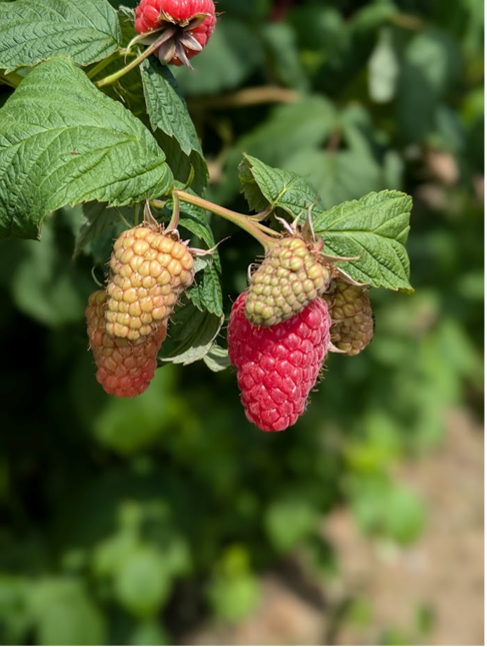
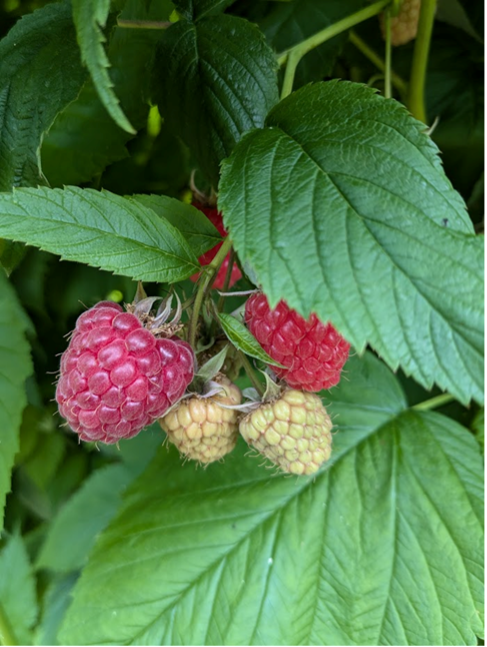
Washington is known for its berries, including raspberries. The Evergreen State is responsible for a whopping 95% of processed red raspberry production[1]. The typically mild winters and summers of northwest Washington have historically been well-suited for small fruit production. However, as summers become hotter, production suffers. The heat dome of 2021 in the Pacific Northwest revealed how increasing temperatures and more unpredictable weather events can negatively impact even the most suitable climates for small fruit production. Raspberry growers reported an estimated 30% yield loss, while blackberry growers faced an additional 40% loss. This resulted in a total revenue loss of over $45 million for Pacific Northwest growers. Furthermore, excessive leaf damage caused by extreme heat events could impact production in the following years.
To help mitigate future crop loss and protect the small fruit industry, the “Beat the Heat – Mitigating Heat Damage in Caneberry” project was formed with funding from the United States Department of Agriculture Multi-State Block Grant Program. This initiative is crucial for safeguarding growers from the increasing threat of heat stress due to increasing summer temperatures. The project employs both short-term and long-term strategies. In the short-term, it focuses on implementing and evaluating mitigation practices, such as the use of evaporative cooling, shade cloth, and biostimulants.
Evaporative cooling methods have been proven effective in alleviating heat stress in blueberries, but further research is needed to determine their efficacy for raspberries and identify any drawbacks. Shade cloths, while more expensive, offer valuable protection against the sun’s rays and help cool down the plants. Biostimulants are designed to prime plants and improve their stress tolerance but have undergone limited testing, especially in regard to their contribution towards thermotolerance. Additionally, the project team plans to study the effects of reflective particles, such as spray-on kaolin clay commonly used in apple cultivation, on fruit quality.
Cost-benefit analysis is also an important component of the project and will be conducted alongside assessments of these heat mitigation practices.
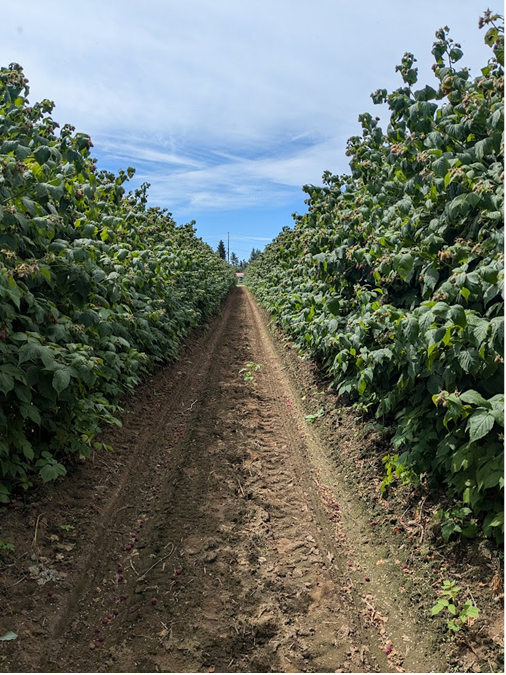
Breeding heat tolerant cultivars represents a long-term strategy the project will explore. The team is using RNA-seq to analyze a diverse range of raspberry germplasm including ‘Meeker’, ‘Wakefield’, and the selections WSU 2188 and ORUS 4715, under heat stress conditions. Observations of differential expression patterns and growth will be used to inform breeding strategies for improved thermotolerance and complement breeding efforts in place for other commercially important traits.
Overall, the “Beat the Heat – Mitigating Heat Damage in Caneberry” project is an important initiative to safeguard raspberry and blackberry production from increasingly extreme weather conditions, particularly heat. This project will provide strategies to alleviate heat-related issues and help ensure continued production of these nutritious fruits, enhancing the competitiveness and long-term viability of the Pacific Northwest’s small fruit industry.