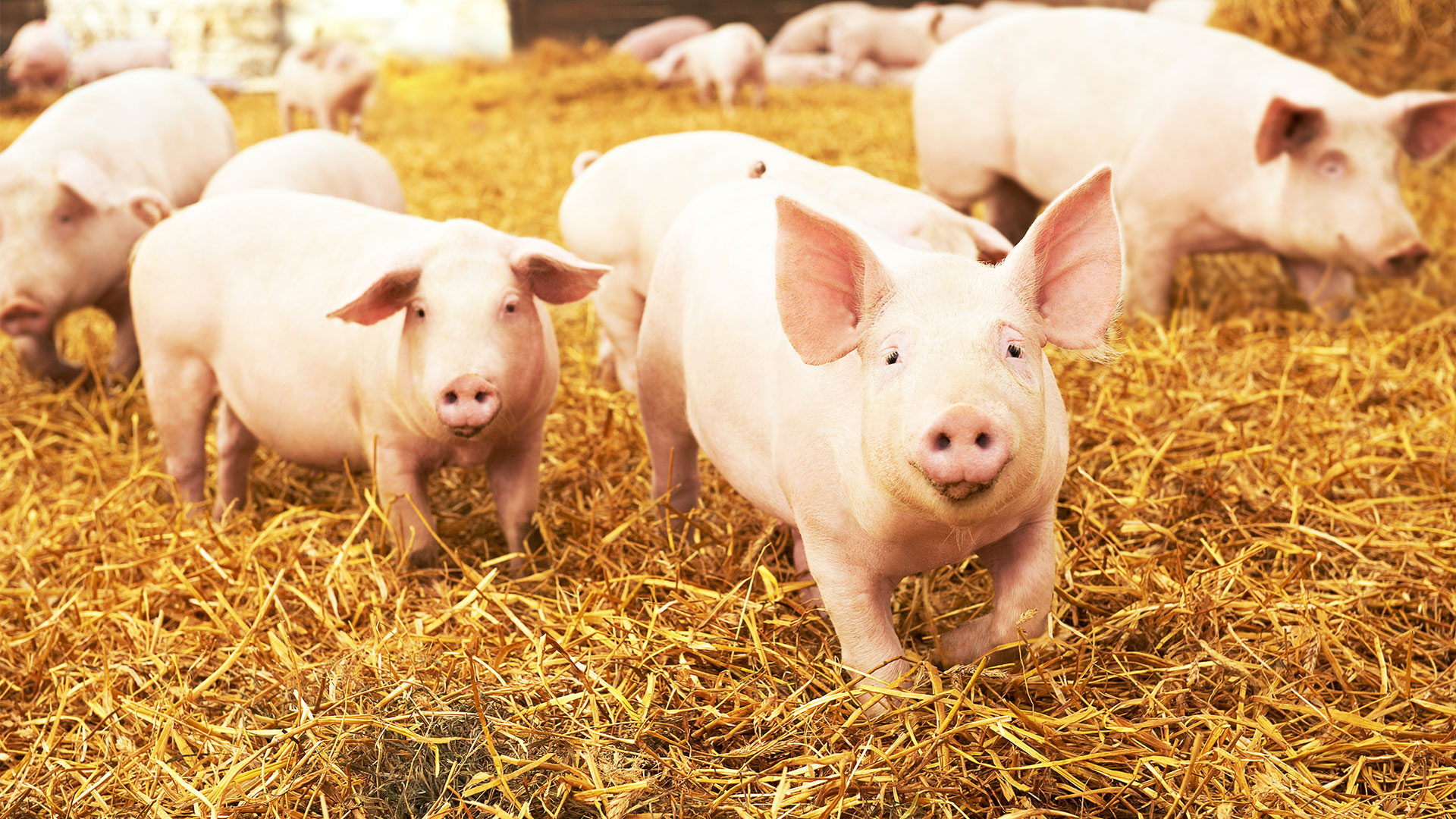
Genomic Testing & Selection Resources for Swine
Fact Sheets
Brief guides for collecting tissue, hair, and blood samples for genetic testing, and a list of genetic tests available for swine.
Sample Collection Guide
Methods for Sample Collection
Note: collection methods may differ based on which genomic test is used. Always check with the company or breed association to determine which sample type is best for submission.
Tissue Sampling Units (TSUs)
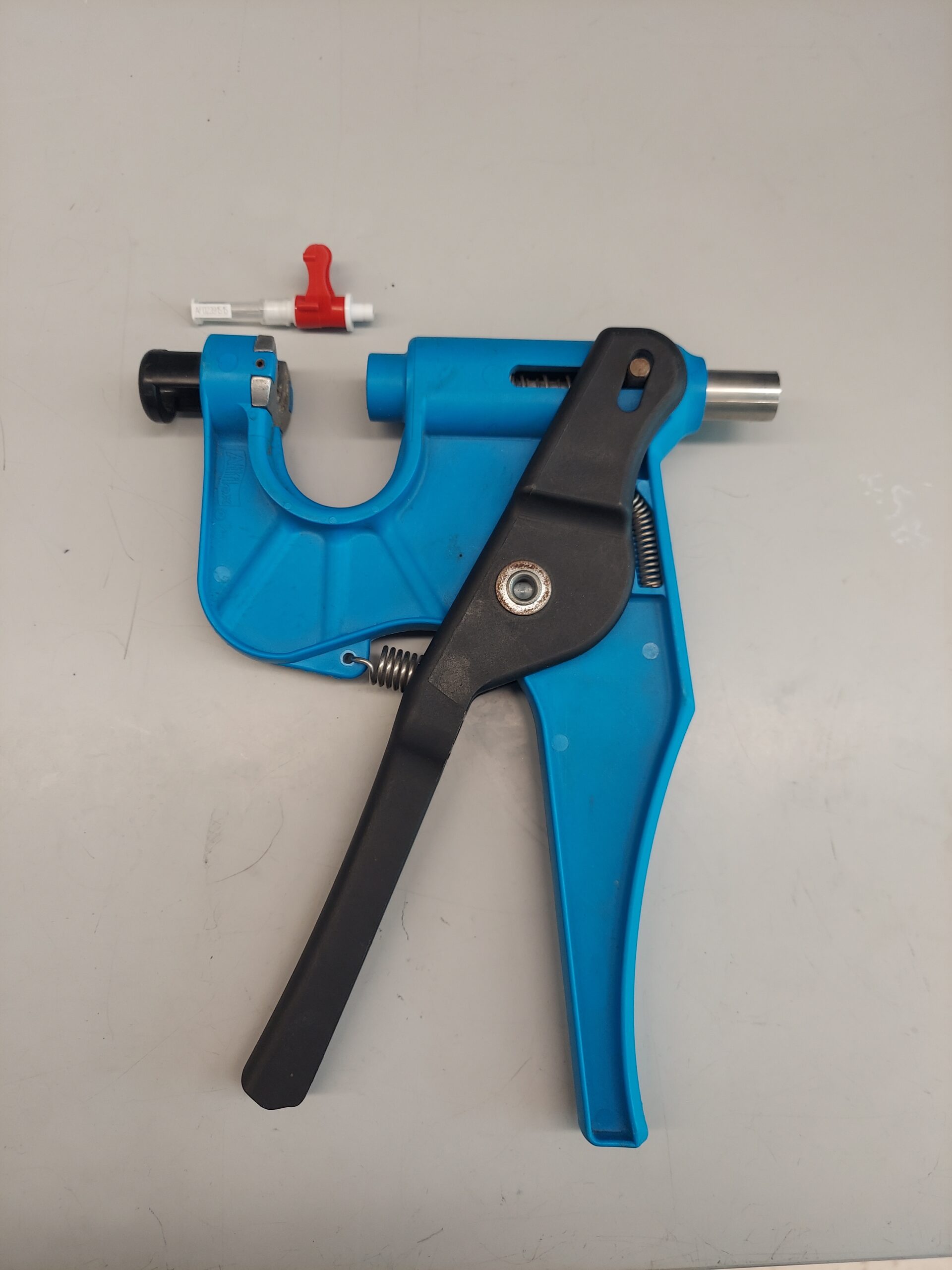
This sampling procedure can be combined with tagging, when the sample is taken at the same time as the tag is inserted into the ear.
TSUs can be stored at room temperature in a cool, dry place before shipping at room temperature.
Whole Blood and Blood Cards
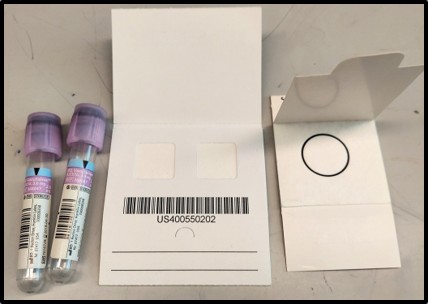
Blood can also be spotted onto a FTA blood card covering the entire circle or square on the card, and be sure to let the card dry before storing in a cool, dry place.
Blood cards can be shipped at room temperature.
Hair Bulbs
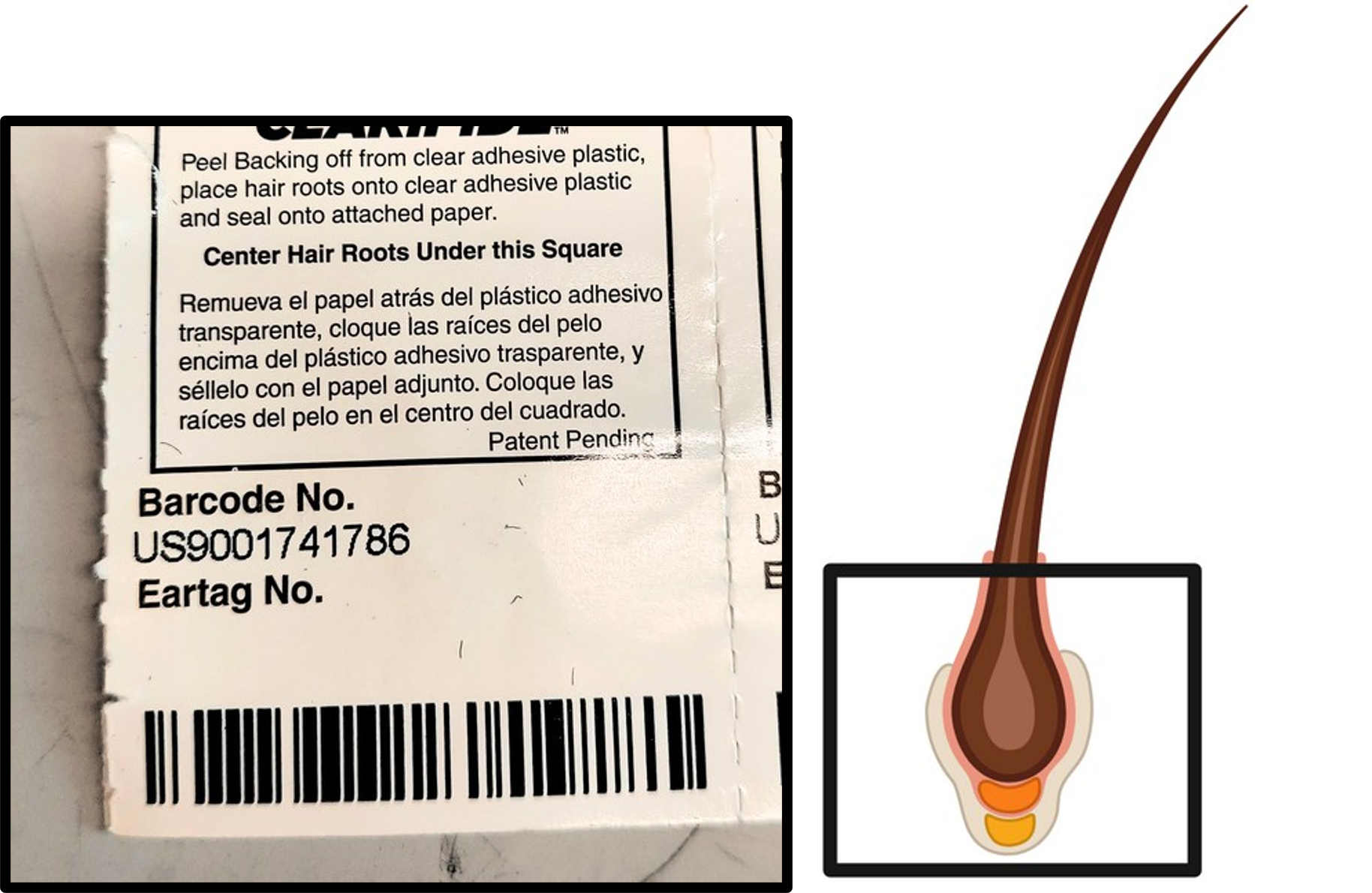
Next, use a clean tool such as pliers to pull 20-30 hairs (about width of a pencil) from the neck or back area. Make sure to get the hair bulbs or roots, as these contain the DNA. Hair can be stored in a cool, dry location and shipped at room temperature.
Sampling Tips
Keep detailed and clear records during sampling to prevent duplicated or skipped animals.
Make sure samples are not contaminated with manure, dirt, and debris.
Clean sampling tools between animals to prevent cross-contamination of DNA.
Store samples out of sunlight and heat, and ship accordingly to prevent DNA degradation.
Genomic Testing Available for Pigs
Test Overview
This information is up-to-date as of August 2025.
| Test | UC Davis | Neogen | National Swine Registry |
| Parentage | $44 (microsatellites) | Embedded in bundled test | Not offered |
| Single gene | Not offered | $40 with report for 10 markers, $35 raw genotypes (GGP Porcine 50K) | $25, Hal-1843 only |
| Breed Composition and Color | Not offered | Not offered | $70-210 depending on time of sampling |
Single-Gene Test Breakdown
Single-gene or single-SNP tests are generally reported as a genotype represented by a number (0,0 or 0,1 etc.), letters, or as “affected”/”heterozygous”/”clear” depending on the test. A breakdown of single-gene tests including whether the trait is generally favorable or unfavorable is listed in the table below:
| Marker ID | Trait Association | Favorable or Unfavorable? |
| RN | Rendement Napole, low pH and water holding capacity of pork | Unfavorable (animals are more susceptible to RN compared to those without the variant) |
| Halothane | Porcine Stress Syndrome (PSS) and pale, soft, and exudative (PSE) pork | Unfavorable (animals are more susceptible to PSS and PSE pork compared to those without variant) |
| F4 E. coli | Susceptibility to E. coli diarrhea | Unfavorable (animals are more susceptible to E. coli diarrhea than those without the variant) |
| MC4R | Growth rate, leanness, feed conversion | Favorable (animals likely have increased growth rate, leanness, and feed conversion compared to those without the variant) |
| CCKAR | Growth rate | Favorable (animals likely have increased growth rate compared to others without the variant) |
| PRKAG3 | Meat quality, high pH and favorable color | Favorable (animals likely have higher pH and better meat color compared to animals without the variant) |
| CAST249 | Meat quality, tenderness and juiciness | Favorable (animals likely have better pork quality, tenderness, and juiciness compared to animals without the variant) |
| CAST638 | Meat quality, tenderness and juiciness | Favorable (animals likely have better pork quality, tenderness, and juiciness compared to animals without the variant) |
| ESR | Litter size | Favorable (animals likely have a greater litter size compared to animals without the variant) |
| EPOR | Litter size and uterine capacity | Favorable (animals likely have a greater litter size compared to animals without the variant) |