
4-H Electricity Project

Program Contact
Autumn Britt, 4-H Program ManagerPhone Number509-588-7817 Email Address • autumn.britt@wsu.edu
Want to learn how the electricity we use every day works? Participating in the electricity project will teach you about topics such as magnetism and circuit design. Also learn hands on skills such as replacing switches.
Objectives
Youth will:
- Develop electrical skills and knowledge
- Learn electrical terminology
- Calculate electrical loads on circuits
- Perform home maintenance electrical repairs
- Be able to detect electrical hazards
- Construct simple electrical connections
- Identify types of electrical equipment
- Help educate others about electrical concepts and skills
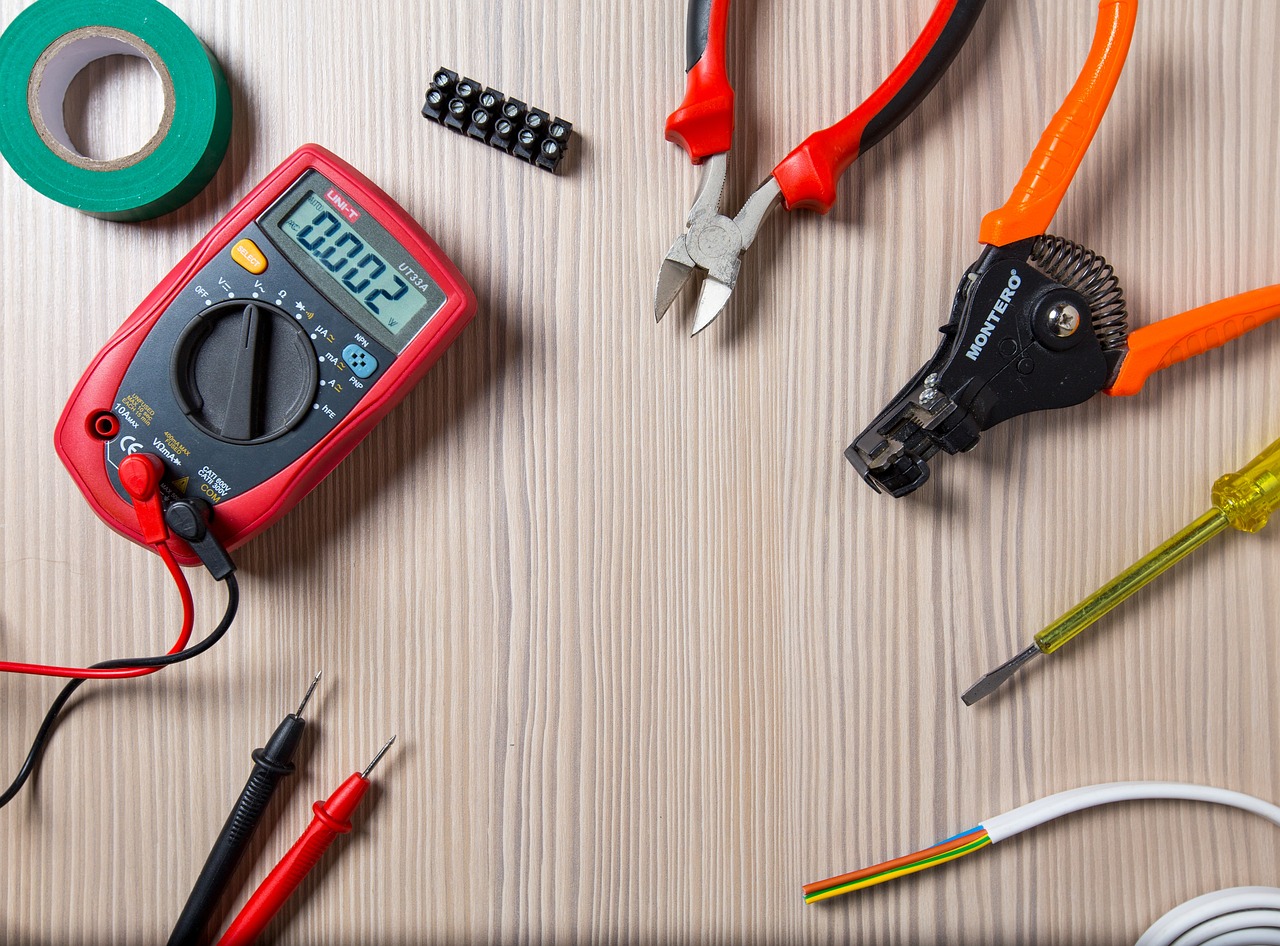
4-H Electricity Curriculum
Available from the Extension office or online.
Electric Excitement Level 1: Magic of Electricity
Youth explore why certain things insulate from electricity better than others and the effect that magnetism has various substances. They also build a flashlight, a compass, an electromagnet, and an electric motor.
Electric Excitement Level 2: Investigating Electricity
Youth build circuits and test voltages, build a rocket launcher, and build a burglar alarm as they practice decision making and communication. This unit is designed for youth who understand magnetism, electron flow, and circuit design.
Electric Excitement Level 3: Wired For Power
Youth build on skills learned in Levels 1 and 2 plus learn how to measure electrical usage, replace electrical switches, and determine electrical loads. Youth will also evaluate different light bulbs and test for electrical power.
Electric Excitement Level 4: Entering Electronics
This unit introduces the basics of solid-state electronics and provides hands-on activities for practical experience in understanding modern day electronic equipment. This unit is for the intermediate to advanced learner.
Electric Excitement Helper’s Guide
This helper’s guide has a number of exciting group activities that will keep members coming back for more. It includes a variety of group activities that can be organized quickly and conducted with 3 to 15 youth in a group.
Explore a Power Park Book 1: Paper Circuits
This circuitry curriculum offers a hands-on introduction to electric circuits using LED’s and conductive tape. The pages are full of opportunities for exploration and challenge young designers to problem-solve and think creatively and critically. The activities are meant to ignite a young person’s curiosity and imagination, opening the mind to new possibilities and moving him or her to play, tinker, and explore.
Short tutorials and background information accompany puzzles and challenges. The activities build on each other and are designed to allow youth to learn by doing. Each curriculum book becomes a completed workbook full of solved puzzles, met challenges, and creative light-up projects.
Light up and ignite a young person’s curiosity and imagination, with LEDs, circuits and more! This Essentials Kit is the perfect complement to our Explore a Power Park Book and will provide you with everything you need to open the mind to new possibilities and moving youth to play, tinker, and explore.
Design a Power Park: Smart Circuits Book 2
The hands-on activities in this book introduce coding, microcontrollers, and sensors to circuitry projects. It is an interactive workbook designed to be a hands-on experience that accompanies computer coding and reading. The pages are full of opportunities for exploration and challenge young designers to problem solve and think creatively and critically. The activities are meant to ignite a young person’s curiosity and imagination, opening the mind to new possibilities and moving him or her to play, tinker, and explore.
Short tutorials and background information accompany investigations and challenges. The activities build on each other and are designed to allow youth to learn by doing. Challenges provide opportunities for solving problems with multiple possible solutions or with less obvious solutions. Each curriculum book becomes a completed workbook full of solved puzzles, met challenges, and creative light-up projects.
This is the second book in a collection of three. While we advise all readers to go through the first book before using this one, this is not a requirement, though we do assume the reader has basic electrical circuit skills and knowledge. Coding experience is helpful, but not necessary.
Light up and ignite a young person’s curiosity and imagination, with LEDs, circuits and more! This Essentials Kit is the perfect complement to our Explore a Power Park Book 2: Smart Circuits and will provide you with everything you need to open the mind to new possibilities and moving youth to play, tinker, and explore.
Build a Power Park Book 3: Lights on in the Neighborhood
This interactive workbook has over 25 hours of hands-on activities that introduce coding, microcontrollers, and sensors to circuitry projects while challenging young designers to solve problems and think creatively and critically. This book can ignite a young person’s curiosity and imagination. It encourages playing, tinkering, and exploring new ideas and possibilities.
Short tutorials and background information accompany investigations and challenges. The activities build on each other and allow youth to learn by doing. Challenges provide opportunities for solving problems with multiple possible solutions. The final project introduces more advanced programming skills and requires youth to synthesize and apply previously learned concepts. Young people can work on the activities individually, with partners, or in a guided instructional setting to solve puzzles, meet challenges, and create fun light-up projects.
This is the third book in a collection of three. While we advise all readers to go through the first two books before using this one, this is not a requirement, though we do assume the reader has basic electrical circuit skills and knowledge. Coding experience is helpful, but not necessary.
Washington 4-H Records, Forms, and Guides
For youth members
Coming soon!
For adult helpers and club leaders
Coming soon!

Helpful Resources
Activity Ideas
Electricity Activity Plan: Fruit Batteries – Wisconsin 4-H
Create a battery from fruit, learn the process of scientific inquiry, about connecting batteries in series, and develop familiarity with basic electrochemistry.
Electrical Science Activity Series – Wisconsin 4-H
This 5-activity series helps youth explore electricity and ways they can create and complete tasks with circuits.
- Earth Attractions—Build and test a compass to understand the Earth’s magnetic poles
- Bright Lights—Build a simple circuit to create your own flashlight
- Circuit Sense—Identify closed and opened circuits and think about where and how they might be used
- Control the Flow—Build and test a switch that can open and close, using a paper clip
- Fork in the Road—Identify parallel and series circuits and think about where and how they might be used
Audience: Youth in grade 4; can be adapted for older or younger youth
Time: about 30 minutes per lesson
Bend Water with Static Electricity – Science Bob
Engineering Electricity – University of Minnesota Extension
In this lesson, youth design and build a wind-powered vehicle to turn on a light bulb using the Engineering Design Process. Youth also learn how to incorporate this step into a Rube Goldberg™ type machine.
Mission 4-H: Electricity – University of Minnesota Extension
In this independent learning guide, youth work on their own to create an electrical circuit to light up an LED bulb. Templates are provided to make a car, tree, firefly, rocket or flower.
Washington Specific Reference Material
Yakima County Alternative Energy & Sustainability Project
Other Reference Material
From 4-H Programs
Science Fun with Electricity – Ohio 4-H
This beginning electricity project book includes 11 kid-friendly and time-tested experiments about static electricity, currents, electromagnetism, electric motors, and electric light. Each experiment has a brief introduction, a supply list, and step-by-step instructions that bring an electrical concept to life.
Energy Education Council 4-H Committee
The objective of the 4-H Committee is to promote the efficient and safe use of electricity through educational materials and programs designed for youth.
For decades, the Energy Education Council has supported 4-H youth electricity and energy education with both funding and expertise related to workshops, judging of county and state fair entries, and more. The active 4-H committee works to create programming, recommend material purchases, and provide experts and volunteers to assist youth in their energy education.
Super Science Series – University of Minnesota Extension
This Super Science Series is a collection of super fun science lessons designed for grades 3-8. Each lesson includes a science activity that incorporates different science and engineering concepts in a way that gets youth excited about learning more.
From Higher Education Institutions
From Related Organizations, Journals, and Professionals
EE (Electronics Education) in a Box YouTube Videos
An Introduction to 4-H Magic of Electricity: Level 1, Activity 4 & 5
Conducting Things Activity 5: 4-H Magic of Electricity
An Introduction to 4-H Magic of Electricity: Level 1, Activity 12: Making an Electromagnet
4-H Electric Series Investigating Electricity: Level 2, Activities 3 & 4
4-H Electrics Series Investigating Electricity: Level 2, Activity 5 & 6 Circuit Diagrams
4-H Wearable Technology curriculum series in which youth solve real world problems and practice the engineering design process while immersed in the innovative area of wearable technologies. This curriculum teaches engineering design, computer programming, basic circuitry, and sewing.
Each youth will need their own Design Notebooks for each level.
WearTec Book 1: Circuitry – Leader’s Guide
WearTec Book 1: Circuitry – Design Notebook
This is Level 1 of the Wearable Technology curriculum series, in which youth solve real world problems and practice the engineering design process while immersed in the innovative area of wearable technologies. This curriculum teaches engineering design, computer programming, basic circuitry, and sewing. In Level 1, youth learn the foundations of circuitry through 4 projects.
WearTec Book 2: Sewing – Leader’s Guide
WearTec Book 2: Sewing – Design Notebook
This is Level 2 of the Wearable Technology curriculum series, in which youth solve real world problems and practice the engineering design process while immersed in the innovative area of wearable technologies. This curriculum teaches engineering design, computer programming, basic circuitry, and sewing. In Level 2, youth learn how to sew and create projects using microcontrollers.
WearTec Book 3: Programming – Leader’s Guide
WearTec Book 3: Programming – Design Notebook
This is Level 3 of the Wearable Technology curriculum series, in which youth solve real world problems and practice the engineering design process while immersed in the innovative area of wearable technologies. This curriculum teaches engineering design, computer programming, basic circuitry, and sewing. In Level 3, youth learn basic programming and coding skills and then apply these skills using various platforms, such as Arduino.
WearTec Book 4: Design – Leader’s Guide
WearTec Book 4: Design – Design Notebook
This is Level 4 of the Wearable Technology curriculum series, in which youth solve real world problems and practice the engineering design process while immersed in the innovative area of wearable technologies. This curriculum teaches engineering design, computer programming, basic circuitry, and sewing. In Level 4, youth practice each step of the engineering design process: Research, Develop a Solution, Test & Evaluate, and Communicate. Level 4 includes 4 Design Challenges involving light and temperature.
National 4-H Electronics Curriculum Collection
Learn by Doing with Elenco’s Snap Circuits® Jr.! Electrical components provide hands-on experience designing and building models of working electrical circuits.
Snap Circuits® Jr. allows for hours of educational fun while learning about electronics. All parts are mounted on plastic modules and snap together with ease.
- Electrical components provide students ages 8+ with hands-on experience designing and building models of working electrical circuits.
- Snap-together parts require no tools and ensure correct connections
- Includes 30 parts, and instructions for over 100 projects
- Requires 2 “AA” batteries (sold separately)
- Clear and concise illustrated manual included and available online
A 2022 Toy of the Year Finalist – Elenco’s Snap Circuits® MyHome makes learning electronics easy and fun!
Electricity is everywhere – even in your home. Whether you live in a city skyscraper or a house in the country, our homes are powered by electricity. It’s not magic, it’s science, and it’s easy to learn. Build a house or city tower with real, working, 3-D circuits, just like the ones you use every day. With seven colorful base grids to make your structure your own, learn how electricity travels and powers your home.