Sheep drive, April 24th (St. George’s Day)
Inspired by the next generation of farmers and shepherds
On the last day of my visit to the Hortobagy National Park, my host and park ranger Karoly Hoffman managed to arrange for me to join a ‘sheep drive’ to summer pasture. The sheep are owned by a family living in Nadyudvar, Hungary, in the eastern Pannonian basin that extends into Romania.
One of the most common forms of sheep grazing in the Hortobagy is for a group of farmers to join together an hire a shepherd or herder (latter for cattle). The National Park is peppered with “sheepfolds” to provide daily protection and rest for the sheep out of the sun. These are adjoined by small huts of varying condition, many quite nice, all small. Even the older huts are usually retrofit with solar panels.
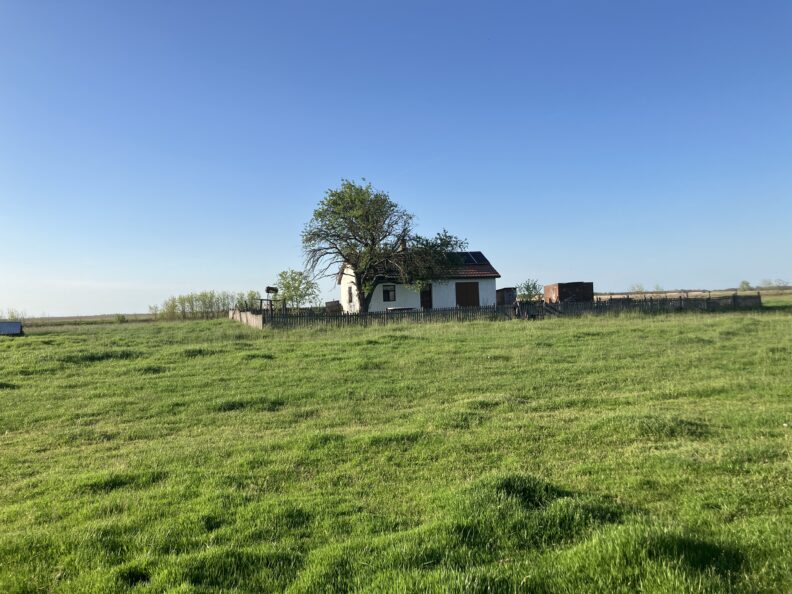
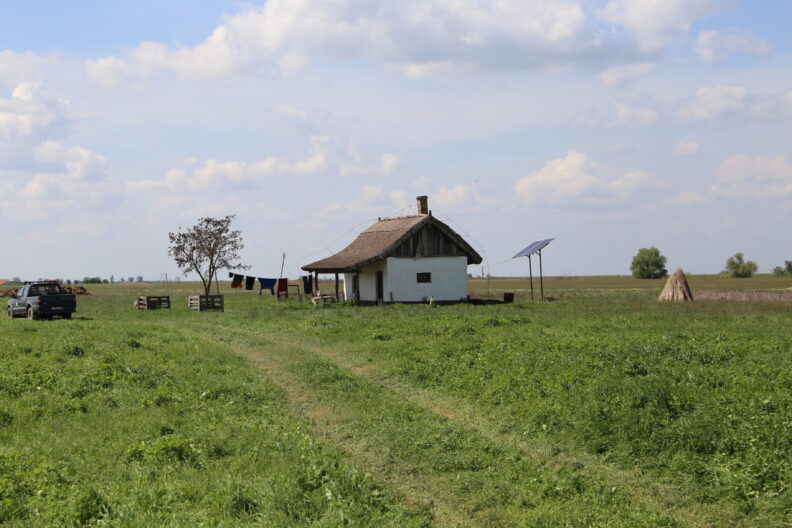
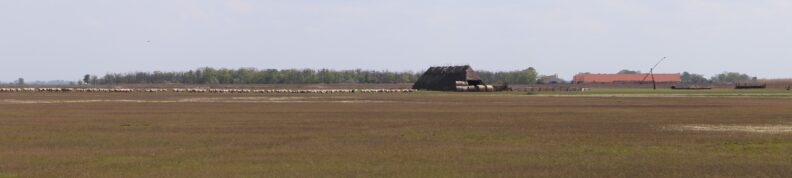
Sheep are typically turned out to pasture in the Hortobagy starting around April 15th, while cattle are turned out traditionally on St George’s Day, April 24th.
The most notable aspect of the experience for me with this sheep drive was the youth involvement. My host Karoly (or Karcsi, pronounced kar-chee) had been organizing a youth shepherd group at the school that his wife teaches at in Nadyudvar. He had many questions for us about the Washington Grazing School and Grazing Association we have organized in SW Washington.
In attendance from the school we had four young boys around 13 or 14, and a young 14-year girl who was the niece of the primary farmer.
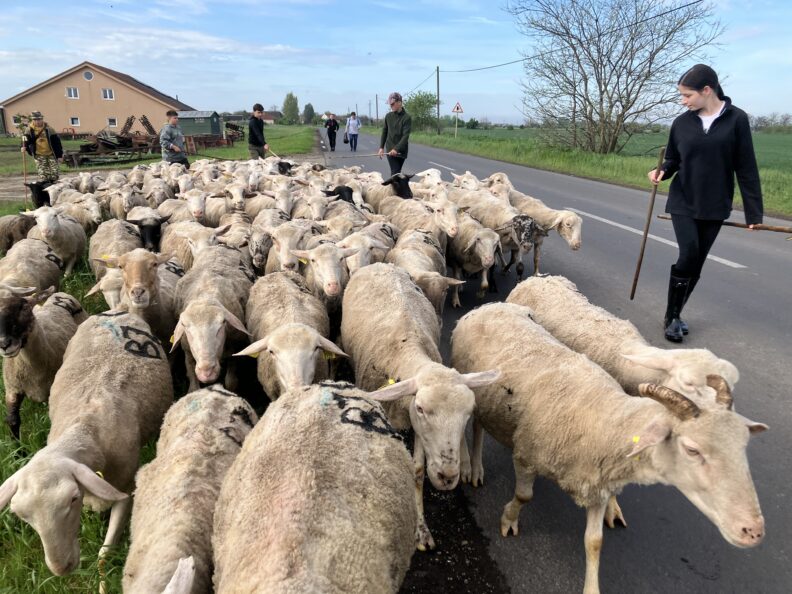
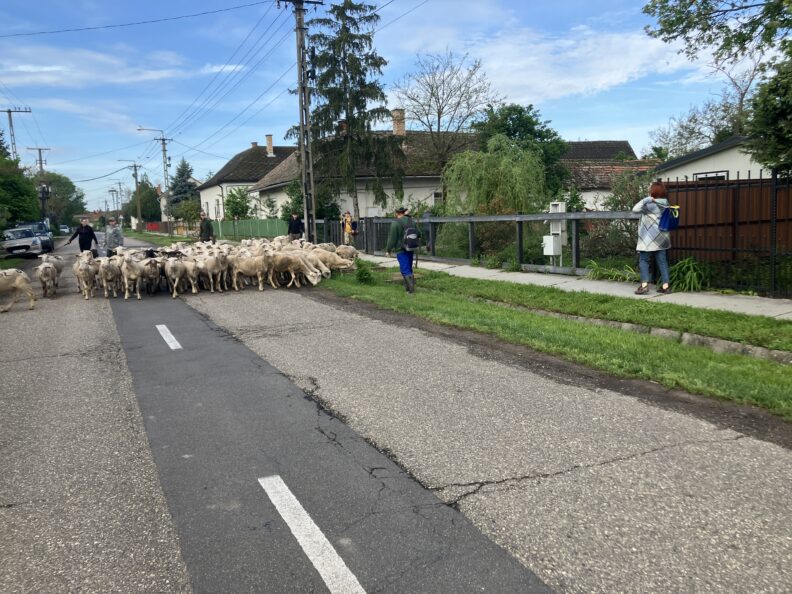
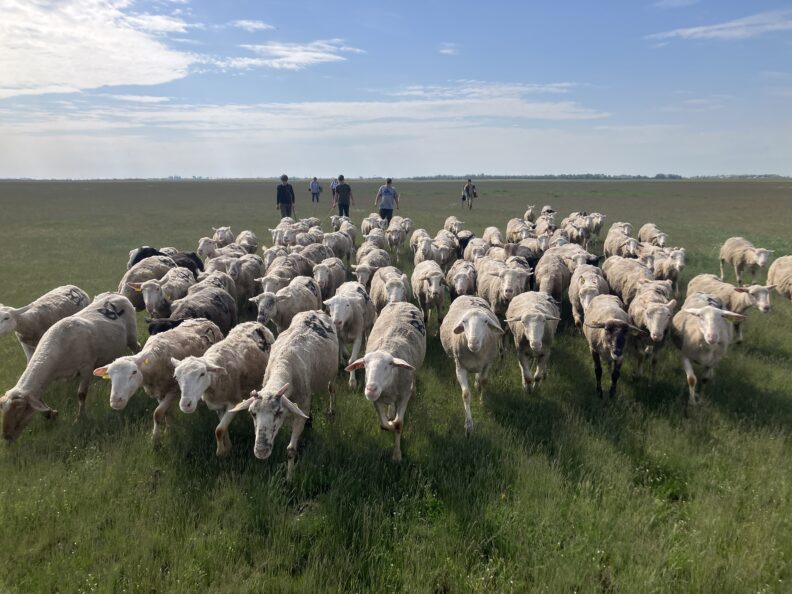
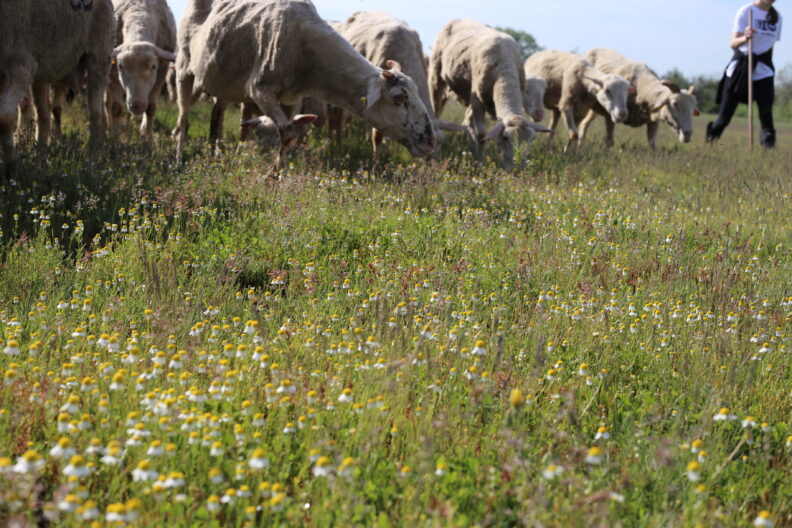
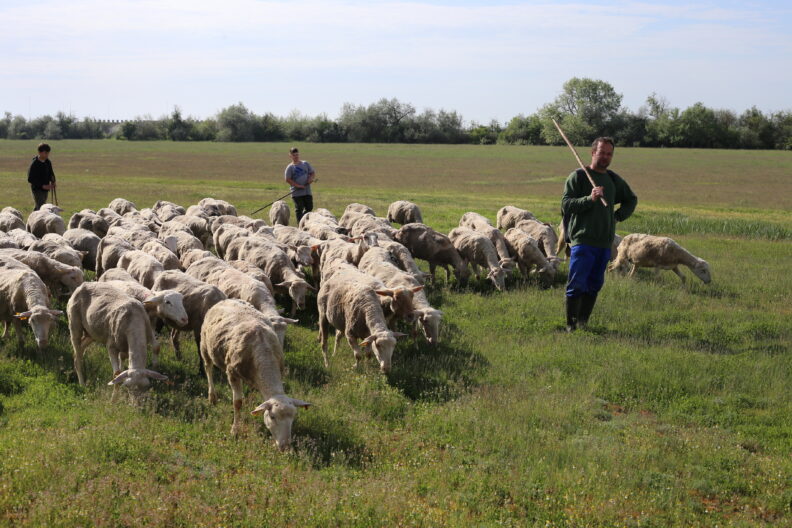
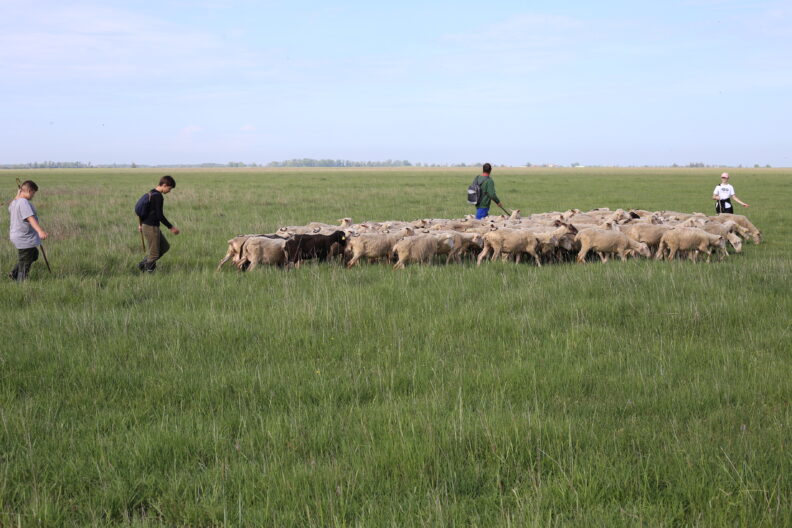
Time again what I’ve heard from folks in Hungary and Romania is that there are no new farmers, that the old shepherd knowledge is being lost, and there are no more people interested in or raising animals.
With regards to detailed, deep ecological herding knowledge, land consolidation and limited access for youth to the land, this has been studied and is true: https://www.mdpi.com/2077-0472/13/6/1206. Yet even so, I was glad to find some exceptions to the lack of youth interest or involvement overall. As with farming in the US, farming is not always directly transmitted parent to child, nor does introduction to agriculture among youth lead directly to farming.
The young girl in the group was intent upon going to school in nearby Debrecen to become a veterinarian. She was no-nonsense, knew the animals well, raised her own, and proud of her agricultural roots and future. One of the young boys I spoke with was aiming to get a degree in agricultural engineering. I had a harder time talking to him with limited mutual language skills, but he was proud of his family (from great grandparents) history in the area settling, raising livestock.