WSU Asotin, Columbia, Garfield, Walla Walla, and Whitman County Extension
Spring 2026
In This Issue
Agriculture
“Tell Us Your Story”
Women farmers are invited to share their stories for research study
WSDA invites Producers, Farmworkers, and Community members to provide input for the state’s comprehensive assessment of agricultural viability
“Meet Morgan Menaker”
Morgan Menaker joins the Blue Mountain Region Agronomy Team
“Save the Date”
WSU Crop tours coming soon!
“Walla Walla County Noxious Weed Rebate Program”
“Forest and Range Owners Field Day”
WSU educational event for anyone who owns forested or range land
“Taking Interest for Pre-License Pesticide Education”
Columbia County wants to know if you are interested in taking the WSU Pre-License Applicator class
Master Gardeners
Master Gardener Plant Diagnosis Clinics
Where to go in your county for garden advice and plant problems
“Tales from the Clinic”
Pearleaf Blister Mite
4-H
“4-H Livestock Judging Contest”
4-Hers across the Blue Mountain Region show off their Livestock Judging skills
“A Heart for Service”
The Waitsburg Corral Wranglers show up for their community
Home Food Safety and Preservation
Home food preservation classes
“Lunch and Learn”
“General Rules for Outdoor Food Safety”
Small steps to keep safe eating outdoors
Home and Family
“Columbia and Walla Walla Counties Participate in Secure Storage Program”
Learn how to get a free gun safety device at the WSU Extension Office
Agriculture News
Tell us your Story
You are invited to participate in a research study examining women farmers’ knowledge of, experiences with, and engagement in U.S. agricultural policy programs. It’s open to women who own, manage, or are employed on a farm in Oregon, Washington, or Idaho (any type of agricultural production and any size) . Questions in this survey relate to general agricultural policy programs, as well as policy programs focused on conservation. This research is part of a doctoral dissertation.
Inform the WSDA’s Comprehensive Ag Assessment
Your responses will directly inform the WSDA report, which will serve as the state’s comprehensive assessment of agricultural viability. This final report will not only reflect on-the-ground conditions, but will also identify practical, actionable solutions. These findings will be shared with policymakers, industry partners, and stakeholders to help guide decisions that impact the future of agriculture in our state.
Agricultural Producer Survey: Take this survey if you are an owner or manager of a farm or ranch.
Farmworker and Farmworker Representative Survey: Take this survey if you are a farmworker or farmworker representative.
Community Survey: Take this survey if you are a food processor, agricultural advocate, business that supports agricultural production, hunger relief organizations, or interested consumer.
These are also available in multiple languages, click here to access.
Washington’s agricultural industry is vital to our economy, our communities, and our way of life. Ensuring its long-term viability requires strong partnership, clear understanding, and informed action. WSDA remains committed to advocating for and supporting our farmers, ranchers, producers, processors, agribusinesses, farmworkers, and tribal partners. Your participation in this effort is a critical part of that work. For more information about this work, visit agr.wa.gov.
Morgan Menaker Joins the Blue Mountain Region Agronomy Team
Morgan Menaker, WSU’s newest Regional Extension Specialist in Agronomy, started his position in September of 2025. Morgan previously worked for NC State Extension in a prominently soybean and winter wheat producing county. However, he consulted on corn, sorghum, sesame, and cotton.
Morgan’s research program is centered on meeting the needs of dryland farmers in Southeastern Washington. He joins WSU Blue Mountain Region Extension Agronomist Rachel Wieme in providing services for Whitman, Asotin, Garfield, Columbia, and Walla Walla Counties. His office is based out of Colfax. Some of the trends Morgan has identified with local growers are managing problematic weeds like Italian Ryegrass, Downy Brome or cheatgrass, finding alternative crop inputs and protectants, and better ways to use in-field and remote sensors.
This past Winter, Morgan spoke at many meetings about controlling problem weeds, fungicide use, and how drones are impacting agriculture. Between grant writing, trial work, and university commitments, Morgan’s number one priority is meeting with and talking to growers about their current agronomic issues.
Hitting the ground running, Morgan currently has trials investigating soil residual herbicides with adjuvants, fungicide and alternative crop protectants in winter wheat, and is developing a winter wheat growth and development model for specific soft white winter wheat varieties.

When Morgan is not at work, he spends time with his wife of eight years and their two children: a four-year-old boy and one-year-old daughter. They have enjoyed exploring Washington State after their big cross country move!
Morgan is only ever a phone call away from providing technical assistance remotely or on your farm. Don’t be strangers!
He can be reached at morgan.menaker@wsu.edu or 509-397-6290. If you would like to read more about Morgan, check out this profile in Wheat Life Magazine!
Save the Dates for 2026 PNW Crop Tours
The 2026 PNW Crop Tour provides opportunities to view field trials and interact with WSU personnel. Please check with the contact listed prior to the tour to verify the time, location, and agenda or reach out to your local county wheat growers association or other co-sponsor. Location maps for the WSU Extension Cereal Variety Trials are available online.
Thank you to the Washington Grain Commission for funding to support the trials and tours as well as the county wheat growers associations and co-sponsors for programs and meals associated with the field days. Finally, a big thank you to all the grower cooperators for their time and resources to host the variety trials. We truly appreciate all the continued support.
For more information, including location and contact information, please visit the Small Grains Website.
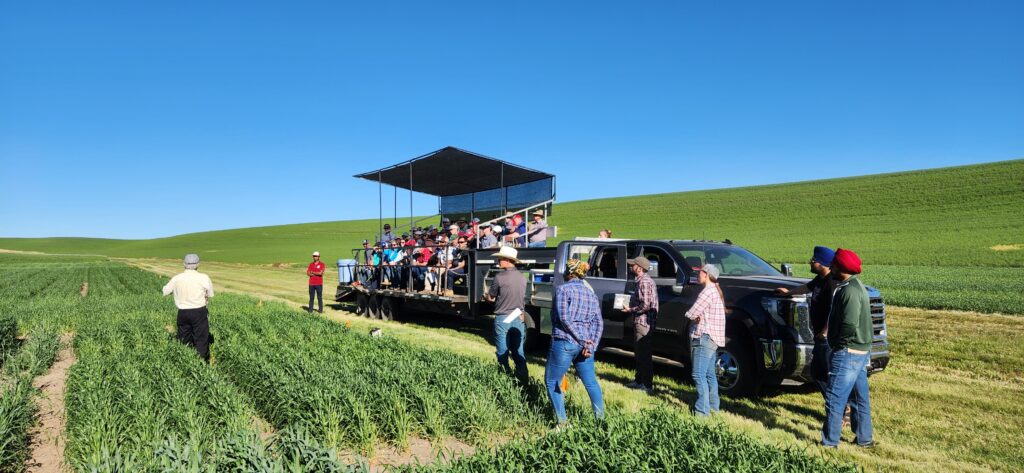
In the Blue Mountain Region, Crop Tours will be held
- Walla Walla, June 5
- Eureka, June 5
- Pendleton, OR, June 9
- Mayview, June 17
- Dayton, June 18
- Pullman, June 22
Walla Walla County Noxious Weed Control Rebate Program
The Walla Walla County Noxious Weed Control Board has made available a rebate program to control selected noxious weeds in the county. Poison Hemlock has been added to the list and we are accepting applications for spring chemical control of Poison Hemlock. Landowners interested may pick up an application at the WSU Extension office at 328 W. Poplar Street. Or you may call Paul Castoldi at 509-524-2688 or 509-540-2299 and an application can be emailed to you and answer questions you may have to see about eligibility. You must be signed up and approved before any spraying can be done to be eligible for the rebate. If you miss the window for spring control, come sign up for fall.
Forest and Range Owners Field Day
Saturday, June 27, 2026
Shea Family Ranch | 23405 W Shea Lane, Cheney, WA
Gates Open: 8 am | Program: 9 am – 4:30 pm
This full-day, out-in-the-woods educational event is designed for anyone who owns forested or range land — from a home in the woods to many acres. Attendees will have access to 20+ expert-led sessions covering topics such as:
- Forest and range health
- Wildfire protection Wildlife habitat and big game management
- Noxious weed control
- Timber sales and forestry taxes
- Soils, reforestation, and thinning
- Chainsaw safety, prescribed fire, and much more
Youth activities are available throughout the day, and an on-site BBQ lunch is offered to benefit the Future Farmers of America.
Registration:
- $30/person or $40/family (before June 24)
- $40/person or $50/family (at the door)
- Register online at WSU Forestry or contact WSU Chelan County Extension at (509) 667-6540
Master Gardeners
Plant Clinics Now Open!
Walla Walla County
Bring your garden questions and plant problems to a WSU trained Extension Master Gardener.
In Walla Walla, plant clinics are held at the WSU Extension Office at 328 W. Poplar
Tuesdays and Thursdays, 9:00 AM – 11:00 AM and 2:00 PM – 4:00 PM
Find out more or submit questions online here.
Garfield County
In Garfield County submit your garden questions online here
Asotin County
Asotin County Master Gardener Plant Diagnosis Clinics start in May in the basement of the Asotin County Courthouse, 135 2nd St, Asotin. For more information see the Asotin County Extension Website.
Wednesdays, 10 AM – 1 PM
Whitman County
Call or email your plant questions to the Whitman County Extension Office. Find more information on their website.
Columbia County
Columbia County doesn’t have a Master Gardener Program, but you are welcome to stop by the office at 139 E. Main. Or contact the office by calling 509-382-4741 or emailing Columbia.ext@wsu.edu. For more information, see the Columbia County Extension Office.
Tales from the Clinic: Pearleaf Blister Mite
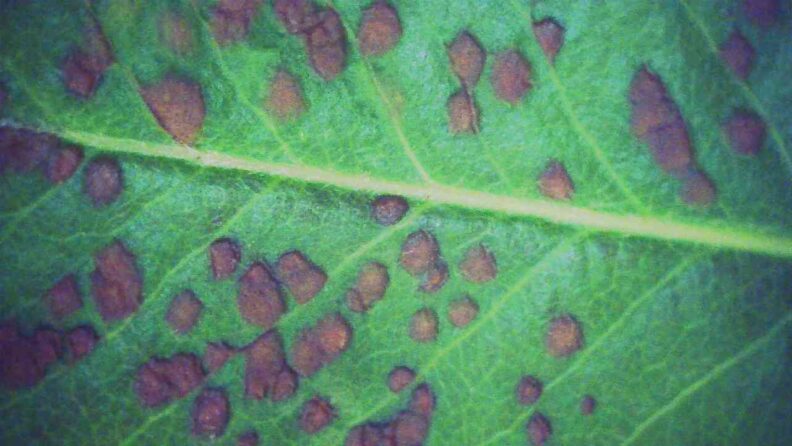
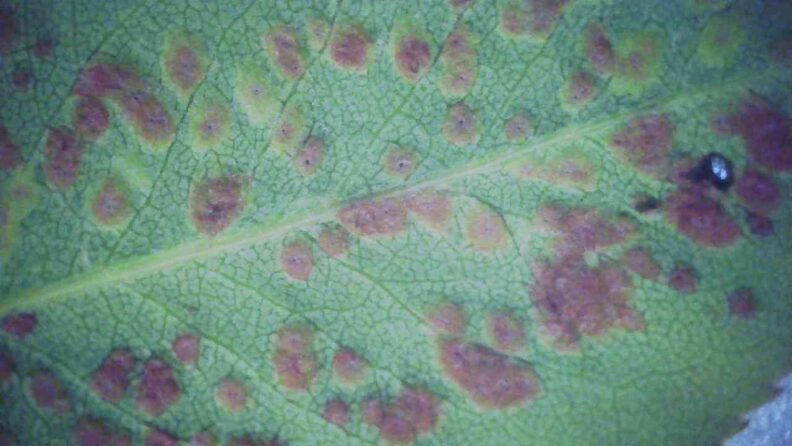
The pearleaf blister mite is currently a pest in most pear growing regions of the world.
Blister mites overwinter as mature females at the base of buds or under outer bud scales. In spring, when buds begin to swell, overwintered females penetrate deeper into buds and lay eggs on live tissue. Development from egg to adult requires 20 to 30 days during the spring. Feeding of females and their offspring causes blisters on developing leaves. As the blisters form, leaf cells near the center of the blisters die and pull apart as surrounding cells enlarge, creating a hole. Mites of the first spring generation enter blisters through these holes and feed on soft leaf tissue inside.
Blister mites attack both foliage and fruit, producing small galls or blisters. Blisters are green or red at first but turn light brown to black as affected tissue dies. Blisters vary in size, with the largest about 1/8 inch (3 mm) in diameter. Mites do not live in the blisters on fruit, but the fruit will be scarred. Severe infestations can deform apples. Damage to pears is less serious, but scarring can make the fruit unmarketable. Severe damage to foliage can cause leaf drop and reduce shoot growth.
To learn more about how to control this and other tree fruit pests see the WSU Backyard Fruit Tree website and WSU Hortsense.
Inland NW Vegetable Gardening
When to plant
Cool season vegetables can germinate in soil temperatures as low as 40°F. They grow and mature during the cool weather of spring and early summer. Several cool season vegetables (broccoli, Brussels sprouts and cabbage) need to be started early indoors or purchased later as transplants to give them time to mature before hot weather.
Warm season vegetables are damaged by frost, cold nights, and cold soil. They need warm soil to germinate (at least 60ºF) and long warm days to mature.
Melons, cucumbers, squash and pumpkins can be grown from direct seeding into the garden or from transplants. These vegetables resent transplanting, but can be started from seed in individual peat pots, which are planted, peat pot and all, into the garden.
Never plant the same crop, or family of crops, in the same place two years in a row. Common vegetable families include:
- Solanaceae: potatoes, tomatoes, eggplant, peppers, tomatillos
- Cucurbits: cucumber, squash, melon
- Brassica: broccoli, Brussels sprouts, cauliflower, cabbage, kale, kohlrabi, mustard, radish, turnips
- Allium: onions, garlic, leeks, scallions
- Legumes: peas, beans, okra
For more information about gardening in the Inland Northwest
Garden Schedule
(actual dates will vary from year to year)
March 1st
Indoors: Start cabbage, cauliflower, broccoli, Brussels sprouts, tomato, and pepper seeds.
April 1st to 15th
Indoors: Start tomato and eggplant seeds.
Outdoors: Plant onion sets or plants, Jerusalem artichokes, asparagus crowns, and rhubarb roots.
April 15th to May 1st
Indoors: Start cucumber, melon, and squash seeds.
Outdoors: Plant beets, carrots, turnips and other root crops; lettuce, spinach, chard, peas, radishes and potato pieces. Transplant cabbage, cauliflower, broccoli, and Brussels sprouts.
May 1st to May 15th
Outdoors: Plant beets, carrots, turnips, potatoes. Transplant cabbage, cauliflower, broccoli, Brussels sprouts.
May 15th to June 1st
Outdoors: Plant beans and corn. Be prepared to replant these if frost occurs. Transplant cucumbers, melons and squash, tomatoes, peppers, and eggplant.
June 1st to June 15th
Outdoors: Plant okra seeds, carrots. Transplant tomatoes, peppers, eggplant.
4-H In Action
Youth Livestock Judging
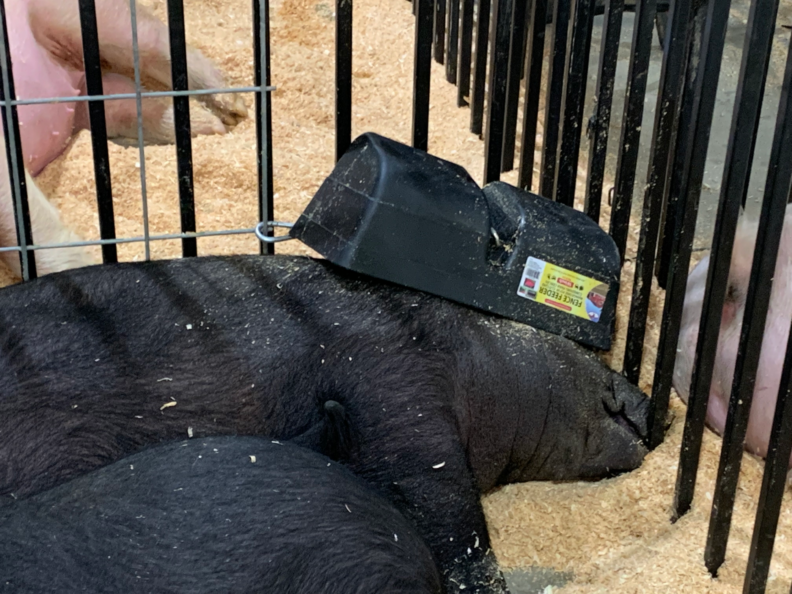
Over 155 4-H members across the Blue Mountain Region participated in Livestock Judging at the Asotin County Fair on Friday, April 24; including 101 members from Asotin County, and 54 members from Walla Walla and Garfield Counties. This event provided youth with an opportunity to apply their livestock evaluation skills in a real-world setting, evaluating animals and making thoughtful comparisons based on industry standards.
Walla Walla youth came prepared thanks to their participation in a Livestock Judging Series that ran from November through March. Throughout the series, members focused on evaluating a different livestock species each month while also developing their presentation and communication skills through oral reasons. This preparation helped youth gain confidence in both their knowledge and their ability to clearly explain their decisions.
Livestock judging is one way 4‑H youth live out the 4‑H pledge using “my head to clearer thinking.” Through judging, youth build valuable life skills such as critical thinking, decision making, communication, planning and organizing, character, and confidence. 4‑H livestock members across the region look forward to continuing to grow and test their skills at future judging events.
A Heart for Service in Waitsburg
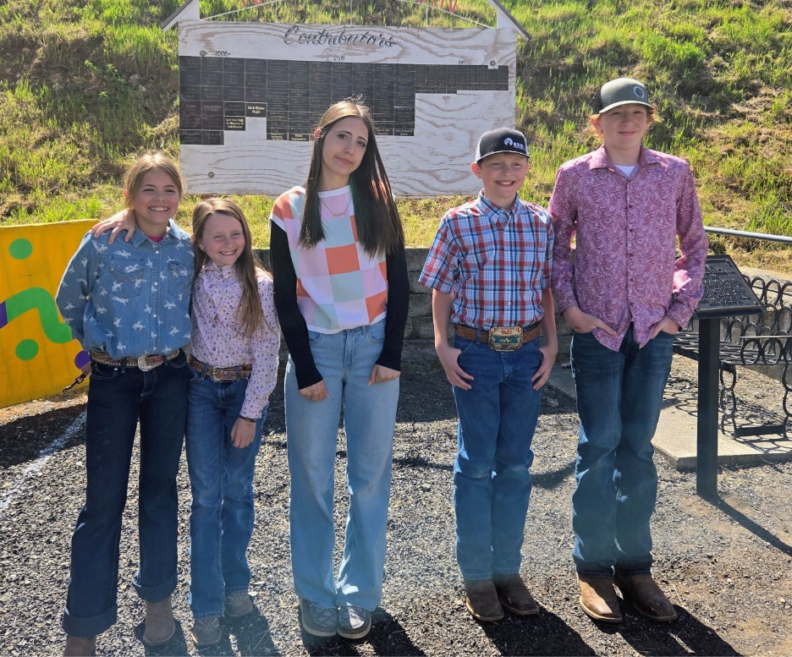
The Waitsburg Corral Wranglers, a Walla Walla County 4‑H club, are a shining example of 4‑H in action, putting their hands to larger service and their hearts to greater loyalty for the community that supports them.
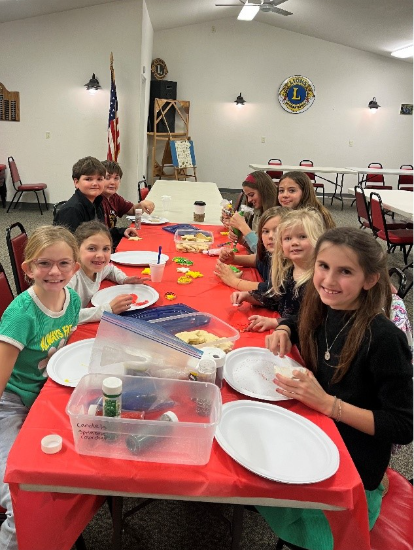
During the Waitsburg Hometown Christmas, club members partnered with the local Waitsburg FFA chapter by decorating Christmas cookies and a festive Christmas tree for the annual celebration. This project was a wonderful example of youth organizations working together for the good of the community. When 4‑H and FFA come alongside one another, youth see firsthand the power of collaboration, shared leadership, and service beyond their own clubs.
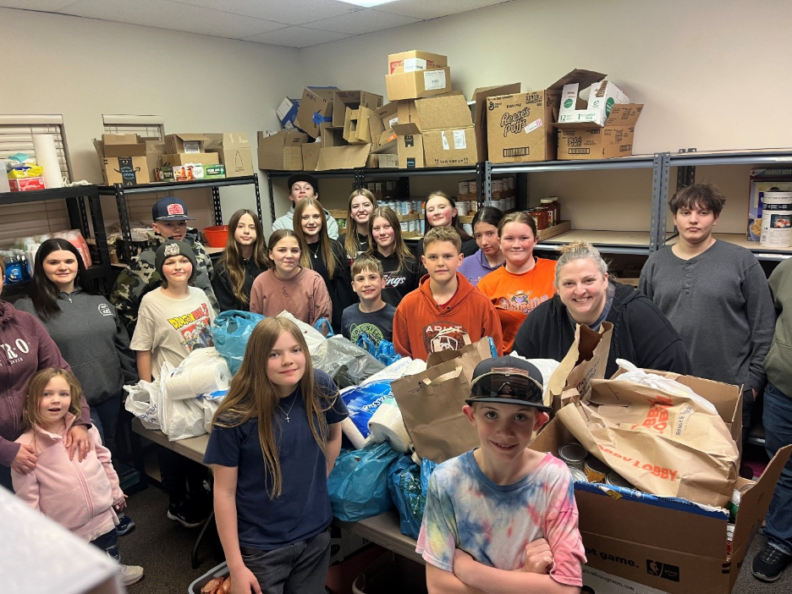
Service didn’t stop with the holidays. In March, the Waitsburg Corral Wranglers organized and carried out a food drive for the Waitsburg Resource Center, helping support local families and neighbors. Through this project, youth saw firsthand how their time, effort, and compassion can make a real difference close to home.
By responding to community needs, the Waitsburg Corral Wranglers are learning that leadership means showing up, serving others, and honoring the communities that support them throughout their 4‑H journeys. These youth are not only building skills for the future, they are becoming caring, engaged citizens today and beyond ready for the future.
Food Safety & Preservation
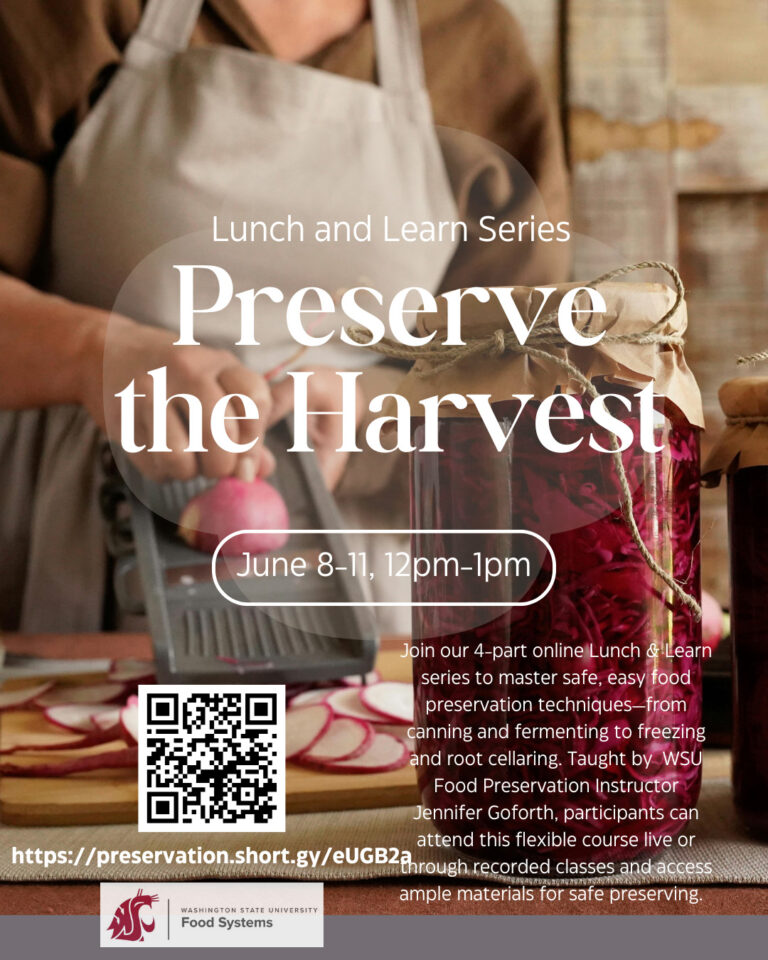
WSU Food Systems Lunch & Learn Series: Preserve the Harvest
Hosted by WSU Food Systems-learn how to preserve the harvest through canning, pickling, fermentation, freezing, dehydrating, and more!
Learn how to preserve food! This 4 part series will help you increase your food access using safe, tested protocols that are easy to learn and follow.
Lunch and learn series allows you to accelerate! Instead of requiring a month long committment for a weekly class, this series allows you to complete the course in under 1 work week, over your lunch hour Monday-Thursday. All classes are recorded, so you may attend some or all of the series through recordings rather than live classes. Attending live classes is not a requirement, feel free to attend in the way that works best for your schedule.
No equipment is necessary. WSU Food Safety/Preservation instructor will teach techniques and explain the items needed to preserve foods in your home. This series covers all the information needed to take advantage of our amazing local produce and reduce waste in your kitchen. This class will be taught online using Zoom.
f you are a SNAP recipient or feel that the class fee presents a financial barrier, you may also be eligible for a partial or full scholarship, please contact j.bryan-goforth@wsu.edu for more information.
For more information or to register, see the event page.
General Rules for Outdoor Food Safety
Outdoor activities like hiking, camping, and boating are great ways to boost your mood, take in some fresh air and get a little exercise along the way. In many cases, these activities last all day and involve preparing at least one meal. If the food is not handled correctly, foodborne illness can be an unwelcome souvenir.
Plan ahead: decide what you are going to eat and how you will prepare it; then plan what equipment you will need.
- Pack safely: use a cooler, or pack foods in the frozen state with a cold source.
- Whether in the wild or on the high seas, protect yourself and your family by washing your hands with soap and water or bring hand sanitizer that contains at least 60% alcohol before and after handling food.
- Raw meats may contain bacteria, so keep raw foods separate from other foods.
- Don’t bring perishable meat or poultry products without a cold source to keep them safe.
- Bring disposable wipes, hand sanitizer or biodegradable soap for hand- and dishwashing.
- If using a cooler, leftover food is safe only if the cooler still has ice in it. Otherwise, discard leftover food.
Read more: USDA Food Safety While Hiking, Camping, & Boating

Home and Family

Columbia and Walla Walla Counties Participate in Safe Storage Program
Columbia and Walla Walla Counties are partnering with WSU CARES, Seattle Childrens Hospital, and the Washington State Department of Commerce to provide FREE gun storage and safety devices to the community.
In Columbia County call 509-382-9760 to learn more.
In Walla Walla County call 509-524-2685, or stop by the Extension Office at 328 W Poplar to pick up your free device.