News

Blackberry and Raspberry Cold Hardiness Update in the Pacific Northwest

Cold hardiness is a dynamic process that strongly depends on air temperatures. As temperatures cool down in the fall, buds gradually acclimate and gain cold hardiness. In contrast, as temperatures rise in the late winter and spring, buds deacclimate and start losing hardiness.
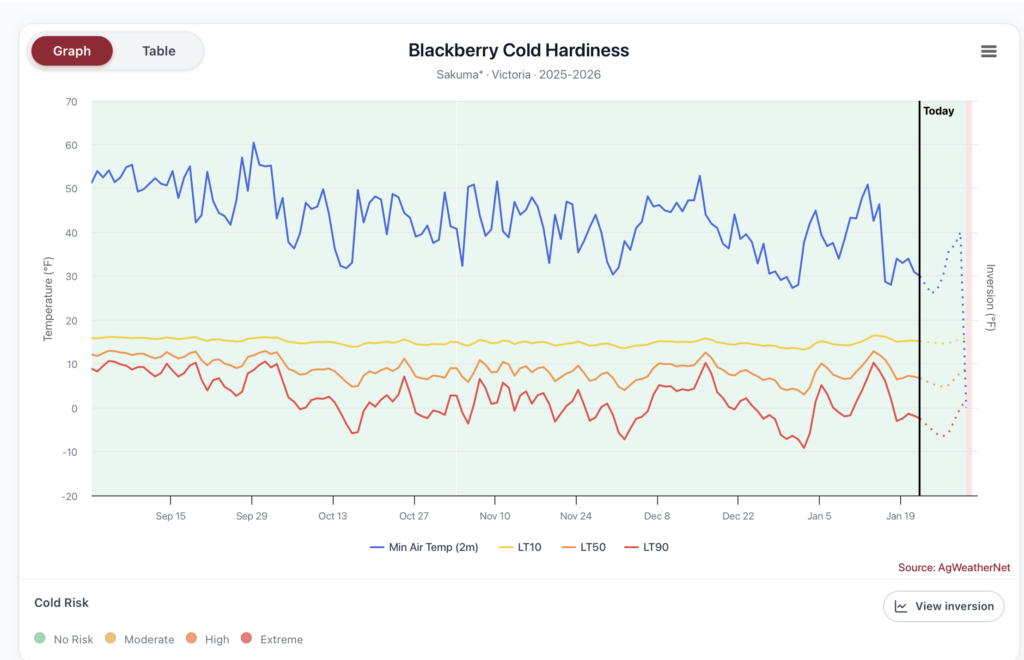
A line graph titled “Blackberry Cold Hardiness – Sakuma, Victoria, 2025–2026.” The x‑axis shows dates from early September through January 19. The left y‑axis shows temperature in °F ranging from –20°F to 70°F. The right y‑axis shows an LT₉₀ scale ranging from roughly –20°F to 0°F. A vertical black line labeled “Today” marks the current date near January 19. Four time‑series lines are plotted: Blue line: Minimum 2‑meter air temperature, fluctuating widely between about 25°F and 60°F. Yellow line: LT₁₀, staying near 20–30°F with small variations. Orange line: LT₅₀, ranging roughly from 5–15°F. Red line: LT₉₀, ranging from near 0°F to –10°F, showing more variability than the other hardiness lines. Dotted extensions of all four lines appear just past the “Today” marker, indicating projected values. The background is lightly shaded green, and a color‑coded legend below the chart describes cold‑risk categories: No Risk (green), Moderate (yellow), High (orange), and Extreme (red). The bottom right corner cites “Source: AgWeatherNet.”