What is Alley Cropping?
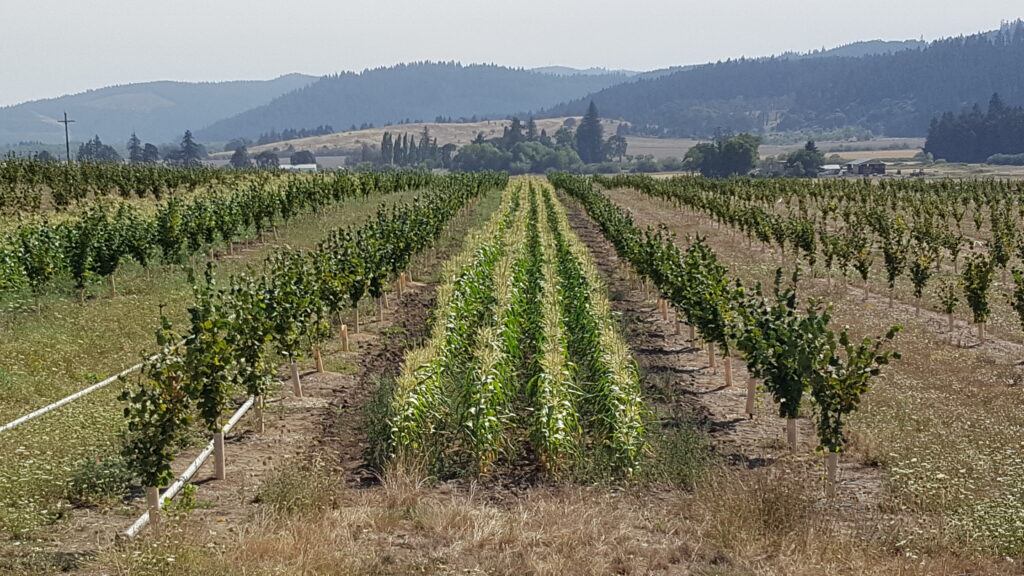
Alley cropping is defined as “the planting of rows of trees and/or shrubs to create alleys within which agricultural or horticultural crops are produced” (USDA, 2025). This practice can be used to diversify income, stabilize soils, provide wildlife habitat, and protect sensitive row crops. Although growing space for annual crops is sacrificed to rows of trees and shrubs, these systems can be economically competitive with traditional row crop systems by diversifying production and utilizing growing space more efficiently (Wolz & Delucia, 2018). Other benefits of alley cropping include carbon sequestration, enhanced nutrient cycling, and improved soil health.
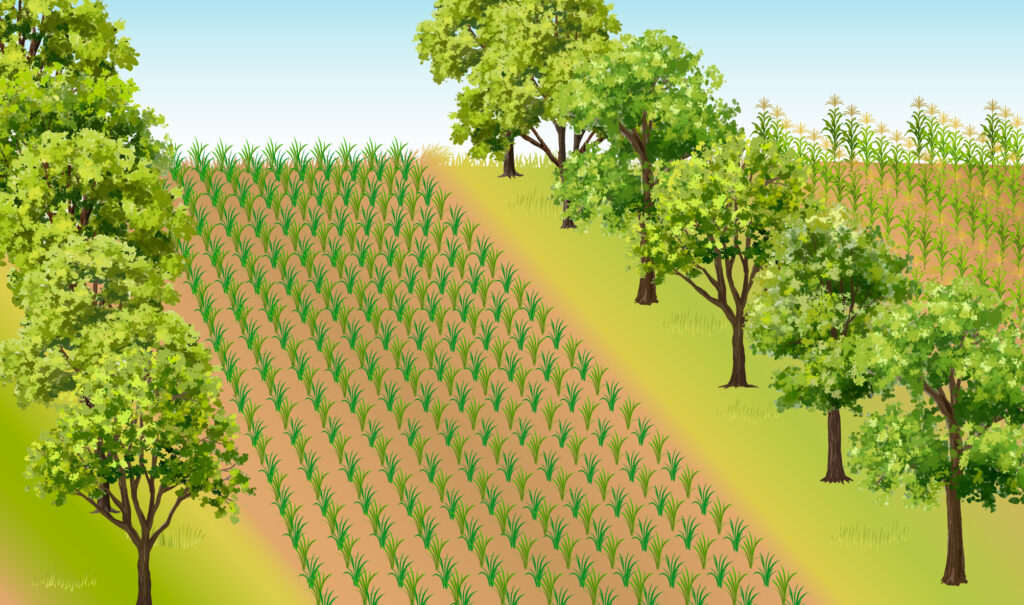
Benefits of Alley Cropping:
- Diversified production and income
- Improved soil nutrient cycling
- Crop protection
- Improved pest management
- Reduced fertilizer and pesticide inputs
- Wildlife habitat
- Carbon sequestration
- Improved aesthetics
Challenges/Barriers to Alley Cropping:
- Establishment costs can be high
- Time required for tree crops to yield
- Potential for competition between trees and crops, especially in short-term
- Increased complexity of management
- Equipment use challenges
- Marketing new products
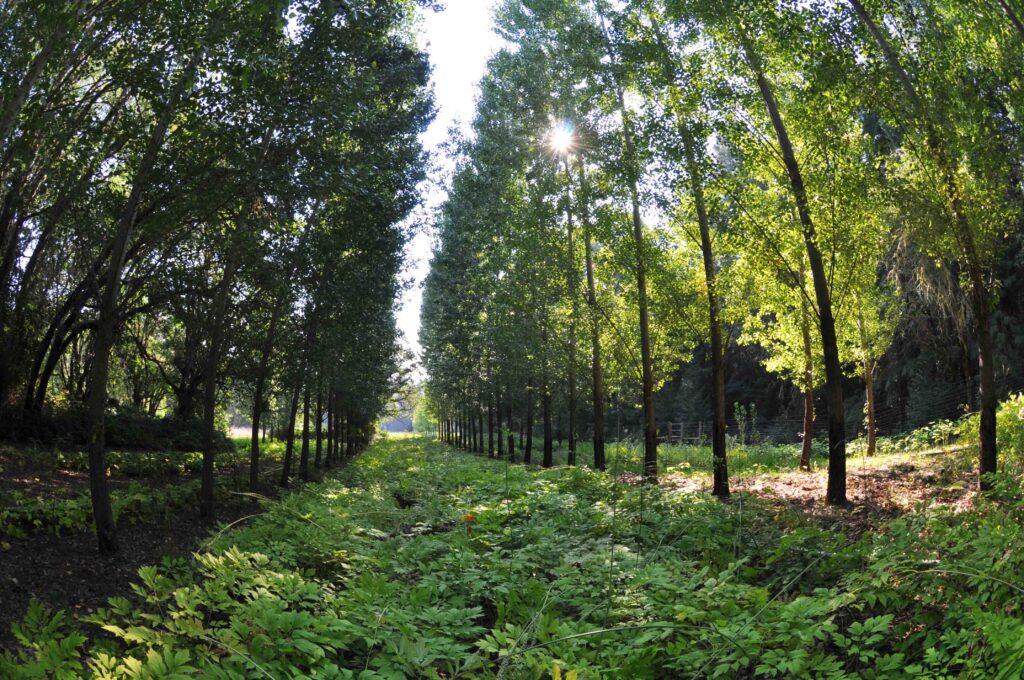
Alley cropping can be used as a short-term strategy to grow crops between rows of young trees in afforestation projects or as a long-term farming model that diversifies income through the incorporation of tree or shrub crops. Trees in alley cropping systems can provide long-term timber products or annual tree crops such as chestnuts, hazelnuts, apples, etc. Regardless of the species used, careful planning is necessary at the beginning to achieve the desired conditions in both the short and long term.
Although alley cropping is growing in popularity on other regions of the United States, it is not yet a common practice in the Pacific Northwest. There is minimal research and few resources available to provide region-specific information on this practice. However, cross-walking guidance from other regions and combining that with local knowledge will help us better understand what alley cropping can look like in the Pacific Northwest
Alley Cropping and Riparian Buffers
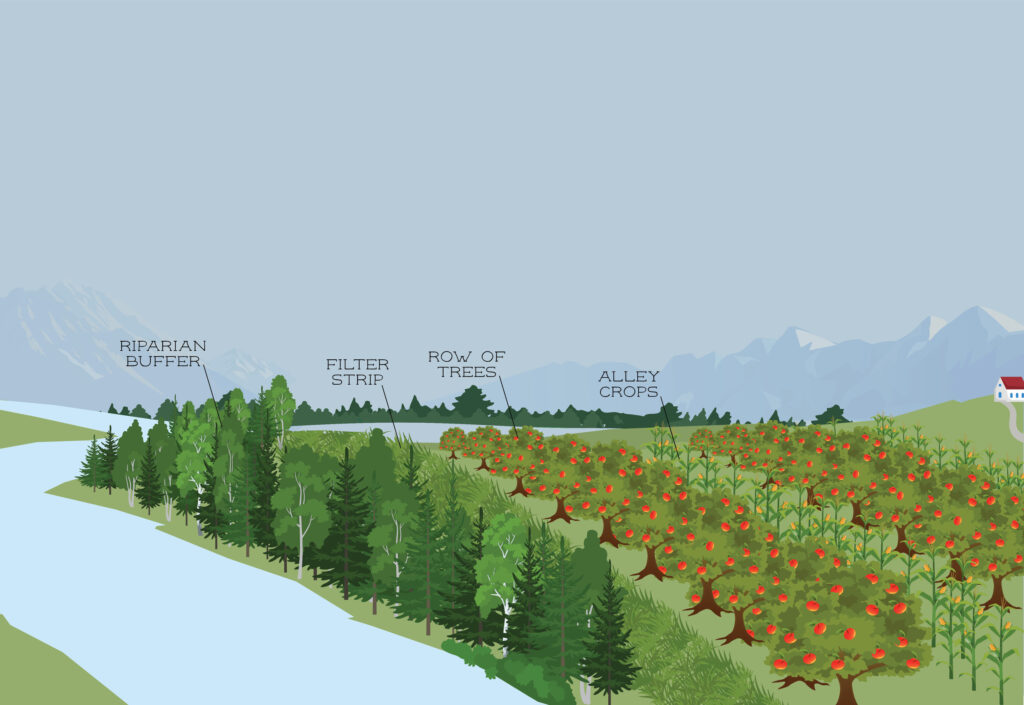
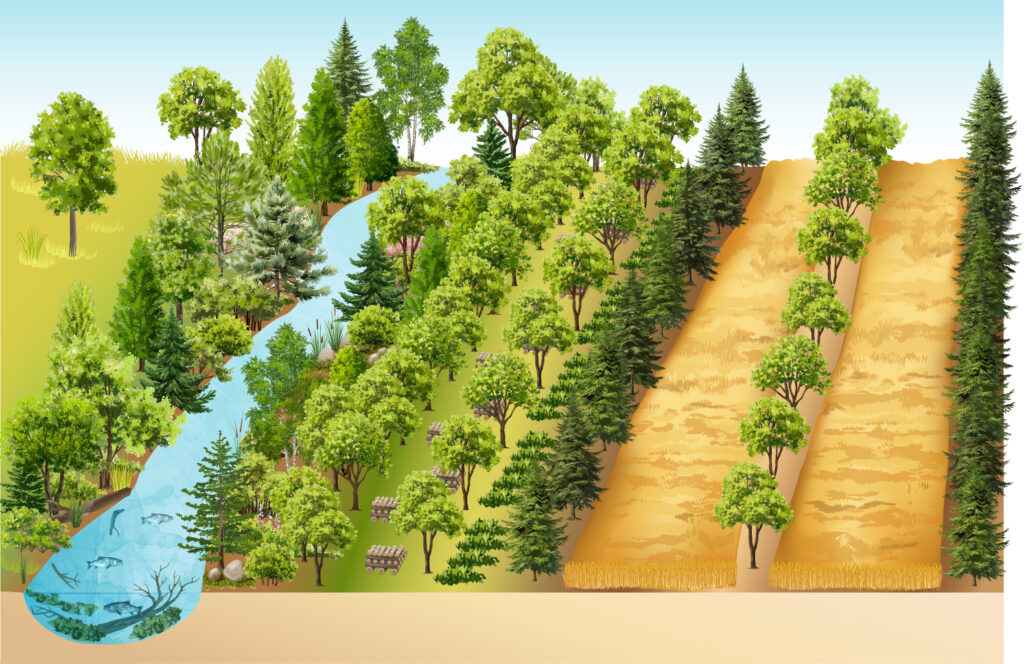
Alley cropping systems that are intended for long-term cultivation of crops between tree rows are designed to avoid canopy closure. They require a wide enough spacing between tree rows that the alleys can receive sufficient sunlight for crop production even as the canopies of the trees or shrubs grow and expand (often greater than 20′). In the context of riparian buffers, the reduced canopy cover means they should be restricted to the outer zone, rather than planting them immediately adjacent to a stream or other riparian feature. The graphic above shows a natural forest immediately adjacent to the waterway buffering an alley cropping system of apples and corn. A filter strip has also been established between the forest and the alley cropping system. A filter strip is an area of herbaceous vegetation (grasses, forbs, etc.) that helps remove contaminants from water as it drains into the waterway. Filter strips can be particularly beneficial when the systems adjacent to them include regular tilling and pesticide or fertilizer applications.
Alley cropping in the outer zone can be a great way to extend the environmental benefits of a forested riparian buffer. The combination of perennial plants and understory vegetation can help mitigate soil erosion and agricultural runoff into waterways. The trees and shrubs can also provide bird and pollinator habitat and, of course, all trees sequester carbon, which provides an opportunity for carbon payments.
Each riparian agroforestry practice has a different role within the context of a working riparian buffer. Buffers are typically broken out into different “zones” in which different practices are applicable in order to sufficiently protect water quality and create high quality habitat. The widths of the different zones, as well as the types of management applied in them, are determined by multiple factors, including regulations, budget, site conditions, water feature type and size, and landowner objectives.
- Zone 1 (Inner Zone) – The innermost zone of a buffer, sometimes called the “core zone”, is where the greatest water quality and habitat benefits are generated. This zone should be left relatively unmanaged as natural forest, ideally with abundant native species growing densely. While intensive management and harvesting practices should be avoided in this area, it can still be designed to provide opportunities for wild foraging and low impact forms of forest farming (e.g., berry picking, tree syrups, log-grown mushrooms). The width of this zone is typically 25-50′ depending on the type and size of water feature being buffered.
- Zone 2 (Middle Zone) – The area immediately adjacent to the inner zone also provides important riparian protection benefits, and should be managed to maintain a mostly closed forest canopy of native trees. However, this zone is suitable for more intensive forest farming practices (e.g., woods cultivated systems). Silvopasture may also be practiced in this area, if compatible with a closed tree canopy (e.g. flash grazing, living shelters). The width of this zone is typically between 25′-100′, depending on the size of the inner zone, water feature type and size, and landowner objectives.
- Zone 3 (Outer Zone) – The outer most zone is the most flexible to practices that require reduced tree cover like alley cropping and more intensively managed silvopasture systems. The presence of trees and/or shrubs in this zone provides additional benefits to riparian habitat, but it is less critical to maintain a closed forest canopy at this distance from a water feature. The width of the outer zone will vary based on landowner objectives, size of the other two zones, and recommended buffer size for the site. For example, the WA Department of Ecology recommends a 215′ total buffer width between all zones, although this is not always feasible.
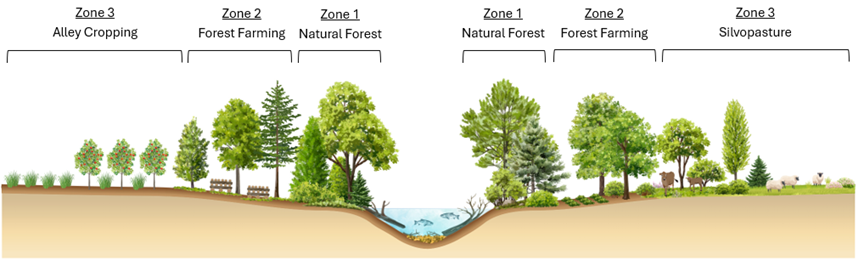
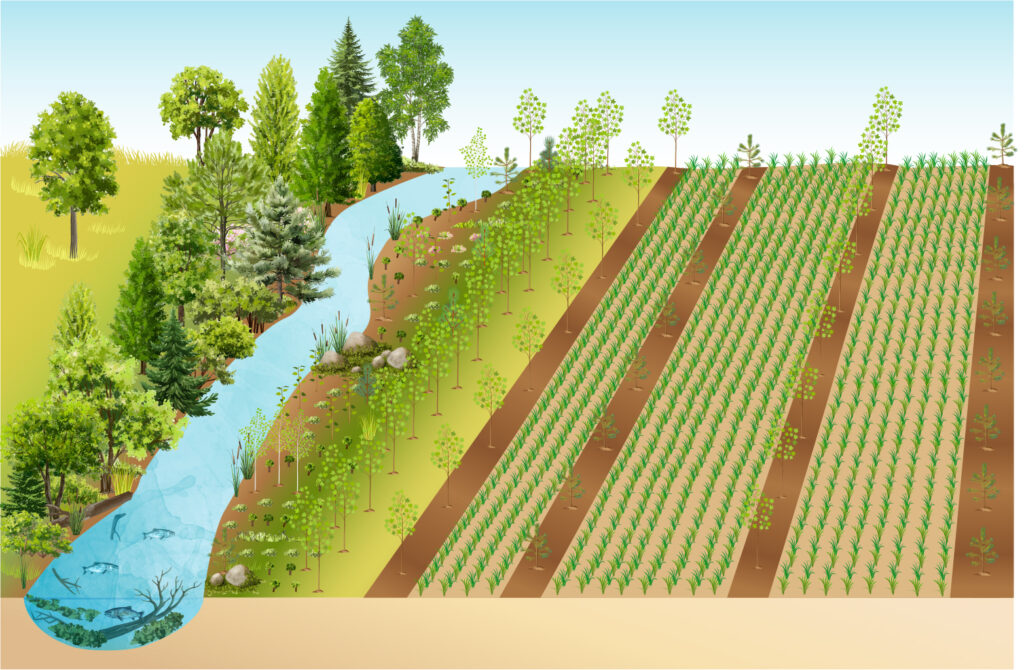
Alley cropping can also be an effective short- or mid-term strategy while establishing forest farming or even silvopasture systems. In these scenarios, tree rows are planted more closely than a traditional alley crop (particularly for forest farming) but still provide opportunity for growing crops between rows while they are young (see graphics below). This can mitigate some financial losses associated with the waiting period for trees to establish and create a closed or partially closed canopy. Unlike silvopasture and forest farming, converting an existing forest into alley cropping is rarely feasible or desireable. The better scenario is to introduce trees and shrubs that produce desirable crops and other benefits into an existing row crop system, making it an excellent strategy for riparian buffer adoption.
- Zone 1 (Inner Zone) – The innermost zone of a buffer is where the greatest water quality habitat benefits are generated. For this reason, this zone should be left relatively unmanaged as natural forest, ideally with abundant native species growing densely. While intensively managing this area for harvesting should be avoided, it can still be designed to provide opportunities for low-impact wild foraging (e.g., berries, mushrooms, basketry materials). The width of this zone is typically 25-50′, but will depend greatly on regulations, site conditions, and water feature type.
- Zone 2 (Middle Zone) – The area immediately adjacent to the inner zone also provides important riparian protection benefits, and should be managed to maintain a mostly closed forest canopy of native trees. However, this zone is flexibile to intensive management practices that can be applied in forest settings, like forest farming. The width of this zone can range significantly but is typically between 25′-100′.
- Zone 3 (Outer Zone) – The outer most zone is the most flexible to different management types, including practices that more closely resemble traditional agriculture like alley cropping and silvopasture, but still incorporate woody species. The presence of trees and/or shrubs in this zones provides additional benefits to riparian habitat, but it is less critical to maintain a closed forest canopy at this distance from a water feature. The width of the outer zone varies significantly and is often mostly subject to landowner objectives.
Buffers Over Time
Goal Setting
For farmers who grow row crops, alley cropping is a great way to diversify production and income, enhance farm resilience, and improve ecosystem services like wildlife habitat and carbon sequestration while maintaining an annual cash crop. Some of these benefits can be prioritized over others and should be incorporated into the planning process. Consider the objectives below and how they will influence your system design:
- Commercial production – Alley cropping systems designed for commercial production will require more inputs and likely focus on fewer crops. Tree or shrub species should be selected to provide high-value short and long-term crops when possible.
- Personal use – Alley cropping systems designed for hobby and homestead farmers will still require significant inputs to be successful but will typically include multiple different tree shrub species to meet an array of interests and needs.
- Soil health – Alley cropping can enhance nutrient cycling and build organic matter to reduce inputs and increase the sustainability of row cropping systems. Systems emphasizing on soil health will focus on selecting tree and shrub species that provide beneficial tree crop interactions and soil benefits.
- Wildlife Habitat – Forested riparian buffers provide habitat to both fish and land-dwelling wildlife. Alley cropping systems that are designed to complement the wildlife habitat benefits of a riparian buffer will focus on selecting native tree species with wildlife and pollinator benefits, maintaining higher density vegetation in the inner buffer, and retaining or creating habitat features on site, such as bird boxes and snags.
- Carbon – Alley cropping systems naturally sequester carbon which may provide landowners with opportunity to receive carbon payments. Systems designed for carbon will focus on ensuring sufficient tree stocking, selecting fast-growing tree species, and maintaining vigorous tree growth.
- Water Quality – Water quality enhancement is a key function of forested riparian buffers. Alley cropping systems have a reduced tree cover compared to a forest and should generally be limited to the outer zone of buffers. However, they can still be designed to enhance water quality by maintaining higher tree densities closer to water, developing layered tree rows with two or more strata, and arranging trees rows so that they are parallel to streams to help intercept pollutants and sediment.
Alley Cropping Case Study – Raising Cane Ranch
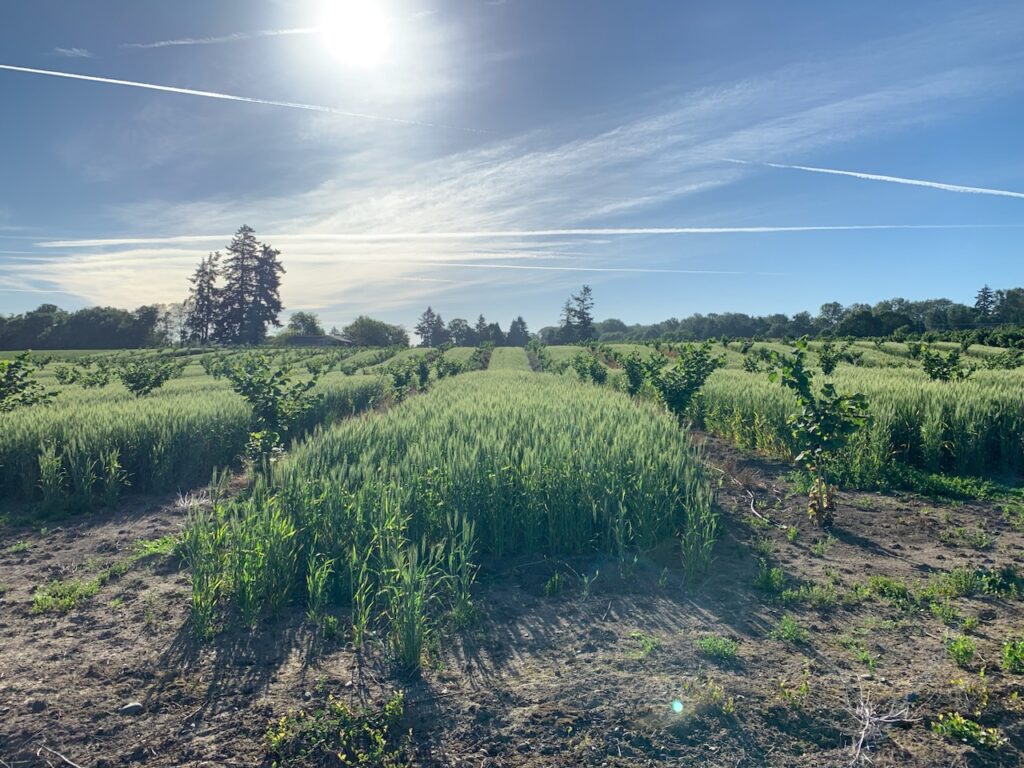
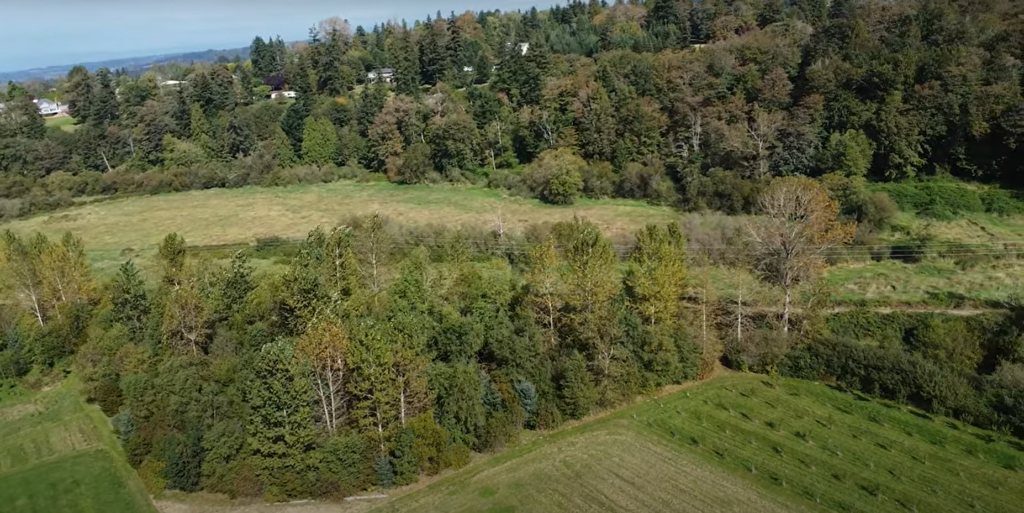
Alley cropping can extend and enhance the environmental benefits of a riparian buffer, while providing opportunities to diversify and increase farm income. Raising Cane Ranch in Snohomish County, Washington established an alley cropping system to utilize growing space more efficiently while growing cider apples and add more perennial vegetation to their existing riparian buffer.
Site Assessment
In the context of designing or incorporating alley cropping into a riparian buffer, there may be limited opportunity for site selection, but site conditions can still vary greatly within this habitat, including existing vegetation, hydrology, slope, and micro-climates. You may also elect to expand this system further upland out of the buffer area if it fits your objectives and site conditions allow. In many cases, landowners will be adopting alley cropping into an existing row crop system, in which case site assessment will focus on the ability of those sites to sustain trees or shrubs. This section will focus on assessing site conditions as they would affect tree and shrub establishment.
The topography of a site is generally described by its elevation, slope, and aspect. These factors can have significant influence on what kind of vegetation occurs naturally or can be grown in that area.
Elevation is not likely to vary enough within a given site to have significant impacts on what can be grown there but knowing the elevation range of your site is still important when matching tree species to site. Small changes in elevation can also have impacts on how cold air moves through an area. For instance, low areas where cool air collects and cannot easily escape creates frost pockets. These areas experience freezing conditions earlier in the fall and later in the spring, which can damage new growth on plants. Identifying frost pockets during planning and designing them with frost resistant species can help avoid damage or mortality. Similarly, upslope areas and ridgetops are generally subject to greater wind pressure, which can damage trees and reduce air and soil moisture.
Slope measures the steepness, or gradient, of a given site and is often expressed as a percentage (e.g. 20% slope) or a degree (e.g. 10° slope). Slope will affect how water drains, organic matter accumulates, and the level of difficulty involved in maintaining an alley cropping system. Since row cropping often involves large equipment, flat or mostly flat ground is generally recommended for alley cropping. However, moderate slopes can be utilized if large equipment isn’t necessary.
Aspect describes the cardinal direction that a slope faces, which directly relates to sun exposure. North and east facing slopes will experience less intense sun exposure and thus have greater moisture availability. South and west facing slopes are exposed to direct mid-day and afternoon sun and, as a result, face greater heat stress and soil evapotranspiration. West-facing slopes are also likely to experience greater wind pressure, especially closer to the coast. Wind has a desiccating effect that can further reduce moisture. West-facing slopes are also likely to experience greater wind pressure, especially closer to the coast, which may damage trees. Understanding the impacts of aspect on your site will help you better select forage and tree species that will have the best chance at survival and vigorous growth in those conditions.
Soil characteristics such as texture, acidity, drainage, and organic matter levels will have significant influence on the species selected for an alley cropping system. Soil features can vary significantly even in small areas. This is especially true in forest settings. However, fields that have been managed for row cropping tend to be more consistent, at least in the topsoil. Over time, land managers come to know these changes soils across their property well, particularly in terms of drainage. Applying this knowledge will be critical when selecting species and other design components for alley cropping.
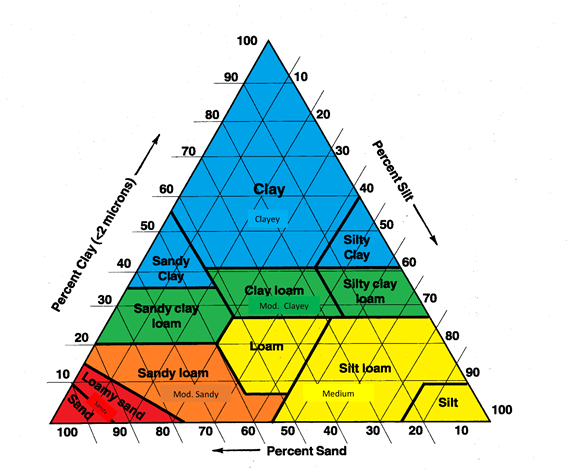
Soil texture refers to the relative amount of sand, silt, and clay in a soil. The texture effects how water moves through the soil (i.e. drainage). By nature, riparian soils will have greater moisture content compared to upland habitats but can still include a range in textures, from well drained, sandy soils to hydric, clay soils. This is especially true along the gradient of a slope. Upper slopes will be better drained than toe slopes or flat areas adjacent to a waterway. Many tree species have high moisture needs but don’t do well in standing water and instead prefer sites where water is available as it drains through the soil (e.g. chestnut). It’s also important to consider seasonal changes in water levels throughout the year and how that could impact tree growth. Trees growing in overly wet conditions that are not adapted to it may struggle to establish, grow poorly, or be subject to disease.
You can determine the texture and drainage of soils on your property using the Natural Resource Conservation Service’s Web Soil Survey. See the tools section at the end of this chapter for guidance on how to use this webtool for your property. The Web Soil Survey can project a map of the soils on your property based on your region, elevation, slope, and other site factors. It is often quite accurate, but it is still valuable to ground truth it by monitoring the hydrology of the area throughout the year and digging up soil samples to examine the texture. Use this NRCS guide to learn more about testing soil texture by hand.
Wet Feet Farming
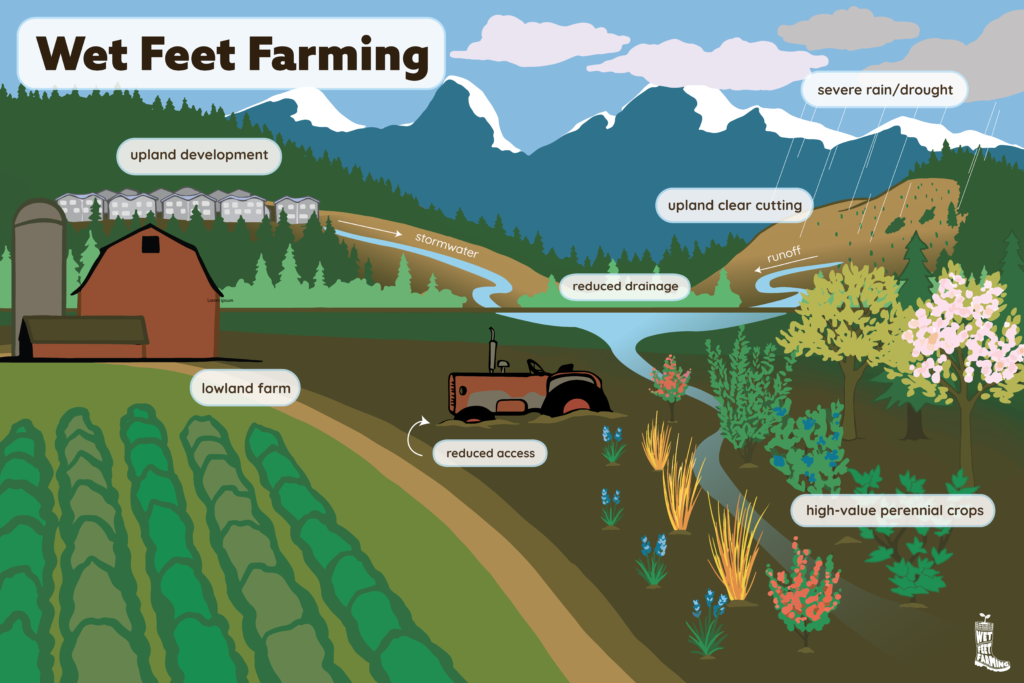
Frequently ponding areas in agricultural fields are a growing problem with the increase of impervious surfaces and heavy rainfall events. These areas are often removed from production, which can negatively impact farm finances. Agroforestry practices can help farmers utilize this space by growing wet-tolerant woody crops. For resources on planting woody perennials in frequently ponding areas, check out Wet Feet Farming. This practice can also be incorporated into larger working riparian buffer projects
Acidity, nutrient levels, and organic matter content will also impact how trees will grow in your alley cropping system. Although not always necessary, these can be determined with soil tests by taking samples and submitting them to a soils laboratory. In areas that have been managed for grazing or row cropping for several years, soil characteristics tend to be more consistent, and testing can be a more reliable indicator over large areas. Because these areas have been more intensively managed for production, soil amendments may be recommended based on the results of those tests to establish trees and shrubs for alley cropping. However, these should be limited in riparian habitats where possible. Visit this WSU Extension webpage for more resources on soil testing.
Channel migration zones (CMZ) are areas where a stream or river channel has the potential to move over time. These occur in floodplains and are the result of gravity, topography, and periods of heavy rainfall. Although they can cause problems for land managers and pose safety threats to communities located near rivers, they are ecologically valuable due to a high diversity of aquatic habitats.
Planning a working riparian buffer in a CMZ poses obvious challenges and risks, and increased heavy rainfall events as a result of climate change is increasing the risk in these spaces. Migrating channels along large waterways have the power to topple mature trees and severely alter forests. Smaller streams and waterways can also experience channel migration, but damage is typically less significant. Although there are methods available for mitigating the impacts of channel migration, these typically require modification of the streambank and significant investment, making them unfeasible for most producers and subject to regulatory barriers.
However, if your property is in a CMZ it doesn’t mean you should avoid investing in riparian agroforestry or restoration. Like wildfire or other natural disasters, these are long-term risks, and areas may go decades without any or minimal issues. Furthermore, damage from channel migration can range significantly won’t necessarily devastate a riparian agroforestry system, especially along smaller streams. The best strategy is to determine your level and scale of risk, if any, adjust your management accordingly.
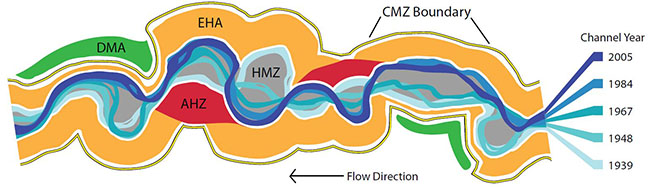
CMZ’s are most likely to occur in the inner and middle zones of a buffer, especially on smaller waterways, so alley cropping systems in the outer zone may be unaffected. However, CMZs can be large and, in some cases, encompass the entire area you have planned for a buffer. When present, understanding where the CMZ ends on your property will impact the width of your buffer and individual zones, as well as what practices you apply there. For instance, you may elect to widen the inner zones of your buffer to push your alley cropping system outside of the CMZ. The inner zones can still be utilized for forest farming crops that are resilient to channel migration. For instance, forest cultivated shiitake systems can be moved if necessary. Tree syrup operations can also function in a CMZ, although sap collection systems and crop trees may be damaged by flooding and long-term changes to soil hydrology.
Not all landowners are effected by channel migration. Identifying a CMZ and determining if a property is at risk requires a thorough study and is a task for an experienced professional. The Washington Department of Ecology has compiled a catalogue of planned and completed publicly available CMZ studies into the Channel Migration Zone Spatial Data Catalogue. Most counties also provide resources and CMZ studies on their websites. However, many streams and rivers remain unstudied. Technical assitance providers, such as conservation districts or NRCS agents, can provide some assistance in identifying basic risk of channel migration, but may not always be equipped to provide detailed assessments.
Read more:
As previously mentioned, alley cropping is best adapted to existing row crop systems by planting trees (i.e. “by addition”) rather than removing trees to create alleys for crop production. The latter is less likely to provide you with consistent shade conditions, potentially costly, and may degrade existing riparian buffer function, depending on the location. However, you may be considering converting a non-forested space that isn’t currently being row cropped, such as a pasture or marginal lands, in which case assessing existing vegetation is an important step. This is especially true if there are noxious weeds present that will likely cause persistent issues on the site via the seedbed. The presence of woody shrubs and brush will also add challenges to establishing an alley cropping system. Assessing the type and density of existing vegetation will inform your design and, most importantly, help you determine what kind of site preparation is necessary. This can significantly affect your costs and labor. Record what species you see and the extent of their presence relative to others then study those species to determine the most effective method of removal (discussed more in the Site Preparation section).
There are several tools available to landowners to conduct an “armchair assessment” of your property. These provide helpful background information to compliment your observations on the ground.
- Google Earth
- Google Earth is a free mapping program that utilizes satellite images to create maps. It can be used in your web browser, or the “pro” version is available for free download to use on your desktop. Using this program, you can create layers delineate roads, planting areas, and forest farming plots to plan and track your operations. You can also access historic aerial photos to determine past land use on your site.
- NRCS Web Soil Survey
- The Web Soil Survey is a free online tool that generates a soil map which delineates and describes the different soils on your property. The actual soil type boundaries can vary, so it is recommended to ground truth them to the best of your ability. It also generates ratings for soil types against land use practices, such as susceptibility to compaction. For more information on how to generate a Web Soil Survey report for your property, read the WSU Extension Manual EM064 “Forest Soil Data for Your Forest Stewardship Plan”.
- LandMapper
- LandMapper is a powerful mapping tool created by EcoTrust and is specifically available to landowners in Oregon and Washington (as of 2024). Using your address, this program auto-generates several maps, including hydrology, stream type, soil type, forest communities, tree diameter class, canopy cover, and forest density.
- County-based parcel maps
- Most counties offer an online GIS portal where you can gain access to information about your parcel, including aerial photos. These portal maps often include layers with information related to local regulations, such as protected wetlands. For information on your parcel, find your local county assessor’s office website.
Design and Establishment
The following sections will discuss some of the important considerations and technical components of designing an alley cropping system as a part of a working riparian buffer.
Although establishing an alley cropping system can be challenging, it presents a great opportunity to design a system that suits your needs by selecting trees and shrubs that fit your economic and environmental objectives.
Selecting species that produce valuable crops will maximize income or personal use opportunities from your working riparian buffer. While the inner and middle zones of a buffer should be restricted to native tree species, incorporating non-native trees and shrubs that produce viable crops into an alley cropping system in the outer zone can maximize outputs. Examples include elderberry, chokecherry, chestnuts, hazelnuts, and fruit trees. Biomass crops like hybrid poplar can also be valuable in alley cropping systems. Many native tree species are also conducive to this practice and can provide valuable timber or other products. Red alder, for example, can be grown to produce veneer quality timber and/or produce substrate for forest cultivated shiitake. Choosing multiple species that produce crops or timber can diversify the production for commercial sale or personal use.
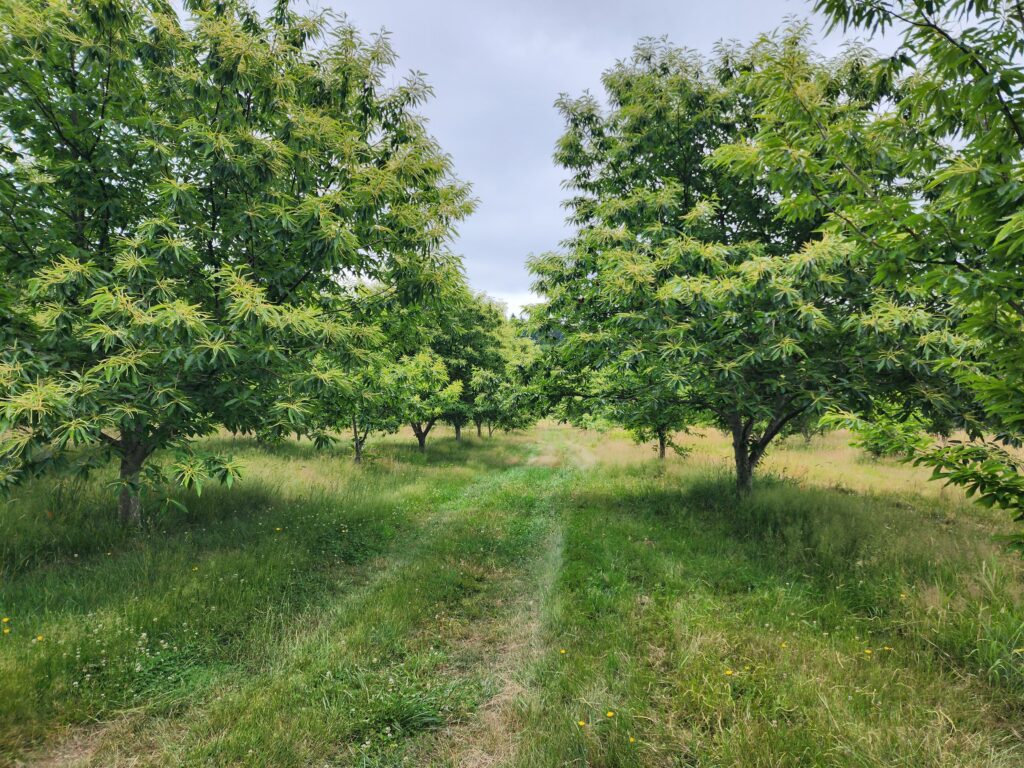
The species you select will have significant impacts on the density and timing of shade, which will impact row crop production. Although thinning and pruning are powerful tools that allow you to manipulate shade density throughout the lifespan of tree rows, some shade characteristics can only be achieved by the presence of certain species. For instance, the timing of shade provided by deciduous trees facilitates better spring growth in the understory than conifers, which provide shade year-round. Shrubs will not grow as tall as trees and are less likely to shade out crops. Shade density can vary significantly between species too. For instance, chestnuts produce a denser shade than red alder or Oregon oak. Of course, shade will also be heavily impacted by the alley width (discussed in the next section).
The growth rate and form of trees will have significant impacts on an alley cropping system. It’s common for landowners planting agroforestry systems to select fast-growing species to produce shade more quickly and limit the time required for establishment. For instance, red alder can reach heights of over 25’ in just five years of growth given good site conditions (Oregon State University, 2024). Hybrid poplar species can grow even faster. However, desire to establish trees quickly must be balanced against other objectives like growing crop trees and producing or maintaining ideal light conditions for row crops long-term.
It’s also important to consider the need for pruning when selecting species. Open-grown trees and shade tolerant trees are less likely to self-prune and will likely require hand-pruning. Pruning lower branches improves timber quality, reduces shade for crop production, and stimulates tree height growth but requires labor and equipment.
The rooting patterns of trees and shrubs are particularly important to consider in an alley crop, especially if you intend to till between rows (University of Missouri, 2018). Shallow rooted trees and shrubs should be avoided or, if they are used, spaced more widely between rows. Deep rooted trees are less likely to be damaged during operations in the alleys and incur less competition for water and nutrients with row crops.
Matching the right species to the site is critical and will provide those trees with the conditions for vigorous growth and resilience to pests, disease, and environmental stressors. This requires an intimate knowledge of the site you’re planting as well as a familiarity with the silvicultural characteristics of the trees you are planting.
Niche Partioning
Niche partitioning is a concept that describes the ability of species to grow and adapt to the resource needs of others around it to mitigate negative effects of competition. In alley cropping systems, belowground competition for soil water and nutrients is generally highest early in the lifespan of the system but subsides over time, particularly as tree and shrub roots utilize deeper layers of the soil (Shults, 2017).
Climate change is expected to have significant impacts in the Pacific Northwest, including changes in precipitation, increased temperatures, and increases in severe weather (Frankson et al., 2022). Increased summer heat and extended drought (particularly spring drought) has already been tied to the decline of some species in Western Washington, including western redcedar and bigleaf maple (Andrus et al., 2024; Betzen et al., 2021). Matching species to site and selecting species with drought tolerance on difficult sites is becoming increasingly important. This is especially true in alley cropping settings where soil moisture loss can be exacerbated by the lack of a closed canopy. If using native tree species, assisted migration may be worth exploring. Assisted migration involves sourcing seed for native plants from places with hotter, drier conditions or migrating species out of their habitat to match expected future conditions (Handler et al., 2018). Examples of this would be sourcing Douglas-fir seedlings with genetics from northwest Oregon to plant further north in Western Washington (i.e. seed zone migration) or planting Oregon white oak outside of its normal habitat because of its drought tolerance (i.e. range expansion). These are low-risk forms of assisted migration, while higher risk practices would include migrating species from far outside of their native habitat, including non-native species like incense cedar or coast redwood.
Understanding local and regional pest pressures may also influence your species selection. For instance, emerald ash borer (Agrilus planipennis) is present in the Pacific Northwest and causes significant mortality in ash trees (Fraxinus spp.) so it is best to avoid or minimize planting ash while it spreads. If you have significant pressure from animals in your area (e.g. deer/elk, black bear), you may consider planting trees that are less palatable to them, especially if you do not have the resources to adequately protect trees. Some native pests are experiencing population growth or spreading to new areas because of hotter drier summers making trees more susceptible. For instance, fir engraver beetle (Scolytus ventralis) increases after bad drought years and can cause damage on true firs like noble fir (Abies procera) and grand fir (Abies grandis), which are common Christmas tree species. California five-spined ips (Ips paraconfusus Lanier) are expanding their range to the Puget Sound region and prey on two-needle pine species (Pinus spp.). Being aware of these trends in both native forest pests and pests of crop trees (e.g. orchard species) will help you determine the best species for your site.
Even if it is not your primary objective, there is substantial opportunity to provide habitat for wildlife when establishing your alley cropping system. Native species are better than non-native trees and shrubs in this regard, as they will be more likely to provide the necessary food and cover for native wildlife and are more likely to be a resource for pollinators. Diverse plantings will provide better habitat compared to single-species plantations. This will also enhance a system’s resilience to stressors like pests and disease or climate change.
For more information on species selection, including species tables, planting templates, and nurseries that provide plants, visit the Additional Resources Page. Technical assistance may also be available to you through state and local programs.
Keep Reading:
- Assisted Migration – USDA Northern Climate Hub
- Climate Impacts in the Northwest – USDA Northwest Climate Hub
- Climate Resilience Guides For Small Forest Landowners (Western Washington/Eastern Washington) – USDA Northwest Climate Hub
- Species and Habitats – Washington Department of Wildlife
- Washington Native Plant Society
The potential crops that can be grown in the alleys of alley cropping systems are numerous and include traditional (corn, tomatoes, strawberries, etc.) and non-traditional (forest medicinals, native wildflower seed, etc.) species. Because there are so many potential combinations of trees and crops, there is often little or no research available on the likely interactions between the species selected for these systems. The best planning you can do is often by developing an intimate knowledge of the behaviors and needs of the species you select for both your tree rows and your alley crop, to achieve a combination that will mitigate negative interactions and maximize beneficial interactions. Here are some questions to consider when thinking about potential species combinations:
- How shade tolerant is this the alley crop species and how does it respond to shade? Will shade effect the quality or quantity of yield (for better or worse)?
- What is the typical rooting pattern of these species? And are they likely to interact in a way that will incur greater competition for water and nutrients?
- What nutrients are most important to the growth of these species? Do they’re needs complement each other or imply that they will be competing for specific resources? Alternatively, could there be beneficial nutrient interactions between these species (e.g. by including nitrogen-fixing species)?
- Similarly, what are the moisture needs of the crop you’ve selected compared to that of the trees or shrubs you intend to plant in rows?
- If any of the trees or shrubs you intend to plant are allelopathic, does the crop species you intend to grow tolerate allelopathy?
- Does this crop require tilling? And is that likely to impact the roots of the trees or shrubs?
- Do the trees or shrubs I’ve selected provide habitat for potential pests? Alternatively, do they provide beneficial habitat for pollinators or animals that will predate on pests?
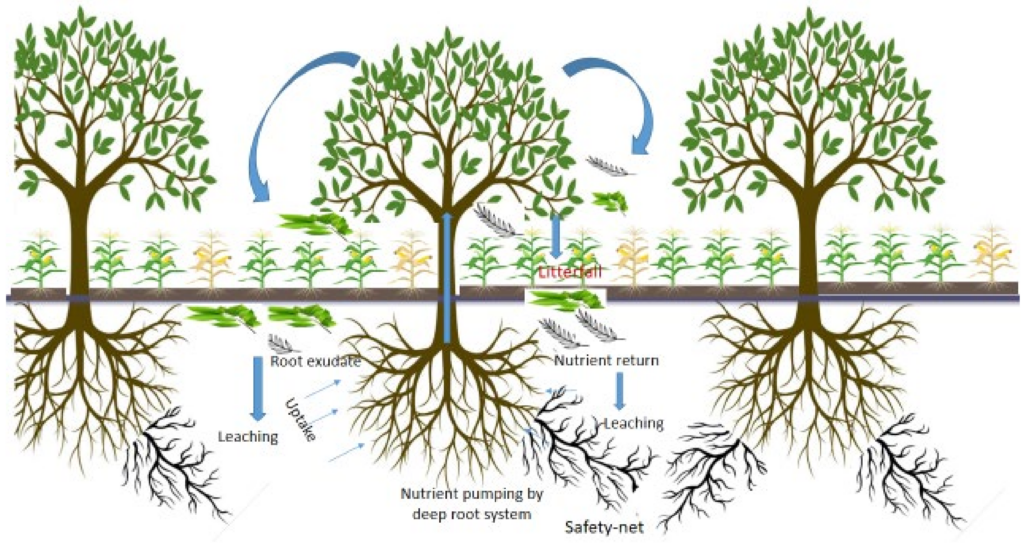
Some of this information may be more well-studied and readily available for some species than others. Keep in mind, too, that it is common to change what is grown between rows in alley cropping systems over time as the trees or shrubs grow.
Alley cropping has less flexibility in design compared to silvopasture or forest farming. However, it’s still important to put careful thought into what you want your system to look like both in the short and long-term to maximize its benefits. The design components of an alley crop primarily consist of row spacing (i.e. alley width), row composition, and row orientation. The width of your alleys will be influenced by multiple factors.
Light Needs
The crops you intend to grow in the alleys will likely have specific light demands that will heavily influence the spacing of your tree and shrub rows. Although some crops can be grown in shade, most agricultural crops require full or nearly full light to produce viable yields. If you intend to maintain growing conditions for these kinds of crops long-term, a wider alley is necessary. The alley width will also be informed by the anticipated canopy spread of the trees or shrubs you select. Shrubs like elderberry or aronia will have limited spread and may be planted with alleys as narrow as 15-20’, depending on the intended alley crop. Trees with broader canopies like chestnut may need alleys 40’ or more to sustain light demands for crop growth. Some farmers may elect to change crops as the shade from tree rows increases, moving from more traditional agricultural crops to crops that can handle partial shade (e.g. strawberry, kale) or full shade (forest medicinals, native wildflower seed). As discussed previously, farmers may also elect to transition to silvopasture by establishing forage and introducing livestock once the canopy begins to close.
Allelopathy
Some trees and shrubs are allelopathic, which means that they produce and exude compounds from their roots that inhibit the growth of nearby plants. This is a defense mechanism developed by some species to secure proper water and nutrients for their own growth. An example of this is black walnut, which creates and releases the compound juglone into the soil. As the tree grows and root system expands the amount of juglone in the soil increases, making it difficult to grow agricultural crops nearby. Although this is not an ideal trait for alley cropping, this can be mitigated with wider alleys that reflect the anticipated root spread of the allelopathic trees or shrubs. It takes several years for tree roots to spread and allelopathic compounds to build up in the soil, allowing for relatively uninhibited crop production in the short term. As they develop and the allelopathic effects increase, farmers may transition to crops that are tolerant of those compounds or forage for livestock.
Rooting Depth
Root to root interactions between crops grown in alleys and trees or shrubs can lead to competition and reduced crop yields. Therefore, understanding the rooting depth and form of the trees and shrubs you select can impact the ideal width of the alleys in your system. When working with shallow rooting species wider alleys are recommended while deeper rooting perennials can support more narrow alleys. Even deep rooting species will occupy the upper layers of the soil during establishment and temporary competition-related reductions in yield are possible during this time, but competitive effects in alley cropping systems generally subside over time with careful species selection (Shults, 2017). Some research suggests that routine tilling in the alleys can force tree roots into deeper layers of the soil and reduce competition (O’Connor et al., 2023).
Tree or Shrub Crops
Even if you don’t intend to maintain the alleys in your system for long-term crop production, it is still important to space rows wide enough to facilitate any tree or shrub crops you intend to produce. For instance, hazelnut orchards typically require a 20’ spacing between rows and chestnut rows are often planted 30’ apart. Reducing the width beyond that may affect production and operability.
Equipment Needs
The type of equipment you intend to utilize in the alleys is a key consideration when determining width between rows. If you intend to use large equipment at any point in the lifespan of your alley cropping system, it’s important to factor that in at establishment.
Production Needs
Of course, if you’re an agricultural producer that relies on crops for your livelihood, it’s important to consider how the width of your alleys will affect productivity. Establishing an alley cropping system requires sacrificing growing space for row crops in favor of perennial tree and shrub crops or the benefits they provide. In many cases tree and shrub crops will take several years to begin producing. If you feel the financial impacts of losing that growing space in the short-term are too significant, alley cropping may not be the right choice for you. However, you can also increase the width of your alleys to mitigate that risk and improve crop production compared to more narrow alleys (in other words, reducing the number of tree rows).
A traditional alley cropping system might consist of a single tree or shrub species combined with a single alley crop. This kind of composition is particularly ideal for large agricultural operations where it’s important to be able to streamline operations. However, for small and medium sized farms focused on diversified production, it can be beneficial to plant multiple species. This could mean alternating species between rows or planting multiple species within each row. For the latter, a common practice is to combine trees and shrubs to take advantage of vertical growing space. An example of this would be planting one to three elderberry shrubs between chestnut trees within a row. Another way to diversify an alley cropping system is incorporating double or triple row designs. This requires sacrificing more growing space for annual crops but can make more efficient use of your tree rows by taking advantage of vertical space. For instance, planting fruit or nut producing shrubs on either side of a tree row.
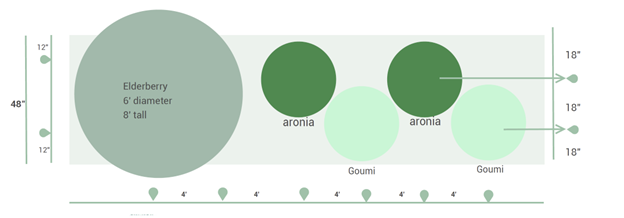
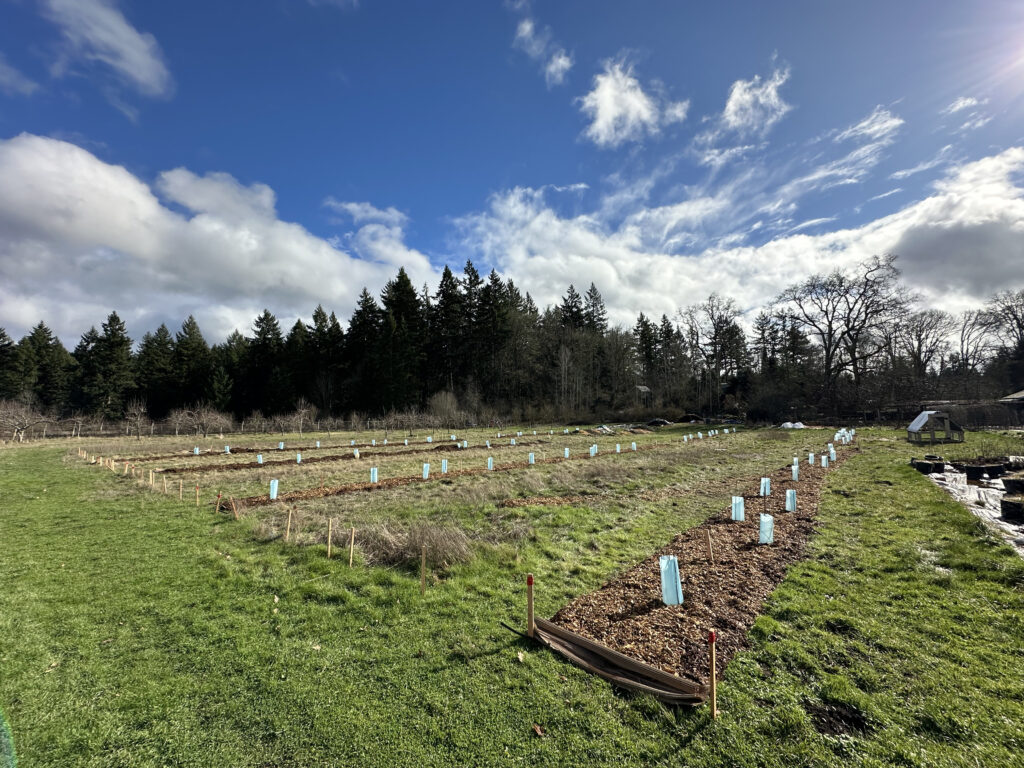
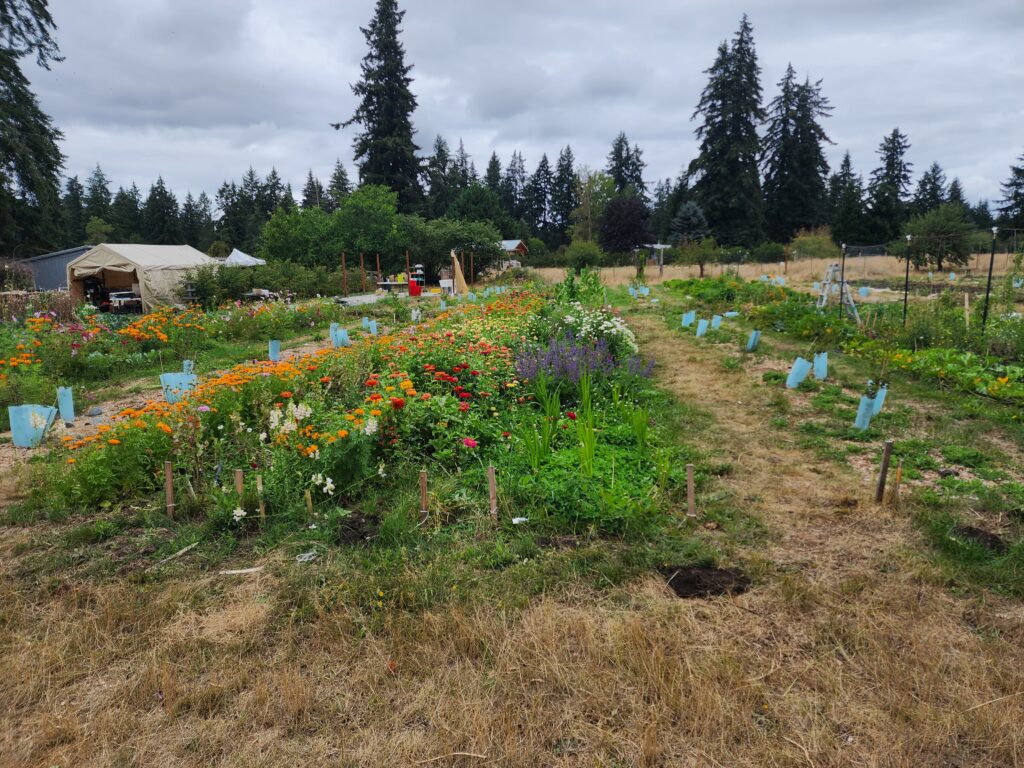
The spacing of trees and shrubs within rows will vary greatly based on the light demands and growth pattern of the species you select. Keep in mind that planting more densely can benefit vertical growth but will likely mean you’ll need to thin out rows as they develop. Research your selected species carefully for spacing recommendations and adapt them to an alley cropping structure. The Additional Resources Page includes some alley cropping resources with spacing recommendations for some species as well as planting templates.
Orientation is another important consideration for alley cropping design. Generally, an east-west orientation is ideal for maximizing sunlight, but a north-south orientation might be more ideal if you intend to grow crops where shade and moisture retention are more important. The terrain on which you’re planting can influence your orientation as well. For instance, if you are establishing a system on a slope, you might consider contouring tree rows to the gradient of the slope. This will also help intercept sediment and pollutants before reaching a waterway.
When ordering plants for your project, you may have the option to select from different stock types. Stock type refers to how that plant was grown and maintained prior to planting. Each stock type has advantages and disadvantages:
- Container plants are grown in containers that can vary significantly in size. Many niche plants, particularly shrubs and small trees, suitable for agroforestry are only available in containers from nurseries (e.g. chestnuts, tea plant). Container plants are resistant to damage during transportation and typically have more established root systems, which increases survival. This makes them good for challenging sites. However, they are more expensive than other stock types.
- Bare root plants are grown in large quantities directly in the soil at large-scale nurseries for forestry and conservation. The plants are “lifted” in the winter while dormant and sold in bulk with their roots exposed. In the period between lifting and planting special care is required to ensure they remain dormant, and roots don’t dry out. Bare root plants have a lower survival rate than container plants, but they are also significantly cheaper. They are ideal for sites that are less challenging and high survival is expected.
- Plugs are a type of container plant sold by forestry nurseries. They are much smaller than typical container plants but are good for low-fertility sites and are less expensive than larger container plants.
- Live stakes are segments cut from deciduous trees and shrubs that can be planted directly into the ground. This is a form of asexual (vegetative) reproduction, which means the plant will be genetically identical to the plant it was harvested from. Live stakes are very inexpensive and can be easily harvested from your own property, if available. Willow (Salix spp.) and Poplar (Populus spp.) are examples of species that can be easily propagated via cuttings.
Many factors can influence the type of stock that is best for your project, but the primary influencers will be soil conditions and your budget. Of course, the availability of seedlings in your preferred stock type can vary significantly from year to year.
Keep Reading:
Site Preparation
Exactly as it sounds, the site preparation stage is intended to ready an area for tree planting and can include several practices necessary to improve conditions for the species you intend to plant, like soil amendments, vegetation management, and scarification. In situations where trees are being established in an existing row cropping system, it’s likely that only limited site prep will be necessary, if at all. However, if you’re establishing an alley cropping system in an unmanaged area it will be important to eliminate any existing vegetation that can compete with the species you are planting while they’re juvenile and getting established, which is what this section will focus on. It’s common to see failed plantings where competing vegetation was not managed. The presence of other vegetation, especially grass or noxious weeds, will reduce the water and nutrients available to your seedlings. Some weeds, such as blackberry or Scotch broom, can easily grow over top of your seedlings and shade them out as well. The effort required to prepare a site for planting a site will vary significantly based on the type and density of vegetation growing there. At minimum, it is recommended to eliminate competing vegetation in a circle within 1-2 feet of the seedling.
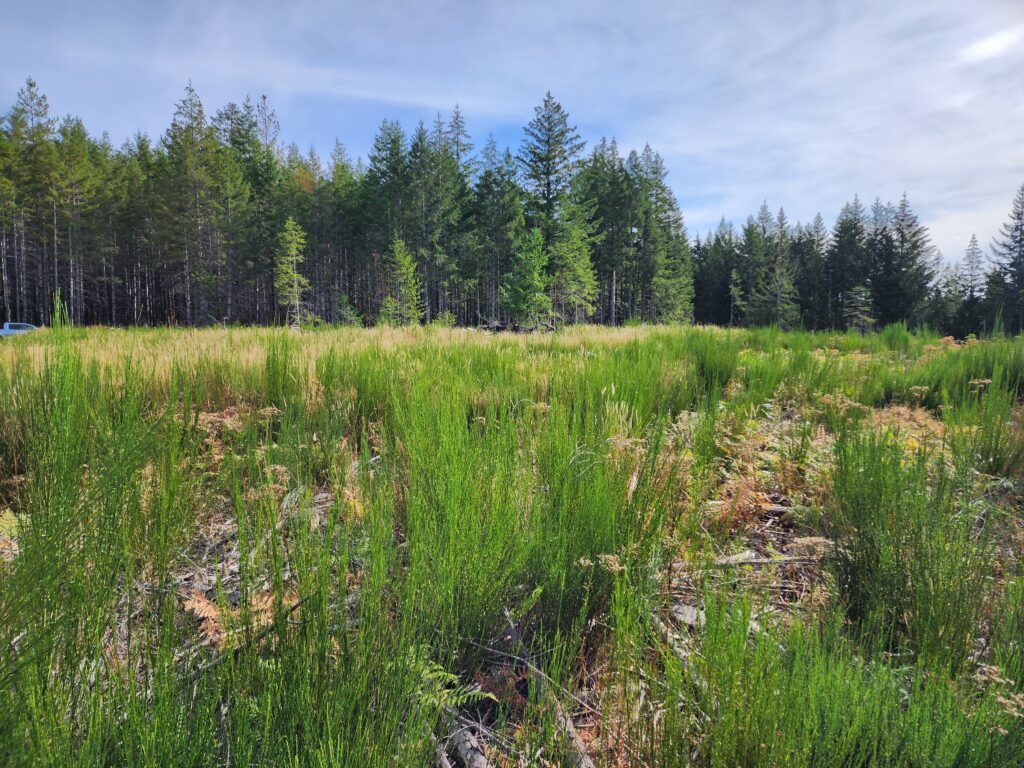
Site preparation typically occurs in the growing season ahead of when you intend to plant. For instance, if you intend to plant in November, you might conduct your site preparation of the area sometime between May and September. Generally, it is best to avoid too large of a gap between when you prepare a site and plant so there is limited time for vegetation to grow back. So, it can be advisable to wait until later in the growing season. That said, the best timing for your site prep may vary significantly based on the type of vegetation there and method you choose. For instance, an excellent method for removing invasive blackberry (e.g. Himalayan blackberry) ahead of planting is to cut it back to the ground in the early summer using hand tools or a brush hog, then allowing it to grow back over the remainder of the growing season. Then, in the early fall, use a recommended herbicide to kill the new vegetation. This late season herbicide application ensures the chemical is taken into the roots as the plants go into dormancy, and having mulched the bulk of the vegetation in the early summer ensures the area is accessible and easy to work in.
For more recommendations on how to deal with specific weed species, visit the PNW Weed Management Handbook. In some cases, site preparation may take more than one growing season to adequately remove existing vegetation. In other cases, it may be as simple as removing sod by hand immediately before planting.
There are several methods of vegetation control available, many of which are described below. Again, the most appropriate method will depend on the type and density of vegetation, other site conditions, and your available resources. Integrated pest management (IPM) is strongly recommended, which is a strategy that utilizes multiple approaches to managing unwanted vegetation efficiently and with limited ecological impacts.
Chemical applications can be used to eliminate competing vegetation efficiently and effectively. Most herbicides are used to kill existing vegetation, but pre-emergent herbicides are also available, which prevent seed in the soil from sprouting. The use of herbicides in or near riparian areas should be limited wherever possible but they are effective at controlling vegetation both before and after trees are planted. They may be particularly suitable for large projects where other methods are not financially viable. When using herbicides, always read the label and be aware that some have limited legal applications within certain distance of water and/or require special licensing. For recommendations on chemical applications for specific weed species, refer to the PNW Weed Management Handbook.
Hand-weeding using basic tools can often be the most cost-efficient way to prepare a site for planting. It can be effective for small-scale projects or bigger projects where minimal site preparation is necessary. For instance, when planting in grassy areas, an effective strategy is to simply remove the sod layer within 1-2’ of the planting spot and set it aside immediately before planting.
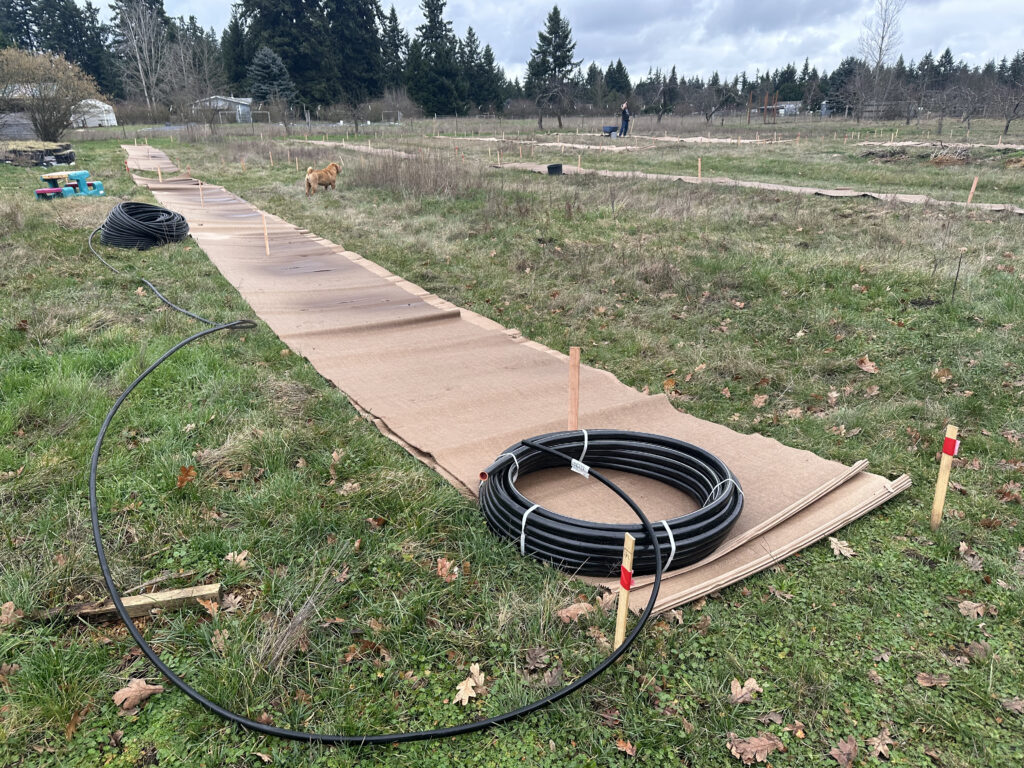
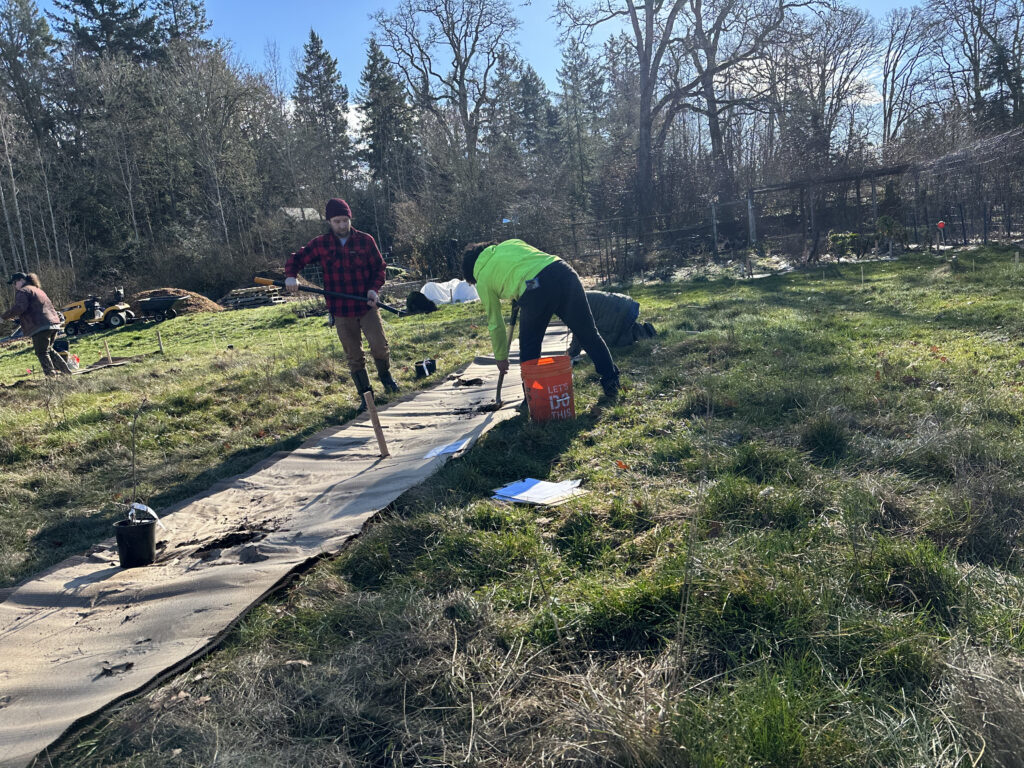
Sheet mulching, also referred to as “lasagna composting”, involves layering organic materials (typically 3-6” thick) over a project area. This eliminates existing vegetation prior to planting and will continue suppress vegetation while trees are getting established. Mulching is effective and utilizes materials like cardboard and woodchips, which can often be sourced for free or with limited cost. It also adds organic matter to the soil over time. However, it may add labor to the planting process, especially if you have to cut through layers of carboard to get to the soil. Because of the materials required, it is generally more suitable for smaller projects. While mulch can effectively mitigate soil moisture loss through evaporation, it can also reduce soil recharge from rainwater, and may need to be paired with irrigation depending on the materials used. Sheet mulch is also susceptible to being washed away in areas that flood, so it’s important that you know where flooding may occur on your site to determine where other strategies are more appropriate.
Keep Reading:
Solarization is the process of laying clear plastic over a project site to destroy existing vegetation. The plastic covering creates a greenhouse effect, trapping heat and moisture, that kills the plants underneath. This is best done during the growing season to take advantage of warm, sunny days. Depending on the weather, solarization may take 2-3 weeks to effectively kill the vegetation beneath. Occultation is a similar practice, but instead uses opaque materials (e.g. black plastic tarp). Because the material is opaque the greenhouse effect is limited, and the process takes longer (often 3-6 weeks) but landowners are more likely to have these materials already so it can be the more cost-effective option. Solarization and occultation will control vegetation prior to planting but are not recommended for controlling vegetation around planted trees because of their heating effect on the soil and potential to damage roots. The heating effect of these strategies may also negatively affect beneficial soil bacteria and fungi but can also be a method for killing harmful organisms in the soil. Research is limited on this subject. Using an arbuscular mycorrhizal inoculant on the roots of plants during planting may help offset any negative effects on soil biota.
Keep Reading:
- Using the Sun to Kill Weeds – University of Minnesota Extension
- Soil Solarization: An alternative to soil fumigants – Colorado State University Extension
Tilling is a mechanical site preparation strategy that involves ripping or turning over soil in the areas you intend to plant. This kills or sets back existing vegetation and makes soil more workable for planting. This can be particularly helpful in areas with compacted soil and/or heavy clay components. However, because tilling exposes soil it can create conditions for new weeds to flourish. “Strip tilling” in narrow rows just big enough to plant in, rather than tilling the entire project area, is recommended. This will limit the weed response and reduce potential for soil erosion. Tilling is sometimes followed with solarization, occultation, or chemical applications to kill the weeds that get established after tilling, thereby depleting the presence of weeds in the seed bed. Tilling should be done carefully in riparian contexts and is not recommended on sensitive soils adjacent to riparian features or on slopes that would accelerate sedimentation into waterways.
Machinery may sometimes be necessary to efficiently remove existing vegetation. This is especially true for larger projects and areas where there is significant woody vegetation or other difficult to remove species. Tractors with mulcher attachments (i.e.) masticators and similar machines can make quick work of difficult vegetation and leave behind a thick layer of mulch. However, large machinery should be avoided in sensitive riparian sites and wetland soils, especially in winter or spring when the ground is soft. Smaller machines, such as brush hogs, may be necessary on sensitive sites and more effective for smaller projects and can often be rented from farm supply or hardware stores.
Planting
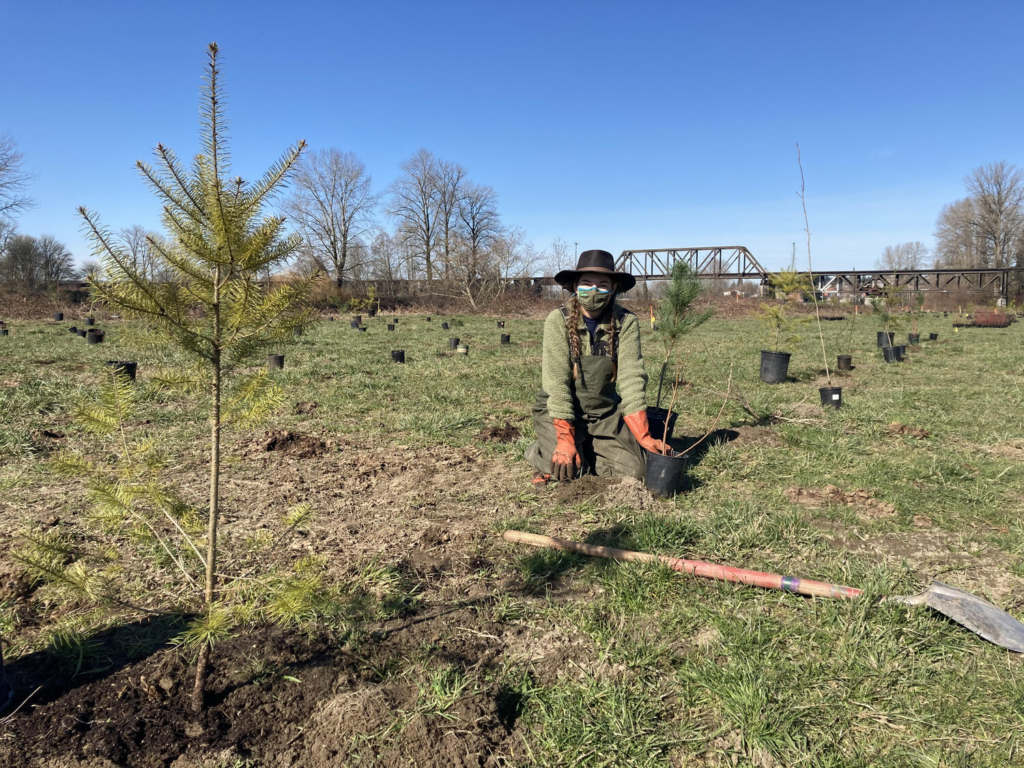
Whether you’re planting bare root, potted plants, or live stakes, timing is important. In Western Washington, planting should occur after the soils have sufficiently recharged from the dry season and before plants come out of dormancy in the spring. This is typically between November and March or April. Planting in the fall can provide extra time for plants to establish roots ahead of their first growing season, which can improve drought tolerance and survival. However, it can also expose plants to early frost damage and should be avoided for plants that are sensitive to frost (e.g. red alder) or in frost pockets.
When planting bare root seedlings, be sure to ensure the roots stay moist and cool. Avoid planting on warm, sunny, or windy days. If the roots appear dry, it’s likely that many of the fine roots have already desiccated and are damaged, which makes survival unlikely. Waiting to pick up bare root seedings from the nursery until the day of or day before you intend to plant is recommended. Transport them in a cooler and keep out of the sun while you are working through the planting area. Bare root seedlings can be planted quickly using a dibble bar or planting shovel, which wedges in the ground to open a small gap allowing you to drop the seedling in. However, there are some easy mistakes to make, especially if moving quickly. See the figure below for some of the common pitfalls of planting bareroot seedlings and how to avoid them.
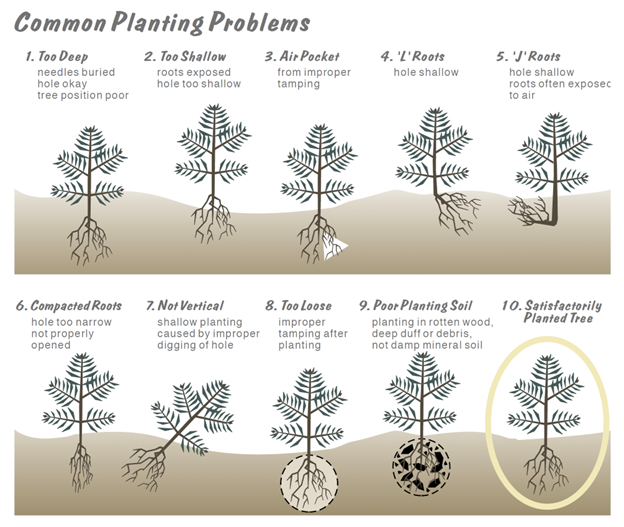
Keep Reading:
Maintenance
Tree and Shrub Protection
In most cases, trees will require protection from animal damage. Deer and elk are common in Western Washington and will browse the foliage and juvenile shoots of trees and shrubs. This can set back their growth, cause poor form, or kill the tree entirely. Small mammals, such as mice, voles, or rabbits, can also damage seedlings by girdling roots and stems. The type and intensity of pest pressure will vary by site. For instance, mice and vole damage can be particularly bad in overgrown pastures where they have significant cover from predators.
There are two types of approaches to preventing animal damage to seedlings: tree protection and cultural management. There are several products and methods available for protecting individual or groups of trees. Tree protectors (e.g. tree tubes) are the most commonly used method. They can be used to protect the base and/or the leader of the trees while they establish. However, they will add $1-2 in cost per tree often require annual maintenance to move the tube up the tree 1-2 times a year as it grows to protect the leader from deer or elk browse. Likewise, a t-post and fencing material such as chicken fencing or hog wire can be used to create a cage around an individual tree. This can be effective for small-scale plantings and many farms have these materials on hand but are more expensive than tree tubes in larger projects.
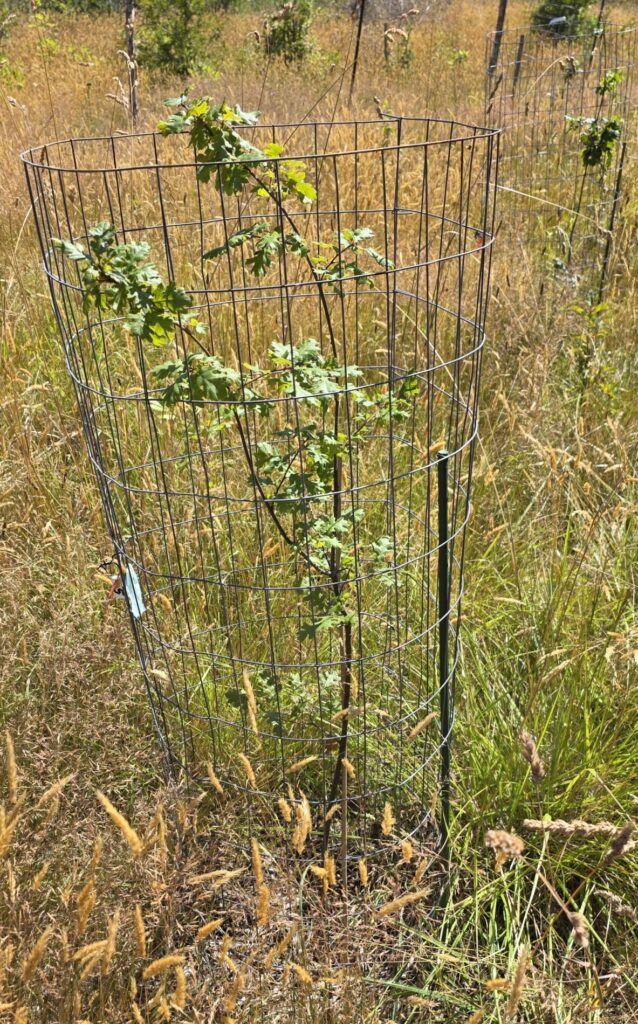
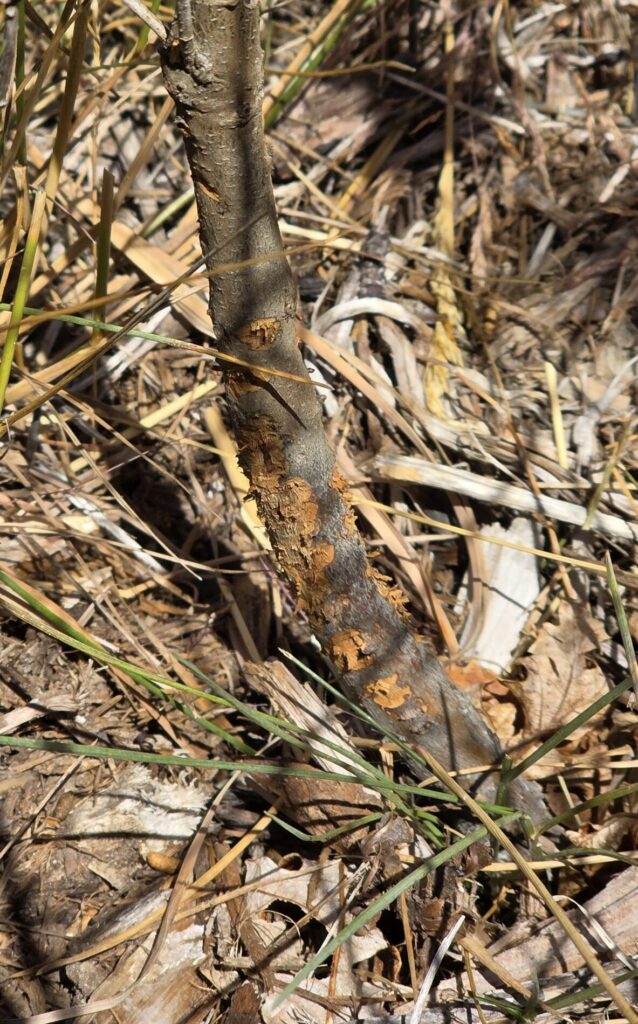
Fencing can be an option as well but are typically only financially viable for large, multi-acre projects and may be difficult to do in riparian areas. It will take more time to install but generally requires less maintenance than tree tubes. Fences should be a minimum of six feet high to prevent deer from jumping over. In large open areas where deer have more space to jump, eight feet is recommended. A “two-tiered” fence approach, where two shorter fence layers are staggered 4-5 feet apart (with an inner fence and outer fence), has also been successful at preventing deer from gaining enough speed to jump over fences. If using fencing, be sure to provide an access point that is large enough for yourself and any equipment you will need to maintain the area.
There are also “cultural control” methods of deterring animal damage. This involves altering the environment to make the area inhospitable to pests. For example, building next boxes and perches for large predatory birds can help reduce mice and vole populations when planting into grassy areas. Similarly, reducing vegetation near trees will reduce cover for small pests. “Dead wood fencing”, which involves creating a barrier with large woody debris (e.g. logging slash) throughout or around a planted area can help prevent deer and elk browse, which struggle to walk through that type of terrain. Cultural methods are usually not sufficient to protect seedlings on their own but can be used to supplement other protective measures.
Keep Reading:
Maintenance
Good decision making, site preparation, and tree planting methods will go a long way to improve the survival rate of your planting project, but maintenance will still be required over the next several years while they establish. This can include, but is not limited to, moisture management, maintaining animal protection, back planting where trees didn’t survive, and adapting to new and unforeseen challenges.
Ensuring trees have water available for growth is very important for the first several years of a trees life while it establishes a sufficient root system. This can be done by providing supplemental moisture through irrigation or by cultural methods that reduce moisture loss during the growing season. Native tree species in our region have evolved to survive dry summers by completing most or all their annual growth in the spring to early summer. However, this means that drought conditions during the spring can be particularly damaging to new plantings, especially if competing vegetation is present and reducing water availability. Increasingly hot summers and extension of the dry season will exacerbate that damage. Your approach to moisture management for your seedlings will depend on the resources you have available and site conditions, specifically soil hydrology. Irrigation can greatly increase the survival of tree seedlings during drought conditions but is not always necessary or feasible due to the cost and/or site logistics. If using irrigation, drip irrigation methods are recommended to provide a slow moisture release into the soil. Providing a layer of mulch within 1-2 feet of the tree will help reduce soil moisture loss as well as reduce the presence of competing vegetation. Ideally, this would be done at the time of planting. A 3-4” layer is ideal and should be arranged so that the area within an inch or two of the base of the tree is kept free of mulch to allow for air movement and avoid mold or fungal growth.
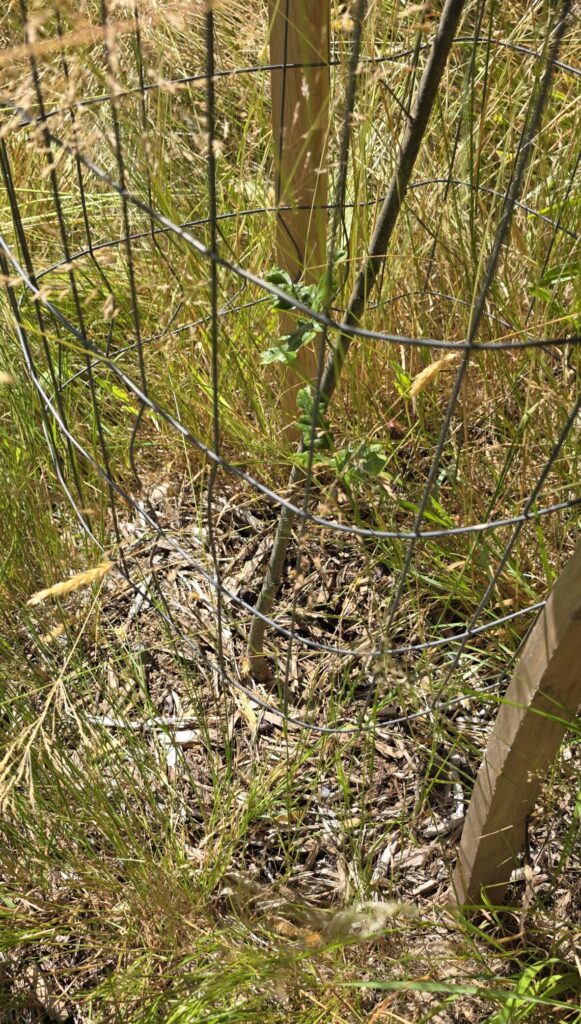
In most cases after tree planting, managing competing vegetation is an ongoing task. Even in the context of alley cropping, where the space between rows will be managed for row crops, the area immediately around newly planted trees may face weed pressure. Repeating the treatments you used during site preparation or utilizing different methods may be necessary to ensure weeds don’t outcompete the species you planted. However, it’s not necessary to maintain bare earth. Some vegetation is acceptable (and inevitable) but limiting the growth of vegetation within 1-2’ of the trees or shrubs you plant will improve their growth and ensure they are not overtopped by weeds. Reducing vegetation around the trees can also keep that area exposed and reduce cover for pests like mice and voles.
Maintaining your protection from animal damage will also likely take some time each year. For tree tubes, it’s important to ensure that the tube covers the new growth by moving them up the tree one or two times in the growing season. Fencing requires less annual maintenance but should still be monitored for gaps or damage allowing animals to enter. As you maintain and monitor your planting, you may find that additional measures are required to protect your trees.
For most tree species, maintenance is only necessary in the first several years while the trees establish sufficient root systems and canopies to thrive on their own and develop some resilience to potential stressors. Your new alley crop would be considered “free to grow” when you’ve reached a desired number of trees that have successfully established and grown tall enough that the leaders are no longer within reach of deer or elk browsing, are large enough to deter small mammal damage, and cannot be overtopped by competing vegetation (typically 5-6’ tall). For fast-growing species like red alder or black cottonwood (Populus trichocarpa), this can happen in as little as 3-5 years. For most other trees in good site conditions, it will likely take 6-10 years to reach this size.
For most trees, animal protection can be removed once they reach the free to grow point, although some producers may elect to install permanent fencing to protect crops that are susceptible to browse. Certain shrubs, for instance, may never reach heights that put them out of reach of pests. Vegetation management is typically unnecessary beyond successful establishment as the shade from the canopy will usually prevent significant weed growth immediately below the trees, and the areas between rows will be managed for crops.
Monitoring
Monitoring is important during the establishment phase to keep watch for damage and mortality. Finding one dead or damaged seedling is not a reason to panic, but it is worth keeping an eye on. If mortality is significant, it may become necessary to spot fill areas where those trees died. You will have to decide what your threshold for action is based on your objectives and available resources. If you decide to replant in areas where mortality occurred, it’s important to do some diagnostic work first. As discussed, animal browse, insufficient moisture, or competing vegetation can all be responsible for seedlings dying but insects, disease, and other environmental factors (e.g. frost, excessive heat) may also play a role. Understanding what is causing the mortality will help you determine your approach for replanting and avoid repeating a mistake. For instance, planting back the same species that was there previously may result in the same issue if the cause of mortality is related to unsuitable site conditions or a disease in the soil (e.g. root disease). If you’re unable to diagnose the issue and mortality or damage is significant, seek advice from a technical assistance provider. The WSU Puyallup Plant and Insect Diagnostic Laboratory also accepts photo submissions for diagnostic support, but may require a fee.
The work of maintaining a working riparian buffer is never truly over, but once you reach “free to grow” the level of monitoring and maintenance required is significantly reduced. Putting the proper effort up front will help you avoid failed plantings and financial losses. For support with your project, visit the Additional Resources Page to learn about programs that offer landowner assistance through site visits, planning and design, and cost-share.
Much of the work related to alley cropping occurs during establishment, but long-term systems require long term maintenance. Aside from annual maintenance required by individual tree and shrub crops (e.g. harvest), the tree rows must be managed as units to continue to provide optimum shade and ensure there are enough resources available for continued growth.
Monitoring Shade
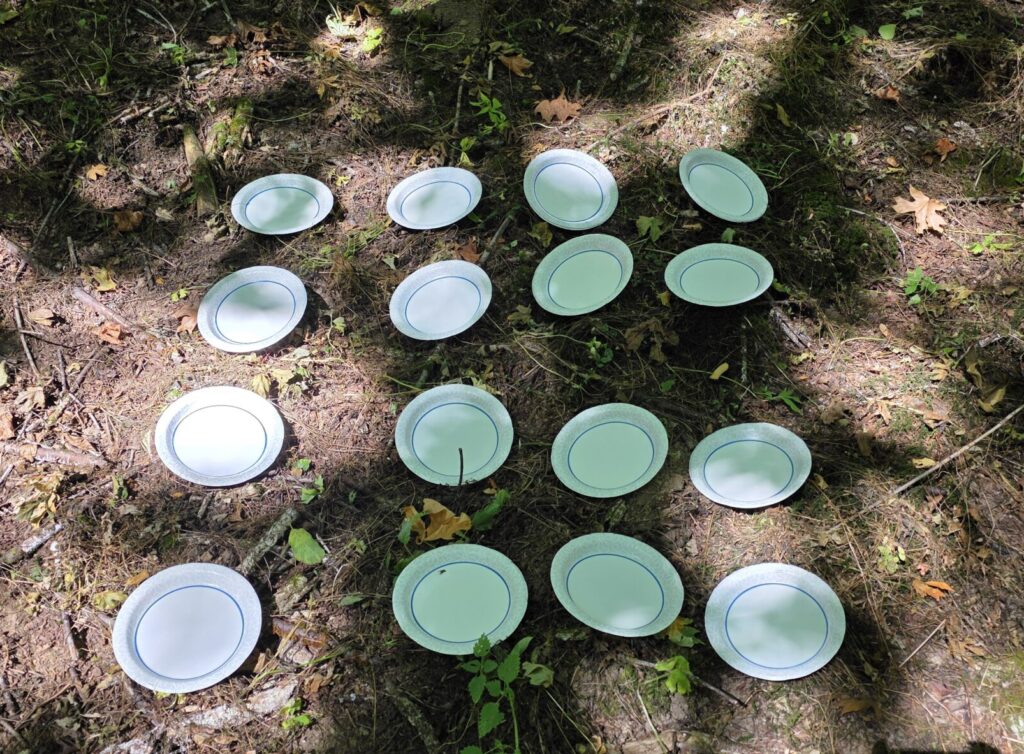
Monitoring changes in shade as your trees and/or shrubs grow will be critical to maintain crop production in the alleys or knowing when to transition to a shade tolerant crop or forage. To determine the amount of light reaching the forest floor, foresters use a tool called a densiometer. This is a handheld device with a concave or convex mirror with a grid engraved on it, which allows you to measure the amount of light reflected at a given point in the understory. A densiometer is relatively inexpensive and can be a worthwhile investment for anyone managing agroforestry systems, but a low budget workaround is also available using simple household materials (see sidebar).
Using a densiometer or the paper plate method once or twice a year at a few points in your alley cropping system will help you monitor changes in shade over time. Optimum shade level will vary based on the crops you’re currently growing or intend to grow.
Paper Plate Method
“Place 10 or more white paper plates at even distances on the ground at approximately noon on a sunny summer day. Count the number of plates that are at least half shaded. Next, divide the number of shaded plates by the total number of plates placed on the ground. Multiply this number by 100 [to determine shade percentage].” (Apsley & Carrol, 2013)
It can be helpful to take multiple measurements throughout the day to determine how shade changes over time.
Thinning
Thinning is a forest management practice by which trees in a forest are strategically selected for removal to benefit the growth of remaining trees and overall forest health and function. In the context of alley cropping, the need for thinning will depend on the initial spacing and composition of your rows. More densely planted rows and double or triple rows are more likely to require thinning to ensure the trees and shrubs have the light, water, and nutrients needed to continue to grow vigorously or to maintain ideal shade conditions in the alleys. Single rows with wider within row spacing are less likely to require thinning.
Thinning in an alley cropping system is less complex than in a forest or even a silvopasture because the composition and spacing are more uniform. In many cases, it will be a simple as removing every other tree or shrub. If the goal of thinning is to manipulate shade, check the shade level consistently as you thin to see how you are approaching your target. Thinning while the leaves are on the trees (in the case of deciduous trees and shrubs) will important for this process.
Thinning produces a significant amount of woody debris that will need to be dealt with before introducing forage and/or livestock. Large, commercially valuable trees can be sold or milled for lumber on site, or split for firewood. Small diameter trees and woody debris can be piled and burned or processed in kilns to produce biochar that can then be spread back throughout the silvopasture system to benefit soil health. You can also use a masticator to mulch the woody debris and spread it across the area. Small diameter hardwood trees like red alder or Oregon oak can be used to grow forest-cultivated shiitake mushrooms.
Pruning
Pruning will have a more limited effect on shade than thinning and is good for “fine-tuning” light levels. Depending on the composition and age of your silvopasture, pruning may or may not be necessary or even an option. Some trees are effective “self-pruners” but only when there is sufficient competition for light from other trees nearby. Since tree are arranged in rows in alley cropping systems, its unlikely that they will self-prune effectively.
Native trees in Washington are typically pruned in two “lifts”, first up to 8 feet and then again up to 16 feet (Hanley et al., 2005). Pruning is best done while trees are dormant, between November and March, to reduce the risk of spreading pests and disease and minimize damage to the bark. However, pruning deciduous trees to manipulate shade levels requires doing it while leaves are still on the tree. Targeting late summer to early fall (late August to October) for deciduous trees will allow you to monitor light levels during pruning and mitigate risks associated with doing it during the growing season. When pruning, never remove more than 30-50% of the canopy in a year. Pruning trees also produces higher quality timber products. It is especially important when growing high-value products like veneer. Pruning to ensure that no limbs are larger than 2-3” will improve wood quality. Prunings from certain deciduous species such as cottonwood, red alder, and willow can serve as highly nutritious forage for livestock.
Pruning fruit and nut trees in orchards can be slightly more complicated and is done more frequently to encourage production. For more information on this, visit the OSU webpage on Training and Pruning Your Home Orchard.
Keep Reading:
Additional Guides and Resources
*Indicates a technical resources created for Washington State or the Pacific Northwest
- Agroforestry Ingenuity in the Pacific Northwest (Webinar Recording)*
- Alley Cropping: An Agroforestry Practice – National Agroforestry Center (PDF)
- Alley Cropping at Raising Cane Ranch: Apples, Hay, and Cider*
- Alley Cropping Case Studies in Appalachia – National Agroforestry Center (PDF)
- Alley Cropping Planning and Design (Webinar Recording)
- Alley Cropping Template and Species Table – Snohomish Conservation District (PDF)*
- Crabapples and Camas: Alley Cropping at Northwest Meadowscapes*
- Enhancing Berry Farm Profitability with Perennial Alley Crops (Video)
- Intercropping Black Walnut in Oregon’s Willamette Valley – Association for Temperate Agroforestry*
- Practice Highlight: Alley Cropping*
- Training Manual for Applied Agroforestry: Alley Cropping Chapter – UM Center for Agroforestry (PDF)
- Working Buffer Template: Alley Cropping – Snohomish Conservation District (PDF)*
- Working Trees: Alley Cropping – National Agroforestry Center (PDF)
Andrus, R. A., Peach, L. R., Cinquini, A. R., Mills, B., Yusi, J. T., Buhl, C., Fischer, M., Goodrich, B. A., Hulbert, J. M., Holz, A., Meddens, A. J. H., Moffett, K. B., Ramirez, A., & Adams, H. D. (2024). Canary in the forest?—Tree mortality and canopy dieback of western redcedar linked to drier and warmer summers. Journal of Biogeography, 51(1), 103–119.
Balasubramanian, A., Anjali, K.S., Swathiga, G., Abbas, G., Krishnan, S.N. (2024). Soil Nutrient Dynamics and Cycling Under Agroforestry. In: Jatav, H.S., Rajput, V.D., Minkina, T., Van Hullebusch, E.D., Dutta, A. (eds) Agroforestry to Combat Global Challenges. Sustainable Development and Biodiversity, vol 36. Springer, Singapore.
Betzen, J. J., Ramsey, A., Omdal, D., Ettl, G. J., & Tobin, P. C. (2021). Bigleaf maple, Acer macrophyllum Pursh, decline in western Washington, USA. Forest Ecology and Management, 501.
Fahad, S.; Chavan, S.B.; Chichaghare, A.R.; Uthappa, A.R.; Kumar, M.; Kakade, V.; Pradhan, A.; Jinger, D.; Rawale, G.; Yadav, D.K.; et al. Agroforestry Systems for Soil Health Improvement and Maintenance. Sustainability 2022, 14, 14877.
Frankson, R., K.E. Kunkel, S.M. Champion, D.R. Easterling, L.E. Stevens, K. Bumbaco, N. Bond, J. Casola, & W. Sweet. (2022). Washington State Climate Summary 2022.
Handler, S., Pike, C., & St. Clair, B. (2018). Assisted Migration. USDA Forest Service Climate Change Resource Center.
Hanley, D. P., Baumgartner, D. M., & Mccarter, J. (2005). Silviculture for Washington Family Forests.
O’Connor, C., Zeller, B., Choma, C., Delbende, F., Siah, A., Waterlot, C., & Andrianarisoa, K. S. (2023). Trees in temperate alley-cropping systems develop deep fine roots 5 years after plantation: What are the consequences on soil resources? Agriculture, Ecosystems and Environment, 345.
Oregon State University. (2024). Red Alder (Alnus Rubra). Oregon Wood Innovation Center.
Shults, P. (2017). EXPLORING THE BENEFITS OF COVER CROPS TO AGROFORESTRY TREE PLANTATIONS: AN ANALYSIS OF DIRECT AND INDIRECT NITROGEN TRANSFER IN ALLEY CROPPING SYSTEMS [M.S. ]. Michigan State University.
University of Missouri. (2018). Training manual for Applied Agroforestry Practices. The Center for Agroforestry, 105(3).
USDA. (2025). Alley Cropping. National Agroforestry Center.
Wolz, K. J., & Delucia, E. H. (2018). Black walnut alley cropping is economically competitive with row crops in the Midwest USA. Ecological Applications, 29(1).