This case study was developed by the USDA Forest Service, National Agroforestry Center and the USDA Northwest Climate Hub. Any errors or omissions are the responsibility of the authors and can be directed to the National Agroforestry Center. The lead author is Katherine Favor, ORISE Fellow with the National Agroforestry Center.
These and more case studies were developed for the Pacific Northwest Training Manual for Applied Agroforestry (to be released in 2026).
Introduction
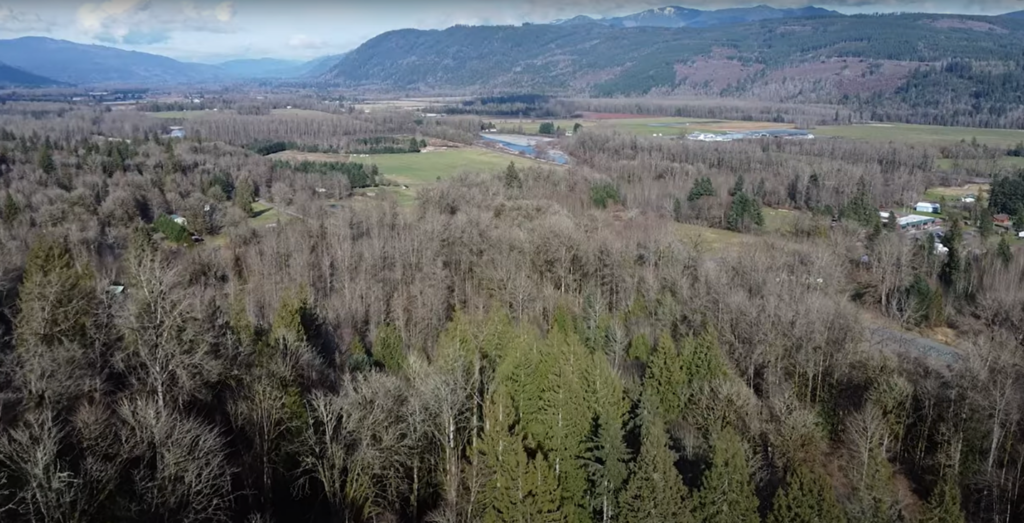
Neil McLeod is the owner and operator of Neil’s Bigleaf Maple Syrup, a 200-acre forest that produces maple syrup in Acme, Washington. Tapping maple syrup in the context of a diversified forest is one form of forest farming. The USDA Natural Resources Conservation Service defines forest farming as growing or managing stands of trees or shrubs in coordination with the understory plants or nontimber forest products (USDA NRCS 2022). The“overstory” and “understory” layers in forest farming systems aren’t always distinctly pronounced. In the case of Neil’s operation, he manages bigleaf maple trees (Acer macrophyllum), which make up one layer of vegetation, while other native trees form additional layers. Some of these trees include western red cedar (Thuja plicata), giant sequoia (Sequoiadendron giganteum), grand fir (Abies grandis), paper birch (Betula papyrifera) Pacific madrone (Arbutus menziesii), and others. When managed together intentionally, this diverse mix of species forms a multi-layered cropping system that produces a harvestable product while also protecting the forest ecosystem.
Bigleaf maple is considered a commercial hardwood tree species, but it often has higher felling, yarding, and milling costs than other trees in Washington State (Peterson et al. 1999). It also often yields a lower price compared to other tree species in Washington (Washington Department of Natural Resources 2025). Additionally, timber operations have long harvest intervals—decades can pass between harvests. Because of this, it can be difficult for forest landowners to generate a steady income from selling timber alone in bigleaf maple dominated forests.
Bigleaf maple forest ecosystems also support many types of flora and fauna, including woodpeckers, bald eagles, elk, black-tailed deer, rough skinned newt, tailed frog, and western red-backed salamander, fungi, mosses, lichen, and others (Peterson et al. 1999). By engaging in forest farming and by harvesting nontimber forest products like maple syrup, Neil is able to generate a reliable income while also supporting an ecosystem that is vital for many forms of wildlife.
Tapping maple trees is common in the East and Midwest, but historically has not been common in the Pacific Northwest. This is due to the West Coast’s unpredictable freeze/thaw cycles, which can lead to unreliable sap production. 12 years ago, Neil started experimenting anyway. Before that, he had been a beekeeper for years until his hives unexpectedly died. Needing a sweetener for his coffee in the morning and without the ability to produce his own honey, Neil decided to try tapping a bigleaf maple on his land, just to see what would happen. He had low expectations at first. “Everyone told me ‘It can’t be done on the West coast’ and that it wasn’t worth the effort,” says Neil. Still, he kept experimenting. After several failed trials, he finally figured out the right tapping technique. “I got really good at it,” Neil says. “I could pick out the trees to go after, I hit the runs just right, and before long, we were making a lot of syrup.”
Design and Management
Neil cares deeply about protecting wildlife, so maintaining a diverse forest ecosystem is one of his top priorities. He manages his land so that roughly 80% of the trees are bigleaf maple, while the remaining 20% are other native trees like western red cedar, giant sequoia, and grand fir. By stewarding a mix of species, Neil is creating a more ecologically complex system than if he managed for only one species.
To keep his stand healthy, Neil removes diseased, dying, and dead trees every few years. This helps prevent the spread of disease and gives the remaining trees more space and sunlight to grow. With less competition, these trees become more resistant to potential pest outbreaks (Kneeshaw et al. 2021). Climate change models project that pest issues may worsen in the coming years (Chang et al. 2023), so having strong, resilient trees is especially important for promoting resilience into the future. Removing weak trees also reduces crowding, which allows Neil’s bigleaf maple trees to produce higher yields of sap (Giesting 2023). However, Neil doesn’t thin healthy trees. “My philosophy is largely to leave the forest alone as much as possible,” Neil explains. When Neil removes weak or dead trees, he always follows that task by planting new trees in their place. In addition to planting maples, he plants a mix of native trees, to ensure that the forest remains diversified.
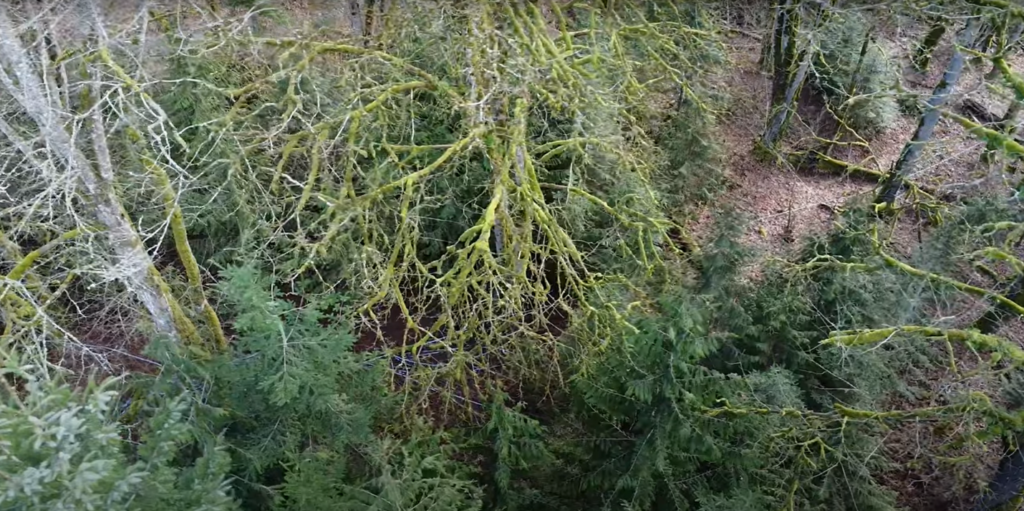
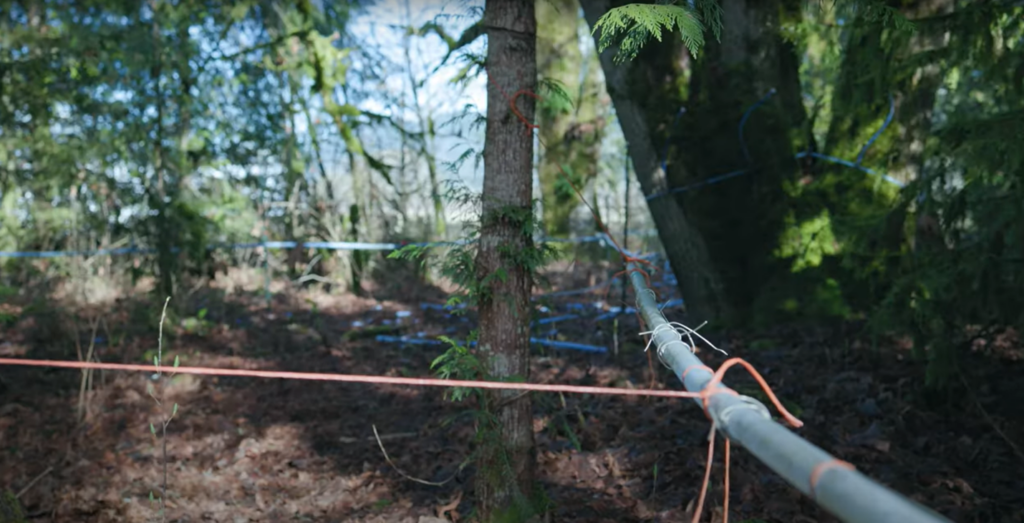
Harvest and processing are the most labor-intensive parts of Neil’s operation. The harvest season lasts from late December to early February, when nights are still cold, but the days are getting warmer. To collect sap, Neil developed an elaborate harvest system throughout the forest consisting of spiles (small metal taps) inserted into trees to draw out the sap. The spiles are connected to a hanging network of one-inch polyethylene tubes. These tubes are suspended from trees horizontally and are connected in a complex network throughout the forest that lead to a vacuum. The vacuum gently pulls the sap out of the trees, through the tubes, and into the sugar shack where processing occurs, increasing the speed of harvest. Neil finds this vacuum-based harvest system to be much more efficient than the common gravity fed system, where sap is gravity fed into tanks in different parts of the forest and transported to the sugar shack by truck. Thanks to his vacuum harvester, Neil has been able to significantly reduce his labor and gas costs while maintaining a consistent flow.

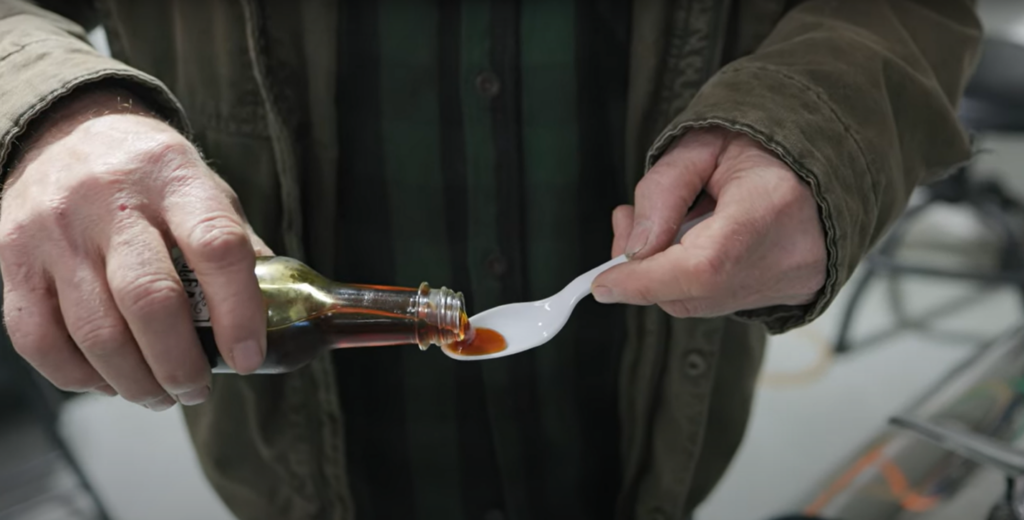
Once the sap is collected, Neil refines it into syrup. First, he runs the sap through a reverse osmosis filter, which removes some of the water and increases the sugar content to 10%. Next, he boils the sap in a machine called an “evaporator” at 219.7 degrees Fahrenheit, until the water evaporates off and the remaining liquid reaches a desired consistency. “When it gets to the temperature I want, the machine automatically opens a valve and pours off the syrup,” explains Neil. He stops the process once the syrup reaches a sugar content of around 68%, resulting in a thick and sweet final product.
Cleaning the network of taps and harvest pipes several times a year is another important management task. Neil used to clean them with bleach, but he stopped because he didn’t want the bleach residue to contaminate his product or the ecosystem. Today, Neil opts for a more natural cleaning solution by collecting excess sap and fermenting it into a low acidity vinegar. In his experience, this vinegar cleans the pipes without leaving behind contaminants. Because Neil produces vinegar as a cleaning solution from his own sap, he also spends less money on external inputs.
Today, Neil’s property has around 600 taps, producing between 20-40,000 gallons of sap most years. After boiling, this results in roughly 200-400 gallons of syrup. He sells his syrup both online and to restaurants, and he notes that there is always more demand than supply.
Climate Risks and Adaptation Strategies
Higher Winter Temperatures
Maple syrup production is sensitive to weather fluctuations. “Weather is always a challenge – our winters are completely different from the East Coast’s winters,” explains Neil. In many regions that produce maple syrup, nighttime temperatures stay below freezing during the spring, while daytime temperatures often rise above freezing. This creates a steady freeze-thaw cycle, leading to consistent production of high-quality, clear sap. In Washington, however, nighttime winter temperatures regularly fluctuate above- and below-freezing (Hegewisch and Abatzoglou 2025a). This can cause pressure changes inside the tree that form air bubbles in sap. The result is that some weeks, Neil’s land yields high-quality, clear sap, while some weeks it yields low-quality, foamy sap. This trend is expected to continue, as climate models project that Washington’s winters will get warmer in the future (Hegewisch and Abatzoglou 2025b). To deal with this challenge, Neil developed a specialized, multi-filter filtration system that separates foam from the sap. This equipment helps Neil quickly and efficiently manage the unpredictable sap quality caused by Washington’s oscillating winter temperatures.
Increased Risk of Flooding
Neil’s land has a high water table and the creek that runs through his property often rises during the winter, causing seasonal flooding. Because the ground stays wet for much of the year, logging in these areas is difficult, and building houses or traditional farming is not an option. “It’s kind of considered useless land,” says Neil. “It’s hard to log it, you can’t build houses on it, you can’t farm it. But it does produce an awful lot of sap.”
Flooding in Washington State is expected to become more frequent and severe in the coming years due to climate change (Chang et al. 2023). Instead of fighting these conditions, Neil decided to work with them. Since bigleaf maple naturally thrives in wet environments, he found a way to turn a challenge into an opportunity. “Some of the best runs I’ve ever seen are after major flooding,” says Neil. Choosing to lean into these challenges, Neil planted even more bigleaf maple saplings on some other flood-prone areas of his land. He looks forward to continued production despite what many would consider unfavorable climatic challenges.
Conclusion
Neil’s Bigleaf Maple Syrup is an example of what alternative forest management can look like in some areas of the Pacific Northwest. Neil’s forest farming approach demonstrates that tapping bigleaf maple trees can provide a sustainable annual income stream while maintaining the integrity of the forest. This method allows the land to stay productive while supporting an ecosystem that supports diverse plant, animal, and fungal life. Neil hopes that his model can serve as an inspiration for other land stewards who work with bigleaf maple forests. As he puts it, “Over the next 100 years you’d be making money off those trees without destruction of this great habitat.” Neil’s work exemplifies how harvesting maple syrup through the practice of forest farming can be both an economically and ecologically viable solution for land stewards looking to balance profit with conservation.
References
Chang, M.; Erikson, L.; Araujo, K.; Asinas, E.N.; Chisholm Hatfield, S.; Crozier, L.G.; Fleishman, E.; Greene, C.S.; Grossman, E.E.; Luce, C.; Paudel, J.; Rajagopalan, K.; Rasmussen, E.; Raymond, C.; Reyes, J.J.; Shandas, V. 2023. Northwest. In: Fifth National Climate Assessment. Eds: Crimmens, A.R.; Avery, C.W.; Easterling, D.R.; Kunkel, K.E.; Stewart, B.C.; Maycock, T.K. U.S. Global Change Research Program, Washington, DC, USA. [Date accessed: 26 March 2025].
Giesting, K. 2023. Maple Syrup. USDA Forest Service Climate Change Resource Center. [Date accessed: 26 March 2025].
Hegewisch, K.C.; Abatzoglou, J.T. 2025a. Historical Climograph web tool. Climate Toolbox. [Date accessed: 26 March 2025].
Hegewisch, K.C.; Abatzoglou, J.T. 2025b. Future Climate Dashboard web tool. Climate Toolbox. [Date accessed: 26 March 2025].
Kneeshaw, D.D.; Sturtevant, B.R.; DeGrandepe, L.; Doblas-Miranda, E.; James, P.A.M.; Tardif, D.; Burton, P.J. 2021. The Vision of Managing for Pest-Resistant Landcscapes: Realistic or Utopic? Forest Entomology 7:97-113.
Peterson, E.B.; Peterson, N.M.; Comeau, P.G.; Thomas, K.D. 1999. Bigleaf Maple Managers’ Handbook for British Columbia. British Columbia: B.C. Ministry of Forests, Research Branche.
USDA NRCS. 2022. Forest Farming (Ac.) (379) Conservation Practice Standard. [Date accessed: 5 April 2025].
Washington Department of Natural Resources. 2025. Timber Sale Query/Log Prices. [Date accessed: 7 March 2025].
This resource was supported in part by the U. S. Department of Agriculture (USDA) Climate Hubs via an appointment to the USDA Forest Service Research Participation Program administered by the Oak Ridge Institute for Science and Education (ORISE) through an interagency agreement between the U.S. Department of Energy (DOE) and the USDA. ORISE is managed by ORAU under DOE contract number DE-SC0014664. All opinions expressed in this paper are the author’s and do not necessarily reflect the policies and views of USDA, DOE, or ORAU/ORISE.