Background
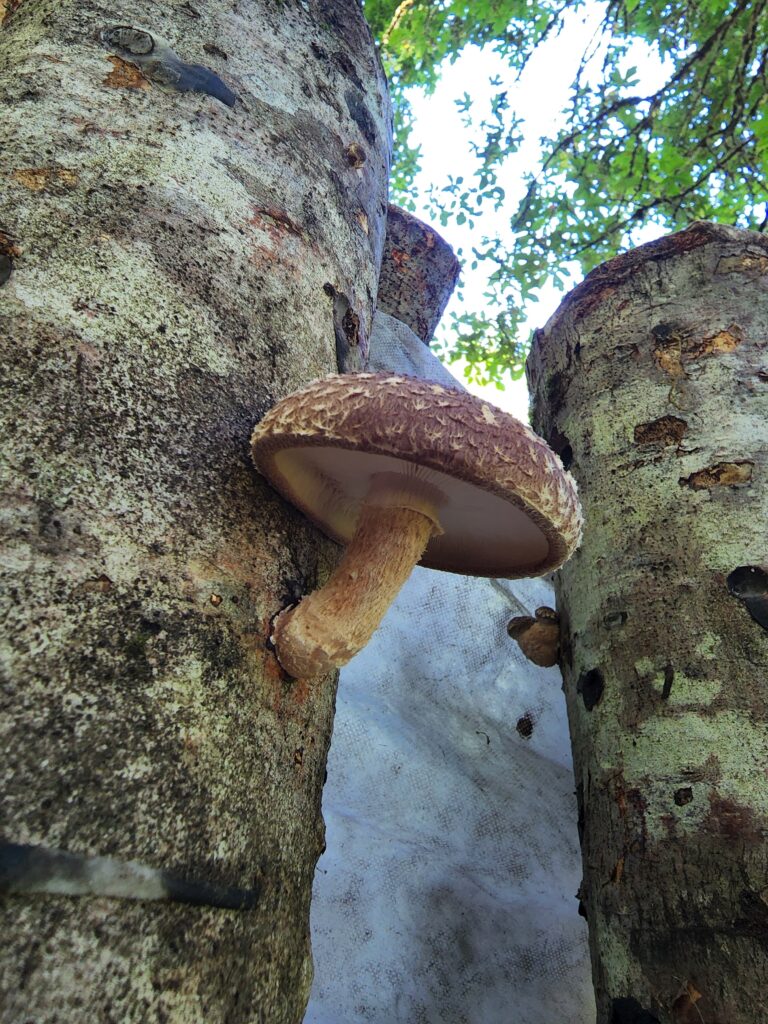
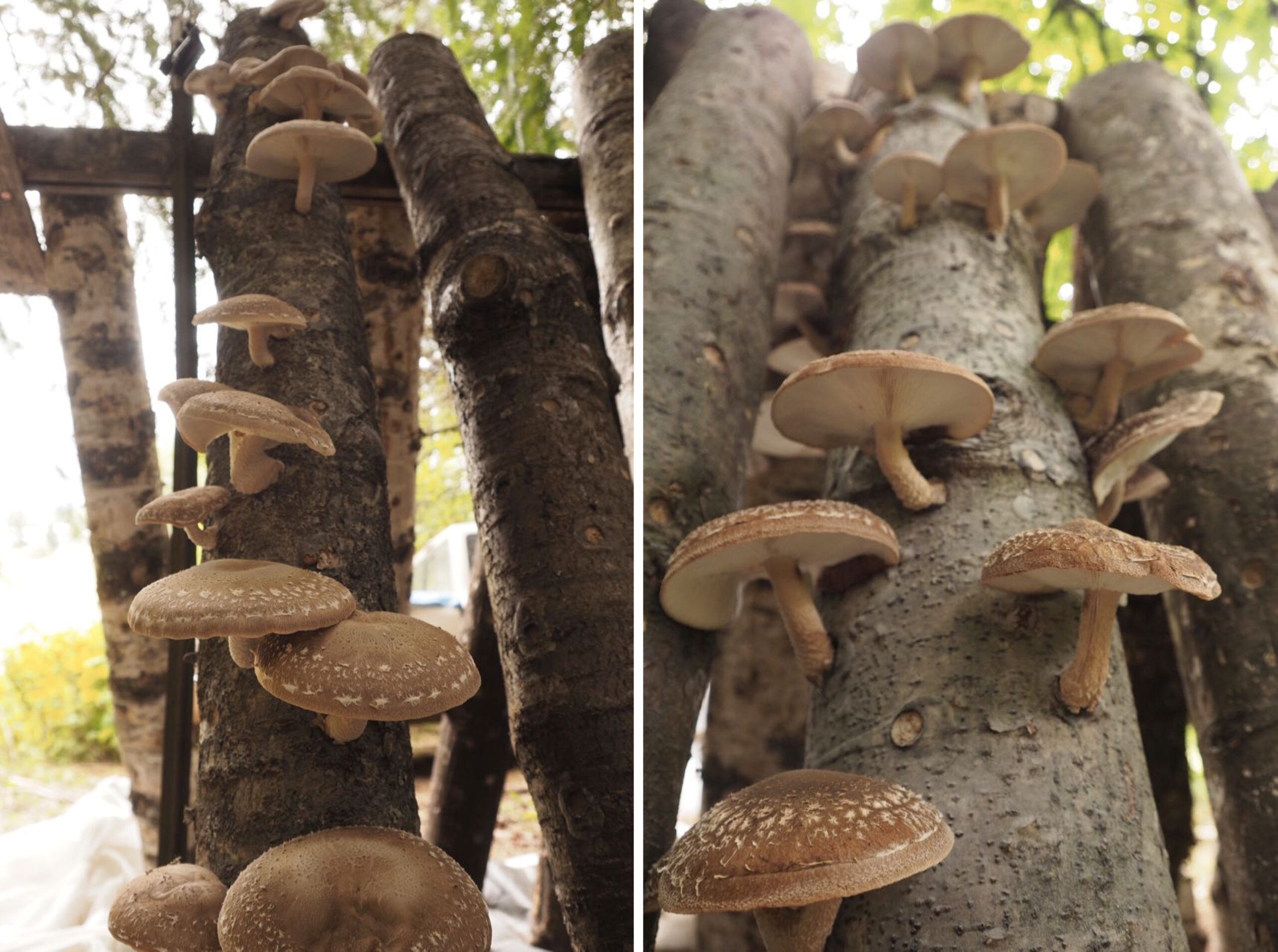
Forest cultivated shiitake is an agroforestry practice that can reliably produce high-quality shiitake mushrooms in a forest using logs as substrate. This method has been developed over 1,000 years in Japan and China, where shiitake is a native species. In the 1980’s, this method was adapted to the eastern U.S., where shiitake is not native. This practice is low risk, requires minimal space and equipment, and yields a high-value mushroom that is ideal for direct-to-market sales to restaurants, at farmer’s markets, or as supplement to a CSA. It utilizes small-diameter hardwood logs as substrate, which makes it compatible with forest enhancement practices like thinning. Today, most shiitakes are produced using bags of sterilized sawdust in climate-controlled facilities. However, log-grown shiitakes still provide an opportunity for farm and forest owners to diversify and supplement their income.
There are fewer forest cultivated shiitake producers in the Pacific Northwest, largely due to a lack of research and guidance available to support the adoption of the practice to the unique climate and hardwood species in the region. However, WSU Extension began researching this in 2019 and is actively developing best practices for commercial-scale and hobbyist shiitake cultivation in Washington State (see below for details).
Overview
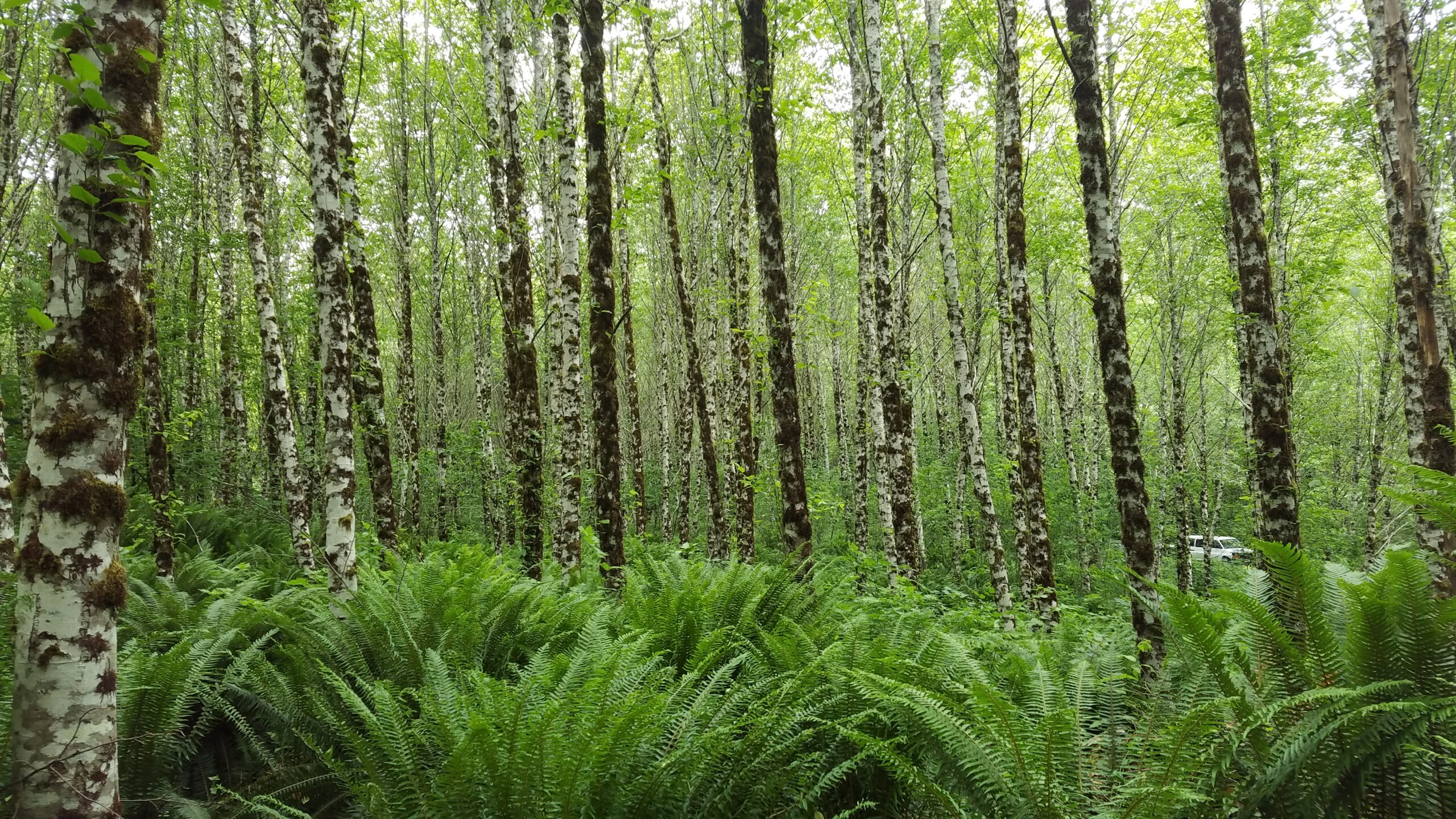
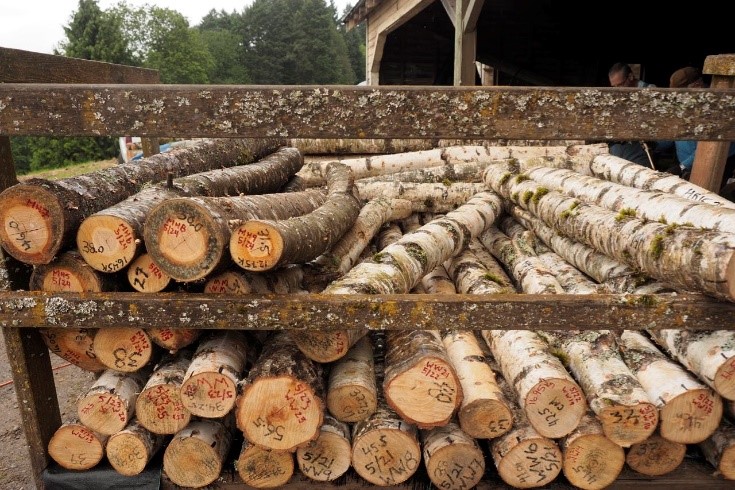
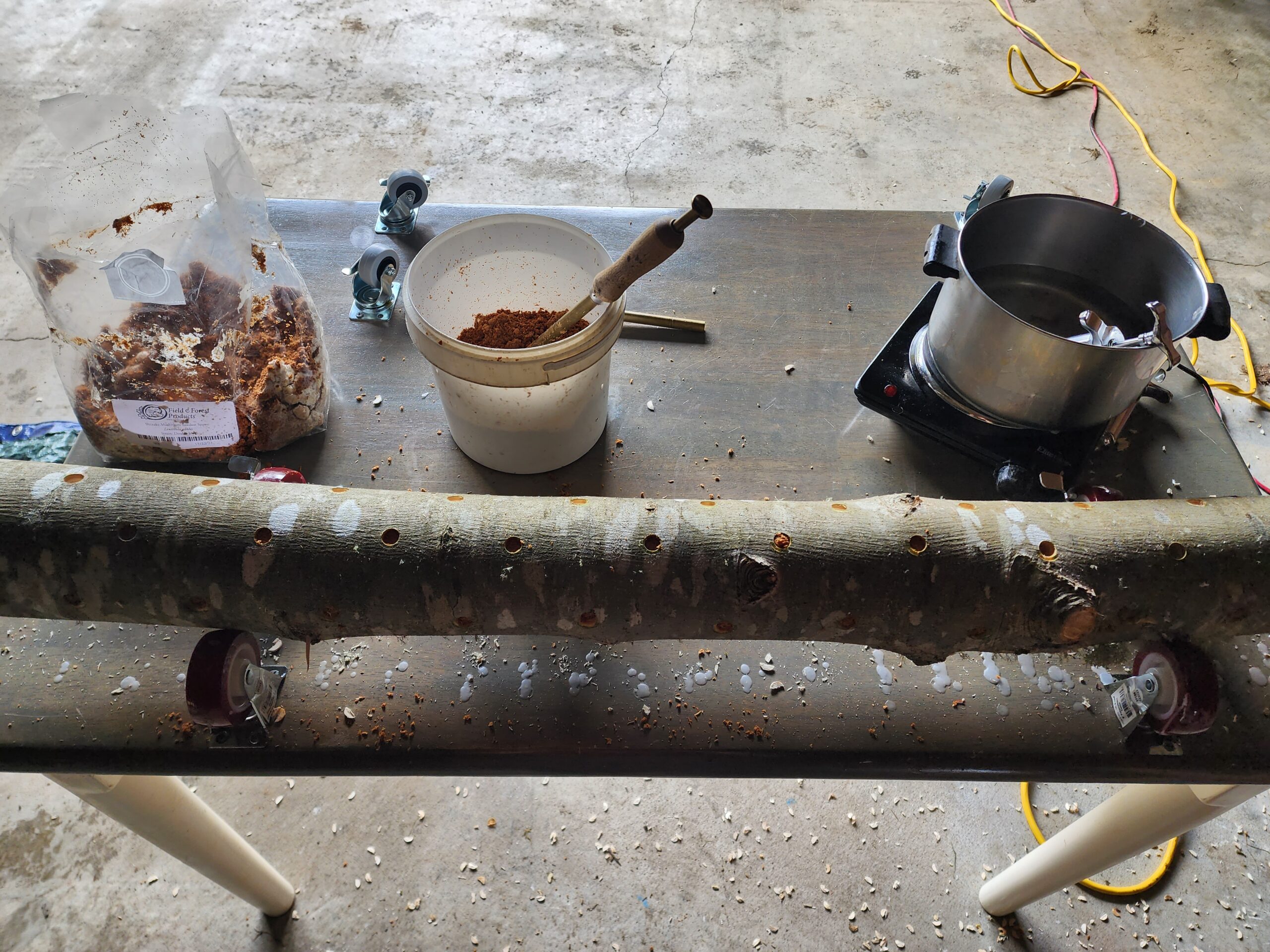
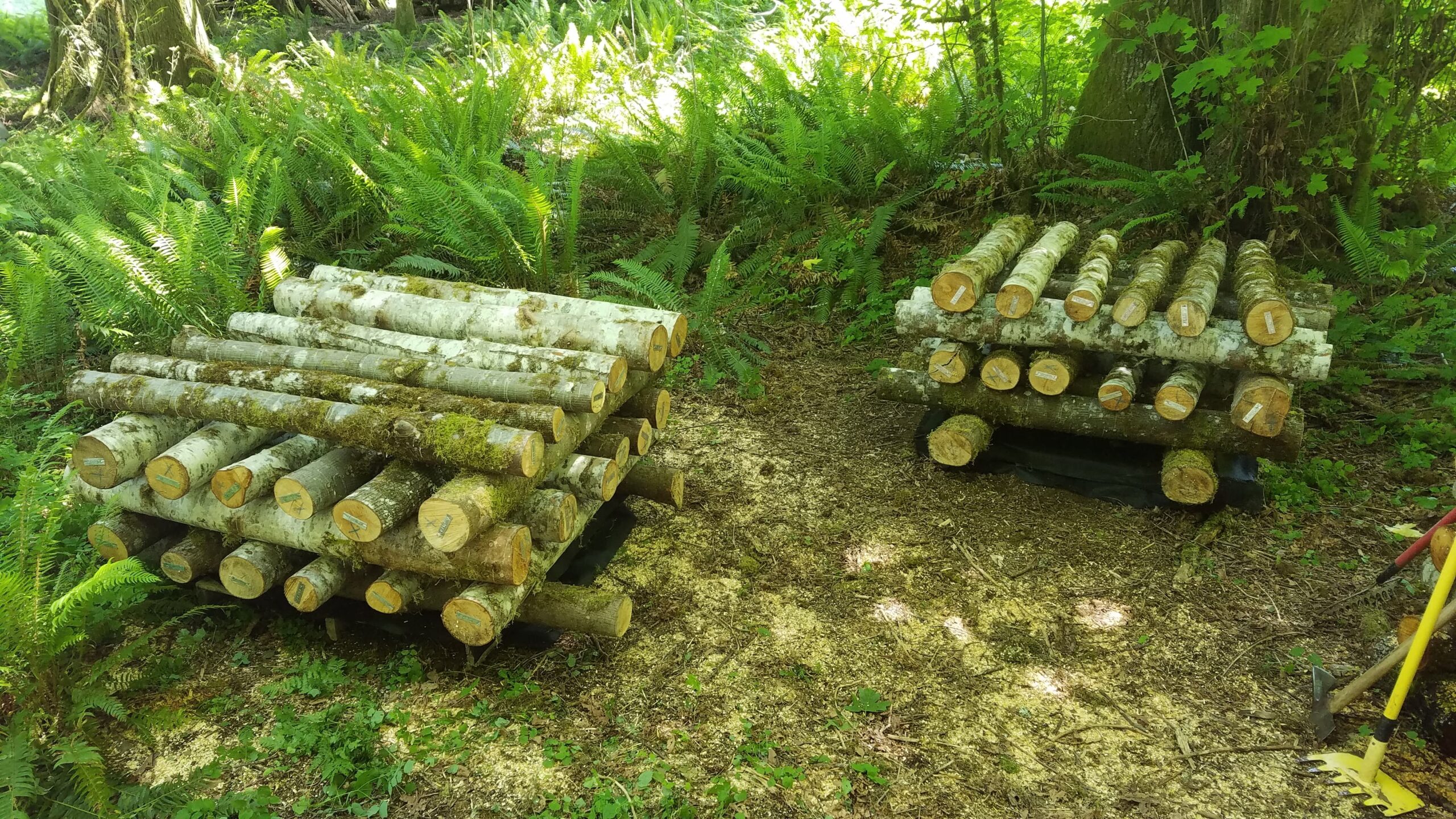
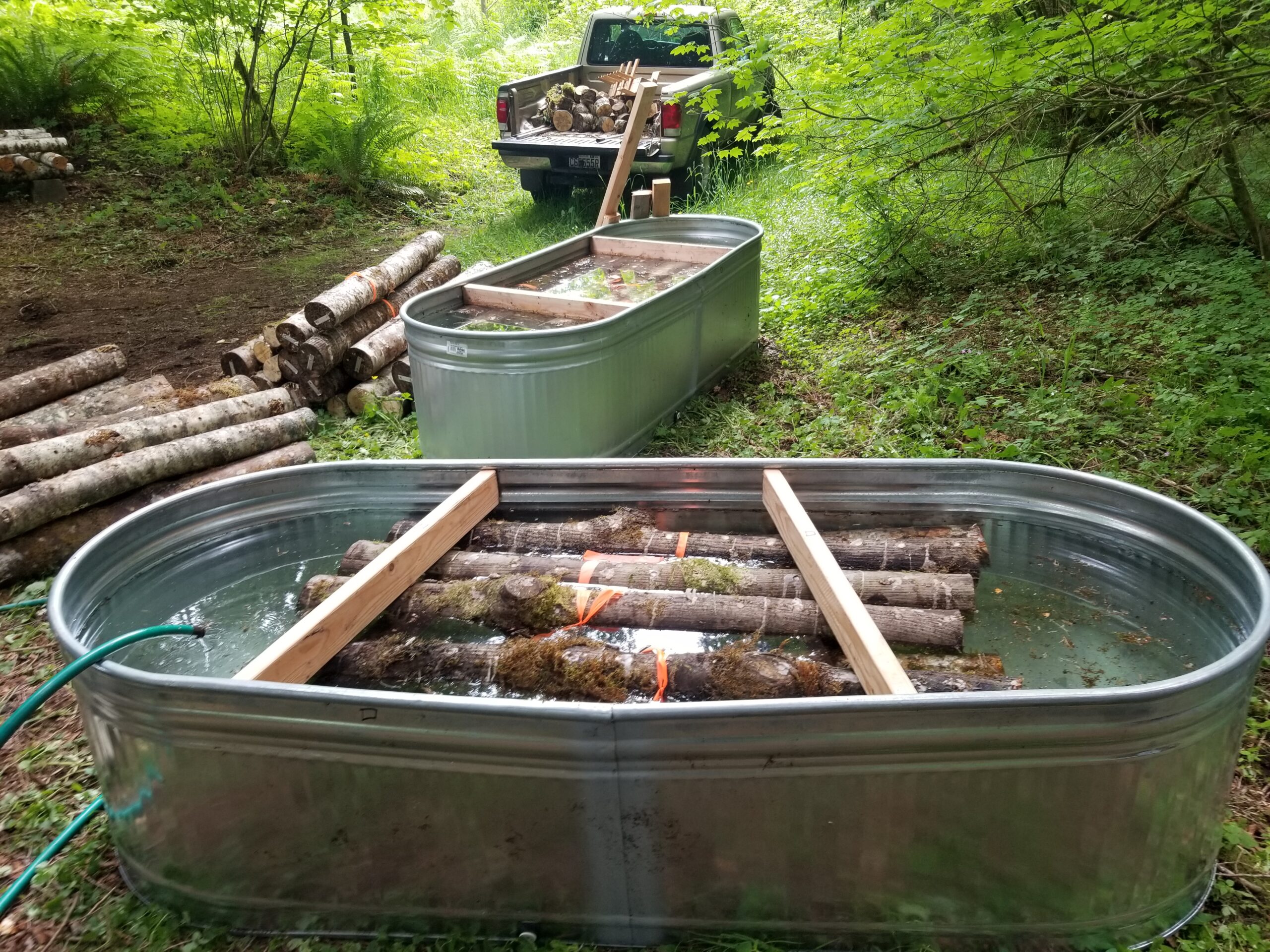
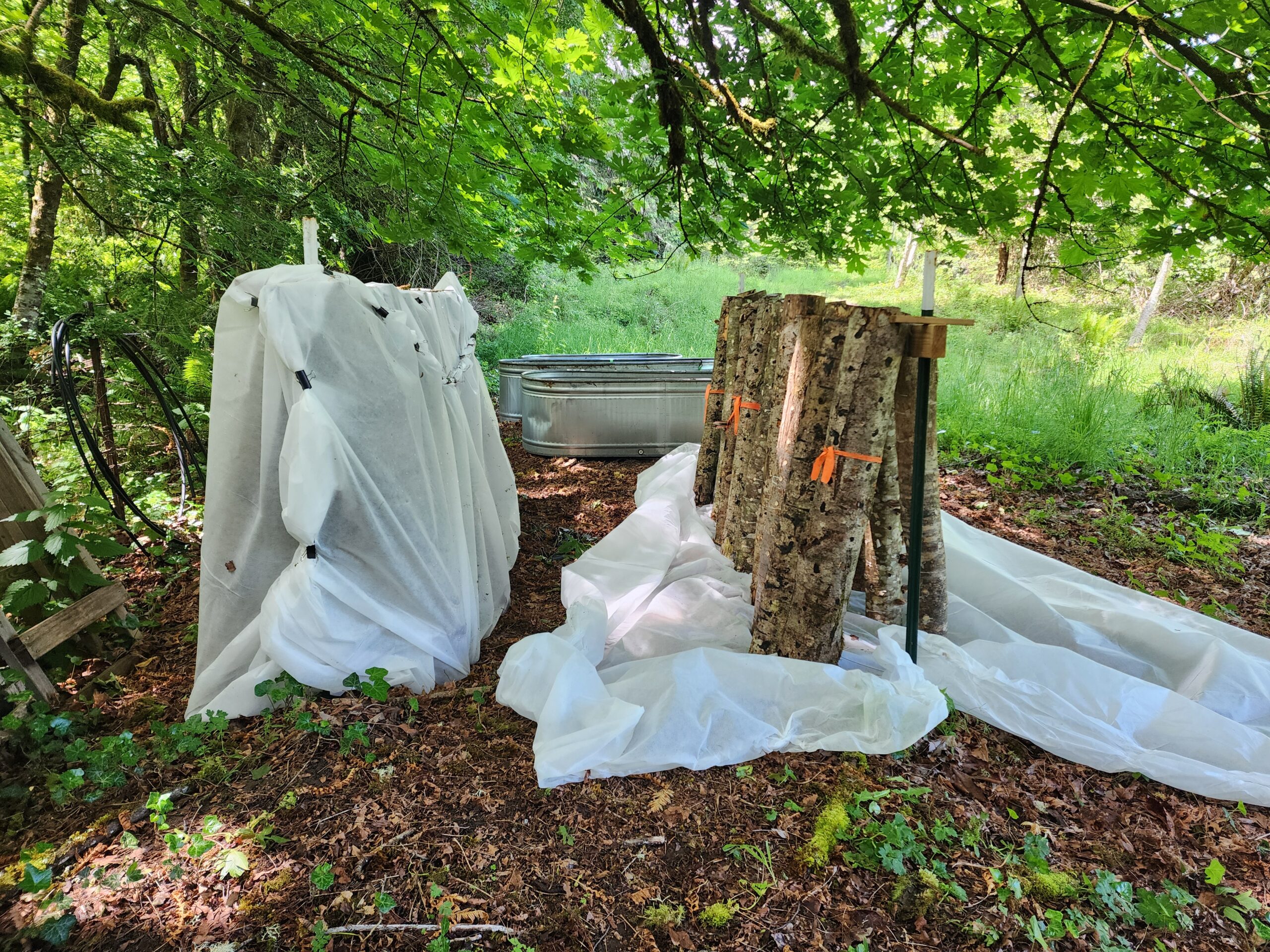
Cultivating shiitake on logs is a relatively simple process but it does require time. Small diameter hardwood trees (e.g. red alder) are felled in the late winter to provide fresh substrate (downed wood collected from the forest floor won’t work). Those trees are cut into four-foot lengths (called “bolts”) in the spring and then “inoculated” by drilling holes in them, filling the holes with shiitake spawn, and then covering them with wax. The bolts are then moved to the forest where they will have sufficient shade for the spawn run, which is the period required for the shiitake to fully colonize the log. This is typically a full year from the time of inoculation, after which the bolts can be forced to fruit by soaking them in cold water for 24 hours. Bolts can be force fruited 2-3 times per year for multiple years, before the carbon and nutrients in the log are spent.
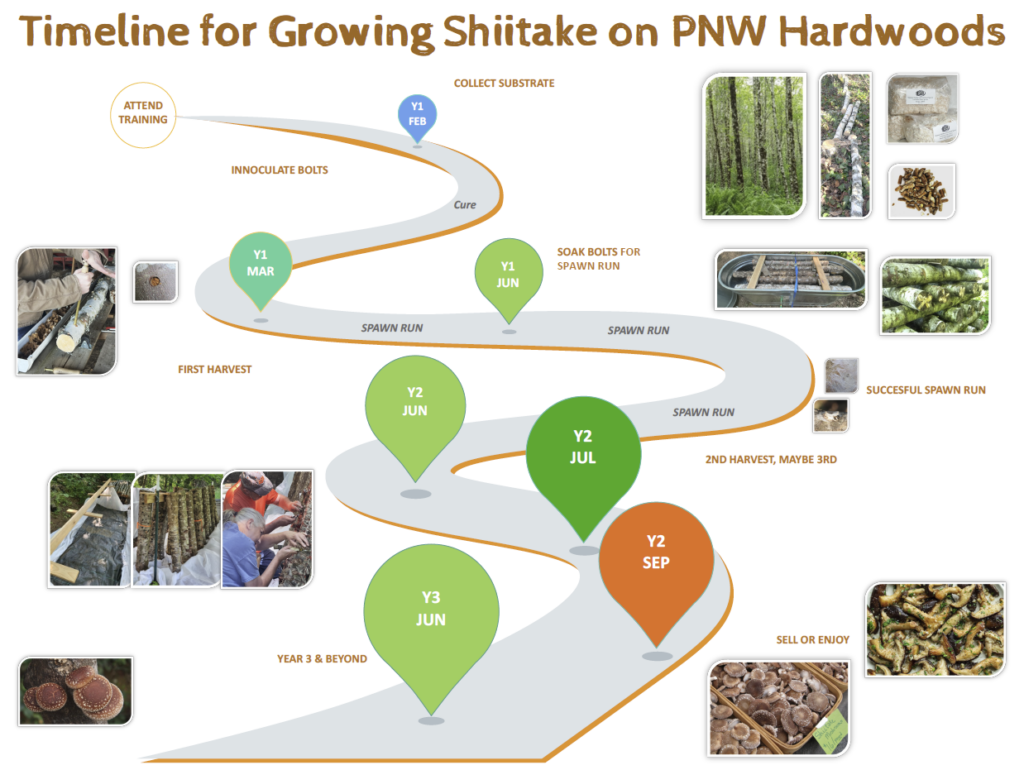
A small-scale commercial system would likely start at 100-200 logs while larger operations will have several hundred to 1,000+. Much of the labor for this process occurs during inoculation, but most commercial operations will add new logs every year to maintain yields. Some specialized equipment and supplies are necessary, including a modified angle grinder, inoculation plungers, and shiitake spawn, but farmers will often have much of the other necessary equipment already (e.g. chainsaw, sawbuck, t-posts). Livestock tanks are often the most expensive investment, which are used to soak the shiitake logs and force fruiting.
Local Research and Guidance
Since 2019, Washington State University Extension has been managing log-grown shiitake trials in Western Washington. These trials have revealed key management guidance around choosing tree species for substrate, shiitake spawn selection, and how to mitigate the negative effects our low-humidity summers have on successful colonization and yields.
Considerations for Riparian Buffers
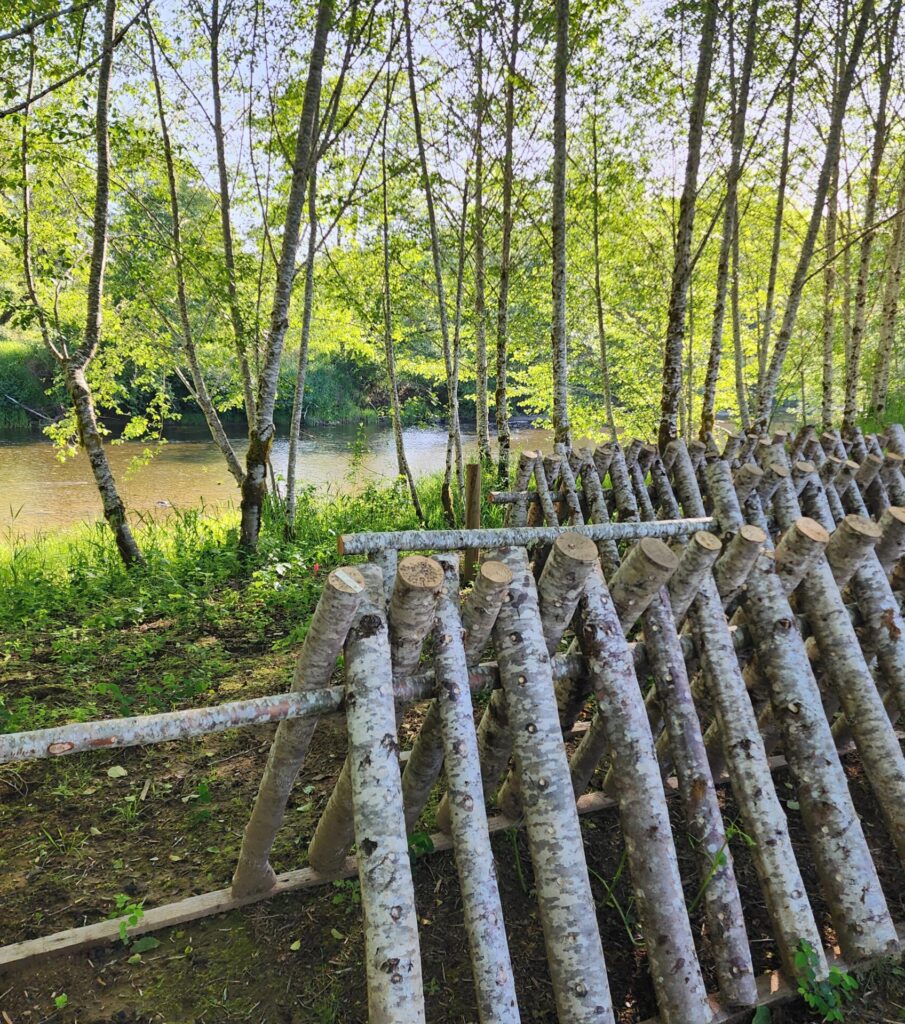
Forest cultivated shiitake systems have a very low ecological footprint and require minimal space, making it an ideal practice to incorporate into a riparian buffer. The higher relative humidity in riparian areas can even benefit moisture retention in the shiitake bolts. The bolts will benefit from a mix of hardwood and conifer shade, which may or may not be available to you if working within an existing forested buffer. You will also need to have access to water wherever you keep your bolts (called the “lay yard”) for soaking. If you don’t have access to a well in that location and don’t have water rights to draw from a nearby water source, soaking the bolts in a cold stream can work, provided there is a 20-30 degree difference between the water and air temperature. However, yields will likely be reduced because it is difficult to fully immerse logs in this situation. It’s also important to consider potential restrictions on harvesting trees for substrate in riparian buffers, particularly in the inner zone.
Guides and Resources
Most of the available guidance on shiitake cultivation in the United States has been generated in eastern states. Although the principles are the same, the WSU Extension trials have determined some critical supplemental guidance to ensure successful shiitake production in the Pacific Northwest. We recommend using the Pacific Northwest Forest-Cultivated Mushroom Growers Network and other regional guides as your primary resources, while using non-regional resources as supplemental guidance.
Pacific Northwest Forest Cultivated Shiitake Resources
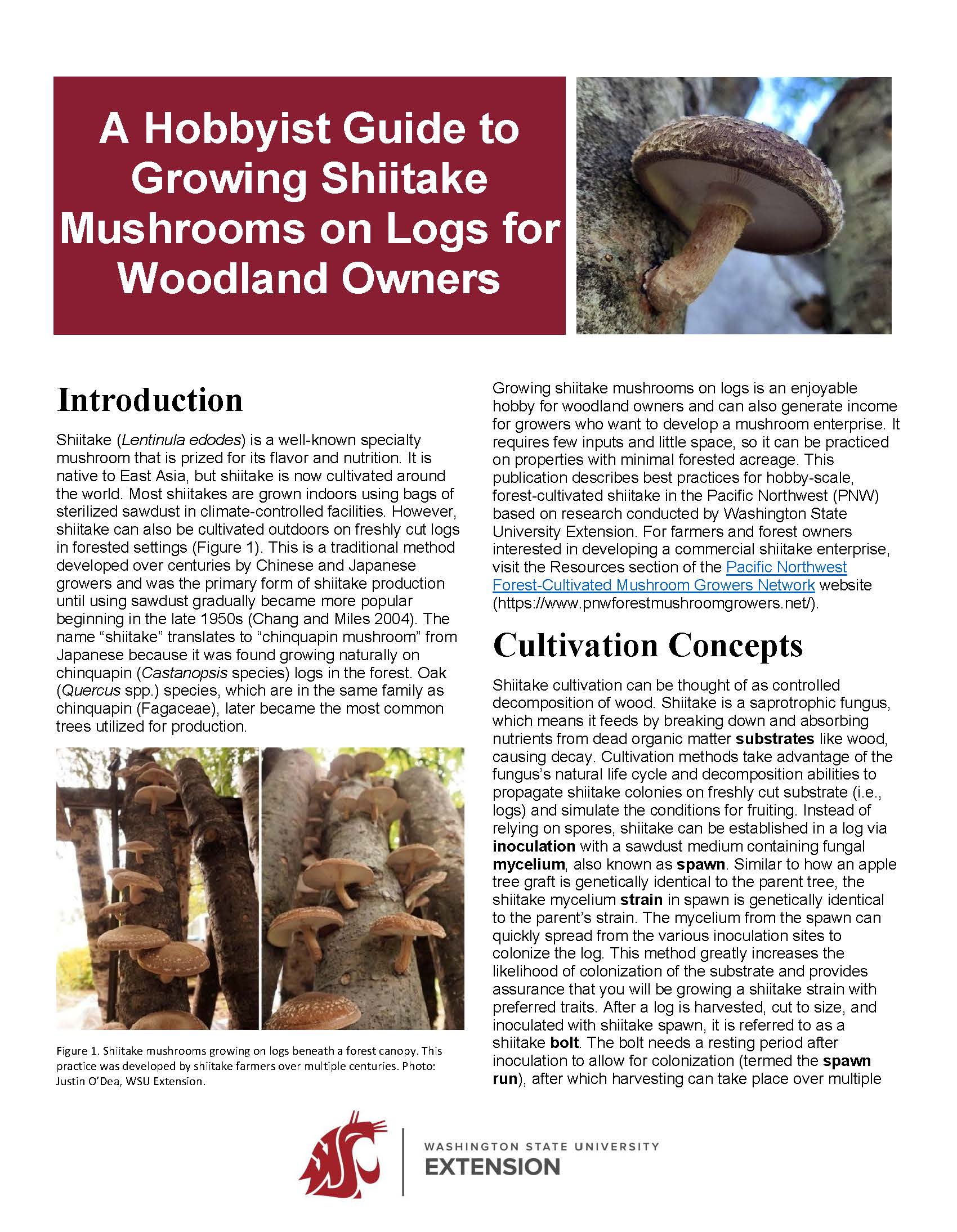
- A Hobbyist Guide to Growing Shiitake Mushrooms on Logs for Woodland Owners – WSU Extension
- AFNW Workgroup Meeting – Forest Cultivated Shiitake for Commercial Sale (Webinar)
- Farming Mushrooms in the Forest: An Opportunity to Grow Something New – Forest Stewardship Notes
- Pacific Northwest Forest-Cultivated Mushroom Growers Network – WSU Extension
- Shiitake Growers Handbook: The Art and Science of Mushroom Cultivation (Book)
Other Forest Cultivated Shiitake Resources
- Best Management Practices for Log-Based Shiitake Cultivation in the Northeastern United States
- Field and Forest Products – Shiitake on Logs
- Growing Shiitake Mushrooms: An Agroforestry Practice – UM Center for Agroforestry
- Outdoor Specialty Mushroom Production – Cornell Small Farms
- Shiitake Enterprise Budget Tool – Cornell Small Farms
- Shiitake Mushroom Production – Ohio State University