This case study was developed by the USDA Forest Service, National Agroforestry Center and the USDA Northwest Climate Hub. Any errors or omissions are the responsibility of the authors and can be directed to the National Agroforestry Center. The lead author is Katherine Favor, ORISE Fellow with the National Agroforestry Center.
These and more case studies were developed for the Pacific Northwest Training Manual for Applied Agroforestry (to be released in 2026).
Introduction
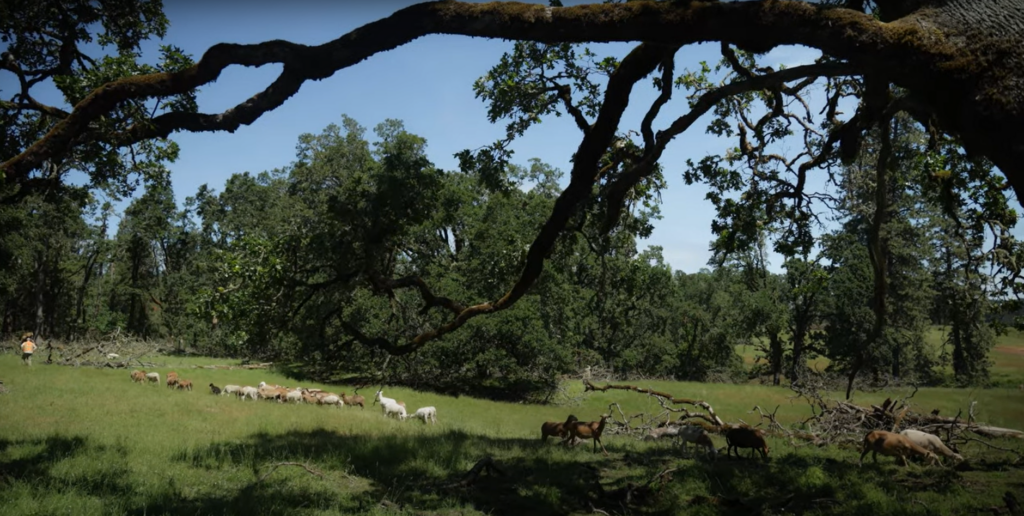
Spencer Shadow Ranch is a 340-acre property in Eugene, Oregon where owners and operators, Doug and Sookjae McCarty, transitioned an unmanaged forest to a silvopasture system, with cattle rotated under the shade of trees. Doug McCarty identified risks such as low soil fertility, high heat, and limited rainfall, and took action by integrating livestock with native trees such as white oak (Quercus alba) and valley ponderosa pine (Pinus ponderosa). By implementing silvopasture through strategic thinning and rotational grazing, the ranch is mitigating heat stress in cattle, improving forage resilience, and improving soil fertility. Oak woodlands and savannas like those found on Spencer Shadow Ranch provide important ecological functions to numerous species that depend on this ecosystem (Tietje et al. 2005). By implementing silvopasture, the McCartys are conserving this habitat while increasing the productivity of their ranch.
How it Started:
Doug and Sookjae McCarty purchased Spencer Shadow Ranch in 2014. What started out initially as an investment opportunity quickly turned into what Doug now sees as his life’s legacy. As Doug started spending more time on the land and studying permaculture design (a design framework for sustainable food production), stewarding the ranch became his full-time passion and he never turned back.
“When we took over ownership, the land was in bad shape,” says Doug. Parts of the land had been operated as a hay farm for years, relying on heavy inputs to stay viable. Other parts of the land were unmanaged, overgrown forests that posed a fire risk. The soil was compacted from heavy equipment use and severely lacking in microbiological life.
The McCartys invested in livestock, believing that well-managed grazing would help improve soil structure fertility, structure, and water holding capacity, to support more production. “Divots from cattle hooves create thousands of mini-ponds that collect water,” explains Doug. “This helps water infiltrate slowly. Cattle also take forages and transform them into nutrient-rich manure that goes back to the soil and provides nutrients in a plant-available form.” Because of this, cattle can help improve soil fertility when rotated regularly and when managed intensively.
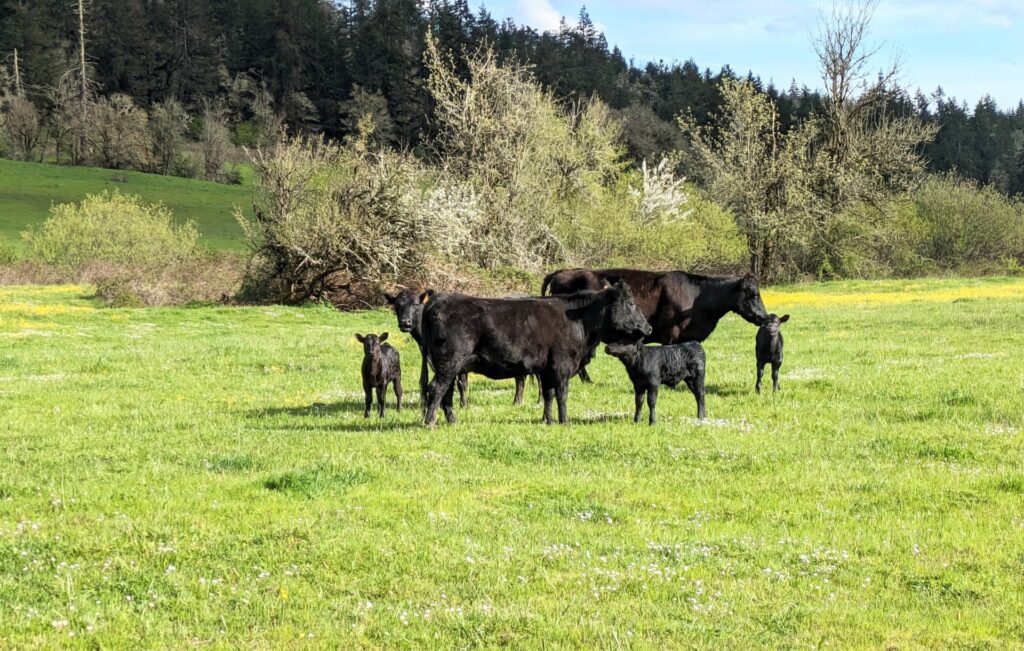
The McCartys now have a complete herd (calves, cows, and bulls) consisting of 140 head of Aberdeen Lowline Angus and Dexter steer – all grass fed and finished. To address the risks of high heat and limited water availability, the McCartys are practicing silvopasture, defined by the USDA as the establishment of trees, livestock, and forage on the same unit of land.
Climate Risks and Adaptation Strategies:
Extreme Temperatures
Both high and low temperatures can pose challenges for livestock. Eugene, Oregon’s USDA Plant Hardiness Zone is 8b, and while temperatures can drop to 15 °F in the winter, they regularly climb into the high 90’s in the summer. Since 1900, temperatures in Oregon have risen 2.5 °F (Chang et al. 2023). They are projected to increase another 4.7-10 °F by the end of the century, depending on whether greenhouse gas emissions are curbed or increased in the coming years (Chang et al. 2023). Much of the McCarty’s land is sloped slightly to the south, which exposes plants and livestock to even more heat. Because cattle begin experiencing heat stress at temperatures as low as 75 °F (St-Pierre et al. 2003), Doug understood the importance of designing a system that would address this risk.
One of the ways that Spencer Shadow Ranch is managing livestock heat stress is by implementing silvopasture. In silvopasture systems, trees provide shade to livestock, reducing temperatures by up to 2.5 °F and reducing solar radiation exposure by 14–58% (Karki and Goodman 2010). This can reduce heat stress in cattle, resulting in increased feed intake, faster weight gain, improved fertility, and lower mortality rates (Smith et al. 2022).
Trees also provide protection to cattle during cold winter months. “The beauty of trees is that they provide shade and cooling in the summer, and they also provide protection from the worst of the winter,” explains Doug. Of the McCarty’s 340 total acres, 120 acres are now managed as silvopasture, with native white oaks and valley pine strategically spaced and integrated with pasture in the understory.
Limited Water Availability:
Limited summer precipitation and regulations that limit irrigation are additional challenges that Spencer Shadow Ranch experiences. While Eugene receives around 46 inches of rain a year, it typically gets 0 to 5 inches from July 1 to November 1. Four months with limited rainfall can prove challenging when trying to sustain cattle on pasture. Limited water may prove even more of a challenge in the coming years, as climate change models project that summer precipitation may decrease in Oregon, and water stress will be exacerbated by increasing temperatures (Hegewisch and Abatzoglou 2025).
The McCartys are addressing the challenge of limited water by planting pasture into thinned wooded areas, as shade from trees can help pastures maintain soil moisture longer by reducing evapotranspiration. This can enhance forage production during times of limited rainfall (Smith et al. 2022).
Establishment
Silvopasture is often established either by planting trees into existing pastures, or by thinning trees in an existing forest and planting preferred forages under the thinned canopy. Achieving the right balance of trees and pasture is important; some shade from trees is beneficial, but too much shade can prevent pasture from growing. To achieve the proper canopy density, Doug thinned his forested land in a strategic way. Originally, the forested parts of the McCarty’s land held dense stands of white oaks (Quercus alba), valley ponderosa pine (Pinus ponderosa), cedar (Cedrus spp.), and Douglas fir (Pseudotsuga menziesii). Doug started thinning the forest by first removing dead and dying trees. He also logged mature, economically valuable trees from an overstocked stand, including some older white oak, which he sold as lumber for flooring. Finally, he removed most of the Douglas fir and cedar trees, because their dense canopies cast too much shade, encroaching significantly on oak and pine trees and reducing the amount of light that reaches the understory. Douglas fir trees can also be susceptible to drought and heat stress, and were therefore identified as the most at-risk species in the face of limited summer precipitation and increasing summer temperatures. Most of the healthy pines and oaks were left because Doug considers them “good neighbor species” that don’t compete excessively with pasture for light or water.
Design
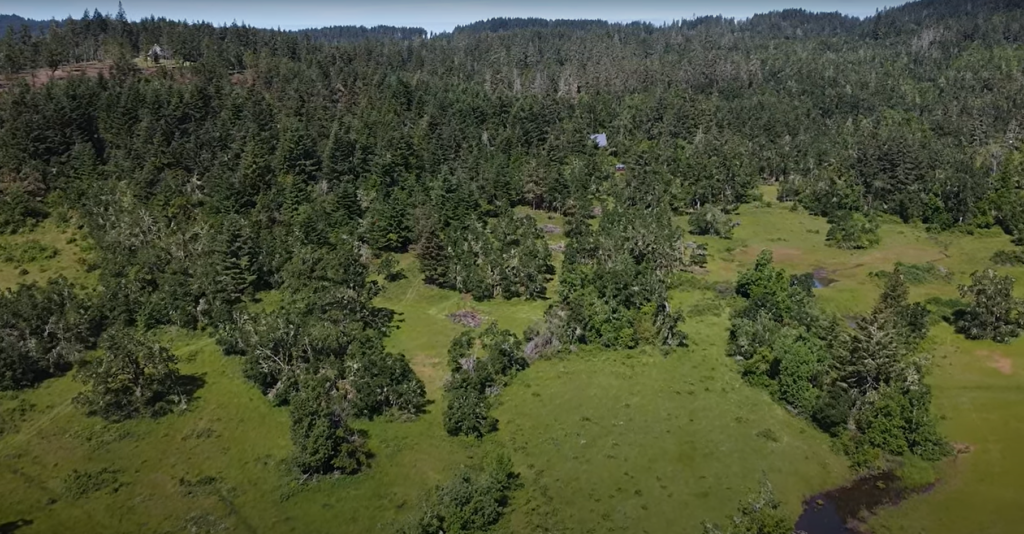
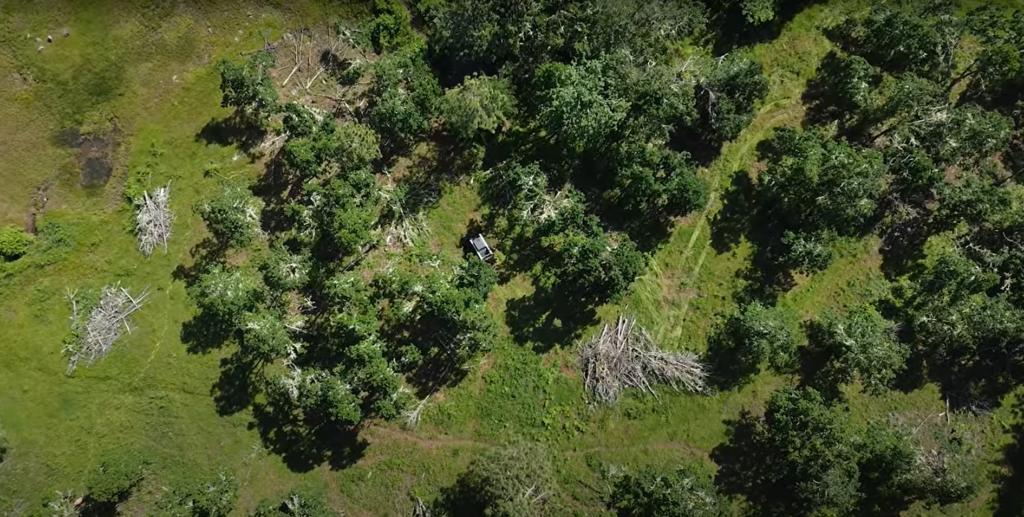
At Spencer Shadow Ranch, Doug opted to create islands of trees laid out in a “patchwork” design. In his design, there are 1–2-acre patches of well-spaced trees interspersed with 4–5-acre patches of treeless meadows in a grid pattern across 120 acres of landscape. Each paddock that cattle pass through contains both open pasture and stands of thinned trees. This allows cattle the freedom to access shade for relief from the heat when needed, and to also access open pasture, which often can support more forage.
By creating a patchwork pattern of treed areas and open grassland areas, Doug has also enhanced the “edge effect” on his land. The “edge effect” is a phenomenon in ecology in which biodiversity richness increases where two or more habitats meet. “If you look at a forest ecosystem, the edges of the forest – where the forest meets another kind of ecosystem – are where most of the species interaction occurs,” explains Doug. “That edge is a hotspot for wildlife. A goal of mine with this silvopasture design was to create more of that ‘edge effect’ on the land.” Although the ranch itself is only half a square mile, Doug has created roughly 20 miles of “edge” ecosystems with his careful design which he says has allowed wildlife to flourish. ”It’s kind of a magic trick,” he says.
Another benefit of this patchwork design is sustained forage production in each paddock at different times of the year. During summer, the growth rate of forage exposed to direct sun can be inhibited by high heat. When forage is grown under the partial shade of trees, however, heat stress can be alleviated, which allows forage growth to continue. In cooler times of the year, however, shade from trees can limit forage growth, so during cool months, it’s important to have some areas of pasture that are exposed to direct sun. By concentrating trees in patches and leaving some open pasture, Doug can extend the forage growing season using the same paddocks all year.
Management
While management is intensive, Doug has designed his silvopasture system to rely on as few inputs as possible. Rather than using herbicides to manage weeds in the forest, vegetation is mostly managed by cattle, which eat many of the undesirable species when rotated using adaptive grazing principles. After rotating cattle through first, Doug then follows with his herd of sheep, which eat the vegetation that cattle don’t like, including poison oak, hawthorn, young cedar trees, and blackberry.
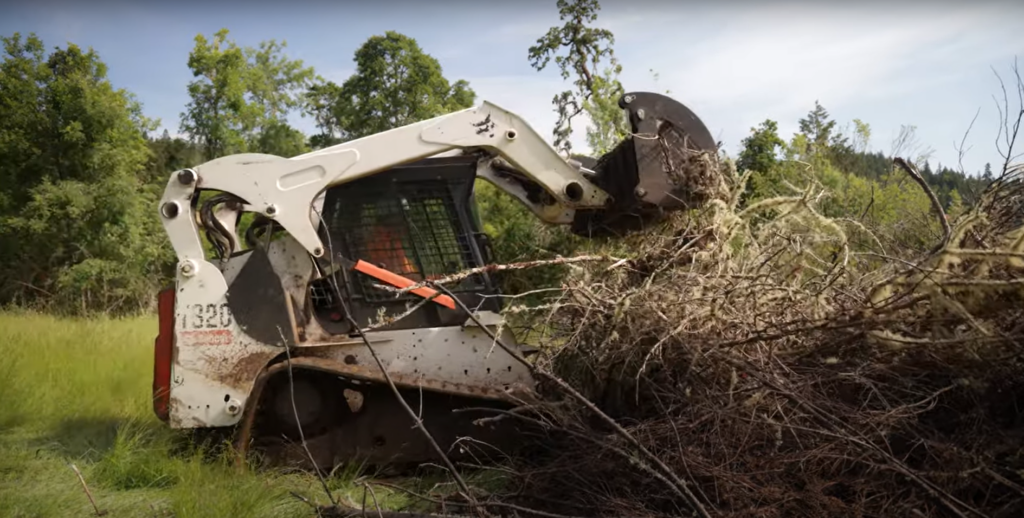
Restoring the native oak woodland is an ongoing project that is very labor-intensive, and that requires regular thinning of trees with the use of specialized equipment. Doug cuts down most trees by hand with chainsaws and removes them with a skid steer that has a log grapple attachment, which can lift up to 4,000 pounds. High-quality logs are sold, while dead and dying trees are hauled to a slash pile where they are burned. Once trees are logged, the remaining woody debris on the forest floor is cut up with a brush cutter. Finally, the ground is raked over with a tractor, and vegetation is allowed to grow. Native grasses and clover come up naturally, but Doug also broadcasts native perennial grasses into these areas.
Rotational grazing is a critical part of silvopasture management to ensure that cattle promote soil health instead of damaging it. When cattle are rotationally grazed and the land is allowed to rest in between periods of grazing, animals can improve soil fertility, microbiological activity, infiltration rates, and soil water holding capacity (USDA NRCS 2019). At Spencer Shadow Ranch, Doug monitors pasture growth carefully to determine when it is time to rotate cattle to a new paddock. In his larger, 50–100-acre paddocks, the timing of these rotations comes out to about every two to four weeks. In the smaller, 15–20-acre paddocks, cattle sometimes need to be rotated as often as every three days. Once cattle leave an area, that paddock is allowed to rest for a minimum of 40 days before animals are allowed back in.
Challenges
Fencing infrastructure can be important both to conduct rotational grazing and to protect cattle from predation. However, fencing can be expensive and time consuming to maintain, and Doug has identified this as one of his biggest challenges.
One of Doug’s land stewardship goals is to promote biodiversity across the broader landscape by increasing the species-richness of the land. He recognizes the role of wildlife in ecosystem health, and he welcomes diversity and abundance of fauna of all kinds – even predators like coyotes and mountain lions. Rather than kill these animals or eliminate their habitat, Doug’s strategy to protect his cattle while also promoting wildlife has been to exclude predators with multiple layers of fencing, including electric fencing and a perimeter border of taller nonelectric fencing. By having multiple exclusionary barriers in place, Doug has been able to reduce the threat of predation without hurting predators.
Eventually, Doug would like to invest in more fencing to establish smaller paddocks for optimized rotational grazing as well. Spencer Shadow Ranch’s existing paddocks range from 15- to 100-acres, but Doug’s goal is to divide the land into smaller 20-acre paddocks, so that cattle can be rotated through quickly at a higher stocking density. “The overall goal is to have 20-acre paddocks, each with roughly 6 acres of woods and 14 acres of meadows,” explains Doug. “This will allow enough canopy cover for weather protection, while providing enough open space to invite abundant grazing.” This type of rotation also promotes even pasture growth and allows each paddock to receive longer periods of rest between rotations. Paying for and maintaining fencing infrastructure is a challenge, but Doug feels it will be worth it. This infrastructure will support improved rotational grazing, which will benefit soil health, protect his cattle, and protect other wildlife as well.
Implementation
The USDA Natural Resources Conservation Service (NRCS) helped fund much of Spencer Shadow Ranch’s initial forest thinning through a financial assistance program called the Environmental Quality Incentives Program (EQIP). Doug worked with an NRCS Technical Service Provider to develop a Forest Management Plan, which helped inform which trees to thin and which trees to keep. Doug invested in equipment to implement the Forest Management Plan, and some of these costs were reimbursed through financial assistance from NRCS.
Conclusion
Doug and Sookjae McCarty’s implementation of silvopasture at Spencer Shadow Ranch is helping them address challenges such as limited soil fertility, extreme temperatures, and limited water availability, to improve their cattle production in the face of changing climate conditions. By adopting silvopasture, the McCartys are also able to conserve their oak woodland and savanna habitat and protect biodiversity. While challenges inevitably come up, Doug considers them as part of the journey. “There are no mistakes – just activities that give you results that you weren’t expecting,” says Doug. “It’s all a learning opportunity
References:
Chang, M.; Erikson, L.; Araújo, K.; Asinas, E.N.; Chisholm Hatfield, S.; Crozier, L.G.; Fleishman, E.; Greene, C.S.; Grossman, E.E.; Luce, C.; Paudel, J.; Rajagopalan, K.; Rasmussen, E.; Raymond, C.; Reyes, J.J.; Shandas, V. 2023: Ch. 27. Northwest. In: Fifth National Climate Assessment. Crimmins, A.R., C.W. Avery, D.R. Easterling, K.E. Kunkel, B.C. Stewart, and T.K. Maycock, Eds. U.S. Global Change Research Program, Washington, DC, USA.
Hegewisch, K.C. and J.T. Abatzoglou. 2025. ‘Climate Mapper’ web tool. Climate Toolbox. Accessed on [February 10, 2025].
Karki, U.; Goodman, M.S. 2010. Cattle distribution and behavior in southern-pine silvopasture versus open pasture. Agrofor. Syst. 78, 159–168.
Smith, M.M.; Bentrup, G.; Kellerman, T.; MacFarland, K.; Straight, R.; Ameyaw, L.; Stein, S. 2022. Silvopasture in the USA: A systematic review of natural resource professional and producer-reported benefits, challenges, and management activities. Agriculture, Ecosystems & Environment. 326(1): 107818-.
St-Pierre, N.R.; Cobanov, B.; Schnitkey, G. 2003. Economic Losses from Heat Stress by US Livestock Industries. Journal of Dairy Science 86:E52-E77.
Tietje, W.; Purcell, K.; Drill, S. 2005. Oak woodlands as wildlife habitat. In: A Planner’s Guide for Oak Woodlands, Second Edition. Giusti, G.A.; McCreary, D.D.; Standiford, R.B. University of California, Division of Agriculture and Natural Resources, Davis, California.
USDA NRCS. 2019. Management Intensive Rotational Grazing (E528R). [Date accessed: 12 February 2025].
This resource was supported in part by the U. S. Department of Agriculture (USDA) Climate Hubs via an appointment to the USDA Forest Service Research Participation Program administered by the Oak Ridge Institute for Science and Education (ORISE) through an interagency agreement between the U.S. Department of Energy (DOE) and the USDA. ORISE is managed by ORAU under DOE contract number DE-SC0014664. All opinions expressed in this paper are the author’s and do not necessarily reflect the policies and views of USDA, DOE, or ORAU/ORISE.