Dahlias in the Fall
by Carol Barany, Yakima County Master Gardener
I’m at my desk writing because it’s too hot to work outside. By the end of today, September 3, Yakima could break the all-time high temperature record. I’m trying to leverage that with the fact that the average first frost date recorded at the airport in my 98902 zip code is October 3.
Two weeks later on October 15, the City of Yakima will end its irrigation season, another milestone on the march to the end.
My dahlias must have heard the news. They’re blooming with wild abandon, holding nothing back just when other flowers are slowing down.
When gardeners get together these days to compare notes, I’m amazed by how many of them are growing dahlias.
It hasn’t always been easy for these dramatic divas. Ignored for years by sophisticated gardeners, dahlias were considered old-fashioned and even gaudy not that long ago. These days, dahlias are enjoying a run as the ‘It’ flower.
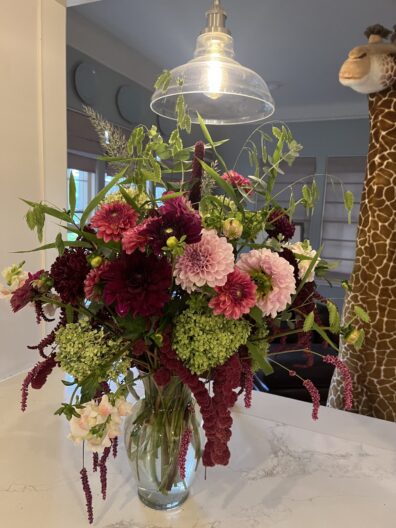
Posting stunning photos of voluptuous dahlias as wedding flowers in her books and magazines beginning in the 1990s, many credit Martha Stewart for turning the tide. A few years later in 2008, Erin Benzakein of Washington’s Skagit Valley founded Floret Flowers. Erin is considered by many to be the United States’ most influential flower farmer. Together, both women revived an interest in not just dahlias but locally sourced, fresh seasonal flowers.
New small-scale cut-flower farmers shared their stories and photos. All those gorgeous images of dahlias on Instagram and Pinterest captured our attention and inspired home gardeners to grow some dahlias of our own.
Just as ‘tulipmania’ gripped Europe in the 17th century, these days, it’s ‘dahliamania.’
Most September days begin for me at dawn with a cup of coffee and a pair of snips. In the still-cool hours of the morning, it’s a pleasure to cut a bucket of blooms for bouquets.
The honeymoon will be over come November, when the real work begins. Digging, dividing, and storing tubers…..not my favorite tasks. But for now, I’m madly in love and don’t mind the maintenance tasks.
I’ve learned from my friend Nancy that stripping the plant’s lower leaves up to about 16” from the ground can improve air circulation and keep late-season powdery mildew at bay. Many of these leaves are brown or declining anyway, contributing nothing to photosynthesis, so why not get rid of them now?
If you’ve been fertilizing your dahlias regularly, it’s recommended that you stop 30 days before you dig your tubers. The plant should be focusing its energy on tuber production, not growing more leaves and blooms.
Once dahlia plants are cut down by frost, they all look the same. Imagine a collapsed heap of mushy stems. If it’s important for you to know one dahlia from another next spring, check their ID tags now for accuracy.
While my dahlias are still blooming, I’ll tie a length of plastic flagging tape to the base of each clump. With a permanent marker, I record the variety name. Some of the flags will be marked ‘LOSER,’ reminding me which dahlias are not worth growing again next year. When I dig the clumps for storage, they’ll already have an ID label attached that can go into storage with them.
For as long as I’ve grown dahlias, I’ve waited a week or two after a killing frost to dig the tubers. I recently discovered it’s a myth that frost is necessary for successful winter storage. Gardeners in warm or tropical climates that never get frost dig and divide their dahlias just fine.
That’s because as the days grow shorter at the summer solstice, increasingly longer nights trigger dahlias into tuber development. According to dahlia expert Kristine Albrecht, you can dig tubers after they’ve been growing for a minimum of 135 days. There is nothing wrong with waiting for frost, but it’s not a requirement.
Dahlias can be left in the ground to overwinter in USDA Zones 8 and warmer. In colder climates, dahlia clumps must be lifted and stored indoors to prevent them from freezing.
Are you a gardener who likes to walk on the wild side? Some Zone 7 Yakima gardeners successfully leave their dahlias to overwinter right out there in their garden beds with some extra protection.
I still cling to the ritual of digging and storing my tubers every November. As soon as they’re dug and stored in the basement, I cover the beds with about 12” of shredded leaves to protect the soil.
Last year, I left several ‘LOSER’ clumps I never wanted to see again in place and said “goodbye.” Guess what? This spring, as I cleared away the leaf mulch to plant a new crop of dahlias, virtually every one of those ‘LOSER’ clumps was alive and sprouting.
For great information on dahlia culture, consult the American Dahlia Society website: www.dahlia.org.
Kristine Albrecht has her own YouTube channel with more excellent advice and information.
If you’ve never grown dahlias before, these resources may convince you to give it a try.