Grow a Garden From Garbage
by Carol Barany, Yakima Master Gardener
I can still remember the clear glass custard cups filled with water and sprouting carrot tops sitting on our kitchen windowsill. Tired of making snow men, snow angels, snow forts, and snow in general, weeks of winter in Buffalo, New York would eventually drive my little sister Audrey and I indoors to complain of having nothing to do.
From time to time, our mother could keep us occupied with simple indoor gardening projects to combat winter our boredom. Small children have little green thumbs, and it doesn’t take much to pique their interest in the natural world.
GROW A GARDEN FROM ‘GARBAGE
If you’re chopping up vegetables, save the tops of carrots, beets, turnips, and radishes; and the root ends of celery, lettuce, and green onions. Kids can place them in a shallow dish of water and in just a few days, notice re-growth from the center. They can snip the fresh greens and add them to their lunch. Next time you serve a fresh pineapple, save the top and set it in a dish of water. Kids won’t have to wait long for new leaves and roots to appear. The new plant can be transplanted into a pot and grown outside for the summer. Make sure you tell your child not to expect their plant to produce a pineapple, just pretty leaves.
SWEET POTATO VINE
A sweet potato has a wide end, which sends out sprouts, and a narrow end, that grows roots. Insert 4-6 toothpicks, perpendicular to the potato, around its circumference. Set the tuber on the rim of a glass, two-thirds full of water, supported by the toothpicks, with the narrow end in the water and the top half above the glass rim. Children can clearly see root growth within 10 days if the glass is kept in a warm area with bright light. The first vine sprouts usually pop within a week or two of the roots. Although the vines can grow quite long if the tuber is left in water, it will eventually begin to rot and die. Before that happens, your child can transplant the sweet potato into a 5” diameter pot filled with potting mix. Continue to keep it in a warm, sunny place and water the soil when the top inch feels dry.
AVOCADO PIT TREE
Commercial avocados are grown on grafted rootstock. A plant produced from a pit is unlikely to ever produce fruit, but will grow into a plant that a child can learn from and care for. Remove the pit from a ripe avocado and rinse off any excess flesh. Push 4-6 toothpicks around the circumference of the pit and suspend it on top of a glass of warm water. The pit should dip an inch or so into the water at the dented or dimpled end. Place the glass in bright light where temperatures are at least 65 degrees, and change the water frequently. Soon roots, and eventually, stems and leaves will sprout. When the roots fill much of the glass and the plant has two sets of leaves, it’s time to transplant it to a pot that can be brought outside this summer.
GARLIC GREENS

Plant three or four cloves in a pot filled with potting soil. Set in a sunny window and water lightly. You won’t get a head of garlic, but garlic sprouts or greens will grow in just 7 to 10 days. Children can snip the leaves and add to tacos and pizza.
COMPACT DISC CASE MINI-GREENHOUSE
This is a great visual for witnessing the miracle of germination. Fill the bottom half of an empty plastic CD case with damp potting soil. Spread easy-to-sprout seeds like grass or beans evenly over the soil and then lightly cover them with another thin layer of soil. Tape the bottom and sides of the case closed to keep the soil in but leave a small gap at the top for watering. Once the seeds have sprouted and developed roots and shoots, transplant into a larger pot.
GROW MICROGREENS
Microgreens are seedlings that are harvested and eaten before they can grow into bigger plants. Recycle a clear plastic food container and punch a few drainage holes in the bottom. Add potting soil about ¾ of the way to the top. Sprinkle seeds over the soil and lightly cover them with more soil. You can use old vegetable seeds, or buy a packet of microgreen seed mix. Use a spray bottle to moisten the soil and close the lid for a few days to create your own greenhouse. Place the container in a sunny location and watch for germination in a few days. Kids can snip the tops of the greens right away, or wait for them to get a few inches taller.
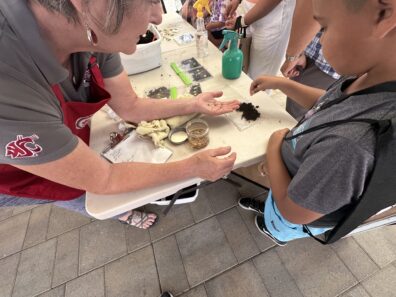
These projects never get old.
I was still growing sweet potato vines and avocado pit trees when I was a college student. My current windowsills hold a multitude of jars filled with high hopes and cuttings of an array of botanicals.
Try one of these projects with your own children this week. What just might grow is a future gardener.