Quail: Part of a Healthy Garden
by Don Flyckt, Yakima Master Gardener
Gardens are more than a source of healthy food or a place to reconnect with nature. Our gardens provide habitat for birds, bees, butterflies, small mammals and a wide-range of invertebrates. In return, these garden visitors pollinate our plants and limit the ability of pests and diseases to cause damage.
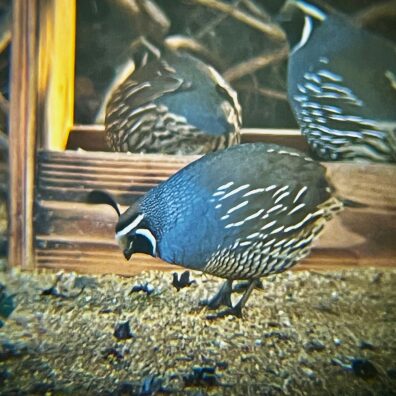
Like many gardeners, I have been working to encourage native pollinators to visit. An unintended consequence of this never-ending effort is a noticeable increase in the California quail population. In hindsight this should not have been a surprise. Both quail and pollinators benefit from a garden with food, shelter and a reliable source of water.
A California quail’s diet consists of seeds from a wide variety of plants, leaves and fresh shoots from weeds; and small invertebrates like caterpillars, grubs, aphids, and white flies. Much of this diet consists of garden pests and help removing them is greatly appreciated. Unfortunately, some of their diet may include portions of my tender vegetable plants.
In captivity, an adult quail eats 0.5 to 1 ounce of feed per day. Assuming the 30 wild quail routinely visiting my garden have similar appetites, they eat a pound of weed seeds and insects per day. After passing through the quail’s digestive system, the overwhelming majority of seeds become non-viable. The seeds are physically broken down in the quail’s gizzard, allowing the other portions of their digestive tract to extract the nutrients.
Quail Behavior
California quail are highly social birds that form coveys during the non-breeding season. A covey typically consists of 10 to 50 individuals. Quail do not migrate and occupy a relatively small home range between 17 and 45 acres.
Quail can fly, but they are primarily ground birds that use short explosive bursts of flight as a last-minute escape tactic from predators. Their plump bodies, strong legs, and rounded wigs are built for quick takeoffs and scurrying, not soaring. They fly for survival. Their sudden and noisy launch is used to startle a potential predator.
Breeding occurs from March to August, with pairs forming monogamous bonds. Their nests are shallow ground scrapes lined with grass and feathers. Often placed near vegetation or rocks for protection, nests can be found up to 10 feet off the ground.
A nest will contain 10 to 16 eggs incubated solely by the female for 22 to 23 days after the full clutch is laid. The female performs the majority of the incubation duties while the male remains nearby as a sentinel, alerting and attempting to deter potential threats.
Quail typically have 1 to 3 clutches per year depending on their physical condition, weather, and availability of food.
Chicks emerge from the egg covered in downy feathers and capable of walking within hours of hatching. They begin learning to fly 10 days after hatching. This early mobility allows the family unit to relocate to safer foraging areas soon after hatching. They leave the nest site almost immediately, relying on their parents for guidance and protection.
Supplemental Feeding
In return for the quail’s help controlling my garden pests, I provide them with supplemental feeding during winter when their food is limited. The goal of supplemental feeding is to help the quail reach spring in a healthy condition and ready to raise the next generation.
The quail population is seldom limited by food but by the amount of shelter to escape predators.
Begin by placing a small amount of feed out in late fall, when food is starting to become scarce. This will help the quail to recognize your feeder as a reliable source of food. Quail require a higher protein feed than other common backyard birds such as sparrows, mourning doves and finches. Adult quail need feed with 18-22% protein. Chicks require even higher levels (25-30%) for their first 6 weeks of life. High carbohydrate feed like cracked corn is a nice treat for holiday celebrations and periods of cold and wet weather.
Supplemental feeding should be provided in a manner that reflects the quail’s natural eating behavior. They are ground foraging birds and prefer areas with bare dirt or sparse grass. A bird feeder hanging from a tree branch is not a good option. Quail are very messy eaters and the feeding area will soon become untidy. If not properly maintained , it will attract unwanted wildlife and the spread of diseases.
Quail feed mainly in the early morning and late afternoon and rarely forage more than 50 to 100 feet from protective shrubs and trees. Placing a feeder at the base of a shrub or tree provides them with escape opportunities. Without this protective cover, quail will fall prey to owls, hawks and domestic cats.
Quail are a welcome gardening companion and happily provide valuable assistance controlling garden pests. They add beauty and sound to our gardens and their presence indicates our gardens are providing essential habitat. Maybe most important is the opportunity they provide to teach the children in our lives about the delicate balances and beauty of nature.