Confusing Seed Terms
By Master Gardener, Phyllis Pugnetti
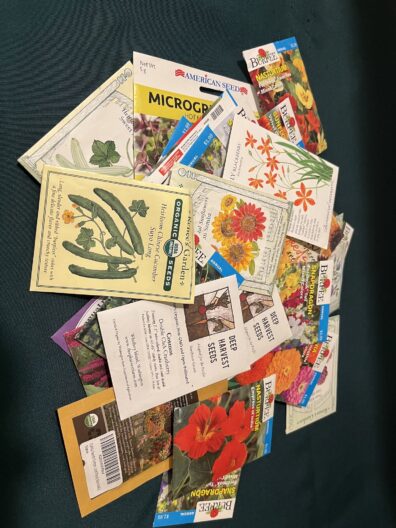
Each spring gardeners are planning for the best garden ever! Unfortunately, it’s hard to get started with a good plan when the long list of terms on seed packets is so confusing it’s impossible to decide what seeds to buy.
Open pollinated seeds result from pollination by insects, wind, self-pollination or other natural forms of pollination. As long as pollen is not shared between different varieties within the same species, then the seeds produced can be saved and year after year will have the same characteristics as the original parent plants.
Heirloom seeds are always open-pollinated varieties. Like an antique, open pollinated varieties that are at least 50 years old are considered an heirloom. Some heirlooms come from seed that has been handed down for generations in a particular region, hand-selected by gardeners for a special trait. Many heirloom varieties have interesting stories that document their history. Both open pollinated and heirlooms seeds will produce plants with the same characteristics as the parent plant.
Hybrid seeds are often labeled as F1 and are the result of controlled methods of pollination in which the pollen of two different varieties are intentionally crossed by human intervention. Seed produced from hybrid plants will be different from the parent plants. Therefore, you must purchase new hybrid seed every year.
GMO and GE are genetically modified organisms or genetically engineered organisms where the DNA of the seed has been altered by human manipulation, often by inserting genes from unrelated species, to create traits that would not otherwise happen in nature. For example, the DNA of corn seeds may have the DNA of a soil bacteria inserted into it, creating something that nature wouldn’t produce. At this time GMO and GE seeds are rarely available to home gardeners, largely due to the high cost of seed and legal restrictions to sellers and growers. If you grow GMO or GE seeds, even unknowingly, you can be sued for patent infringement. Use caution!
USDA Certified Organic seed requires that growers are in compliance with strict regulations specified by the USDA. Certified Organic seeds are grown without the use of synthetic fertilizers and pesticides, sewage sludge, irradiation, or genetic engineering. It is an expensive certification process that is not always affordable to small growers. Many seeds are grown organically and can be labeled as Organic, but if they haven’t met all the USDA criteria they can not be labeled as USDA Certified Organic.
Pelleted seeds are enclosed in a round pellet made from simple clay or another inert material to bulk them up. This process makes very small seeds such as lettuce, carrots, and onions easier to handle and sow.
Treated seeds are more likely used by commercial growers but are also available to home gardeners. Treated seed has a chemical or biological coating on the outside of the seed to protect it from specific seed or soil-borne pathogens, improving it’s germination rate and seedling health. Treated seed is usually a bright pink or blue color to distinguish it from non-treated seed. The coating usually breaks down within 2 weeks.
Now that you understand the various terms on seed packets it should make reading all those seed catalogs more enjoyable and your final buying decisions a little easier. So now you can move on to planning your best garden ever!