
Building the Youth-Adult Partnership

Program Contact
Autumn Britt, 4-H Program ManagerPhone Number509-588-7817 Email Address • autumn.britt@wsu.edu
The Youth-Adult Partnership
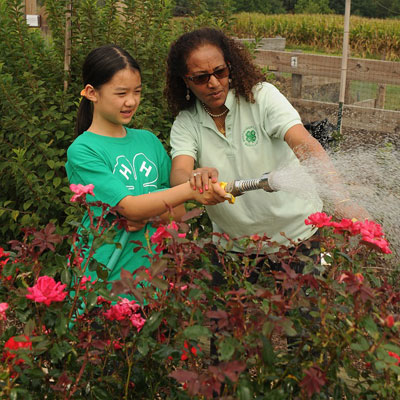
4-H is a youth-driven program. This means that the young people in our clubs have meaningful opportunities to make decisions. Their voices are central to the entire program. 4-H clubs provide youth safe settings for learning the skills for leadership and to practice the decision making process while being supported by caring adults.
When youth feel empowered in this way, they “learn by doing” – they become stronger leaders, team players, conversation facilitators, and problem solvers. They learn how to plan together, navigate conflict as a group, and work through their differences with kindness and respect.
Youth can take many different leadership roles within their clubs, their communities, their country, and their world.
Club officer positions allow for youth to take ownership of meetings and to learn how to formally conduct club business.
Fundraisers to support club projects and programs provide youth with experience planning events and managing club finances.
Service projects allow youth to connect with the larger community in which they live, whether those projects are volunteering to support a cause they believe in or service learning projects.
Workshops, showcases, clinics, and other events give youth the opportunity to demonstrate these skills and their projects beyond just the fair. The planning, public speaking, and leadership skills build the sense of belonging youth have in their communities as they discover they do have a voice and the means to create opportunities for others in their community.
Check out this article from Extension.org’s 4-H Volunteerism Resources library on Practicing Youth-Adult Partnership (PDF) for a research-based deep dive into this area.
Regional Opportunities
Statewide Opportunities
State Teen Leadership Programs and Events
National Opportunities
The 4-H Thrive Model
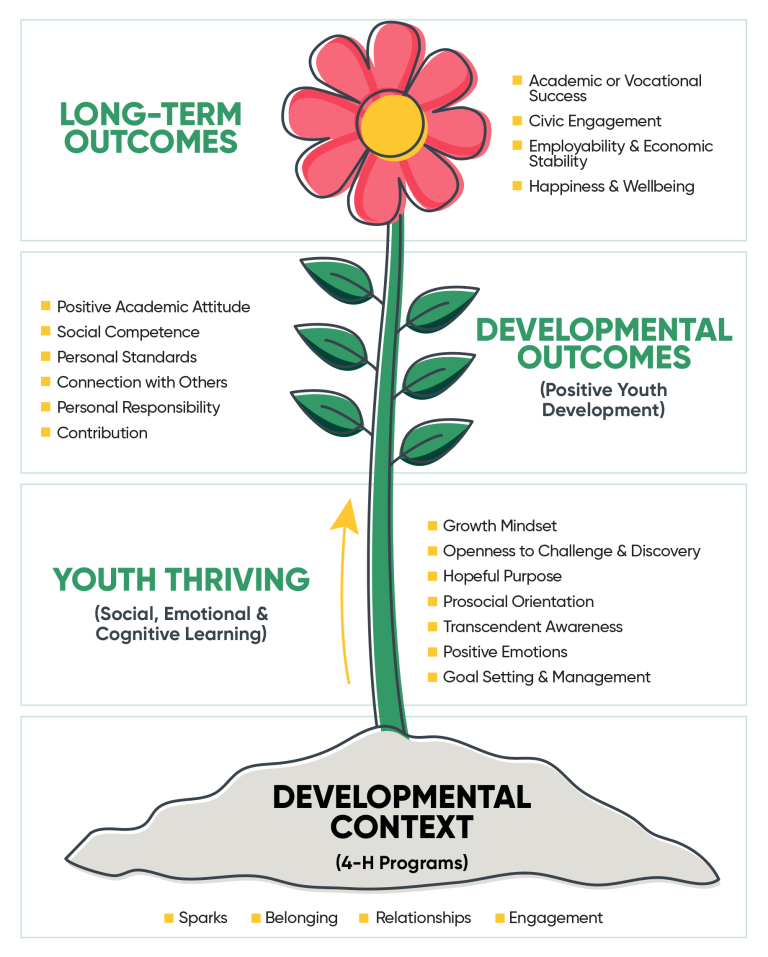
Developmental Context (4-H Programs)
The 4-H Thrive Model starts with the developmental context. If we use a plant to illustrate this idea, this is the soil in which it s planted. It includes a youth’s sparks – the interests that light up their faces with excitement, their sense of belonging, the relationships they have with their peers and caring adults, and their sense of engagement.
Youth Thriving (Social, Emotional, & Cognitive Learning)
Youth who thrive have people in their lives encouraging their social, emotional, and cognitive learning. They develop a growth mindset and learn that failure is part of learning. They are open to challenges and discovering new things and find hopeful purpose in their lives. They have a prosocial orientation, meaning they believe in supporting others, being compassionate, and not intentionally causing harm. They develop transcendent awareness – a sense of connection to others that goes beyond just what others can do for them. They find ways to express positive emotions and to express all emotions in healthy ways. Youth also learn how to set goals and to manage their time and expectations.
Developmental Outcomes (Positive Youth Development)
The developmental outcomes for the 4-H Thriving Model go beyond the 4-H club setting. Youth develop a positive academic attitude and become more socially competent. They set their own personal standards and learn how to maintain their connections with others. They accept personal responsibility for their words and actions and understand that they, too, have a contribution to make to their communities.
Long-Term Outcomes
Encouraging a youth to thrive in a youth development program such as 4-H has a benefit that reaches far beyond just the club setting. Youth meet with academic or vocational success when they learn in a supportive setting that they can try new things and learn from them whether or not they go as planned. They are more likely to be civically engaged when they have the opportunity to learn early that their voice matters and they can create change. They are more likely to be considered employable and to experience economic stability after learning how to be leaders in their clubs and to develop their projects from start to finish. And overall, youth who thrive are more likely to experience happiness and wellbeing as they navigate their daily lives.