Teaching Terminology

Program Contact
Autumn Britt, 4-H Program ManagerPhone Number509-588-7817 Email Address • autumn.britt@wsu.edu
Miggle and Match
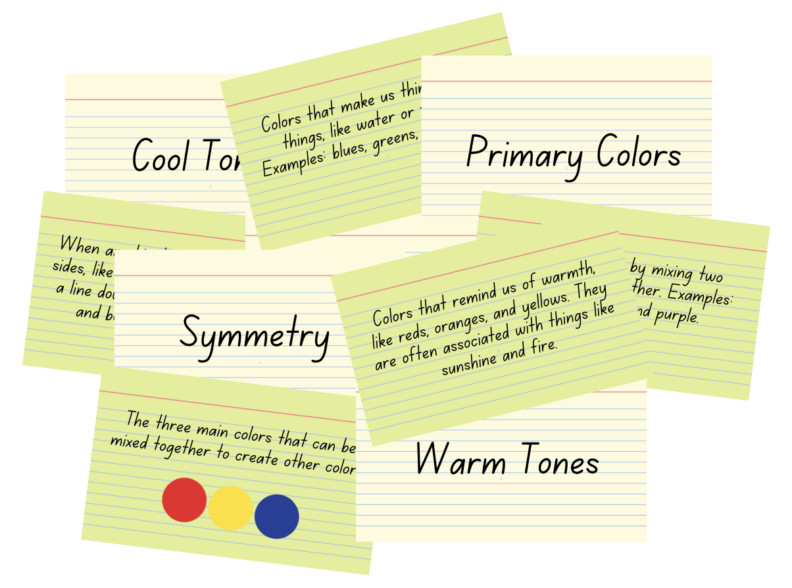
Pass out one card to each youth. Ensure that each card has a match; have adults play if you need event numbers or more players. Players will mix and mingle with one another until they find their matches, then take turns sharing their terms/concepts with the club.
Heads Up
Divide youth into pairs or small groups. Within the pair or small group, the youth take turns holding a term/concept card to their forehead (no peeking) while their teammate/s give them descriptive clues without using any words on the card to help them guess what their card says. The youth providing clues can use the matching definition card for ideas. Take turns as time allows.
Pictionary
Pair the card matches together. Have youth take turns grabbing a card set (term/concept and definition/description) and then draw the term/concept while the other club members guess! This can be done in small groups with regular paper or with the whole group using a large paper pad or whiteboard.
Relay Race
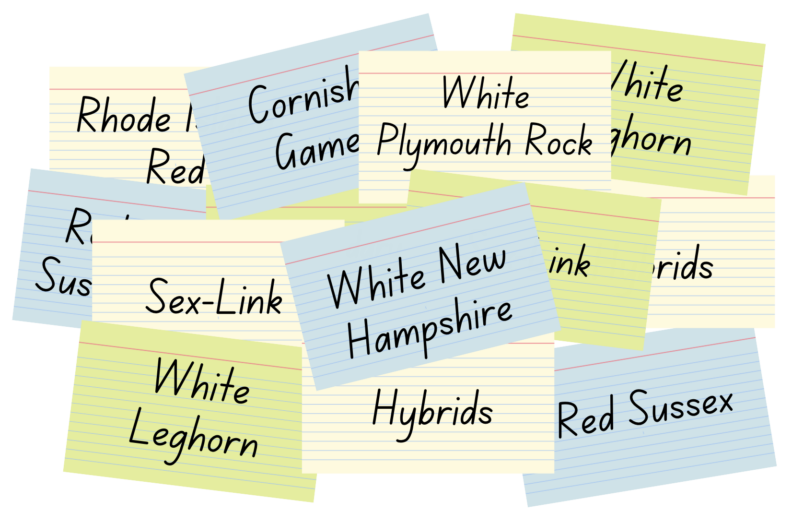
Divide youth into teams and assign each team a concept (e.g., Team 1: egg-producing chicken breeds, Team 2: boilers/meat-producing chicken breeds, Team 3: dual-purpose chicken breeds). Place a pile of cards related to the teams’ concept on the other side of the room or location (ensure that running between the teams’ starting point and the pile is free of obstacles). If there are four youth per team, then there should be at least four cards related to each team’s concept in the pile so that each youth has a chance to find a card that matches their concept. Leaders can add duplicate cards or distracting cards (incorrect ones) to the pile. Have each team line up; on “GO” the first member of each team runs to the pile and grabs a card that matches their concept, returning to their team and going to the back of the line so that the second team member can go. If a team decides a member grabbed an incorrect card, it can be returned to the pile. Play until all the correct cards are found or until a previously set time or turn limit.