
By Twinflower Wilkie, WSU Ferry County Master Gardener
In an area where Canada thistle (Cirsium arvense) or other thistles have habituated themselves, gardening becomes painfully difficult. Canada thistle packs a double wallop. It is a perennial, and the rootlike rhizomes run underground like those of quackgrass. As with quackgrass, if you break the rhizome but leave any of it underground, a new thistle can sprout up from the breakage point, and besides, any seed allowed to develop will be taken to new locations by the wind or birds and rodents who are attracted to thistle seed. It can even be spread by vehicles, tools, and equipment taken into an area where you intend to control it, if the equipment isn’t carefully cleaned. It spreads quickly, displacing desirable plant species, dominating the area, and making it difficult to work in the area. Canada thistle tends to grow through the thickest mulches eventually, as well as tough growing conditions like cold weather, hard soils, storm, drought, or flood – none of these will set it back for long. It’s depressing to contemplate.
Information on thistle control will often recommend using herbicides, different herbicides for different situations. If this seems like the only way to get your problem under control, be sure to choose one that is specific to your particular thistle issue and remember: the label is law – literally! Never use any pesticide, organic or otherwise, in any way that is not listed on the label.
However, for those looking for ways to garden with the least harm to the environment, is there any possible way to rid your ground of thistles so you can garden safely? That answer depends on how persistent you are. A multi-year step by step approach is needed according to solvepestproblems.oregonstate.edu/weeds/canada-thistle. Think in terms of the whole plant system. Weaken all parts of the system, using up its resources above and below ground. This will require multiple strategies.
Act Quickly
If you have flowering or seeding plant stalks, immediately place a paper bag over each stalk, tighten it around the plant and then chop off its head, being careful not to drop any plant material. You can burn the bagful of seedheads when burning becomes safe and legal again.
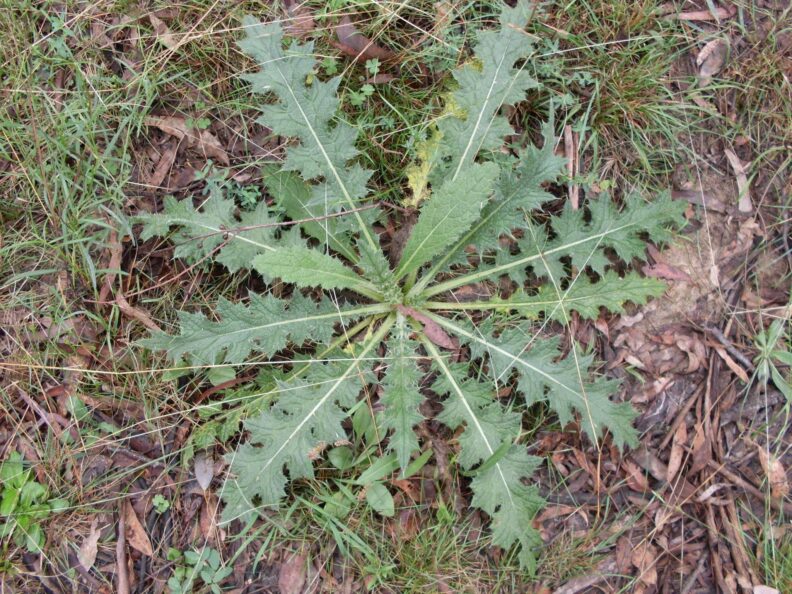
Remove rosettes as soon as you see them, slicing them off just above ground. Or if you are careful enough to get all the rhizomes, and have the energy, you can dig them up.
Consider using targeted grazing. Goats, sheep and cattle will all graze thistles to some degree, with goats being the least picky grazers. The Goat Patrol is a local business which can furnish the goats if you don’t have your own. Don’t use grazing if the thistles are already going to seed or the animals will spread them.
Black plastic mulch will block light and weaken roots. However, Canada thistle rhizomes will take at least two years, maybe more to die. Black plastic can break down from long sun exposure leaving shards of plastic behind. You will need to replace the plastic before it breaks down too much to avoid this scenario.
Clear plastic can be used to heat the soil to temperatures that will kill even Canada thistle. Place the plastic over the soil during the six to eight hottest weeks of the summer. Cover the edges of the plastic all the way around to hold it tightly to the ground. It will reach a temperature of 120F or more, killing roots and seeds. The problem with this method is that then all the soil organisms, healthy or unhealthy will also be killed. So, you will need to add compost or other amendments to rectify that loss, or you won’t have a lively microbiome to help your plants thrive.
Monitor Frequently
Watch stalk development throughout the summer. To weaken the plant, allow it to put its energy into the stalk rather than the roots, and cut off the stalks along with the rosettes just before the flowers begin to open. This will stimulate the plant to begin growing a new rosette and stalk, further weakening the root system. But stay vigilant; don’t let them flower. Possible removal methods include machete, scythe, or mower for a large patch or hand clippers if the patch is small. Remove dirt from tools and equipment to prevent accidental seed spread.
Replant the affected area with a thickly sown cover crop. Vetch, red clover, field peas, sorghum, oats, annual rye, or other vigorous, quick germinating crops are best. When your cover crop is mature (about one third in flower), cut it. Leave it as a thick mulch on the ground rather than tilling it in so as not to disturb thistle seed embedded in the soil. Watch for thistles to re-emerge, and repeat the steps outlined as often and for as long as necessary.
Follow Up with No-Till Plantings
Minimize soil disturbance, or thistle seeds that lay dormant will be brought up to the surface and will sprout. You can use a dibble or a stick to make planting holes for your bigger crop seeds and plant small seeds on top of the soil and sprinkle a thin layer of mulch over them. Then, mulch your garden generously and often. Lastly, continue to monitor and act quickly if problems arise.
Bull Thistle
Bull thistles (Cirsium vulgare) are also a problem here. They have bigger flower heads than Canada thistles, so they look scarier, but they are biennials, which means they put out a rosette their first year, a flower stalk the second, and die the third year. If they are prevented from going to seed, you can get them under control relatively quickly. If you remove them in the spring before the taproot gets long, you can remove them root and all. Birds or wind can still bring in new seeds, of course, but now you know what to do about them. And while you’re busily trying to prevent them from seeding, it may comfort you to know that they are a nectar plant for pollinators.