Asotin, Columbia, Garfield, Walla Walla, and Whitman Counties
April 2026
In This Issue
Agriculture
“Tell Us Your Story”
Women farmers are invited to share their stories for research study
WSDA invites Producers, Farmworkers, and Community members to provide input for the state’s comprehensive assessment of agricultural viability
Master Gardeners
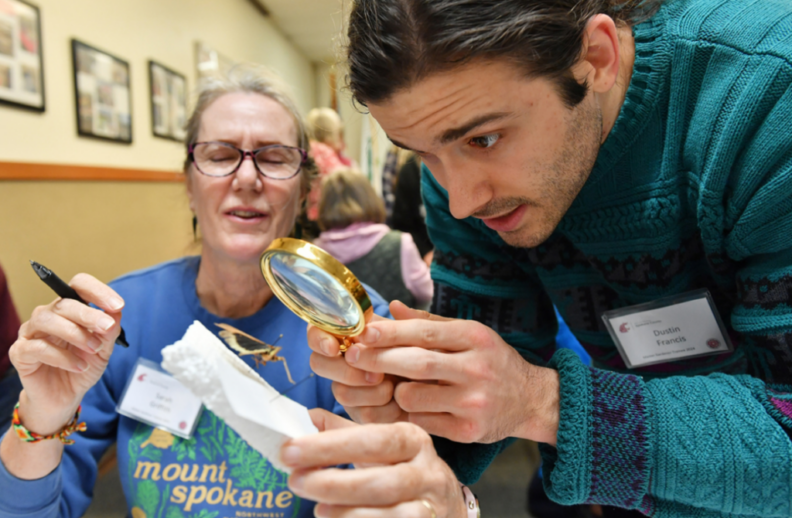
Master Gardener Plant Diagnosis Clinics
Where to go in your county for garden advice and plant problems
“Tales from the Clinic”
4-H
Home Food Safety and Preservation
Agriculture News
Tell us your Story
You are invited to participate in a research study examining women farmers’ knowledge of, experiences with, and engagement in U.S. agricultural policy programs. It’s open to women who own, manage, or are employed on a farm in Oregon, Washington, or Idaho (any type of agricultural production and any size) . Questions in this survey relate to general agricultural policy programs, as well as policy programs focused on conservation. This research is part of a doctoral dissertation.
Inform the WSDA’s Comprehensive Ag Assessment
Your responses will directly inform the WSDA report, which will serve as the state’s comprehensive assessment of agricultural viability. This final report will not only reflect on-the-ground conditions, but will also identify practical, actionable solutions. These findings will be shared with policymakers, industry partners, and stakeholders to help guide decisions that impact the future of agriculture in our state.
Agricultural Producer Survey: Take this survey if you are an owner or manager of a farm or ranch.
Farmworker and Farmworker Representative Survey: Take this survey if you are a farmworker or farmworker representative.
Community Survey: Take this survey if you are a food processor, agricultural advocate, business that supports agricultural production, hunger relief organizations, or interested consumer.
These are also available in multiple languages, click here to access.
Washington’s agricultural industry is vital to our economy, our communities, and our way of life. Ensuring its long-term viability requires strong partnership, clear understanding, and informed action. WSDA remains committed to advocating for and supporting our farmers, ranchers, producers, processors, agribusinesses, farmworkers, and tribal partners. Your participation in this effort is a critical part of that work. For more information about this work, visit agr.wa.gov.
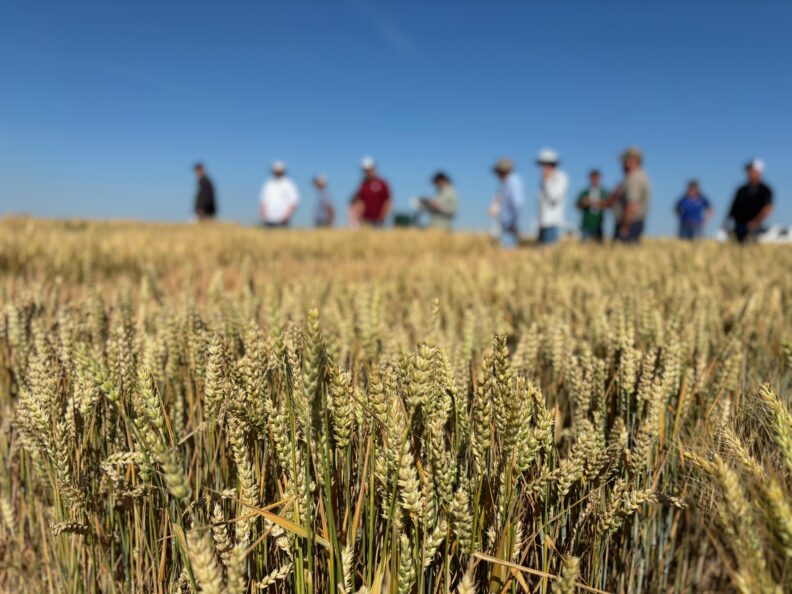
Morgan Menaker Joins the Blue Mountain Region Agronomy Team
Master Gardeners
Plant Clinics Now Open!
Walla Walla County
Bring your garden questions and plant problems to a WSU trained Extension Master Gardener.
In Walla Walla, plant clinics are held at the WSU Extension Office at 328 W. Poplar
Tuesdays and Thursdays, 9:00 AM – 11:00 AM and 2:00 PM – 4:00 PM
Find out more or submit questions online here.
Garfield County
In Garfield County submit your garden questions online here
Asotin County
Asotin County Master Gardener Plant Diagnosis Clinics start in May in the basement of the Asotin County Courthouse, 135 2nd St, Asotin. For more information see the Asotin County Extension Website.
Wednesdays, 10 AM – 1 PM
Whitman County
Call or email your plant questions to the Whitman County Extension Office. Find more information on their website.
Columbia County
Columbia County doesn’t have a Master Gardener Program, but you are welcome to stop by the office at 139 E. Main. Or contact the office by calling 509-382-4741 or emailing Columbia.ext@wsu.edu. For more information, see the Columbia County Extension Office.
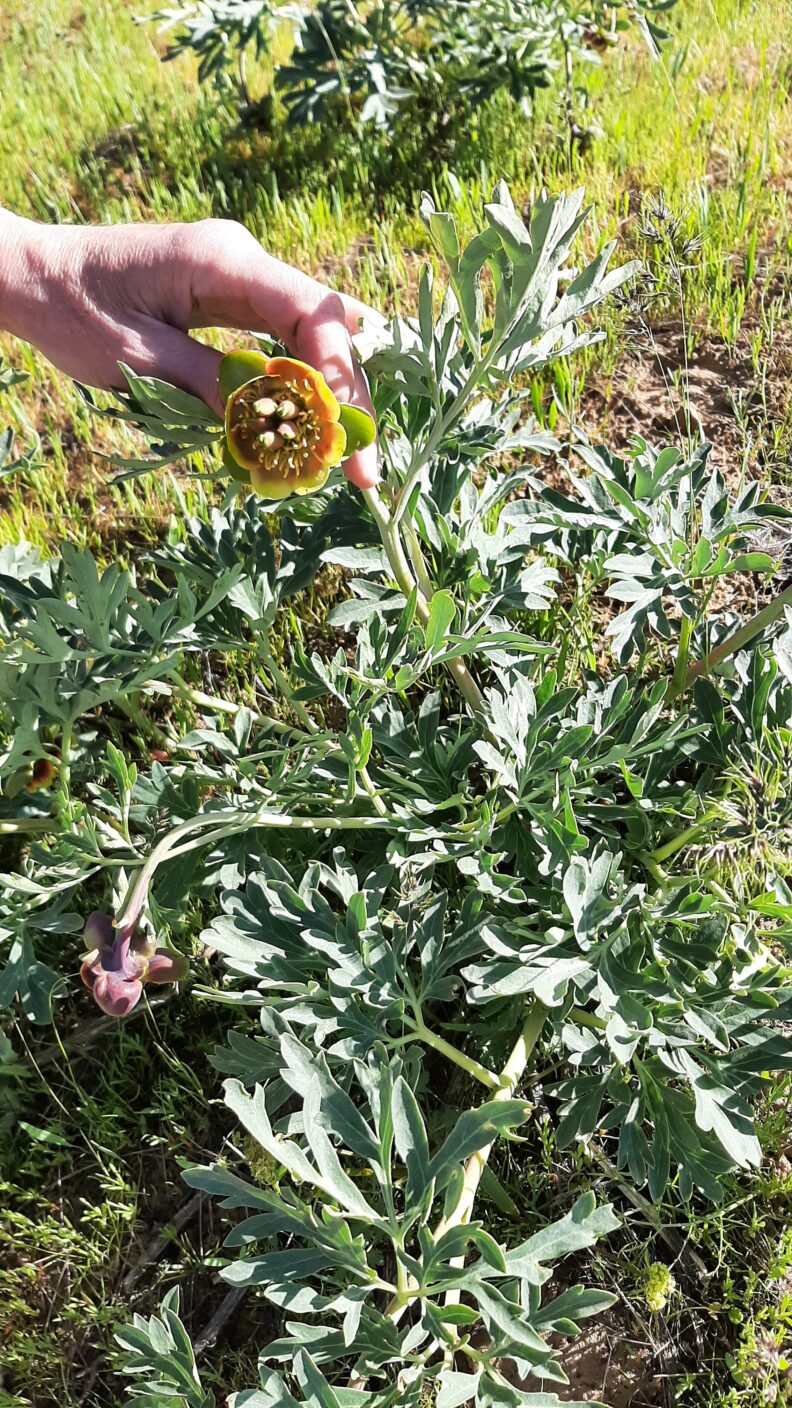
Tales from the Clinic: Pearleaf Blister Mite
4-H Happenings
4-H in Action: Youth Livestock Judging
Youth throughout the Blue Mountain Region recently put their skills to the test at the Asotin County Fair during the livestock judging contest. This event provided youth with an opportunity to apply their livestock evaluation skills in a real-world setting, evaluating animals and making thoughtful comparisons based on industry standards.
Walla Walla youth came prepared thanks to their participation in a Livestock Judging Series that ran from November through March. Throughout the series, members focused on evaluating a different livestock species each month while also developing their presentation and communication skills through oral reasons. This preparation helped youth gain confidence in both their knowledge and their ability to clearly explain their decisions.
Livestock judging is one way 4‑H youth live out the 4‑H pledge using “my head to clearer thinking.” Through judging, youth build valuable life skills such as critical thinking, decision making, communication, planning and organizing, character, and confidence. Walla Walla County 4‑H livestock members look forward to continuing to grow and test their skills at future judging events.
4‑H in Action: A Heart for Service in Waitsburg
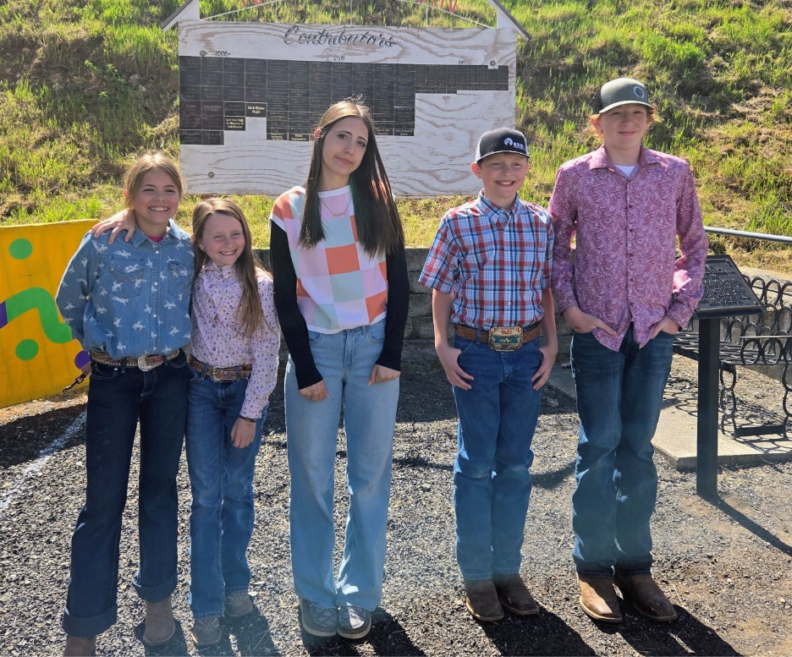
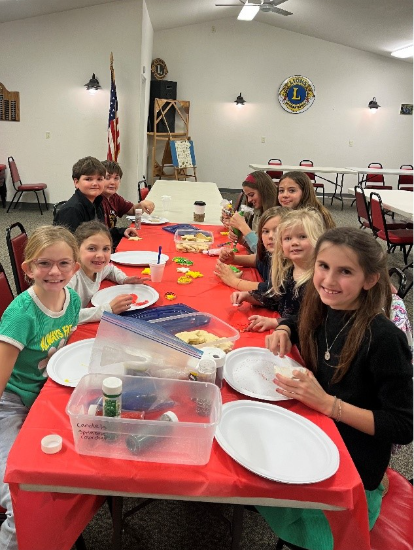
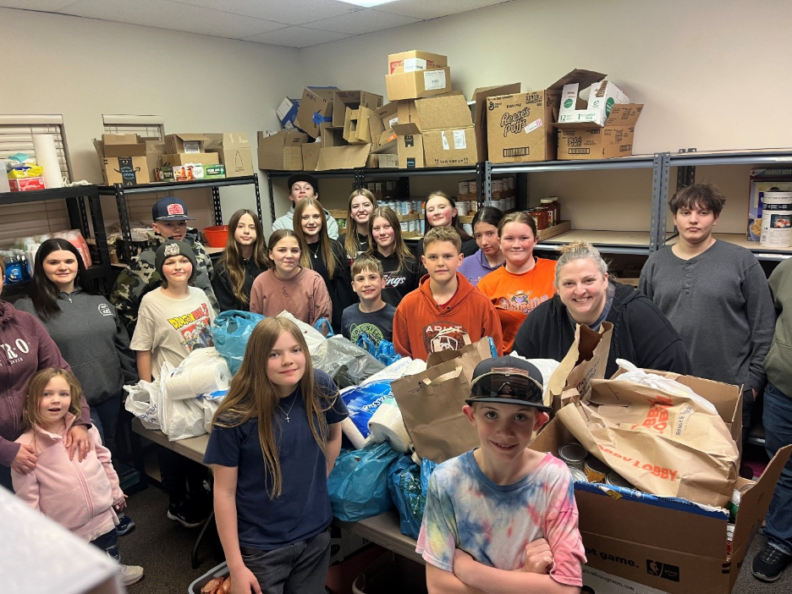
The Waitsburg Corral Wranglers, a Walla Walla County 4‑H club, are a shining example of 4‑H in action, putting their hands to larger service and their hearts to greater loyalty for the community that supports them.
During the Waitsburg Hometown Christmas, club members partnered with the local Waitsburg FFA chapter by decorating Christmas cookies and a festive Christmas tree for the annual celebration. This project was a wonderful example of youth organizations working together for the good of the community. When 4‑H and FFA come alongside one another, youth see firsthand the power of collaboration, shared leadership, and service beyond their own clubs.
Service didn’t stop with the holidays. In March, the Waitsburg Corral Wranglers organized and carried out a food drive for the Waitsburg Resource Center, helping support local families and neighbors. Through this project, youth saw firsthand how their time, effort, and compassion can make a real difference close to home.
By responding to community needs, the Waitsburg Corral Wranglers are learning that leadership means showing up, serving others, and honoring the communities that support them throughout their 4‑H journeys. These youth are not only building skills for the future, they are becoming caring, engaged citizens today and beyond ready for the future.
Food Safety & Preservation
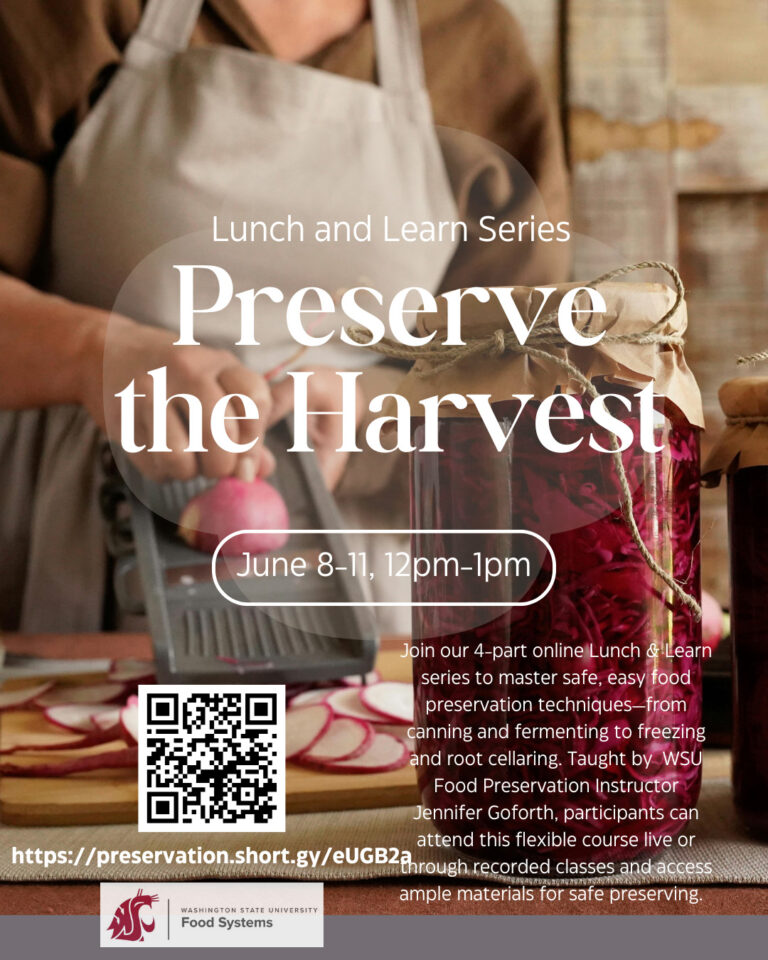
WSU Food Systems Lunch & Learn Series: Preserve the Harvest
Hosted by WSU Food Systems-learn how to preserve the harvest through canning, pickling, fermentation, freezing, dehydrating, and more!
Learn how to preserve food! This 4 part series will help you increase your food access using safe, tested protocols that are easy to learn and follow.
Lunch and learn series allows you to accelerate! Instead of requiring a month long committment for a weekly class, this series allows you to complete the course in under 1 work week, over your lunch hour Monday-Thursday. All classes are recorded, so you may attend some or all of the series through recordings rather than live classes. Attending live classes is not a requirement, feel free to attend in the way that works best for your schedule.
No equipment is necessary. WSU Food Safety/Preservation instructor will teach techniques and explain the items needed to preserve foods in your home. This series covers all the information needed to take advantage of our amazing local produce and reduce waste in your kitchen. This class will be taught online using Zoom.
f you are a SNAP recipient or feel that the class fee presents a financial barrier, you may also be eligible for a partial or full scholarship, please contact j.bryan-goforth@wsu.edu for more information.
Quick Tips for Picnic Site Preparation
Picnic season is upon us! Are you preparing to keep safe? Food safety begins with proper hand cleaning — including in outdoor settings. Before you begin setting out your picnic feast, make sure hands and surfaces are clean.
- Outdoor Hand Cleaning: If you don’t have access to running water, use a water jug, some soap, and paper towels. Or, consider using moist disposable towelettes for cleaning your hands.
- Utensils and Serving Dishes: Take care to keep all utensils and platters clean when preparing food.