What is Silvopasture?
Silvopasture is the intentional integration and active management of livestock, grazing, and trees on the same land (USDA, 2025). It provides multiple benefits to both livestock and farmers. From a financial perspective, livestock provide short-term returns while trees can provide long-term timber products and/or annual tree crops like fruits, nuts, and syrups, which diversifies farm production. Trees in these systems provide critical shade benefits to help livestock moderate body temperature and reduce heat stress during increasingly hot summers. The shade can also help retain soil moisture, extending forage growth and grazing further into the dry season. Trees can be selected and pruned to provide fodder and enhance livestock nutrition. These systems also provide significant environmental benefits, including carbon sequestration, wildlife habitat, and improving soil health. In fire prone ecosystems, silvopasture can be applied strategically to reduce forest fuel loads and increase resilience to wildfire (Batcheler et al., 2024).
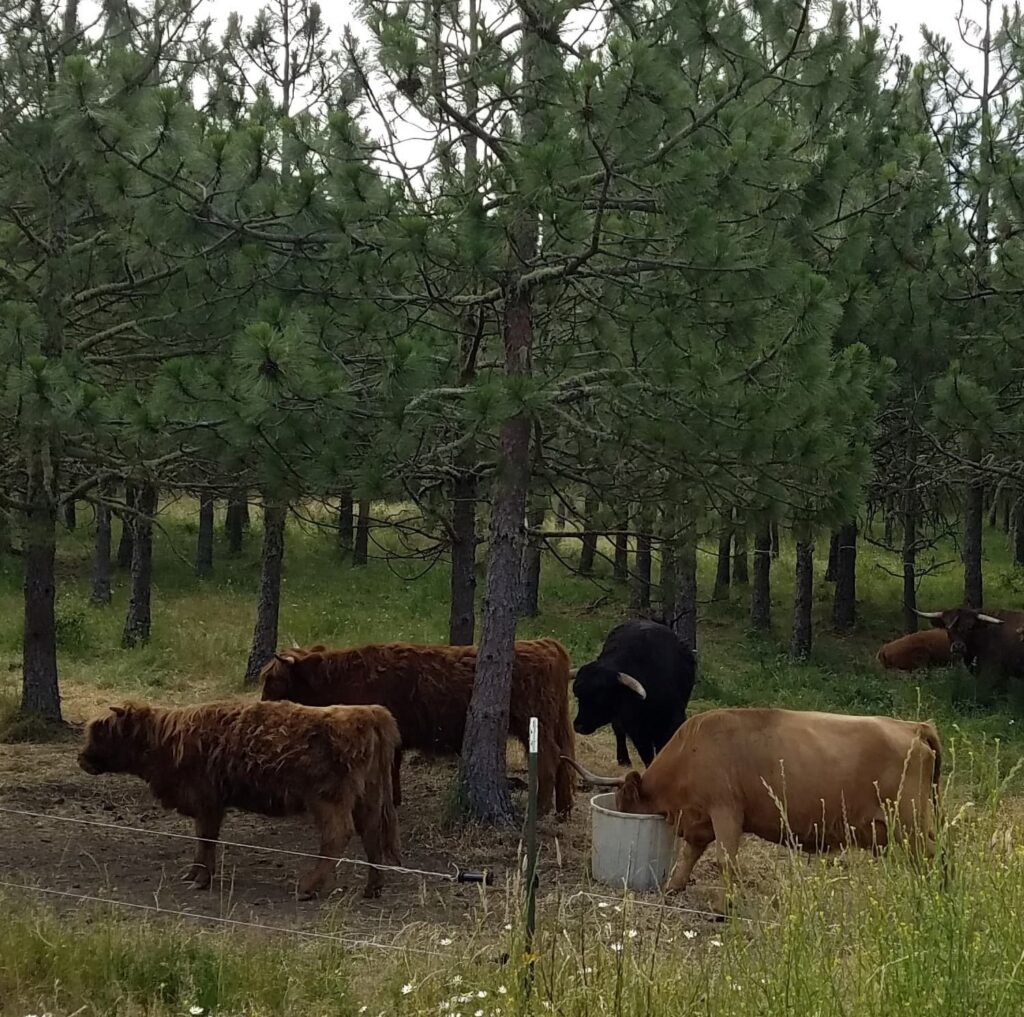
The term “woodland grazing” is often used interchangeably with silvopasture. However, woodland grazing usually refers to the practice of allowing livestock to graze in forested spaces without any significant management of the forage component, whereas silvopasture stresses the importance of forage management and enhancement practices like rotational grazing. Silvopasture and woodland grazing are more commonly practiced east of the Cascades in Washington State where grazing is conducive to managed, low density Ponderosa pine forests, and drier conditions mitigate potential soil-tree damage interactions. However, Western Washington also has significant potential for silvopasture adoption when combined with a forage management practices that move animals frequently.
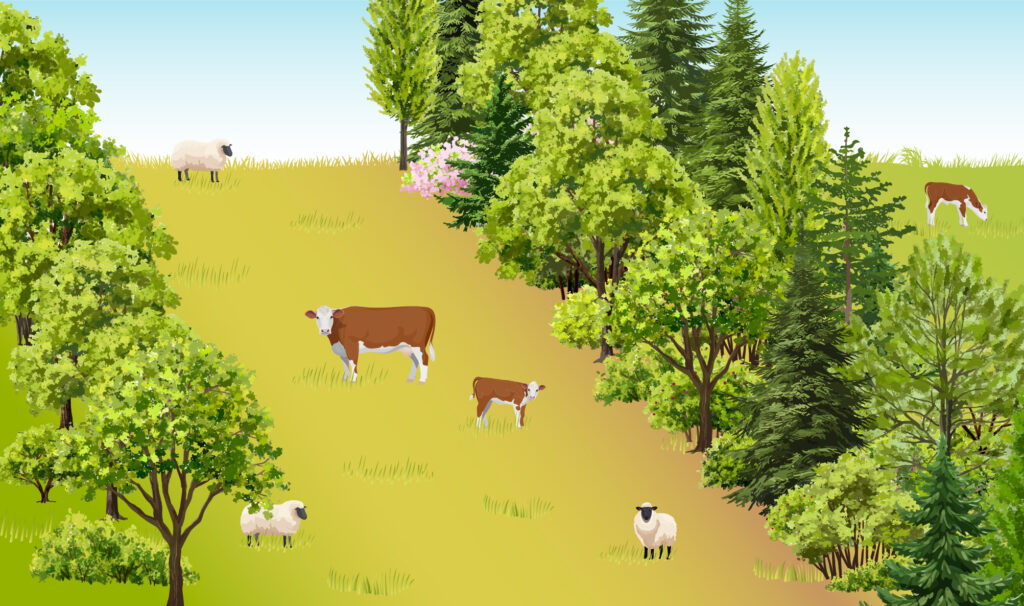
Benefits of Shaded Grazing:
- Shade produced by the canopy can reduce stress on cattle during summer months.
- Cattle that graze in shaded conditions have been shown to have improved weight gains.
- Shade is also beneficial in husbandry of dairy cattle, where milk production and reproductive efficiency need to be maintained.
- Trees can provide protection from wind and winter weather.
- Trees and shrubs can reduce the effect of windchill and help manage blowing snow, both of which may be a concern for winter/spring calving operations.
- Research has shown that cattle on winter ranges require a 20% increase in food energy to offset the effects of exposure.
(Angima, 2009)
Silvopasture and Riparian Buffers
Riparian areas are considered sensitive sites, so grazing livestock in these areas should be done with great care. In some circumstances, it may be best to avoid grazing entirely. Fortunately, careful timing and rotational grazing can prevent damage when grazing within or near sensitive sites. In the context of working riparian buffers, grazing is typically excluded from the inner zone closest to water (typically within 50’) to avoid damage to vegetation and soils.
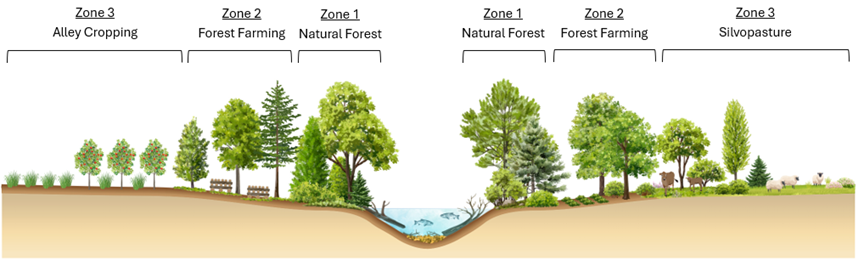
Each riparian agroforestry practice has a different role within the context of a working riparian buffer. Buffers are typically broken out into different “zones” in which different practices are applicable in order to sufficiently protect water quality and create high quality habitat. The widths of the different zones, as well as the types of management applied in them, are determined by multiple factors, including regulations, budget, site conditions, water feature type and size, and landowner objectives.
- Zone 1 (Inner Zone) – The innermost zone of a buffer, sometimes called the “core zone”, is where the greatest water quality and habitat benefits are generated. This zone should be left relatively unmanaged as natural forest, ideally with abundant native species growing densely. While intensive management and harvesting practices should be avoided in this area, it can still be designed to provide opportunities for wild foraging and low impact forms of forest farming (e.g., berry picking, tree syrups, log-grown mushrooms). The width of this zone is typically 25-50′ depending on the type and size of water feature being buffered.
- Zone 2 (Middle Zone) – The area immediately adjacent to the inner zone also provides important riparian protection benefits, and should be managed to maintain a mostly closed forest canopy of native trees. However, this zone is suitable for more intensive forest farming practices (e.g., woods cultivated systems). Silvopasture may also be practiced in this area, if compatible with a closed tree canopy (e.g. flash grazing, living shelters). The width of this zone is typically between 25′-100′, depending on the size of the inner zone, water feature type and size, and landowner objectives.
- Zone 3 (Outer Zone) – The outer most zone is the most flexible to practices that require reduced tree cover like alley cropping and more intensively managed silvopasture systems. The presence of trees and/or shrubs in this zone provides additional benefits to riparian habitat, but it is less critical to maintain a closed forest canopy at this distance from a water feature. The width of the outer zone will vary based on landowner objectives, size of the other two zones, and recommended buffer size for the site. For example, the WA Department of Ecology recommends a 215′ total buffer width between all zones, although this is not always feasible.
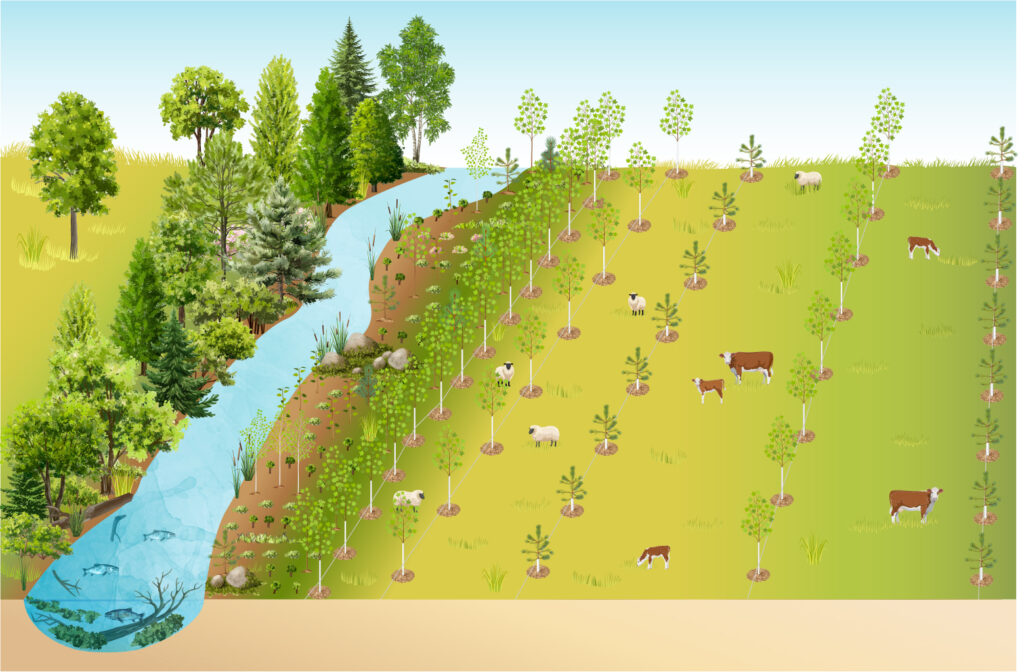
However, there are times where grazing in the inner zone of a buffer can prove beneficial with careful monitoring and management. For example, using livestock to manage competing vegetation around trees and shrubs while establishing a new forested buffer and/or flash grazing to prepare a site for planting. Other exceptions to this might include areas developed to provide water to livestock and stream crossings. As the inner zone of a buffer grows, the vegetation will typically be too dense to facilitate long-term grazing, but it can be a functional part of a buffer’s outer zone for decades when designed appropriately.
Buffers Over Time
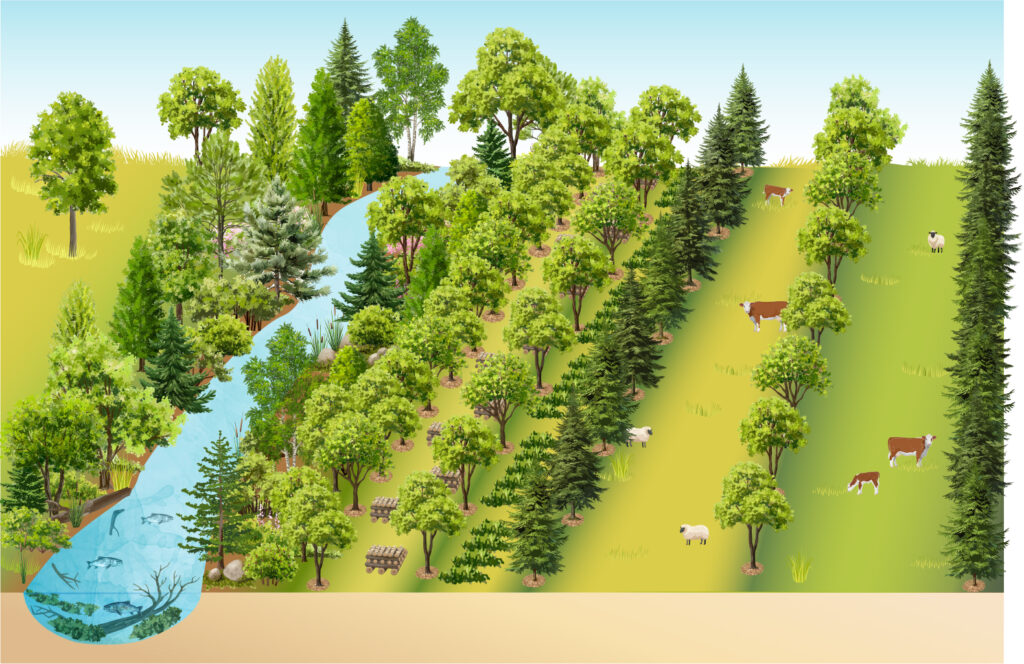
Learn More:
The following sections on this page describe the role silvopasture can play in working riparian buffers, as well as technical details regarding site assessment, design, establishment, and maintenance.
Goal Setting
For farmers who manage livestock, silvopasture offers an opportunity to maximize grazing opportunities, enhance climate resilience, and diversify production, while providing significant environmental benefits. Some of these benefits can be prioritized over others. Consider the objectives below and how they will influence your system design:
- Commercial production – Silvopasture systems designed for commercial production will require more inputs and likely focus on fewer types of livestock and tree products. Tree species will often be selected to provide annual (e.g. fruit and nut trees) and/or long-term crops (timber).
- Personal use – Silvopasture systems designed for hobbyist livestock managers will require less inputs and may feature multiple different tree and shrub crops to meet an array of interests and needs.
- Wildlife Habitat – Forested riparian buffers provide habitat to both fish and land-dwelling wildlife. Silvopasture designed to complement the wildlife benefits of a buffer will focus on selecting native tree species with wildlife and pollinator benefits, maintaining higher density vegetation in the inner buffer, and retaining or creating habitat features on site, such as bird boxes and snags.
- Carbon – Silvopasture systems naturally sequester carbon which may provide landowners with opportunity to receive carbon payments. Systems designed for carbon will focus on ensuring sufficient tree stocking, selecting fast-growing tree species, and maintaining vigorous tree growth over time.
- Water Quality – Water quality enhancement is a key function of forested riparian buffers. Limiting silvopasture to the outer buffer zones while maintaining denser vegetation close to waterways will maximize water quality benefits.
- Aesthetics and Recreation – Silvopasture systems are inherently more “park like” and naturally take on aesthetically valuable traits clear sightlines and walkable space. They can also be designed for other uses like camping, birding, and hunting.
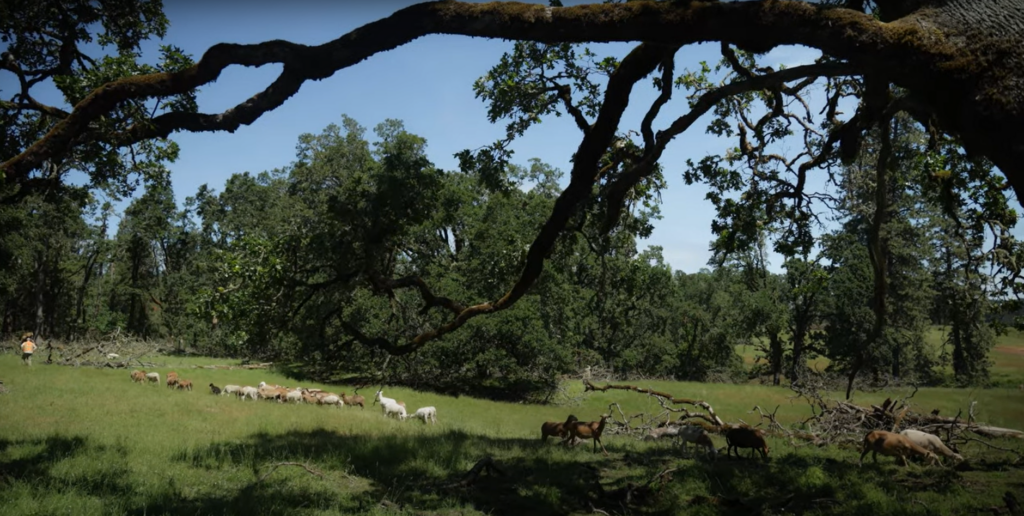
Silvopasture Case Study – Spencer Shadow Ranch
Silvopasture can help livestock managers meet a diverse variety of financial and environmental objectives. There is growing interest in silvopasture as a climate resilience strategy to mitigate heat stress in animals and soil moisture loss during increasingly hot, dry summers. Spencer Shadow Ranch in Eugene, Oregon leveraged NRCS funding to address this issue on their farm.
Site Assessment
Adopting silvopasture across all your grazing space is usually not feasible or recommended (Angima, 2009). Instead, using silvopasture to complement open grazing space will better leverage its benefits and maximize farm production. In the context of designing or incorporating silvopasture into a riparian buffer, there may be limited opportunity for site selection, but site conditions can still vary greatly within this habitat, including existing vegetation, hydrology, slope, and micro-climates. Landowners may also elect to expand silvopasture into upland areas where site conditions are more conducive. Silvopasture can be adapted to a variety of sites but there may be areas on your property that are not suitable, including areas where forage production is limited or trees would grow poorly, soils at high risk of compaction, or, as previously discussed, sensitive sites within riparian zones. In this section we will discuss how these conditions might influence adoption of silvopasture into your land management.
The topography of a site is generally described by its elevation, slope, and aspect. These factors can have significant influence on what kind of vegetation occurs naturally or can be grown in that area, as well as what kind of animals can comfortably graze there.
Elevation is not likely to vary enough within a given site to have significant impacts on what can be grown there but knowing the elevation range of your site is still important when matching tree species to site. Small changes in elevation can also have impacts on how cold air moves through an area. For instance, low areas where cool air collects and cannot easily escape creates frost pockets. These areas experience freezing conditions earlier in the fall and later in the spring, which can damage new growth on plants. Identifying frost pockets during planning and designing them with frost resistant species can help avoid damage or mortality. Similarly, upslope areas and ridgetops are generally subject to greater wind pressure, which can damage trees and reduce air and soil moisture.
Slope measures the steepness, or gradient, of a given site and is often expressed as a percentage (e.g. 20% slope) or a degree (e.g. 10° slope). Slope will affect how water drains, organic matter accumulates, and the level of difficulty involved in maintaining a silvopasture system. The ability to graze on slopes can vary greatly based on livestock type and species, but flat to gentle slopes of less than 10% are generally ideal for livestock access. This will make access for yourself and heavy equipment easier as well.
Aspect describes the cardinal direction that a slope faces, which directly relates to sun exposure. North and east facing slopes will experience less intense sun exposure and thus have greater moisture availability. South and west facing slopes are exposed to direct mid-day and afternoon sun and, as a result, face greater heat stress and soil evapotranspiration. West-facing slopes are also likely to experience greater wind pressure, especially closer to the coast. Wind has a desiccating effect that can further reduce moisture. West-facing slopes are also likely to experience greater wind pressure, especially closer to the coast, which may damage trees. Understanding the impacts of aspect on your site will help you better select forage and tree species that will have the best chance at survival and vigorous growth in those conditions.
Soil characteristics such as texture, acidity, drainage, and organic matter levels will have significant influence on the species and growth of forage and tree species in a silvopasture system, as well as the risk for soil damage through compaction. Soil features can vary significantly even in small areas. Over time, land managers come to know these changes in soils across their property well, especially in terms of hydrology. Riparian buffers are more likely to have more consistent soil characteristics but land managers should keep this potential variation in mind when planning and designing a buffer for silvopasture.
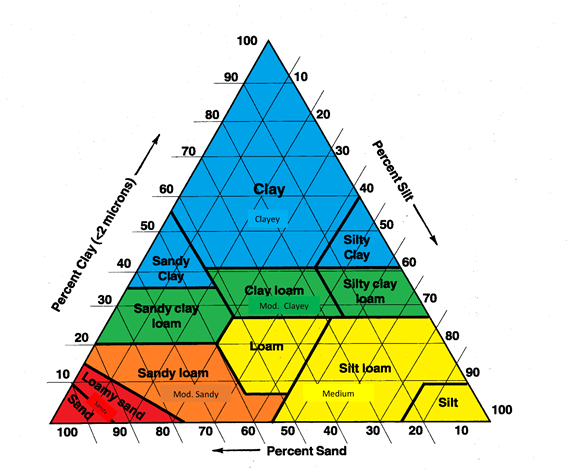
Soil texture refers to the relative amount of sand, silt, and clay in a soil. The texture effects how water moves through the soil (i.e. drainage). By nature, riparian soils will have greater moisture content compared to upland habitats but can still include a range in textures, from well drained, sandy soils to hydric, clay soils. This is especially true along the gradient of a slope. Upper slopes will be better drained than toe slopes or flat areas adjacent to a waterway. Many tree species have high moisture needs but don’t do well in standing water and instead prefer sites where water is available as it drains through the soil, such as bigleaf maple (Acer macrophyllum) or western redcedar (Thuja plicata). It’s also important to consider seasonal changes in water levels throughout the year and how that could impact tree growth. Trees and forage growing in overly wet conditions that are not adapted to it may struggle to establish, grow poorly, or be subject to disease.
You can determine the texture and drainage of soils on your property using the Natural Resource Conservation Service’s Web Soil Survey. See the tools section at the end of this chapter for guidance on how to use this webtool for your property. The Web Soil Survey can project a map of the soils on your property based on your region, elevation, slope, and other site factors. It is often quite accurate, but it is still valuable to ground truth it by monitoring the hydrology of the area throughout the year and digging up soil samples to examine the texture. Use this NRCS guide to learn more about testing soil texture by hand.
Acidity, nutrient levels, and organic matter content will also impact how trees and forage grow in your silvopasture system. Although not always necessary, these can be determined with soil tests by taking samples and submitting them to a soils laboratory. In areas that have been managed for grazing or other agricultural uses for several years, soil characteristics tend to be more consistent, and testing can be a more reliable indicator over large areas. Because these areas have been more intensively managed for production, soil amendments may be recommended based on the results of those tests to establish forage and tree cover for silvopasture. However, these should be limited in riparian habitats where possible. Visit this WSU Extension webpage for more resources on soil testing. In existing forests, these soil traits can vary widely even within a small area, which makes testing much less reliable. Looking at what is currently growing in the understory can also help you learn about soil characteristics. Species that require specific site conditions are called “indicator species” and can be used to interpret a site for what else can be grown there. For instance, evergreen huckleberry (Vaccinium ovatum) tends to establish best on drier, rocky soils so it’s presence may indicate that condition. Typing sites by indicator species is particularly useful in forest farming but may also help you decide what type of forage to plant if converting an existing forest to silvopasture.
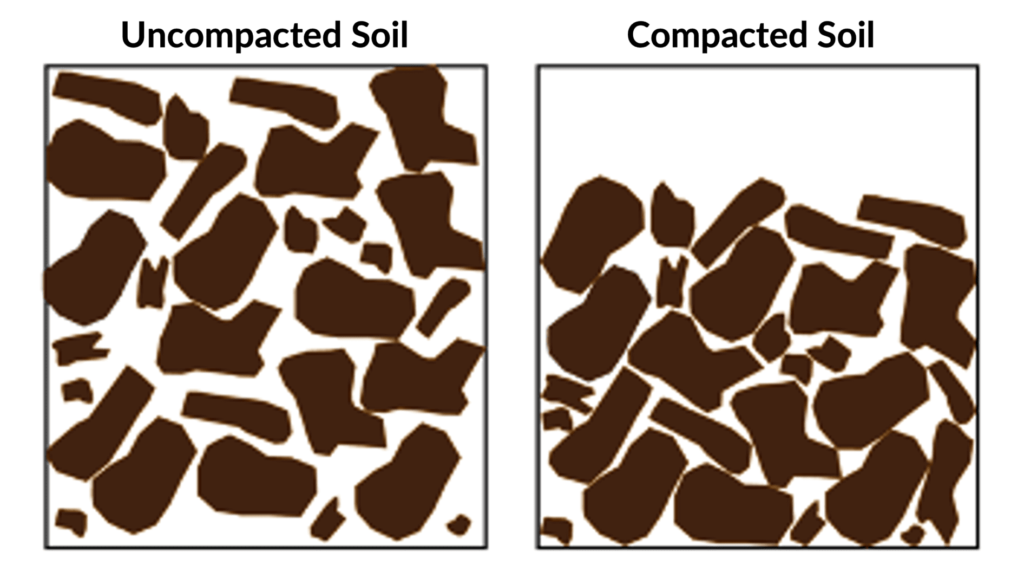
Compaction is the process by which soil particles are pressed together and the pore space (air) between them is reduced or eliminated. Reduced poor space alters water infiltration, drainage, nutrient transport, and limits plants’ root growth. Livestock can cause significant compaction damage in soils if not managed properly. This will reduce or eliminate forage production in those areas and, in the case of silvopasture, lead to tree damage or mortality. Soils are at greater risk of compaction when they are wet, which is why the risk association with silvopasture tends to be more of a concern in Western Washington where the long rainy season keeps soils saturated for much of the year. Some soil textures are at greater risk of compaction as well. Soils with a significant loam component are generally more susceptible than soils that are dominantly rocky or sandy. Clay soils are resistant to compaction while dry but can be susceptible while wet. The Web Soil Survey can apply a compaction risk assessment for your property based on the dominant soil texture found there. Frequent movement of animals through rotational grazing is an effective strategy for mitigating compaction damage in all soil types. Rotational grazing can help prevent compaction-related damage to trees by moving animals frequently. Although this will increase the labor required, it is critical to a successful silvopasture and investing in the long-term health of trees for timber, non-timber crops, and shade infrastructure. Monitoring your grazing space for early signs of compaction such as declines in forage production, increases in bare soil, and poor infiltration will further help you prevent long-term compaction damage. This is discussed more in the forage section.
Channel migration zones (CMZ) are areas where a stream or river channel has the potential to move over time. These occur in floodplains and are the result of gravity, topography, and periods of heavy rainfall. Although they can cause problems for land managers and pose safety threats to communities located near rivers, they are ecologically valuable due to a high diversity of aquatic habitats.
Planning a working riparian buffer in a CMZ poses obvious challenges and risks, and increased heavy rainfall events as a result of climate change is increasing the risk in these spaces. Migrating channels along large waterways have the power to topple mature trees and severely alter forests. Smaller streams and waterways can also experience channel migration, but damage is typically less significant. Although there are methods available for mitigating the impacts of channel migration, these typically require modification of the streambank and significant investment, making them unfeasible for most producers and subject to regulatory barriers.
However, if your property is in a CMZ it doesn’t mean you should avoid investing in riparian agroforestry or restoration. Like wildfire or other natural disasters, these are long-term risks, and areas may go decades without any or minimal issues. Furthermore, damage from channel migration can range significantly won’t necessarily devastate a riparian agroforestry system, especially along smaller streams. The best strategy is to determine your level and scale of risk, if any, adjust your management accordingly.
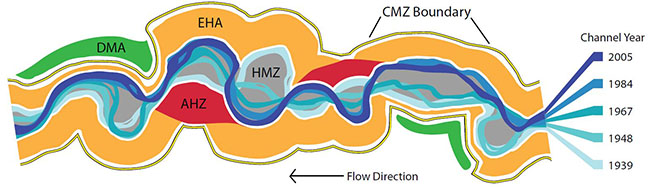
CMZ’s are most likely to occur in the inner and middle zones of a buffer, especially on smaller waterways, so silvopasture systems in the outer zone may be unaffected. However, CMZs can be large and, in some cases, encompass the entire area you have planned for a buffer. When present, understanding where the CMZ ends on your property will impact the width of your buffer and individual zones, as well as what practices you apply there. For instance, you may elect to widen the inner zones of your buffer to push your silvopasture system outside of the CMZ. The inner zones can still be utilized for forest farming crops that are resilient to channel migration. For instance, forest cultivated shiitake systems can be moved if necessary. Tree syrup operations can also function in a CMZ, although sap collection systems and crop trees may be damaged by flooding and long-term changes to soil hydrology.
Not all landowners are effected by channel migration. Identifying a CMZ and determining if a property is at risk requires a thorough study and is a task for an experienced professional. The Washington Department of Ecology has compiled a catalogue of planned and completed publicly available CMZ studies into the Channel Migration Zone Spatial Data Catalogue. Most counties also provide resources and CMZ studies on their websites. However, many streams and rivers remain unstudied. Technical assitance providers, such as conservation districts or NRCS agents, can provide some assistance in identifying basic risk of channel migration, but may not always be equipped to provide detailed assessments.
Read more:
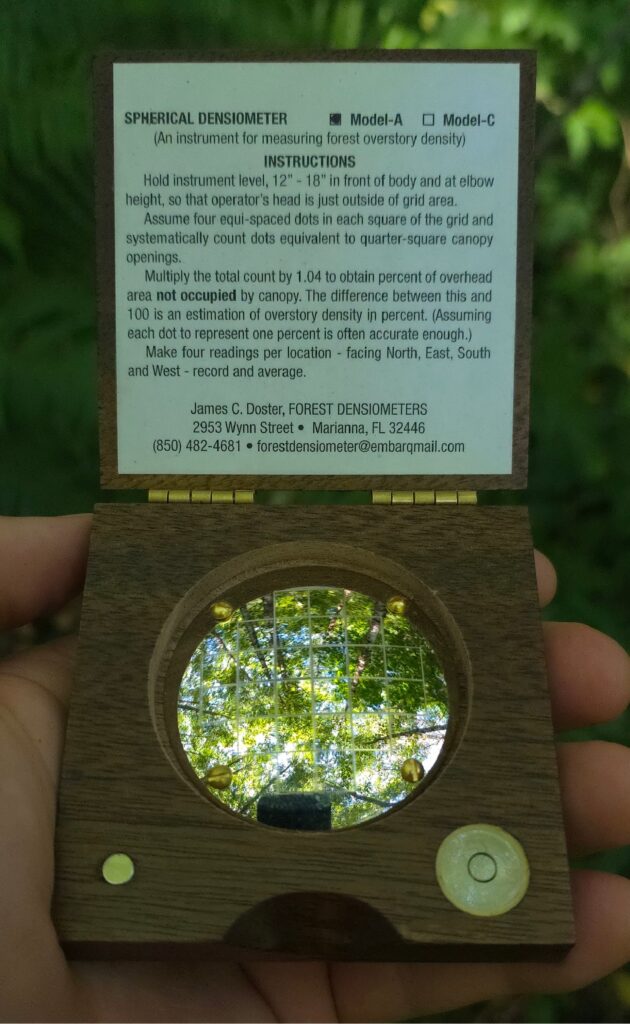
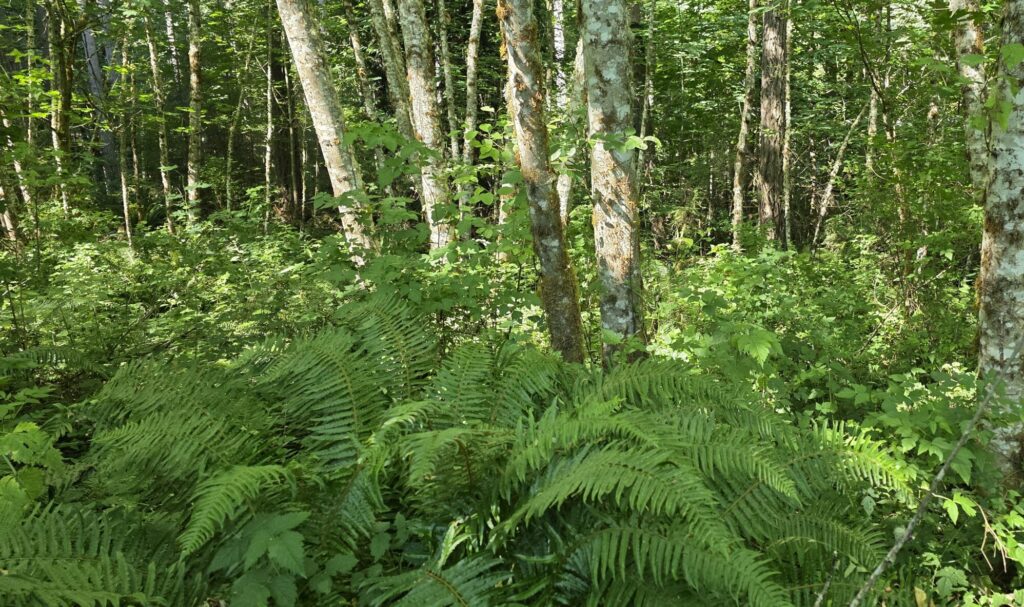
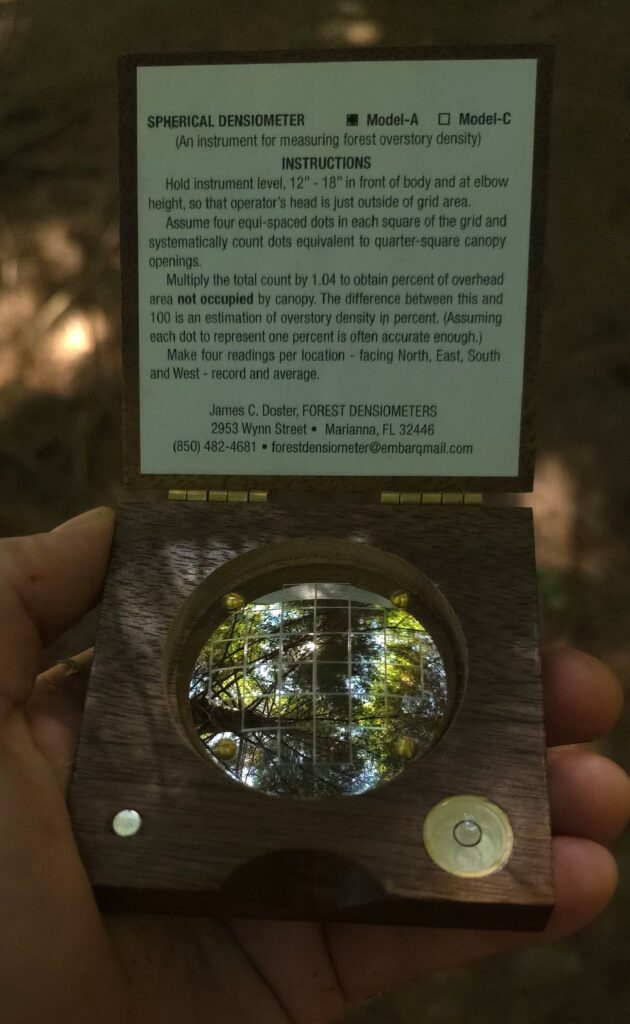
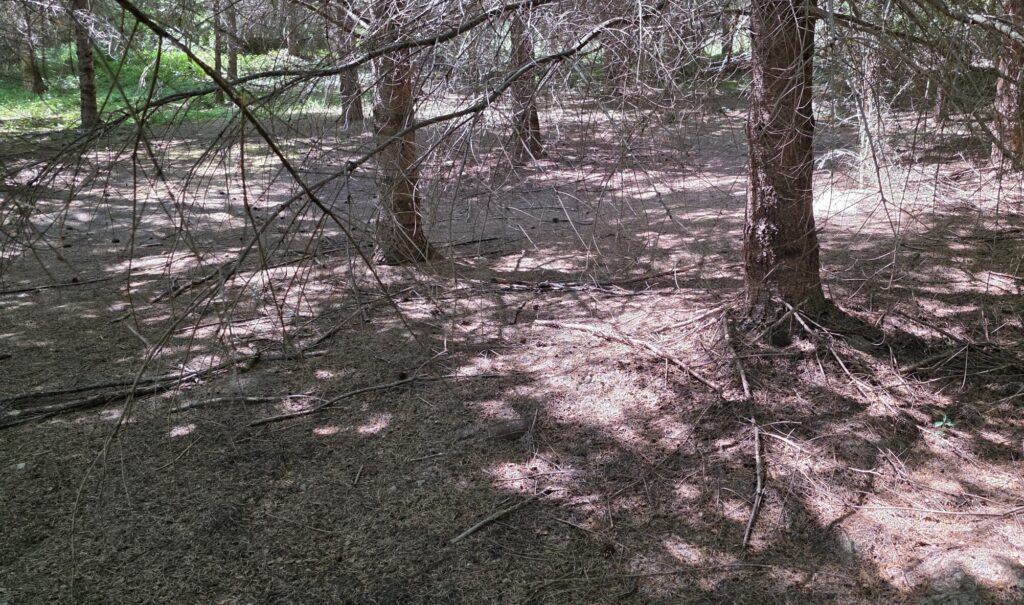
Determining the amount of shade at a site is important if you plan on transitioning an existing forest into silvopasture. Shade is influenced by the structure and composition of the overstory. Dense forest canopies prevent light from reaching the forest floor. Conifers provide shade year-round while deciduous (i.e., hardwood) trees only provide shade from May through October. The intensity and type of shade significantly influences what forage can be grown in the understory.
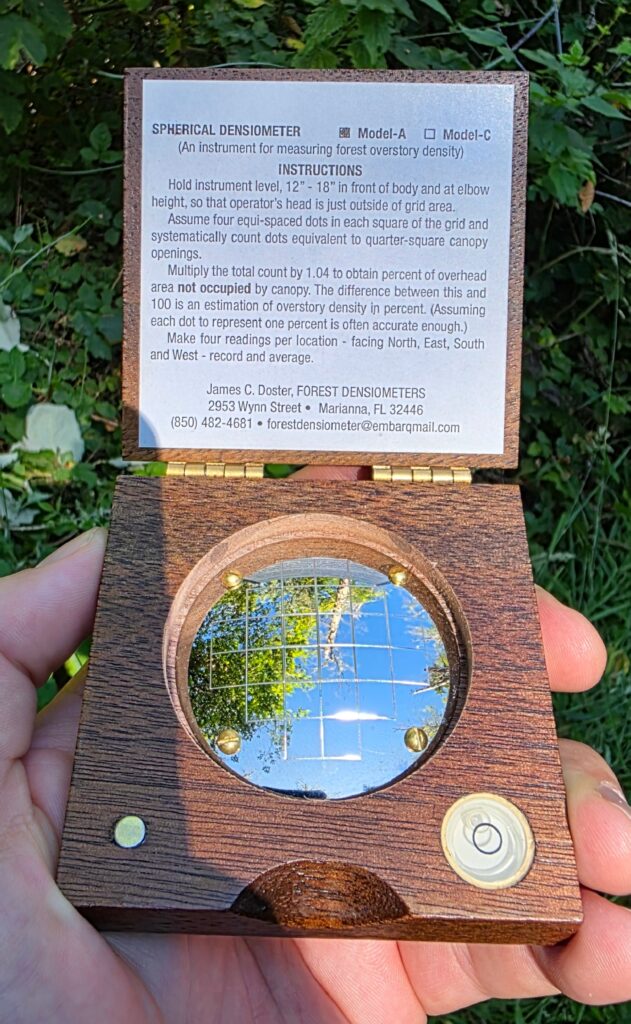
Foresters use a tool called a densiometer to determine the amount of light reaching the forest floor. A densiometer is a handheld device with a concave or convex mirror with a grid engraved on it, which allows you to measure the amount of light reflected at a given point in the understory. This tool is relatively inexpensive and can be a worthwhile investment for someone managing long-term agroforestry systems, but a low budget workaround is also available (see below).
Paper Plate Method
“Place 10 or more white paper plates at even distances on the ground at approximately noon on a sunny summer day. Count the number of plates that are at least half shaded. Next, divide the number of shaded plates by the total number of plates placed on the ground. Multiply this number by 100 [to determine shade percentage].” (Apsley & Carrol, 2013)
It can be helpful to take multiple measurements throughout the day to determine how shade changes over time.
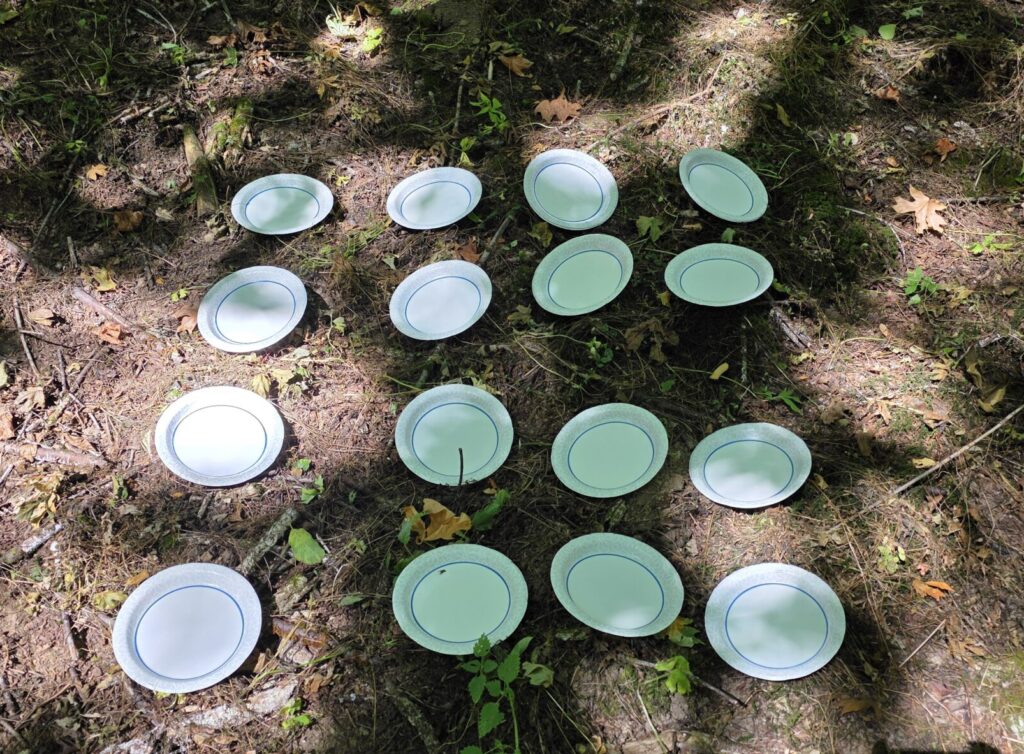
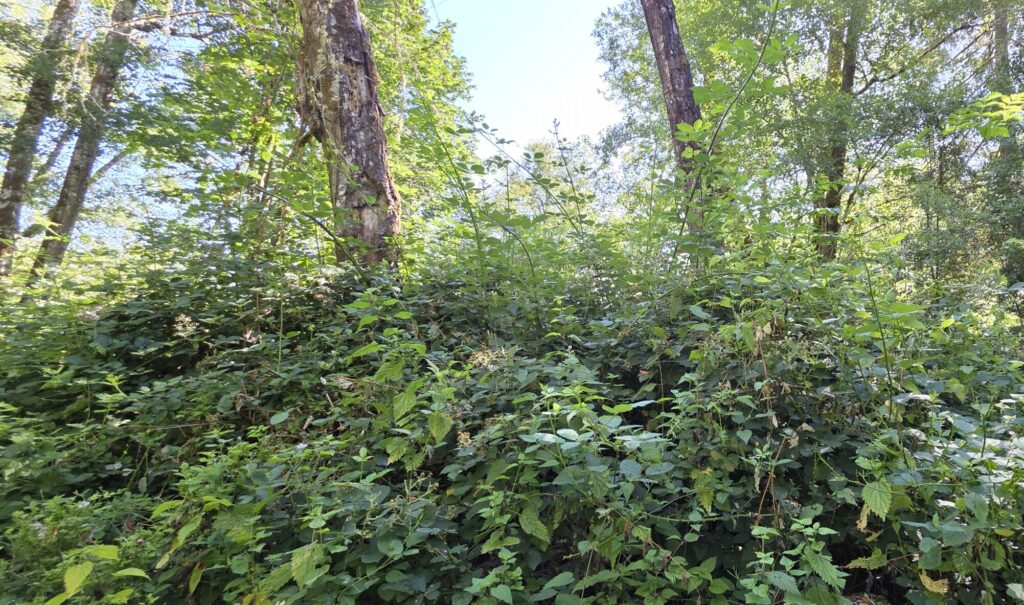
Using a densiometer or the paper plate method will help you find an ideal site to transition to silvopasture or, more likely, help you determine the level of overstory manipulation (i.e., thinning) required to create ideal light conditions. This can be done with thinning and/or pruning, which is described in later sections. Optimum shade level for forage will vary by species, but all silvopasture systems require reduced shade compared to a traditional closed-canopy forest to be able to adequately grow forage and sustain grazing. Generally, anything over 35% shade will have significant impacts on forage growth (Angima, 2009). However, it’s important to remember that the goal of silvopasture is not necessarily to maintain the forage production of open grown pastures, but rather to take advantage of the benefits of shade to livestock, such as moderating heat stress. That said, there is still opportunity for ample forage production in higher shade conditions. Cool season forages can tolerate greater shade of 50-65% (USDA Corvallis Plant Materials Center, 2025) and have been shown to increase in protein content and some nutrients under shaded conditions (Buergler et al., 2006). Shade can also extend forage production into the dry season after grasses in open areas go into dormancy.
| Shade Percentage | Description | Notes |
|---|---|---|
| 60-100% | Dense shade | Not suitable for forage production unless grazing on native vegetation. Dense vegetation can be utilized for cover during inclement weather (i.e. “living barns”). |
| 30-60% | Moderate shade | Reduced forage production but greater shade availability. Ideal for cool season forages and extending grazing into the dry season. Disperses shade and mitigates animal concentration. |
| <30% | Partial shade/Savanna | Ideal for maximizing forage production. Limited shade benefits and may encourage animals to concentrate under shade, leading to compaction issues. Warm season forages may still be negatively impacted by shade. |
For more information on how to systematically assess shade in an existing forest, see the Forest Inventory section.
An additional consideration for the placement, size, and type of silvopasture you intend to adopt is how it fits into your existing grazing system (if you have one). Silvopasture is typically utilized to supplement a larger grazing system and provide the option for shaded grazing. It is not usually recommended or feasible to put all your grazing space into silvopasture but providing tree cover in portions of paddocks and/or dedicating whole paddocks to it while leaving other areas open can provide the best of both worlds. This will be discussed more in the design sections, but during site assessment it is important to consider what parts of your property are best suited for silvopasture in relation to the larger grazing system and how placement can maximize livestock access to shaded and unshaded grazing spaces as necessary throughout the year.
Fuel management can also be an important consideration for silvopasture placement. Well-managed systems can have positive effects on wildfire resilience when converting an existing forest into silvopasture (Batcheler et al., 2024). The lower tree density and reduced fine fuels (e.g. grass) by way of grazing mimics typical fuel reduction methods. This means silvopasture can be strategically placed to serve as “fuel breaks”, which are used to mitigate the spread of wildfire. For example, converting forested spaced around homes or other structures to silvopasture can reduce the likelihood that a wildfire will damage them.
Fuel reduction is just one element of protecting homes and other structures from wildfire. For more information on how to reduce your wildfire risk, visit Firewise USA.
These and other considerations based on your objectives may not fully align with adopting silvopasture as a part of a riparian buffer but may encourage you to try it on other parts of your property in place of, or addition to, a buffer.
There are several tools available to landowners to conduct an “armchair assessment” of your property. These provide helpful background information to compliment your observations on the ground.
- Google Earth
- Google Earth is a free mapping program that utilizes satellite images to create maps. It can be used in your web browser, or the “pro” version is available for free download to use on your desktop. Using this program, you can create layers delineate roads, planting areas, and forest farming plots to plan and track your operations. You can also access historic aerial photos to determine past land use on your site.
- NRCS Web Soil Survey
- The Web Soil Survey is a free online tool that generates a soil map which delineates and describes the different soils on your property. The actual soil type boundaries can vary, so it is recommended to ground truth them to the best of your ability. It also generates ratings for soil types against land use practices, such as susceptibility to compaction. For more information on how to generate a Web Soil Survey report for your property, read the WSU Extension Manual EM064 “Forest Soil Data for Your Forest Stewardship Plan”.
- LandMapper
- LandMapper is a powerful mapping tool created by EcoTrust and is specifically available to landowners in Oregon and Washington (as of 2024). Using your address, this program auto-generates several maps, including hydrology, stream type, soil type, forest communities, tree diameter class, canopy cover, and forest density.
- County-based parcel maps
- Most counties offer an online GIS portal where you can gain access to information about your parcel, including aerial photos. These portal maps often include layers with information related to local regulations, such as protected wetlands. For information on your parcel, find your local county assessor’s office website.
Keep Reading – Site Assessment
- Assessing Woodlands for Silvopasture – Cornell Small Farms
- Considerations for Establishing Silvopastures on Wooded Sites (PDF) – USDA National Agroforestry Center
- Evaluating the Potential of a Site for Silvopasture Development (PDF, Form) – Cornell Extension
Design and Establishment
Many landowners interested in a working buffer will be “starting from scratch”, meaning the riparian area they have in mind currently has limited or no forest vegetation. The existing vegetation may be forage, shrubs, agricultural crops, grass, noxious weeds, or some combination thereof. Others will be starting with an existing forest and adapting their system under an established canopy of trees. Both scenarios contain unique challenges and benefits. The following sections will discuss some of the important considerations and technical components of designing and establishing silvopasture systems under the two different approaches.
Starting from a Pasture (Silvopasture by Addition)
Establishing a silvopasture system by adding trees to an open pasture is often referred to as silvopasture “by addition” and is similar in practice to afforestation, which means planting a forest where one did not recently exist. Although it is by no means an easy task, this approach does provide a landowner with an opportunity to design an overstory that meets their objectives as opposed to working within the composition of an existing forest. Afforestation projects are a particularly high priority for conservation and climate mitigation efforts because their environmental benefits are highly “additive”, meaning it’s easy to prove that those benefits were not being provided in that space before. Of course, afforestation overlaps significantly with riparian habitat restoration and buffer establishment, which means there are several resources available, including cost-share programs and technical assistance, to support landowners in this effort. As discussed before, silvopasture is best applied to the outer zone of a riparian buffer while leaving an inner buffer of denser, native vegetation to provide a protective barrier to a stream or other riparian features. Many of the programs available to landowners, particularly through conservation districts, will work with livestock managers to design and implement buffers that incorporate silvopasture to mitigate the loss of grazing space associated with a traditional forested buffer. For more information on programs that can help you design and plant a working buffer with silvopasture as a component, see the Additional Resources page.
There are several ways to approach tree arrangement when planting a silvopasture. The sections below describe a few designs that function well with riparian agroforestry projects.
Matrix/Even Spacing
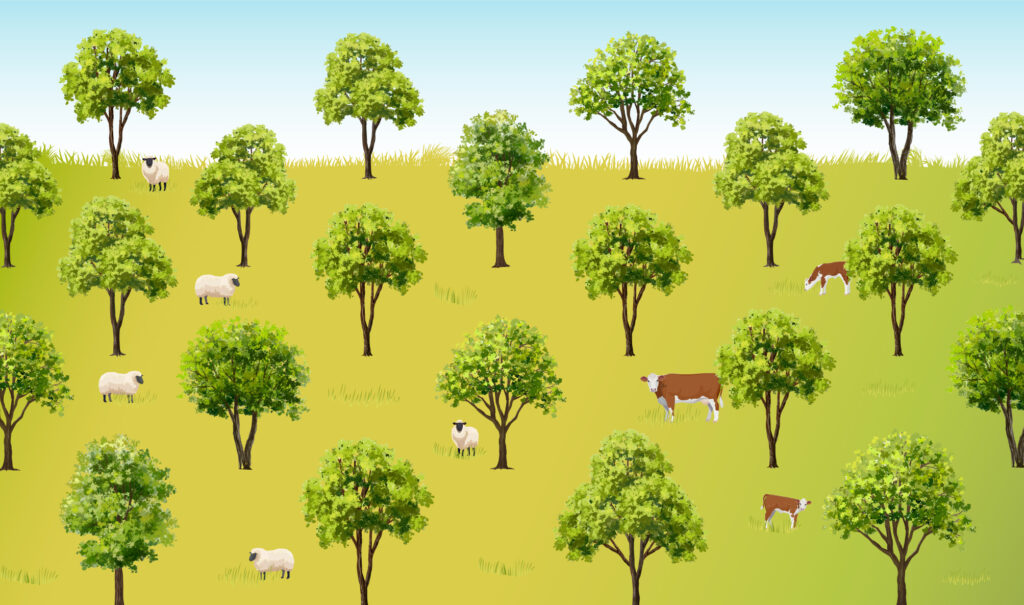
A “matrix” approach to silvopasture establishment mimics traditional reforestation methods by distributing trees evenly throughout an area. This creates uniform light conditions for forage production and livestock benefits. This has the added benefit of distributing livestock activity evenly and can reduce the risk of soil compaction compared to other designs that force livestock to aggregate in more concentrated shade areas. Trees can be planted at a higher density and then thinned to achieve ideal shade conditions as trees grow or planted at a lower density to achieve a desired shade effect at maturity.
A traditional reforestation spacing is usually between 10’ x 10’ (436 trees per acre) and 12’ x 12’ (303 trees per acre), although lower densities may be used in Eastern Washington. A mature silvopasture will have far fewer trees per acre (typically 50-150, depending on tree species) but the high planting density can offer a safeguard against mortality during establishment. Mortality is common in afforestation scenarios as result of difficult site conditions, especially when planting into pastures. Higher densities also encourage prioritization of height growth in trees and force most shade-intolerant species to self-prune, which produces better light conditions and improves timber quality. However, this approach will require that you thin to maintain forage production as the trees grow and create a closed canopy. Lower density plantings can be effective if proper care is taken to ensure an adequate survival rate. However, trees in lower density settings are less likely to self-prune and manual pruning may be necessary to maintain light for forage and improve timber quality if that is an objective.
If trees are evenly distributed, they will need to be protected from livestock individually while they establish, or animals may be excluded from these areas entirely until they are large enough tolerate livestock interactions like rubbing or browse. Depending on the location of the area within your existing grazing system, this may require adding fencing on the perimeter of the planting. Of course, this can vary significantly by the type of livestock. Chickens and most poultry, for example, rarely do significant damage to seedlings and could be grazed in recently planted areas. Ruminants and pigs, however, can significantly damage recently planted trees. If it is necessary to graze these larger animals in recently planted areas, individual tree protection like cages and tree tubes are critical (see more in Tree Protection section).
Tree Rows
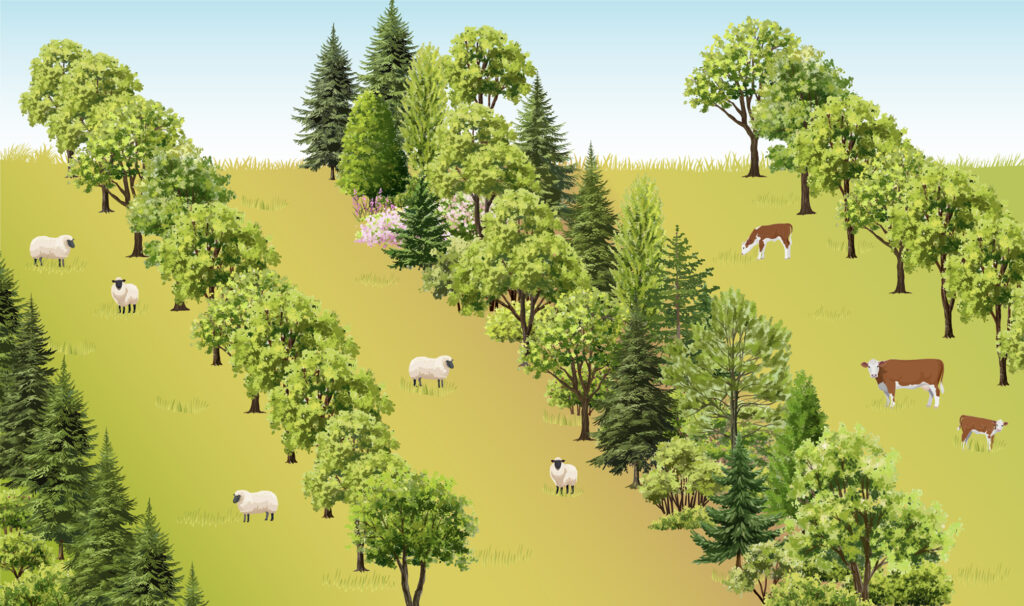
The tree row approach clusters trees into one or multiple rows of trees with wide alleys in between to allow for continued grazing. The alleys allow for greater light availability for forage production compared to evenly distributed tree cover. Planting trees in widely spaced rows allows you to protect them as a group with fencing or electrified polywire, rather than individual tree protection methods, and continue grazing in the alleys while trees are getting established. Alternatively, the space between rows can be utilized for hay production if animals are going to be excluded while trees establish. Single rows provide ideal light conditions for yields in fruit and nut trees and can ease access for large harvesting or maintenance equipment. Double or triple rows are good for adding wildlife value, reducing erosion, and including a greater diversity of products. You may also consider mixing trees and shrubs to utilize vertical space. Consider arranging tree rows parallel to streams to help intercept sediment and pollutants. One downside to the row approach is that aggregating the shade benefits in rows also means livestock are likely to concentrate in those areas once they are reintroduced, which could increase damage to trees through soil compaction or rubbing.
A tree row approach is also conducive to alley cropping in the short to medium term while the trees establish for silvopasture applications. Alley cropping is an agroforestry practice in which agricultural or horticultural crops are grown in the “alleys” created between widely spaced rows of trees or shrubs (USDA, 2025a). While the trees are young and light in the alleys is relatively unimpacted, a farmer can establish or continue to grow row crops. As the canopies of the trees expand, the alleys can then be planted with forage species and the system is transitioned into silvopasture. If taking this approach, be sure to consider the equipment access necessary for managing the alley crop and whether the impacts on tree row spacing is conducive to your long-term silvopasture goals.
A tree row approach is also conducive to alley cropping in the short to medium term while the trees establish for silvopasture applications. Alley cropping is an agroforestry practice in which agricultural or horticultural crops are grown in the “alleys” created between widely spaced rows of trees or shrubs (USDA, 2025a). While the trees are young and light in the alleys is relatively unimpacted, a farmer can establish or continue to grow row crops. As the canopies of the trees expand, the alleys can then be planted with forage species and the system is transitioned into silvopasture. If taking this approach, be sure to consider the equipment access necessary for managing the alley crop and whether the impacts on tree row spacing is conducive to your long-term silvopasture goals.
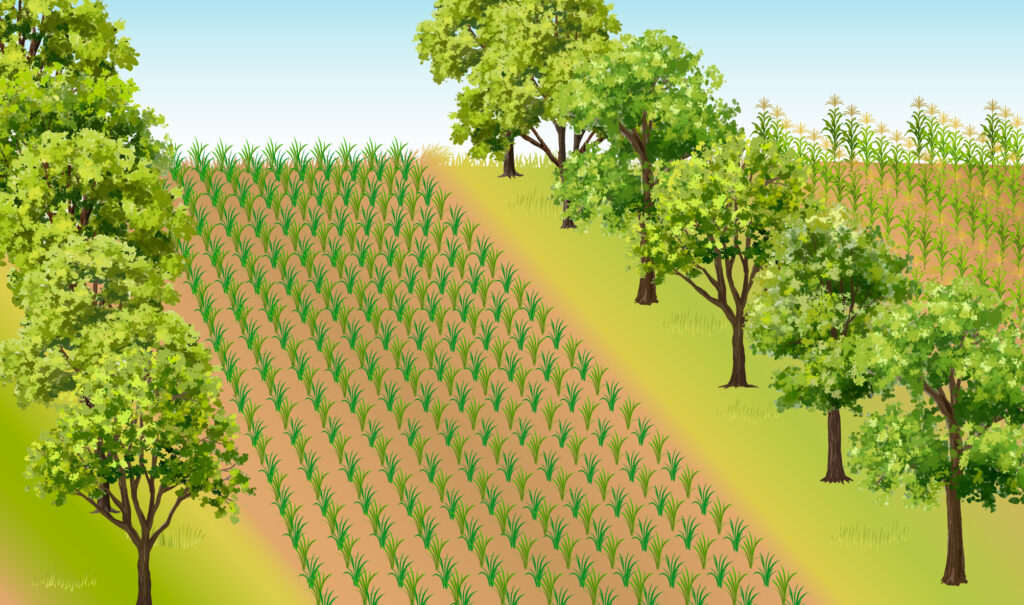
Alley cropping is its own riparian agroforestry practice that can be maintained for long-term agricultural production between tree rows as well. To learn more, visit the Alley Cropping page.
Clustered/Silvopasture “Islands”
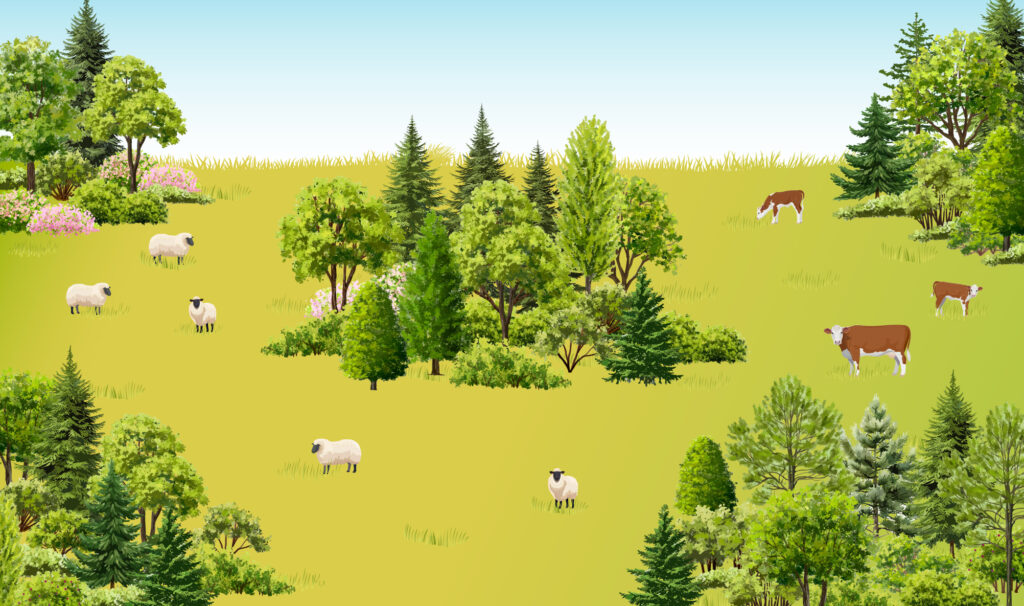
The “islands” approach aims to create clusters of tree cover in the area you intend to convert to silvopasture rather than evenly distributing tree cover over the space with rows or a traditional matrix planting. These clusters may be designed as high tree density spaces primarily used for cover or low tree density areas used for shaded grazing. A combination of both can be valuable within a larger grazing system. Clusters can be protected with fencing or individual tree protection methods, or a combination of both. The clustered approach is most likely to encourage concentration of livestock under trees, which may cause compaction and physical damage to trees over time. This can be mitigated by providing multiple clusters for livestock within a given paddock and rotating animals more frequently if damage occurs.
Ultimately, the tree arrangement, or combination of arrangements, that is right for you will depend on a combination of your goals, available resources, and site conditions.
Although planting a silvopasture can be challenging, it presents a great opportunity to design a system to suit your needs. By selecting trees and shrubs that fit your economic and environmental objectives, you can enhance the benefits your silvopasture will provide at maturity.
Selecting species that produce valuable crops will maximize the income or personal use opportunities from your silvopasture. While native species are ideal for the inner and middle zones of buffers, incorporating non-native trees and shrubs that produce marketable crops into silvopasture systems in the outer zone can maximize farm outputs. Grazing can be highly compatible with fruit and nut orchards, for example. Depending on the crop and how it is harvested, interaction with livestock could have food safety implications and should be considered ahead of time. Many native tree species are also conducive to silvopasture and can provide valuable timber or other products. Red alder, for example, can produce valuable timber and veneer products or be used as substrate to grow forest cultivated shiitake mushrooms. Douglas fir and Ponderosa pine also produce valuable timber and work well in silvopasture systems in both Eastern and Western Washington. Choosing multiple species that produce crops or timber can diversify the production for commercial sale or personal use.
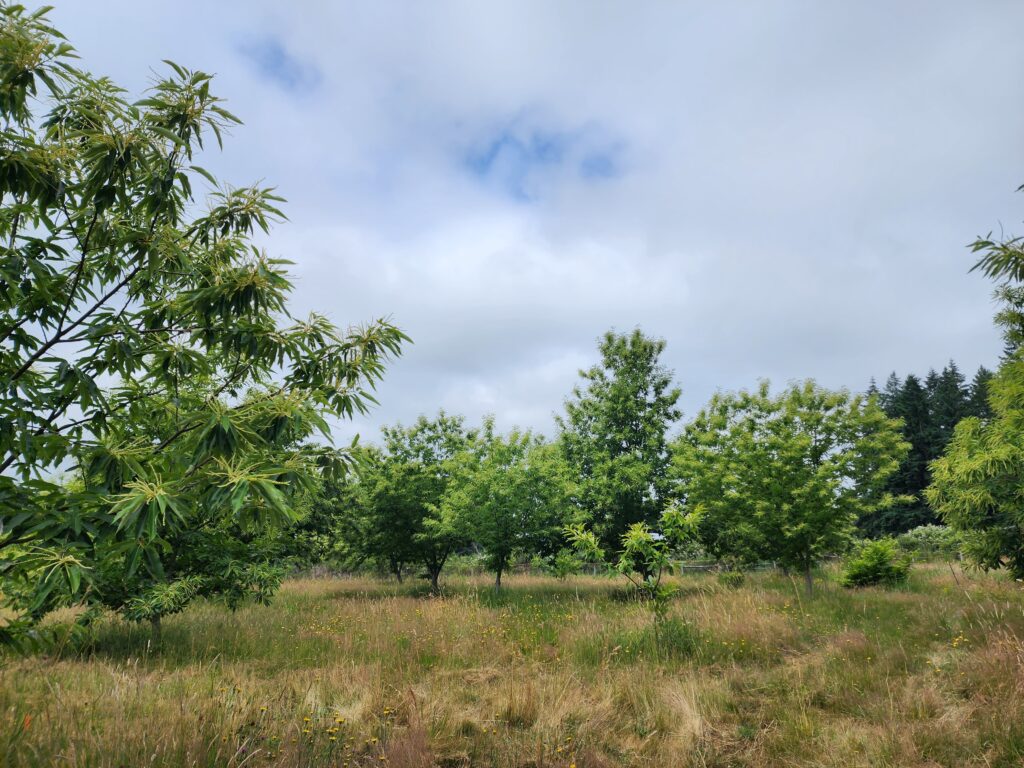
The species you select will have significant impacts on the density and timing of shade, which will impact forage production. Although thinning and pruning are powerful tools that allow you to manipulate shade density throughout the development of a forest, some shade characteristics can only be achieved by the presence of certain species. For instance, the timing of shade provided by deciduous trees facilitates better spring forage growth than conifers, which produce shade year-round. Shade density can vary significantly between species too. Western redcedar produces a much denser shade than Douglas fir or Ponderosa pine. Among hardwoods, bigleaf maple produces a denser shade than red alder or Oregon oak. Trees that produce dense shade are not ideal for forage growth but can be good for creating “living barns”, which is a colloquial term for areas of dense overstory vegetation reserved to protect livestock from high winds, excessive heat, or other severe weather.
The growth rate and form of trees can also influence a silvopasture. It’s common for landowners planting a silvopasture to select fast-growing species that will produce shade more quickly and limit the time required for establishment. For instance, red alder can reach heights of over 25’ in just five years of growth given good site conditions (Oregon State University, 2024). However, the desire to establish trees quickly must be balanced against other objectives like growing crop trees and producing the ideal shade conditions long-term. It is also important to consider the need for pruning when selecting species. Pruning lower branches improves timber quality, reduces shade for forage production, and stimulates tree height growth but requires labor and equipment.
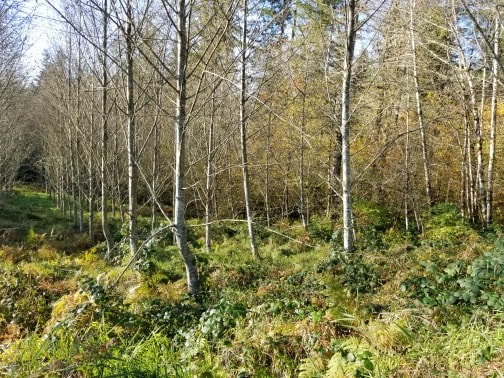
Many shade intolerant trees like Douglas fir or red alder will self-prune in the presence of competition for light from other trees (i.e. when planted more densely). Open-grown trees and shade tolerant trees are less likely to self-prune and will likely require hand-pruning. Native trees in Washington State are typically pruned in two “lifts”, first up to 8 feet and then again up to 16 feet (Hanley et al., 2005). Shrub species may also be viable for silvopasture systems, either in place of or in combination with overstory trees. However, the lower terminal height growth will reduce shade benefits. Browsing or rubbing from livestock can also be more damaging to shrubs, and they may require permanent protection.
Some species can have direct beneficial or adverse effects on livestock outside of shade impacts. For example, some trees can be utilized as fodder for animals, providing them with additional food sources and diversifying their nutrition. Red alder, poplar, and willow are all examples of trees whose foliage are edible to livestock. Fodder production can provide additional motivation for pruning trees. Species that produce fruits and nuts (e.g., chesnut, apple) can also be used to support livestock nutrition and add valuable flavor profiles to livestock products (e.g. apple finished pork). Conversely, some trees can be toxic to livestock or reduce the quality of livestock products. For example, Ponderosa pine needles can cause premature birth or abortion if eaten by pregnant cows and trees that drop sap (many conifers) can degrade wool products harvested from sheep.
Matching the right species to the site is critical and will provide those trees with the conditions for vigorous growth and resilience to pests, disease, and environmental stressors. This requires an intimate knowledge of the site you’re planting as well as a familiarity with the silvicultural characteristics of the trees you are planting.
Climate change is expected to have significant impacts in the Pacific Northwest, including changes in precipitation, increased temperatures, and increases in severe weather (Frankson et al., 2022). Increased summer heat and extended drought (particularly spring drought) has already been tied to the decline of some species in Western Washington, including western redcedar and bigleaf maple (Andrus et al., 2024; Betzen et al., 2021). Matching species to site and selecting species with drought tolerance on difficult sites is becoming increasingly important. This is especially true in silvopasture settings where soil moisture loss can be exacerbated by the lack of a closed canopy. Other climate resilience strategies, such as assisted migration may be worth exploring. Assisted migration involves sourcing seed for native plants from places with hotter, drier conditions or migrating species out of their habitat to match expected future conditions (Handler et al., 2018). Examples of this would be sourcing Douglas-fir seedlings with genetics from northwest Oregon to plant further north in Western Washington (i.e. seed zone migration) or planting Oregon white oak outside of its normal habitat because of its drought tolerance (i.e. range expansion). These are low-risk forms of assisted migration, while higher risk practices would include migrating species from far outside of their native habitat, including non-native species like incense cedar or coast redwood.
Understanding local and regional pest pressures may also influence your species selection. For instance, emerald ash borer (Agrilus planipennis) is present in the Pacific Northwest and causes significant mortality in ash trees (Fraxinus spp.) so it is best to avoid or minimize planting ash while it spreads. If you have significant pressure from animals in your area (e.g. deer/elk, black bear), you may consider planting trees that are less palatable to them, especially if you do not have the resources to adequately protect trees. Some native pests are experiencing population growth or spreading to new areas as a result of hotter drier summers making trees more susceptible. For instance, fir engraver beetle (Scolytus ventralis) increases after bad drought years and can cause damage on true firs like noble fir (Abies procera), grand fir (Abies grandis), and sometimes Douglas-fir. California five-spined ips (Ips paraconfusus Lanier) are expanding their range to the Puget Sound region and prey on two-needle pine species (Pinus spp.). Being aware of these trends in forest pests will help you determine the best species for your site. The Washington Department of Natural Resources conducts annual monitoring of forest health pests and releases their findings in a Forest Health Highlights Report to support decision making in land management.
Even if it is not your primary objective, there is substantial opportunity to provide habitat for wildlife when establishing your silvopasture. Native species are better than non-native trees and shrubs in this regard. These species will be more likely to provide the necessary food and cover for native wildlife and are more likely to be a resource for pollinators. Diverse plantings will provide better habitat compared to single-species plantations. This will also enhance a silvopasture system’s resilience to stressors like pests and disease or climate change. Although silvopasture is better placed in the outer zone of a buffer, long-lived conifers can still provide benefits to streams by eventually inputting dead woody debris if planted within 200 feet. Oregon oak is a native species that is highly suitable for silvopasture and provides significant habitat benefits. Oak-prairie habitat in Washington State has largely been converted to agricultural and residential land-uses and is high priority for restoration. Oregon oak silvopasture can mimic these conditions to provide critical habitat and sustain long-term grazing. If providing habitat is a primary objective, researching the species present in your area and their required habitat could help inform your species selection.
For more information on species selection, including species tables, planting templates, and nurseries that provide plants, visit the Additional Resources Page. Technical assistance may also be available to you through state and local programs.
Keep Reading:
- Assisted Migration – USDA Northern Climate Hub
- Climate Impacts in the Northwest – USDA Northwest Climate Hub
- Climate Resilience Guides For Small Forest Landowners (Western Washington/Eastern Washington) – USDA Northwest Climate Hub
- Forest Health Highlights – Washington Department of Natural Resources
- Species and Habitats – Washington Department of Wildlife
- Trees of Washington – WSU Extension
- Washington Native Plant Society
When ordering plants for your project, you may have the option to select from different stock types. Stock type refers to how that plant was grown and maintained prior to planting. Each stock type has advantages and disadvantages:
- Container plants are grown in containers that can vary significantly in size. Many niche plants, particularly shrubs and small trees, suitable for agroforestry are only available in containers from nurseries (e.g. chestnuts, tea plant). Container plants are resistant to damage during transportation and typically have more established root systems, which increases survival. This makes them good for challenging sites. However, they are more expensive than other stock types.
- Bare root plants are grown in large quantities directly in the soil at large-scale nurseries for forestry and conservation. The plants are “lifted” in the winter while dormant and sold in bulk with their roots exposed. In the period between lifting and planting special care is required to ensure they remain dormant, and roots don’t dry out. Bare root plants have a lower survival rate than container plants, but they are also significantly cheaper. They are ideal for sites that are less challenging and high survival is expected.
- Plugs are a type of container plant sold by forestry nurseries. They are much smaller than typical container plants but are good for low-fertility sites and are less expensive than larger container plants.
- Live stakes are segments cut from deciduous trees and shrubs that can be planted directly into the ground. This is a form of asexual (vegetative) reproduction, which means the plant will be genetically identical to the plant it was harvested from. Live stakes are very inexpensive and can be easily harvested from your own property, if available. Willow (Salix spp.) and Poplar (Populus spp.) are examples of species that can be easily propagated via cuttings.
Many factors can influence the type of stock that is best for your project, but the primary influencers will be soil conditions and your budget. Of course, the availability of seedlings in your preferred stock type can vary significantly from year to year.
Keep Reading:
Exactly as it sounds, the site preparation stage is intended to ready an area for tree planting and can include several practices necessary to improve conditions for the species you intend to plant, like soil amendments, vegetation management, and scarification. However, in most cases, the primary goal of site preparation will be to eliminate any existing vegetation that will compete with the species you are planting while they’re getting established, which is what this section will focus on. It’s common to see failed plantings where competing vegetation was not managed. The presence of other vegetation, especially grass or noxious weeds, will reduce the water and nutrients available to your seedlings. Some weeds, such as blackberry or Scotch broom, can easily grow over top of your seedlings and shade them out as well. The effort required to prepare a site for planting a site will vary significantly based on the type and density of vegetation growing there. At minimum, it is recommended to eliminate competing vegetation in a circle within 1-2 feet of the seedling.
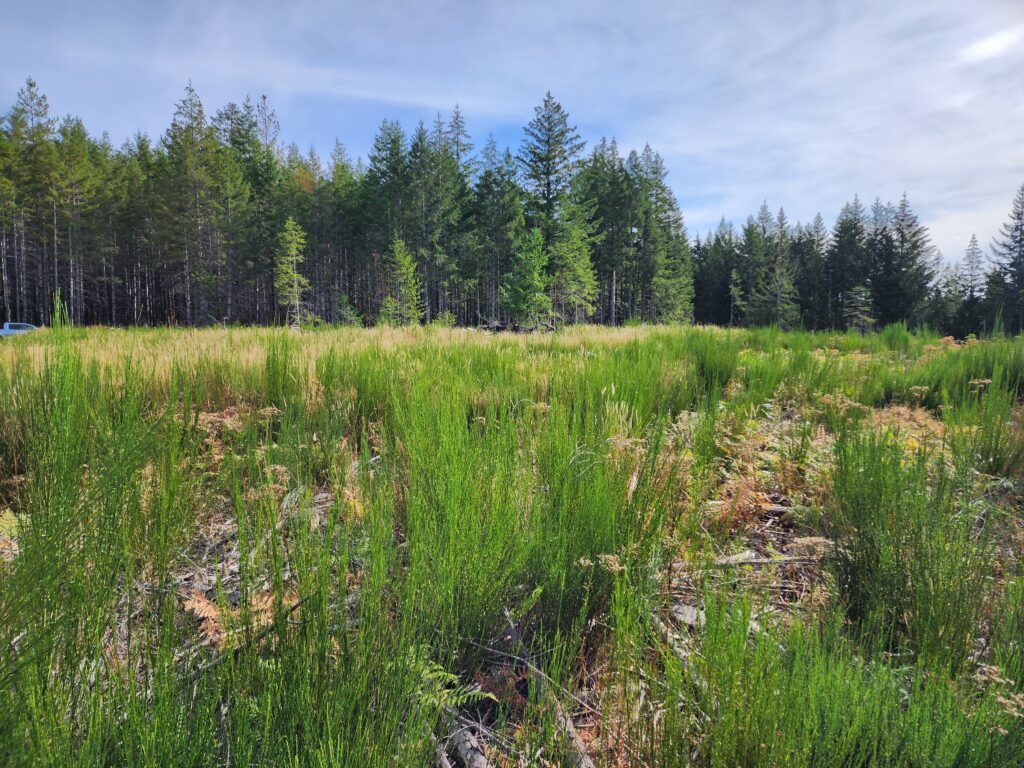
Site preparation typically occurs in the growing season ahead of when you intend to plant. For instance, if you intend to plant in November, you might conduct your site preparation of the area sometime between May and September. Generally, it is best to avoid too large of a gap between when you prepare a site and plant so there is limited time for vegetation to grow back. So, it can be advisable to wait until later in the growing season. That said, the best timing for your site prep could vary significantly based on the type of vegetation there and method you choose. For instance, an excellent method for removing invasive blackberry (e.g., Himalayan blackberry) is to cut it back to the ground in the early summer using hand tools or a brush hog, then allowing it to grow back over the remainder of the growing season. Then, in the early fall, use a recommended herbicide to kill the new vegetation. This late season herbicide application ensures the chemical is taken into the roots as the plants go into dormancy, and having mulched the bulk of the vegetation in the early summer ensures the area is accessible and easy to work in.
For more recommendations on how to deal with specific weed species, visit the PNW Weed Management Handbook. In some cases, site preparation may take more than one growing season to adequately remove existing vegetation. In other cases, it may be as simple as removing grass and sod by hand immediately before planting.
There are several methods of vegetation control available, many of which are described below. Again, the most appropriate method will depend on the type and density of vegetation, other site conditions, and your available resources. Integrated pest management (IPM) is strongly recommended, which is a strategy that utilizes multiple approaches to managing pests, including unwanted vegetation, efficiently and with limited ecological impacts.
Chemical applications can be used to eliminate competing vegetation efficiently and effectively. Most herbicides are used to kill existing vegetation, but pre-emergent herbicides are also available, which prevent seeds in the soil from sprouting. The use of herbicides in or near riparian areas should be limited whenever possible but may be the best or only viable option, especially for large scale projects where other methods would be too labor intensive or not financially feasible. When using herbicides, always read the label and be aware that some have limited legal applications within certain distance of water and/or require special licensing. For recommendations on chemical applications for specific weed species, refer to the PNW Weed Management Handbook.
Hand-weeding using basic tools can often be the most cost-efficient way to prepare a site for planting. It’s effective for small-scale projects or bigger projects where minimal site preparation is necessary. For instance, when planting in grassy areas, an effective strategy is to simply remove the sod layer within 1-2’ of the planting spot and set it aside immediately before planting.
Sheet mulching, also referred to as “lasagna composting”, involves layering organic materials (typically 3-6” thick) over a project area. This eliminates existing vegetation prior to planting and will continue suppress vegetation while trees are getting established. Mulching is effective and utilizes materials like cardboard and woodchips, which can often be sourced for free or with limited cost. It also adds organic matter to the soil over time. However, it may add labor to the planting process, especially if you must cut through layers of carboard to get to the soil. Because of the materials required, it is generally more suitable for small to medium sized projects. While mulch can effectively mitigate soil moisture loss through evaporation, it can also reduce soil recharge from rainwater, and may need to be paired with irrigation depending on the materials used. Sheet mulch is also susceptible to being washed away in areas that flood, so it’s important that you know where flooding may occur on your site to determine where other strategies are more appropriate.
Keep Reading:
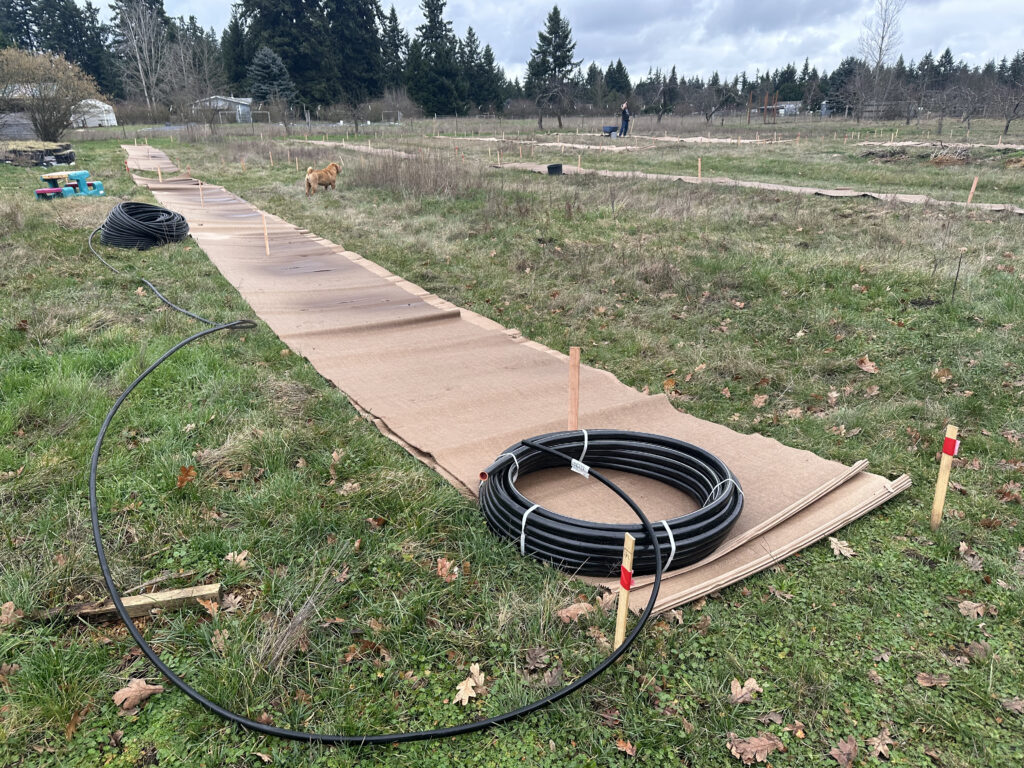
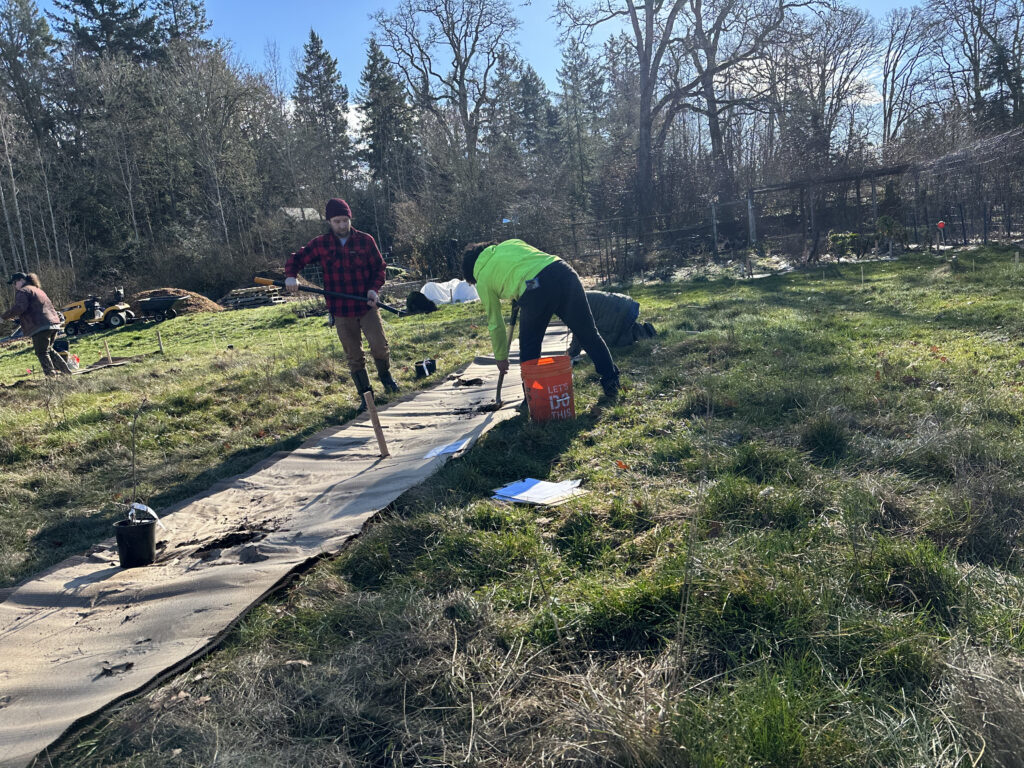
Solarization is the process of laying clear plastic over a project site to destroy existing vegetation. The plastic covering creates a greenhouse effect, trapping heat and moisture, that kills the plants underneath. This is best done during the growing season to take advantage of warm, sunny days. Depending on the weather, solarization may take 2-3 weeks to effectively kill the vegetation beneath. Occultation is a similar practice, but instead uses opaque materials (e.g. black plastic tarp). Because the material is opaque the greenhouse effect is limited, and the process takes longer (often 3-6 weeks) but landowners are more likely to have these materials already so it can be the more cost-effective option. Solarization and occultation will control vegetation prior to planting but are not recommended for controlling vegetation around planted trees because their heating effect on the soil may damage roots. Although research is limited on this practice, it may have the benefit of killing harmful organisms in the soil, but it will also destroy beneficial organisms. Using an arbuscular mycorrhizal inoculant on the roots of plants during planting may help offset any negative effects solarization or occupation has had on beneficial soil biota.
Keep Reading:
Tilling is a mechanical site preparation strategy that involves ripping or turning over soil in the areas you intend to plant. This kills or sets back existing vegetation and makes soil more workable for planting. This can be particularly helpful in areas with compacted soil and/or heavy clay components. However, because tilling exposes soil it can create conditions for new weeds to flourish. “Strip tilling” in narrow rows just wide enough to plant in, rather than tilling the entire project area, is recommended. This will limit the weed response and reduce potential for soil erosion. Tilling is sometimes followed with solarization, occultation, or chemical applications to kill the weeds that get established after tilling, thereby depleting the presence of weeds in the seed bed. Tilling should be done carefully in riparian contexts and is not recommended on sensitive soils adjacent to riparian features or on slopes that would accelerate sedimentation into waterways.
Mechanical means (i.e. machinery) may sometimes be necessary to efficiently remove existing vegetation. This is especially true for larger projects and areas where there is significant woody vegetation or other difficult to remove species. Tractors with mulcher attachments (i.e.) masticators and similar machines can make quick work of difficult vegetation and leave behind a thick layer of mulch. However, large machinery should be avoided in sensitive riparian sites and wetland soils in winter or spring, or any time the ground is soft. Smaller machines, such as brush hogs, may be necessary on sensitive sites and more effective for smaller projects and can often be rented from farm supply or hardware stores.
Planting
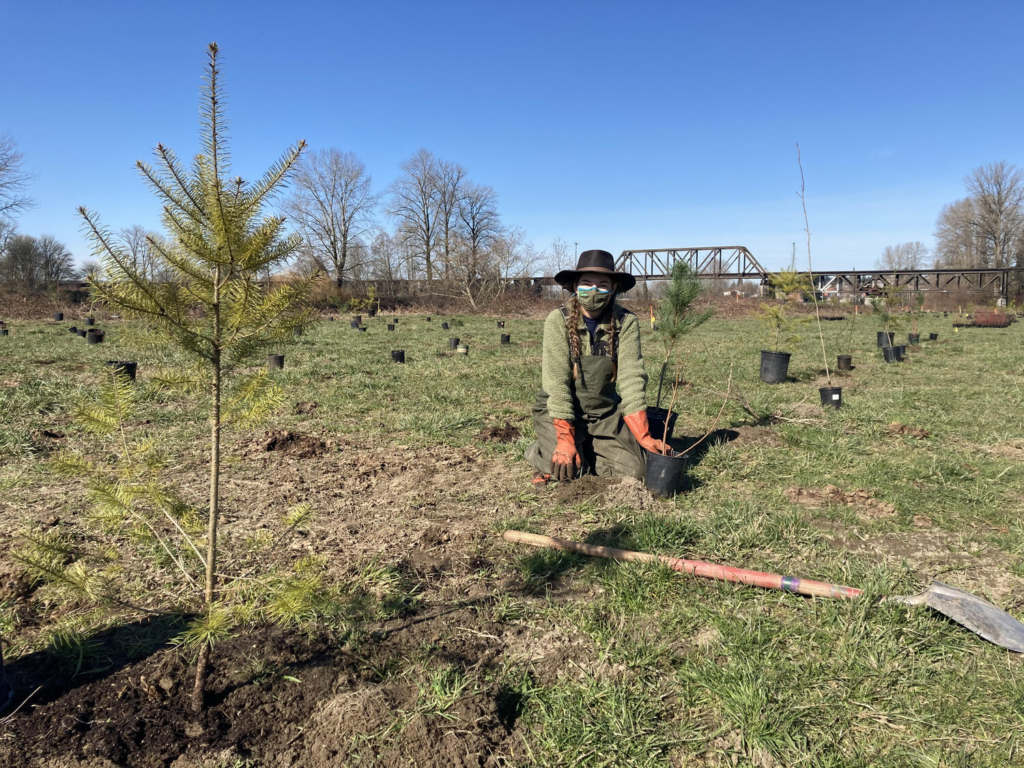
Whether you’re planting bare root, potted plants, or live stakes, timing is important. In Western Washington, planting should occur after the soils have sufficiently recharged from the dry season and before plants come out of dormancy in the spring. This is typically between November and April. Planting in the fall can provide extra time for plants to establish roots ahead of their first growing season, which can improve drought tolerance and survival. However, it can also expose plants to early frost damage and should be avoided for plants that are sensitive to frost (e.g. red alder) or in areas with significant frost pockets.
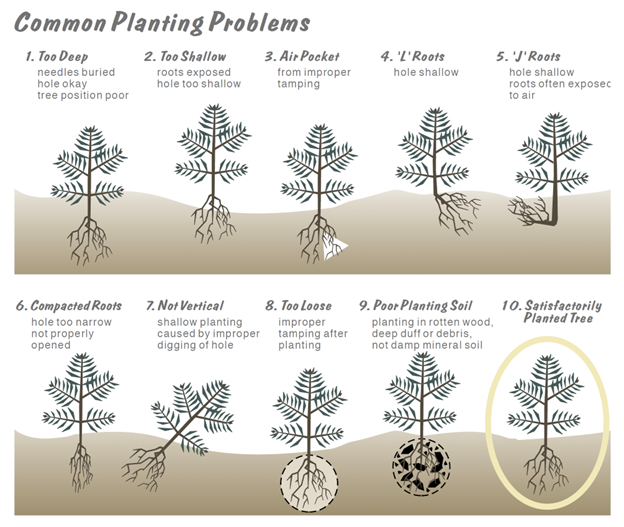
When planting bare root seedlings, be sure to ensure the roots stay moist and cool. Avoid planting on warm, sunny, or windy days. If the roots appear dry, it’s likely that many of the fine roots have already desiccated and are damaged, which makes survival unlikely. Waiting to pick up bare root seedings from the nursery until the day of or day before you intend to plant is recommended. Transport them in a cooler and keep out of the sun while you are working through the planting area. Bare root seedlings can be planted quickly using a dibble bar or planting shovel, which wedges in the ground to open a small gap allowing you to drop the seedling in. However, there are some easy mistakes to make, especially if moving quickly. See the figure below for some of the common pitfalls of planting bareroot seedlings and how to avoid them.
Container seedlings and cuttings are more resilient to damage from transport or environmental conditions prior to planting, although both should still be kept moist and cool. Container seedlings should be planted using a sturdy shovel to dig out an area slightly larger than the size of the container to allow for some loose soil surrounding the planting area. If plants are rootbound, break up the roots to support growth after planting. Cuttings should be planted so that the buds are pointed upwards and deep enough that only one or two buds remain above ground. Larger (i.e. longer) cuttings will promote deeper early root growth and may encourage survival, especially in dry soils. Some cuttings may need to be soaked for several days prior to planting.
Keep Reading:
Tree protection is important element of any planting project but is a particularly important and challenging in silvopasture systems due to the integration of livestock. This section will discuss strategies for preventing damage from both livestock and wildlife after tree planting.
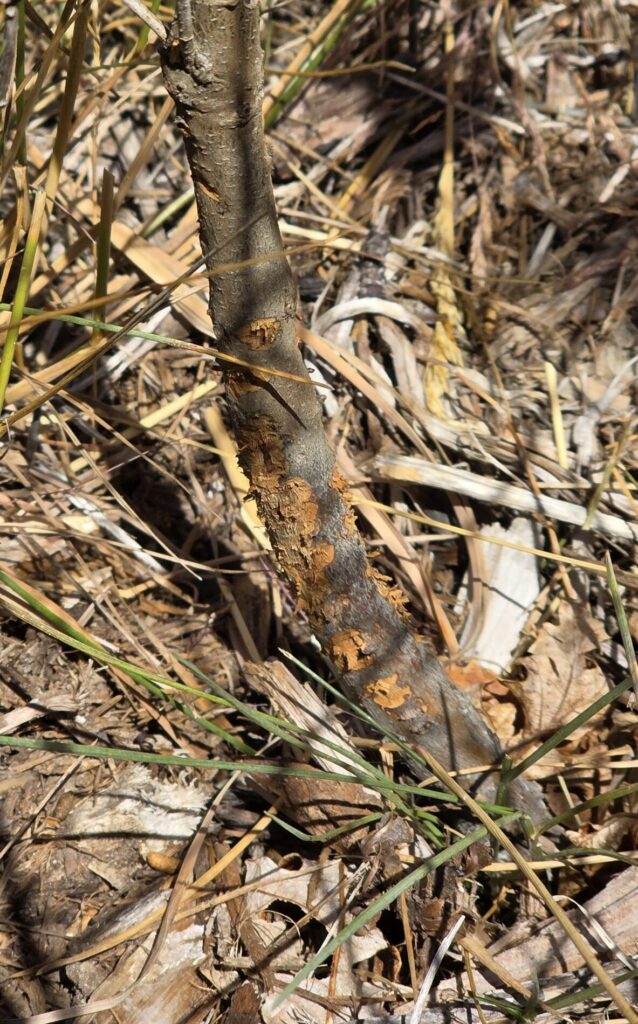
Livestock can damage trees by chewing on foliage, branches, or bark of trees. They may also rub on the bark and trample or even uproot seedlings. Damage will vary widely based on the type and breed of livestock. Poultry, for example, generally don’t damage even young seedlings. Some varieties of sheep and goats are less likely to feed on trees and shrubs than others. Cattle can cause significant damage but are generally the easiest to train or exclude.
As with any planting project, wildlife pressure must also be considered. Deer and elk are common in Washington and will browse the foliage and juvenile shoots of trees and shrubs. This can set back their growth, cause poor form, or kill the tree entirely. Small mammals, such as mice, voles, or rabbits, can also damage seedlings by girdling roots and stems. The type and intensity of pest pressure will vary by site. For instance, mice and vole damage can be particularly bad in overgrown pastures where they have significant cover from predators.
Trees require protection until they have sufficient canopy above the browse level and their stems are large enough to be resilient to interactions with livestock and wildlife. Once they reach this point they are considered “free to grow” and require less maintenance. There are many approaches to tree protection available to ensure trees successfully establish and reach free to grow.
Fencing
Fencing a recently planted area can be a cost-effective solution for protecting trees by excluding livestock and large wildlife (deer, elk). However, removing grazing space for 5-10 years while trees establish may not be financially feasible for some livestock managers. Also, it will not protect trees from smaller animals like mice, voles, and rabbits and will require managing weeds and competing vegetation through methods other than grazing (e.g. spraying, mulching, mechanical removal). Fences should be a minimum of six feet high to prevent deer from jumping over. In large open areas where deer have more space to jump, eight feet is recommended. A “two-tiered” fence approach, where two shorter fence layers are staggered 4-5 feet apart (with an inner fence and outer fence), has also been successful at preventing deer gaining enough speed to jump over fences. If using fencing, be sure to provide an access point that is large enough for yourself and any equipment you will need to maintain the area.
Tree Tubes
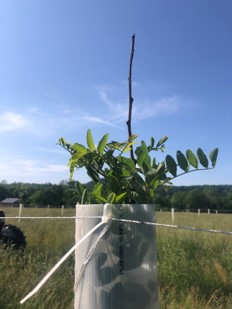
Tree tubes can be an effective method for protecting individual trees while allowing for continued grazing. Tubes are good option for medium to large planting projects where trees are evenly distributed throughout the area. However, they can provide shelter for small pests like voles and shorter tubes require annual maintenance to ensure the tube covers the terminal bud of the tree as it grows. Since they are plastic, they will eventually require disposal, although some claim to be photo- and bio-degradable.
Tree Cages
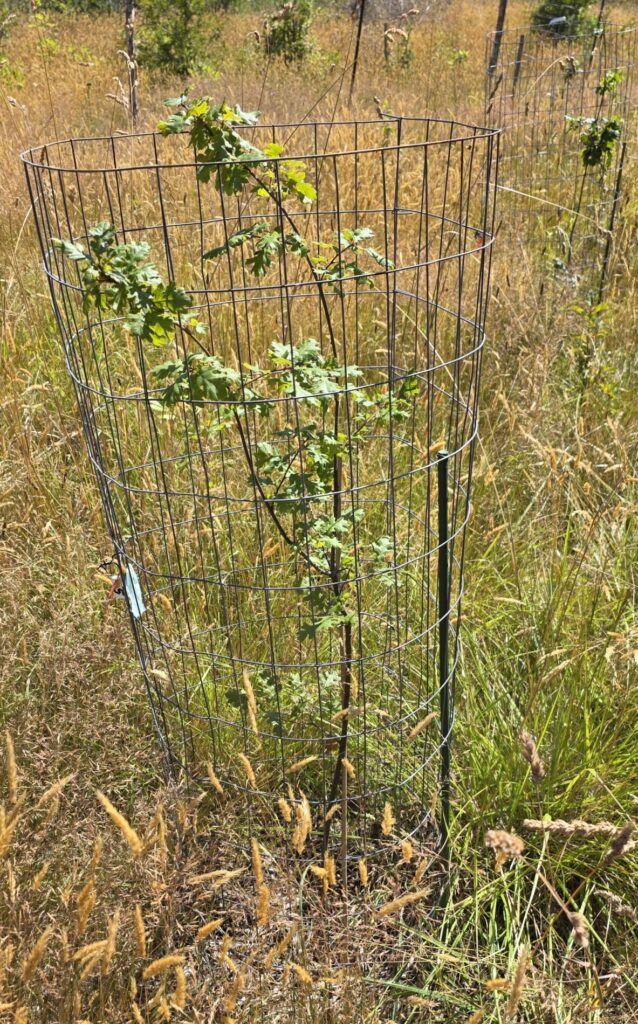
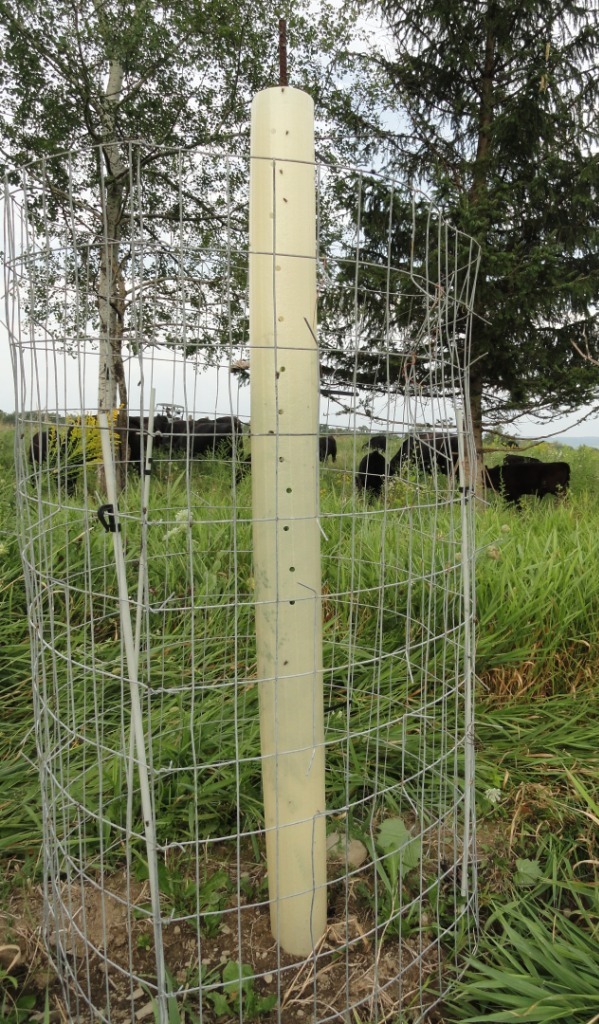
Tree cages utilize materials often found around the farm like chicken fencing or hog wire. The materials are sturdy and reusable over multiple plantings but are best for small projects due to the cost of the material. They create a wider perimeter compared to tree tubes, which means more maintenance is required inside the cage to reduce weeds. This maintenance can be cumbersome because you may need to remove the cage entirely to access that area. Branches may grow out of holes in the cage (depending on the material used) and be subject to browse.
Polywire
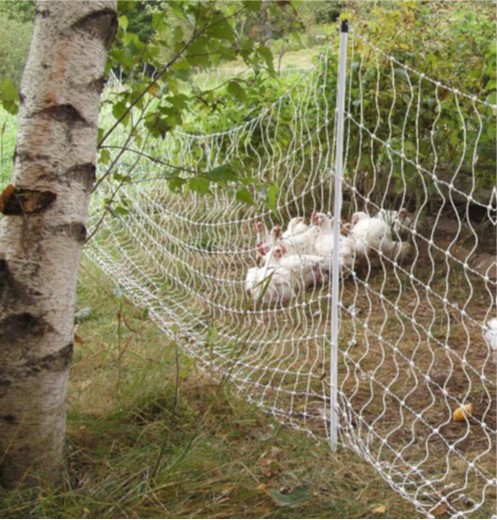
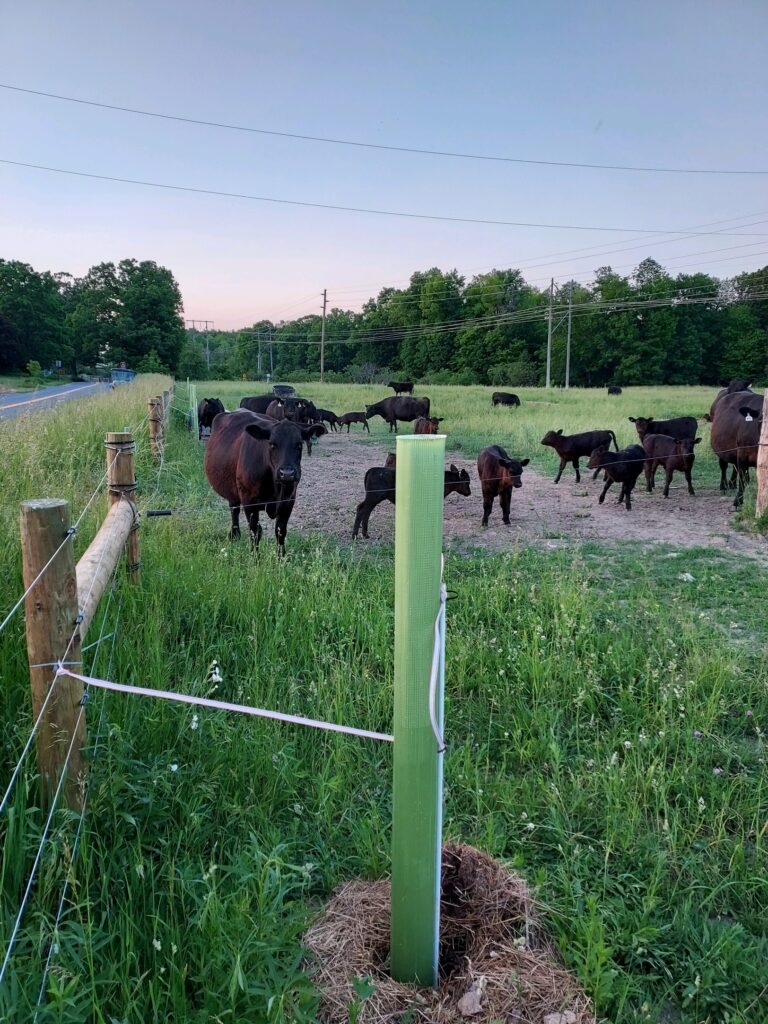
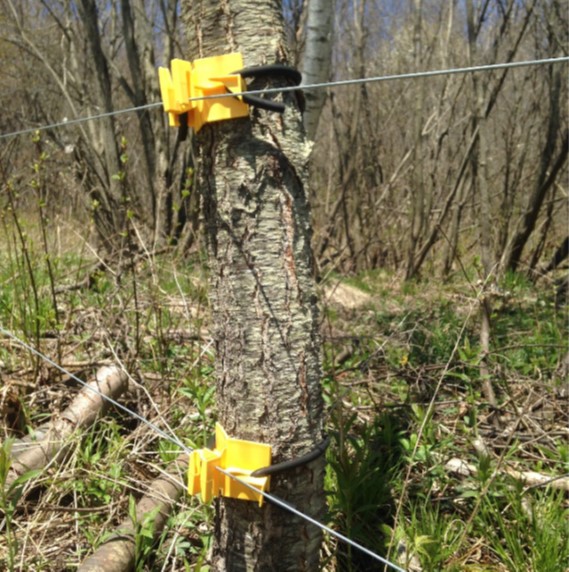
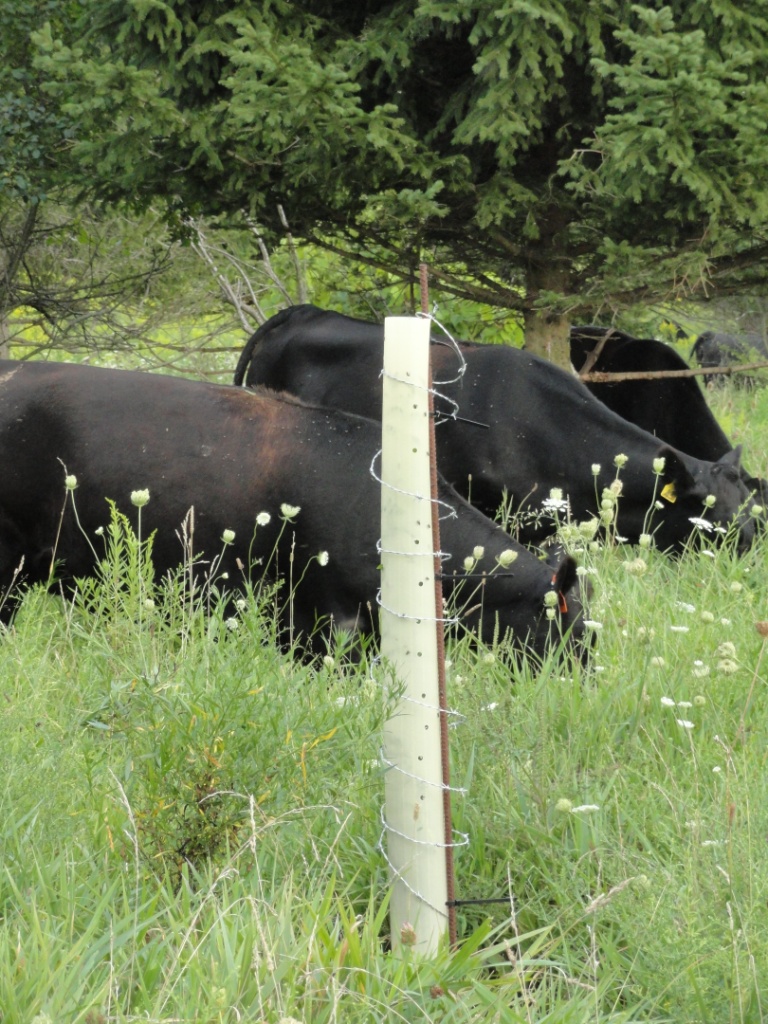
Polywire, or “hotwire”, is an electrified fencing option that can be used to protect trees from livestock but is not typically used to deter wildlife damage from elk or deer. Polywire can be fixed in position on permanent fence posts or used in portable/temporary fencing solutions. The latter are commonly used in rotational grazing, making it a good investment for anyone interested in silvopasture. Cattle are generally the easiest to train and often respond to a single strand of hotwire. Sheep, goats, pigs, and poultry often require multiple strands or electric netting fence to adequately confine or exclude them, although it can vary significantly by breed.
Getting Creative
The above are some of the “tried and true” methods that have worked for forest owners and agroforestry operators, but there is plenty of room for innovation. Combining elements of these options may maximize tree protection benefits. For instance, combining tree tubes and polywire is an approach that is catching on in parts of the Midwest. Polywire is run around the exterior of the tree tube after installation, which prevents animals from rubbing on the tubes and damaging seedlings. The pictures below highlight some other combined and innovative approaches to tree protection in silvopasture.
Paired Planting w/ Spruce
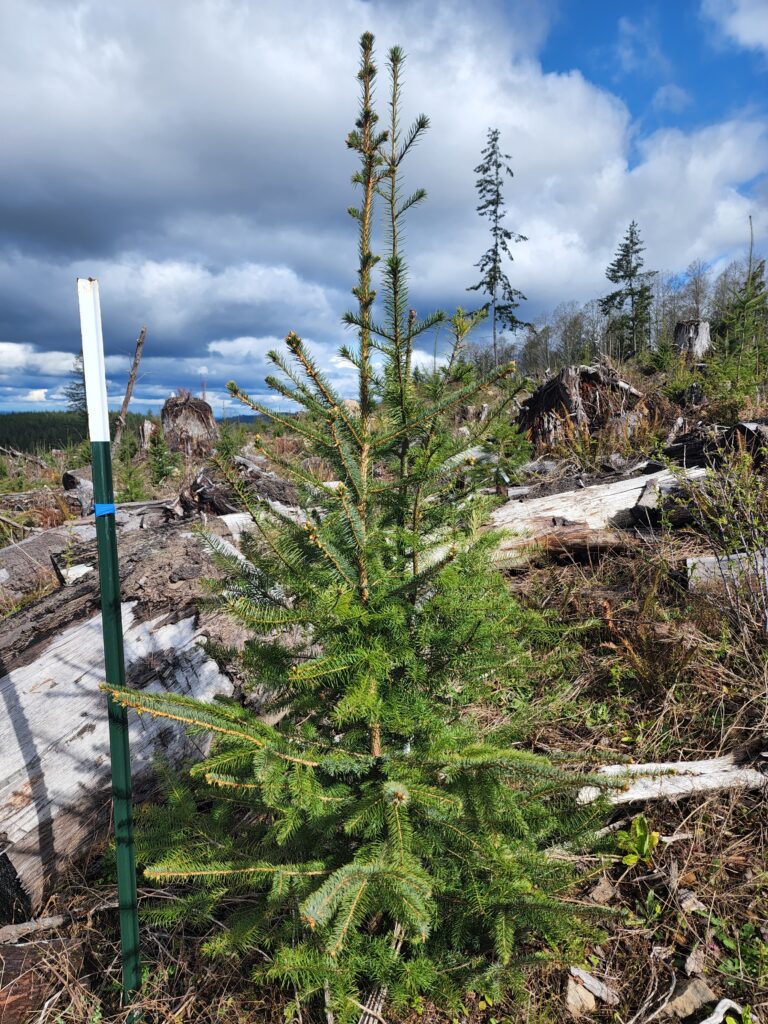
“Pair planting” seedlings with Sitka spruce is a new strategy that some forest owners have used to help deter deer, elk, and small mammals from browsing on target seedlings like Douglas-fir or western redcedar. It may also have applications for silvopasture establishment.
In this method, Sitka spruce seedlings are planted in the same hole as the desired tree seedling. Sitka spruce needles are sharp and tough, which deters animals from feeding on the foliage. Since they have similar growth rates as other conifers, the spruce is often able to intermix with the foliage of the desired seedling and provide protection until it reaches a sufficient height to survive on its own. At that point, the spruce can be clipped at the base. Spruce seedlings are cheaper than many forms of tree protection, including tree tubes, so many forest owners that have tried it feel it pencils out economically. However, it is not known whether competition for moisture, sunlight, or nutrients from the spruce will slow the growth of desired seedlings.
There are also “cultural control” methods of deterring animal damage. This involves altering the environment to make the area inhospitable to pests. For example, building next boxes and perches for large predatory birds can help reduce mice and vole populations when planting into grassy areas. Similarly, reducing vegetation near trees will reduce cover for small pests. “Dead wood fencing”, which involves creating a barrier with large woody debris (e.g. logging slash) throughout or around a planted area can help prevent deer and elk browse, which struggle to walk through that type of terrain. Cultural methods are usually not sufficient to protect seedlings on their own but can be used to supplement other protective measures.
Keep Reading:
Good decision making, site preparation, and tree planting methods will go a long way to improve the survival rate of your planting project, but maintenance will still be required over the next several years while they establish. This can include, but is not limited to, moisture management, maintaining animal protection, back planting where trees didn’t survive, and adapting to new and unforeseen challenges.
Ensuring trees have water available for growth is very important for the first several years of a trees life while it establishes a sufficient root system. This can be done by providing supplemental moisture through irrigation or by cultural methods that reduce moisture loss during the growing season. Native tree species in our region have evolved to survive dry summers by completing most or all their annual growth in the spring to early summer. However, this means that drought conditions during the spring can be particularly damaging to new plantings, especially if competing vegetation is present and reducing water availability. Increasingly hot summers and an extension of the dry season will exacerbate that damage. Your approach to moisture management for your seedlings will depend on the resources you have available and site conditions, specifically soil hydrology. Irrigation can greatly increase the survival of tree seedlings during drought conditions but is not always necessary or feasible due to the cost and/or site logistics. If using irrigation, drip irrigation methods are recommended to provide a slow moisture release into the soil. Providing a layer of mulch within 1-2 feet of the tree will help reduce soil moisture loss as well as reduce the presence of competing vegetation. Ideally, this would be done at the time of planting. A 3-4” layer is ideal and should be arranged so that the area within an inch or two of the base of the tree is kept free of mulch to allow for air movement and avoid mold or fungal growth in the root collar.
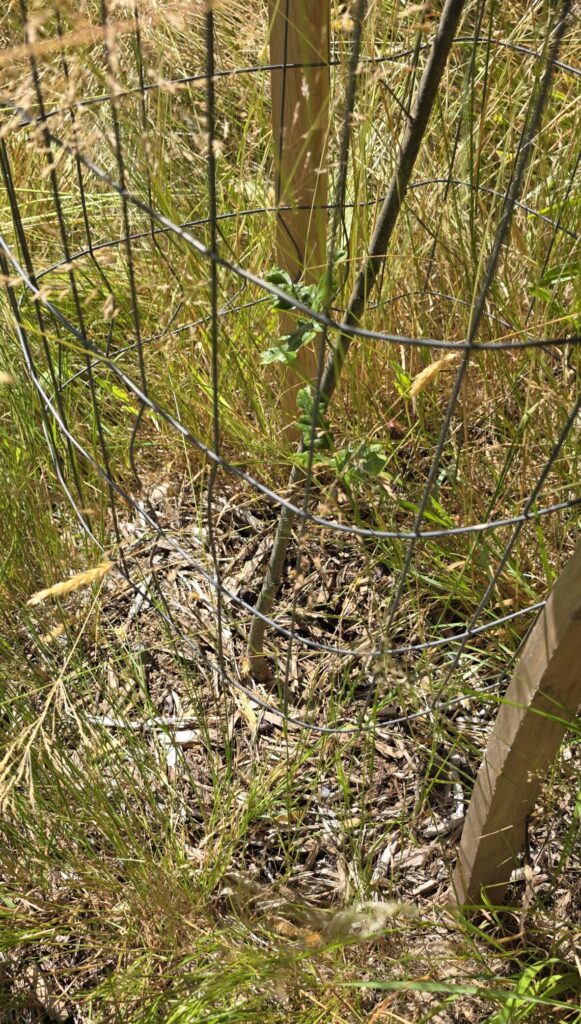
In most cases, managing competing vegetation is an ongoing task. Repeating the treatments you used during site preparation or utilizing different methods may be necessary to ensure weeds don’t outcompete the species you planted. However, it’s not necessary to maintain bare earth. Some vegetation is acceptable (and inevitable) but limiting the growth of vegetation within 1-2’ of the trees or shrubs you plant will improve their growth and ensure they are not overtopped by weeds. Reducing vegetation around the trees can also keep that area exposed and reduce cover for pests like mice and voles.
Maintaining your protection from animal damage will also likely take some time each year. For tree tubes, it’s important to ensure that the tube covers the new growth by moving them up the tree one or two times in the growing season. Fencing requires less annual maintenance but should still be monitored for gaps or damage allowing animals to enter. As you maintain and monitor your planting, you may find that additional measures are required to protect your trees.
For most tree species, maintenance is only necessary in the first several years while the trees establish sufficient root systems and canopies to thrive on their own and develop some resilience to potential stressors. Your new silvopasture would be considered “free to grow” when you’ve reached a desired number of trees that have successfully established, grown tall enough that the leaders are no longer within reach of browse, and cannot be overtopped by competing vegetation (typically 5-6’ tall). In silvopastures, it’s also important that the trees also have significant enough diameter to withstand some rubbing from larger livestock (if applicable). For fast-growing species like red alder or black cottonwood (Populus trichocarpa), this can happen in as little as 3-5 years. For most other trees in good site conditions, it will likely take 6-10 years to reach this size. Although some slow-growing species, such as Oregon oak, can take longer.
The work of maintaining a silvopasture is never truly over, but once you reach “free to grow” the level of monitoring and maintenance required is significantly reduced. Putting the proper effort up front will help you avoid failed plantings and financial losses. For support with your project, visit the Additional Resources Page to learn about programs that offer landowner assistance through site visits, planning and design, and cost-share.
Starting from a Forest (Silvopasture by Subtraction)
Adapting an existing forest to silvopasture may be preferred to avoid the costs, labor, and waiting period associated with tree planting. Since this approach limits your ability to design the overstory for crop production (e.g. fruit and nut trees), it is generally best for individuals that are primarily interested in managing the tree component of their silvopasture for shade benefits and/or native tree products (timber, boughs, mushroom substrate, etc). Although you’ll be limited in your ability to alter the species composition of the overstory, there is still ample opportunity to manipulate the tree canopy to provide the proper conditions for forage production and shade benefits. Forestry site assessment methods, including forest inventory, take on more importance in this context and will help you determine what you’re working with, your options, and how to get there.
Transitioning a forest to silvopasture means reducing tree cover and, to some degree, forest function. Although silvopasture systems still provide significant ecosystem benefits like carbon sequestration and wildlife habitat, they typically do not reach the same level of benefit as a natural forest. One possible exception of this is where the open canopy structure of a silvopasture mimics particular forest types, such as oak woodlands in Western Washington or dry Ponderosa pine forests in Eastern Washington. However, even in these forest types, riparian areas may have denser structure and vegetation. Therefore, it is very important to select forests for conversion to silvopasture carefully. For instance, converting a healthy and mature Douglas-fir/hemlock forest to silvopasture would result in a significant loss of ecosystem services. Comparatively, converting an overstocked conifer plantation to silvopasture would not result in a significant loss of ecosystem services. In fact, the thinning and long-term management associated with conversion would improve tree growth and maintain benefits like carbon sequestration. Degraded forests with significant noxious weed pressure or damage and mortality related to pests, disease, and weather damage could also be good candidates for silvopasture.
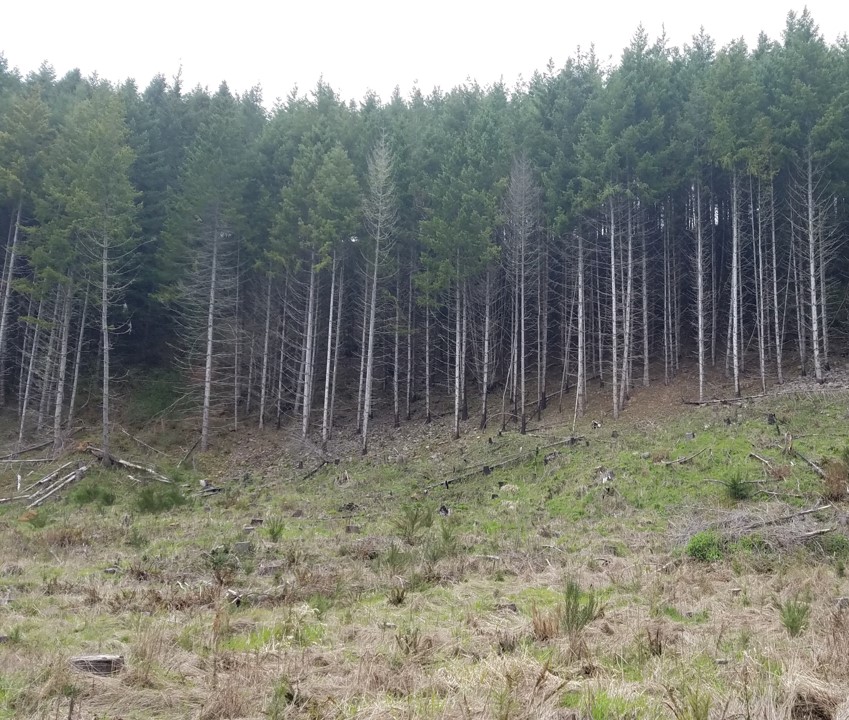
The following section will describe the basic process of converting a forest into silvopasture. While reading this, keep in mind that state and local regulations may impact your ability to manage an existing forest for the purposes of grazing. This can be particularly true in riparian areas, which is another reason why limiting grazing to outer zone of buffers is recommended. Regulations can vary significantly by county and whether your property includes habitat that is under special protection. For more resources on this, see the Additional Resources page.
Whereas with forest farming landowners are intensively managing smaller areas, silvopasture tends to utilize more acreage, so broader methods of forest site assessment may be necessary. A forest inventory will help you determine the structure and composition of your forest, which will inform the type and intensity of practices (e.g. thinning) required to provide ideal conditions for silvopasture. Forest inventory incorporates multiple forest metrics such as tree size, density, species, and health, as well as other site conditions like shade and understory composition. A consulting forester can provide a professional-grade inventory of a project area for a fee. It’s particularly important to hire a forester if you’re interested in assessing the timber value of your forest (also called a “timber cruise). However, a basic inventory can also be done by a landowner using some simple methods and inexpensive tools. Web-based programs like LandMapper and PlotHound are also available to support your forest inventory.
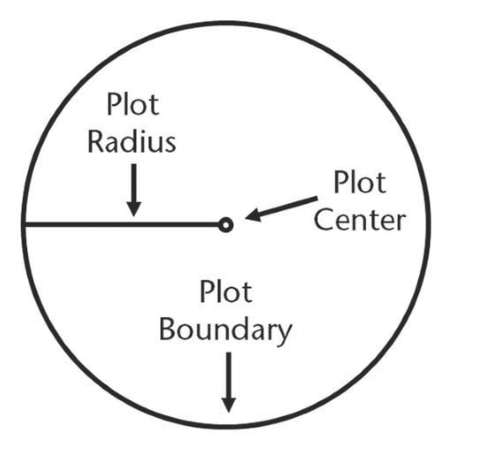
A forest inventory relies on population sampling. Similar to how pollsters will ask a subsample of people how they feel about social issues or political candidates to gauge the larger population, a forest inventory measures randomly selected areas to create an informed vision of the whole forest. There are many ways to go about this, but the simplest method is to randomly select points in the forest and establish circular “fixed” plots in which you can take your measurements. The data you collect is then extrapolated to the whole area based on the size of those plots.
A common plot size for small forest owners to use is a circle with a 16.7’ radius. The area inside this circle is 1/50th of an acre. Using a measuring tape and a plot center, you can easily determine the perimeter of your plot at each randomly selected location. You can elect to use a larger plot size. For example, a 1/20th acre plot has a radius of 26.3’ and will collect more data in those locations. Doing more frequent, small plots is better for diverse forests while fewer large plots are suitable for more uniform forests (e.g. a Douglas-fir plantation).

| Plot Size (acres) | Radius (feet) |
|---|---|
| 1/5 | 52.7 (52’8″) |
| 1/10 | 37.2 (37’2″) |
| 1/20 | 26.3 (26’4″) |
| 1/30 | 21.5 (21’6″) |
| 1/40 | 18.6 (18’7″) |
| 1/50 | 16.7 (16’8″) |
| 1/100 | 11.8 (11’10”) |
Regardless of plot size and frequency, you will take the same measurements within the perimeter of each plot you create. A forest inventory can consist of a wide variety of metrics depending on the site and objectives. For silvopasture, the most important measurements are listed below:
- Forest density describes how densely trees are arranged in a forest is most easily measured as trees per acre. Forest density has significant impacts on forest health, shade, and tree growth. It can easily be determined within a plot by counting the number of trees that fall inside the perimeter and multiplying it by the denominator of your plot size. For example, if four trees fall within your 1/50th acre plot, it would reflect 200 trees per acre (4 x 50 = 200). What qualifies as a “tree” is typically determined by size and/or its’ position in the overstory. Trees smaller than 3-4” in diameter are often ignored in a forest overstory assessment but for forest farming they might be included because they will still impact shade levels.
- Shade describes the amount of light hitting the forest floor and will have significant impacts on most forest farming operations. It’s typically described as a percentage and is the inverse of light availability. Shade should be determined at each plot location, which can be done with a densiometer or through the paper plate method described in the Site Assessment section.
- Tree size is described as diameter and is measured by using a measuring tape to wrap around the circumference of the tree. This metric helps you understand the average size of trees in the forest and how they vary with species, which can help you determine a thinning prescription if necessary. This can be easily done using a cloth measuring tape and then dividing the number by pi (3.14) to get diameter. However, a diameter tape can be worth investing in, which has the value of the pi incorporated on the tape and eliminates the need for any math. Regardless of the tool used, diameter should be taken at “breast height”, which is standardized to 4.5’ off the ground for consistency. Determine and record diameter for each tree inside your plot.
- Species is also important to record inside your plots for each tree. This will allow you to figure out how metrics like diameter vary between species. The relative frequency of species will also help you determine dominant type of shade (e.g. conifer versus hardwood).
- Understory vegetation may or not be valuable for a silvopasture conversion. If you intend to graze animals on native understory vegetation, knowing the type and abundance of species present is very important to determine a grazing plan, as well as identifying any species that could be harmful to livestock. Understory plants are also often some of the best indicator species and can help you better understand your site, including what types of forage will be easiest to establish and maintain there. If you intend to eliminate existing vegetation and establish forage, it can be helpful to record what is present to better prepare a site preparation plan. A rough “eye assessment” is usually sufficient and can be as simple as recording the relative composition of what is growing in the understory by percent area covered within each plot (e.g. 20% sword fern, 10% salal, etc.).
- Plants of the Pacific Northwest Coast – Pojar & MacKinnon (multiple vendors – J Michaels Books, Amazon, Lone Pine Books)
- Trees to know in Oregon and Washington – OSU Extension
- Trees of Washington – WSU Extension (Free PDF available)
- Native Trees of Western Washington – WSU Extension
- Washington Native Plant Society
There are many books, guides, and online resources available to help you identify trees, shrubs, and understory plants growing in your forests:
Once you’ve collected your data, interpreting it for silvopasture applications can be straightforward as well. However, a technical assistance provider will be able to use their experience to better translate that information to land management. For more information on technical assistance available to you, visit the Additional Resources Page.
If doing it yourself, start by averaging some of the data across all your plots. Averaging is done by adding up the individual numbers then dividing by the number of data points. For instance, if you did four plots and the shade levels were 90%, 80%, 90%, and 70% shade, simply add those together and divide by four to get 82.5% shade for the forest. Average density (trees per acre) can be done the same way but remember that you get the trees per acre value in each plot by multiplying the total number of trees in the plot by the acreage represented in your plots (for a 1/50th acre plot, multiply by 50).
Diameter should be averaged by species to determine how they differ in size. Determining relative species composition is a little trickier. You do this by first determining the number of times each species occurs in the plots, averaging them, and then multiplying by plot size to determine the number of trees per acre it represents. For instance, if you had four 1/50th acre plots and red alder was present twice in the first plot, once in the second plot, none in the third plot, and twice in the fourth plot, average those numbers (2+1+0+2 = 5, then 5/4 = 1.2) to determine that red alder occurs 1.2 times every 1/50th acre. This means that there are an estimated 60 red alder trees per acre across your forest (because 1.2 x 50 = 60). Do this for each species to determine their relative population in the forest.
Using the data you collected on shade percentage and total tree density will help you determine if you need to reduce density or take other actions adopt your silvopasture system. This, combined with the numbers you determined for average size and relative density of species will help you develop a course of action (discussed in next session).
Some landowners may prefer to skip the inventory step and simply “eye” it. For small projects or for people that have significant experience thinning forests, this may be a viable option. However, if you are working larger acreages and/or don’t have experience with forest management, knowing the forest you’re working in before getting started can be immensely helpful. Remember, you can’t put trees back on the stump!
Keep Reading:
Thinning is a forest management practice by which trees in a stand are strategically selected for removal to benefit the growth of remaining trees and overall forest health and function. In the context of converting forest to silvopasture, thinning is the most powerful tool available to create the correct light conditions for forage production in the understory. Most mature silvopasture systems in our region will fall somewhere between 50-150 trees per acre, depending on the tree species, age/size of trees, and landowner objectives. This is a lower density than will naturally occur in most forest types, especially younger forests in Western Washington, so thinning at some scale is almost always required to convert to silvopasture. The intensity and style of thinning will be determined by your objectives and the tree density, percent shade, and type of shade determined during your site assessment and forest inventory.
Harvesting and selling timber is often restricted within a certain distance of water features, depending on the feature size and type. Thinning without selling timber products (called “pre-commercial thinning”) is less restricted but may still be subject to regulations, particularly in the inner zone. Refer to the Washington Department of Natural Resources Forest Practices Illustrated Guide to learn more or contact the DNRs Landowner Regulation Assistance Program.
There are several different types of thinning, but not all are appropriate for converting a forest for grazing. The two types of thinning below have the greatest applicability for silvopasture.
- Thinning from below is the most common form of thinning in our region, especially in conifer plantations. In this method, smaller, suppressed, and poorly formed trees are removed from the canopy to achieve an ideal tree density and leave behind the best performing trees. The removal of trees reallocates resources to those remaining while leaving a relatively high stocking rate. This type of thinning supports vigorous growth and timber production. For silvopasture, thinning from below can be utilized to remove smaller, unhealthy, or undesirable trees while retaining healthy, vigorous trees that meet your objectives for shade, production, and environmental benefits.
- Variable density thinning (VDT) is a mixed approach with the goal of increasing structural and species diversity in a forest that lacks those characteristics (Bekris et al., 2021). “Skips” and “gaps” are created to produce heterogeneous tree cover. Skips are areas that are left unthinned and relatively dense, while gaps are small areas where all trees are harvested. The spaces between these are thinned to a variety of target densities. This diversifies forest structure, which in turn benefits forest functions like wildlife habitat. The same concepts can be applied in the context of silvopasture. VDT can be used to create canopy gaps for greater forage productivity while leaving dense areas that can serve as shelter from wind and inclement weather, and the interstitial space can be thinned to provide shaded grazing.
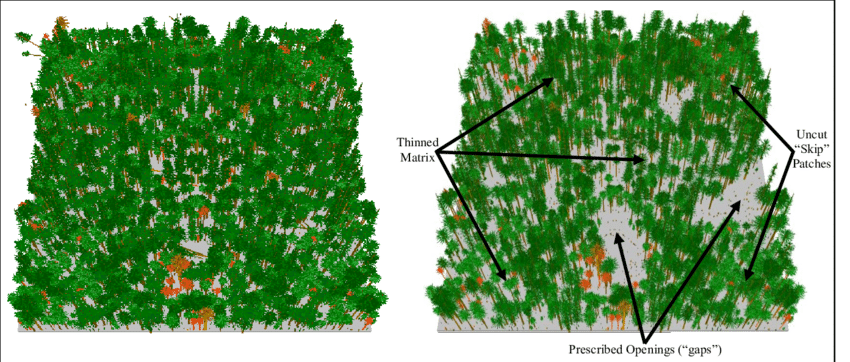
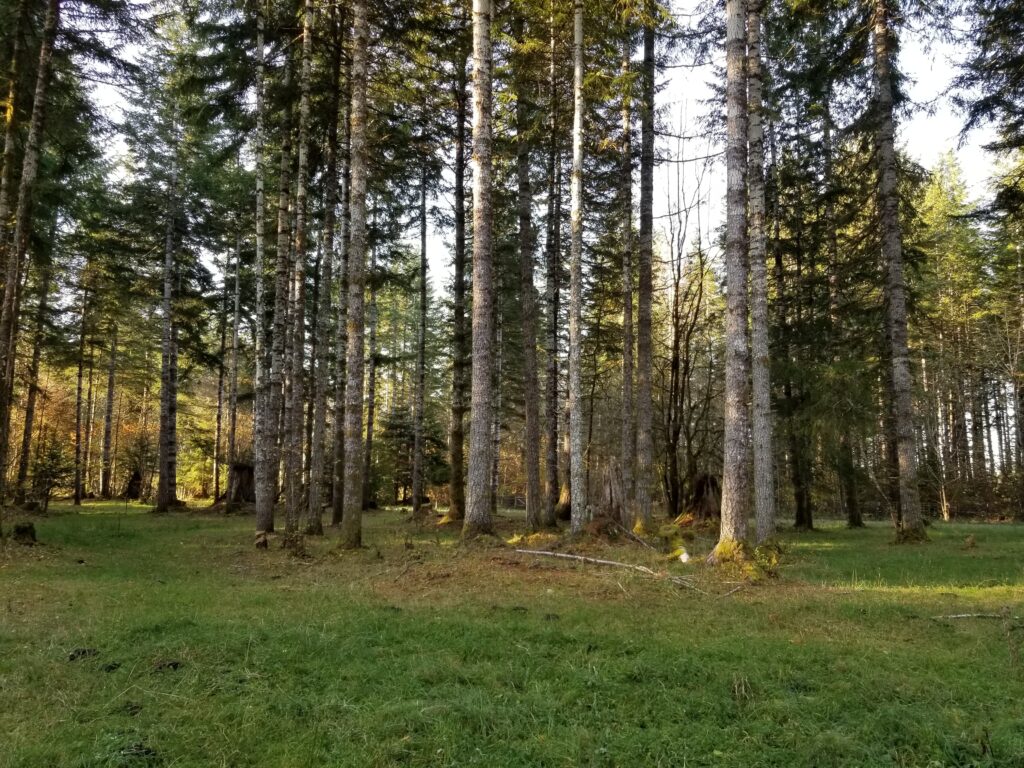
Regardless of approach, thinning to reach a target density and shade level for silvopasture can be difficult to do on your own if you have limited experience with forest management, especially for larger projects. A skilled forester can assess the density of your existing stand and then write a thinning prescription for hitting a target density. They can also mark trees for removal that will help meet those light conditions and your other desired objectives. If you’re thinning project includes targetting large trees with commercial timber value, a forester can navigate a timber sale for you and are often able to negotiate better prices for the logs you sell. This will help you mitigate costs associated with thinning operation, or perhaps turn a profit. If your project requires thinning large, commercially valuable trees but the size of the job is not large enough to attract a logger, you may still consider hiring a skilled tree feller to do the work (especially if you are not experienced in felling large trees). This will reduce risk of injury to yourself and mitigate damage to the remaining trees in the forest. Small-scale sawmill operators are available to mill logs into lumber you can use on site or sell. Some also offer tree felling services.
Foresters and loggers can be valuable for large projects, but most farmers experimenting with silvopasture will be starting with small to medium-size projects. So, hiring contractors may not be practical or necessary. As discussed previously, it’s possible for you to implement a basic forest inventory yourself and achieve rough estimates of basic measures like tree density, existing shade level, and species distribution. These data can help you develop your own thinning prescription. If targetting small diameter trees, many forest owners will also elect to thin themselves with a chainsaw and the proper safety equipment. This is referred to as a “pre-commercial” thinning because the trees are too small to have value as commercial timber. However, those trees can be utilized for other products, such as mushroom substrate, firewood, or biochar.
Remember that a silvopasture will generally require a shade level of 50-60% or less in order to provide sufficient light for forage growth. How this translates to trees per acre will depend greatly on the size and species of trees. Knowing your existing shade level and selecting a target shade is the first step and will depend on type of forage you hope to grow in the understory. Cool season grasses are the best choice for production under a forest canopy. These can grow well in up to 60% shade while warm season grasses and forage can only tolerate up to 30-40% shade. If you intend to graze animals on native forest vegetation, thinning would still improve productivity but your target shade level will be a little higher (60-70%) to maintain similar growing conditions for native understory species. Grazing native vegetation is not ideal for all livestock and will likely mean a much lower carrying capacity for that space regardless of what animals you own. See the Forage Management and Livestock Selections to learn more.
Depending on the composition of your existing forest, it can be difficult to translate an existing and target shade level to a target density that will guide your thinning. In relatively uniform stands where trees are mostly the same species, age, and size, reducing shade level can be done in proportion to tree density. For example, reducing a Douglas-fir plantation with 80% shade and 300 trees per acre to 40% may be as simple as removing half of the trees down to 150 trees per acre. If you’re selecting smaller and poorer performing trees (i.e. thinning from below), you may need to take a little more than half since the remaining trees will be bigger trees with larger crowns, but the uniformity of the stand allows for a much simpler approach.
In stands with trees of a variety of species and sizes, the relative shade contributed will vary from tree to tree. This requires more finesse in your thinning, and relying more heavily on the species distribution data you collected in your site assessment and regularly checking your progress as you go. For instance, if your data shows that a significant portion of bigleaf maple in your forest, you may target those trees for removal first as they have large dense canopies that are not ideal for forage growth. Of course, you have to weigh targetting a species for reducing shade against your desire to retain them on site for other purposes (e.g. crops, habitat, etc.).
Thinning Example Using Forest Inventory Data
Consider the existing conditions and all of your objectives before beginning thinning, then use the data you collected to create a “prescription” you can keep in mind as you work through the project area. Fore example, let’s say your forest inventory returned the data below describing the relative proportion by species and their average size.
- The forest has an average of 400 trees per acre, 95% shade. The species-level data is as follows:
- Douglas-fir – 200 trees per acre, Avg diameter: 8.5”
- Red alder – 150 trees per acre, Avg diameter: 10.5”
- Bigleaf maple – 50 trees per acre, Avg diameter: 7”
With this existing composition and size, we can tell that that dominant tree species is Douglas-fir (50%), followed by red alder (37.5%) and bigleaf maple (12.5%). This would be a common composition to see in a forest that was harvested and replanted with Douglas-fir sometime in the last twenty years but had some competition from naturally regenerated hardwoods. To determine a thinning prescription, start by deciding the relative importance of species available for retention based on your objectives. In this case, let’s say we want to prioritize Douglas-fir because it is long-lived and produces a potential timber crop and red alder because it produces a light shade that is good for forage production and it’s a nitrogen fixer that can benefit the soil. Your target shade level is 40%, recognizing that the trees are relatively young and will continue to grow and increase shade. Starting at 95% shade and 400 trees per acre, this means you’ll likely need to reduce the density by a little more than half to between 150-180 trees per acre. Since the composition is mixed and species affect shade differently, this is just an estimate but can serve as rough guide. A density of 150 trees per acre or more is still on the high end for a mature silvopasture, but you expect to thin more over time and use the trees for firewood, biochar, or other uses.
To understand how a target density translates to individual tree selection, think of your inventory plot. As a thought exercise, imagine you have a 1/50th acre plot (16.7’ radius) that represents the average composition of the forest. Because each tree represents 50 trees per acre, in this plot you would have one bigleaf maple, three red alder, and four Douglas-fir trees. Given the existing density and your objectives of retaining Douglas fir and red alder, you would start by removing the bigleaf maple. After that, you would likely still need to remove around 3-4 more trees to get down to 150-180 trees per acre and roughly 40% shade. However, because bigleaf maple tends to have a large canopy, removing it may have a proportionately larger effect on shade, so it’s possible you would only need to remove 2-3 more trees. You can check your progress regularly by doing a quick plot to look at trees per acre in the immediate area or directly measuring shade using a densiometer or paper plate method. Over time you’ll likely be able to “eye” both density and shade but it can still be helpful to check your work with these tools periodically.
Your desired composition will help you determine what trees to take next. Since there is more Douglas-fir present than red alder, you could remove one red alder and two Douglas-fir trees to reach an equal composition of the two. Or if you want to retain Douglas-fir because it’s long lived, you could remove all of the alder. This will be entirely up to you and your objectives. However, if you notice there are poor performing trees of either species in your plot (e.g. broken tops, small diameter, signs of disease or poor health), it would make sense to target those first.
In practice, the placement and distribution of trees will vary and probably not make things quite as easy as in this example. It’s also not feasible to divide the whole area into 1/50th acre plots and treat the forest that way. However, using this as a guide for the relative proportions of trees you should be targetting will help you reach your target density and composition throughout the area.
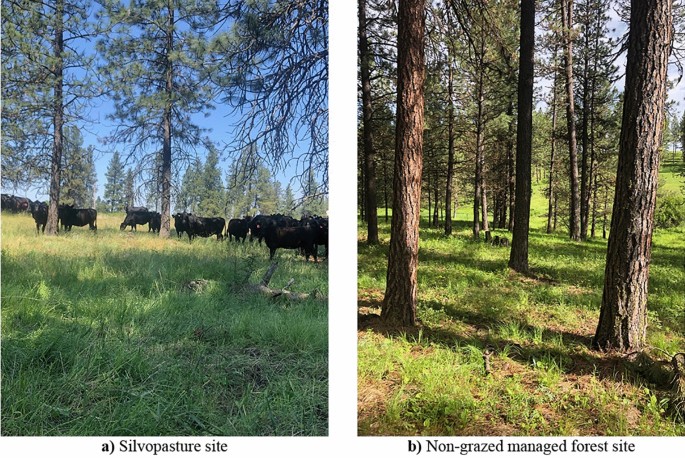
As you remove trees, check the shade level consistently to see how you are approaching your target. Thinning while the leaves are on the trees (in the case of deciduous trees) will important for this process. You can also do “check plots” similar to what was described in the forest inventory section to quickly check tree density where you are working and get a sense of your progress toward your target.
Thinning produces a significant amount of woody debris that will likely need to be dealt with before introducing forage and/or livestock. Although some animals are better able to navigate difficult terrain, in most circumstances removing the woody debris will benefit animal movement and forage production. Large, commercially valuable trees can be sold or milled for lumber on site, or split for firewood. Small diameter trees and woody debris can be piled and burned or processed in kilns to produce biochar that can then be spread back throughout the silvopasture system to benefit soil health. You can also use a masticator to mulch the woody debris and spread it across the area, although too much woody debris may limit forest establishment. Small diameter hardwood trees like red alder or Oregon oak can be used to grow forest-cultivated shiitake mushrooms.
Thinning is the most powerful tool available for converting a forest to silvopasture, but should be done with significant thought and planning. As previously discussed, select forests that would benefit from management while leaving healthy forests to continue growing and providing ecosystem services. Keep in mind too that some regulations may prevent forest conversion to silvopasture. For instance, Western Washington landowners with forestland in Washington’s Designated Forestland Program (DFL) must maintain a forest density of at least 90 trees per acre (50 trees per acre in Eastern Washington). This may impact your ability to manage for silvopasture. Furthermore, some counties are more amenable to implementing silvopasture under this program than others. If you’re enrolled in DFL, check with your local county assessor office prior to taking action. Of course, integrating silvopasture into a new or existing riparian buffer will also be subject to regulations. For more resources on this, see the Additional Resources page.
Keep Reading:
- Competition and Density in Woodland Stands – OSU Extension
- Guide to Variable-Density Thinning Using Skips and Gaps – USDA (PDF)
- Let’s Mix it Up! The Benefits of Variable Density Thinning – USDA (PDF)
- Thinning: An Important Timber Management Tool – WSU Extension
Pruning
Pruning will have a more limited effect on shade than thinning and is good for “fine-tuning” light levels after thinning. Depending on the composition and age of your silvopasture, pruning may or may not necessary or an option. Most shade-intolerant trees (e.g. red alder, Douglas-fir) are effective at self-pruning lower limbs where there is sufficient competition for light from nearby trees. However, these trees will not self-prune in open settings with high light availability. Converting a younger forest to silvopasture means they will likely require pruning as they continue growing, whereas older trees will likely have already sufficiently self-pruned.
Native trees in Washington are typically pruned in two “lifts”, first up to 8 feet and then again up to 16 feet (Hanley et al., 2005). Pruning is best done while trees are dormant, between November and March, to reduce the risk of spreading pests and disease and minimize damage to the bark. However, pruning deciduous trees to manipulate shade levels requires doing it while leaves are still on the tree. Targeting late summer to early fall (late August to October) for deciduous trees will allow you to monitor light levels during pruning and mitigate risks associated with doing it during the growing season. When pruning, never remove more than 30-40% of the canopy in a year.
Pruning trees also produces higher quality timber products. It is especially important when growing high-value products like veneer. Pruning to ensure that no limbs are larger than 2-3” will improve wood quality. Pruning material cut from certain deciduous species such as cottonwood, red alder, and willow can serve as highly nutritious forage for livestock and help supplement their diets.
Pruning trees also produces higher quality timber products. It is especially important when growing high-value products like veneer. Limbs that grow larger than 2-3” will decrease wood quality. Harvesting and selling timber is subject to restrictions within a certain distance of streams and other features, depending on the stream size and type. Refer to the Washington Department of Natural Resources Forest Practices Illustrated Guide to learn more.
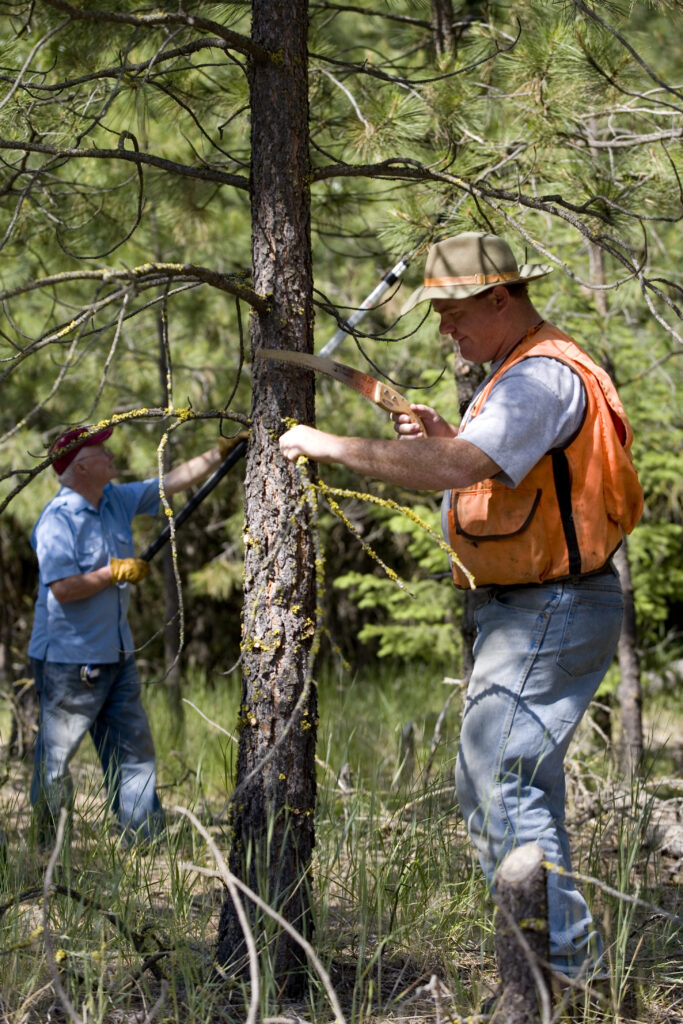
Keep Reading:
Forage and Livestock Management
Depending on the existing vegetation present when establishing or converting an area to silvopasture, it may be necessary to establish forage. In the case of converting a forest to a silvopasture, this would be done after thinning is complete and ideal light conditions are achieved. Many afforestation projects (i.e. silvopasture by addition) occur in pastures where some level of existing is forage available but individuals may decide to remove that vegetation in favor of establishing a specific mix or alter the existing composition with forage improvement practices. It’s also common to convert areas with significant brush, including noxious weeds, to silvopasture. Grasses and legumes require disturbed soil to successfully germinate and grow, so site preparation is an important first step for forage establishment in these scenarios. There are several site preparation methods available, and the best option will vary based on site conditions, landowner goals, and available resources.
- Logging disturbance as a result of converting a forest to silvopasture can sometimes be sufficient site preparation for forage. Machinery used to harvest and move large trees can reduce existing vegetation and expose bare soil which is ideal for seeding forage. In situations where smaller trees are hand felled and removed (i.e. pre-commercial thinning), it is less likely there will be sufficient disturbance to substitute for site preparation.
- Chemical applications can be a very efficient site preparation solution. The use of herbicides in or near riparian areas should be limited wherever possible but they are an effective short-term strategy for removing unwanted vegetation. They are particularly suitable to large projects where other methods are not financially viable and in the case of converting areas dominated by noxious weeds to forage. However, they may need to be combined with mechanical methods like mastication or chain harrowing to disturb the soil. When using herbicides, always read the label and be aware that some have limited legal applications within certain distance of water and/or require special licensing.
- Solarization is the process of laying clear plastic over a project site to destroy existing vegetation. Occultation is a similar practice, but instead uses opaque materials (e.g. tarp). Occultation takes longer but uses materials many landowners already own. In both practices, heat is trapped below the material which kills vegetation. Cutting existing vegetation down to the ground may be necessary to be able to cover it with whatever material you are using. Since silvopasture systems are shaded, these methods will take longer than in open conditions. Solarization and occultation can be difficult to use for large projects because of the amount of time and material required but can be effective for smaller projects or establishing forage in stages.
- Tilling or harrowing utilizes agricultural equipment to physically destroy vegetation and prepare soil for forarage establishment. This can be done with large equipment (i.e. tractors), roto-tillers, or hand tools, although most silvopasture projects will be larger than is feasible for hand tools. Tilling in a silvopasture can be difficult due to the presence of trees and tree roots, so special care must be taken to avoid damaging them. Secondary tilling minimizes disturbance by using tools such as a harrow that reduces the tilling depth to less than three inches. Further reducing tillage depth to 1-2” will help mitigate damage to tree roots. Tree arrangement can have a significant impact on your ability to use heavy equipment for tilling or harrowing. It’s easiest to avoid damage to trees when trees are arranged in rows. Forests converted to silvopasture will have a sporadic tree arrangement that may be difficult to work around. Using no-till drills on slopes that will mitigate increased sediment deposits into waterways. Depending on the size, type, and density of existing vegetation it may be necessary to use a brush hog or mulcher to eliminate vegetation first. In which case this machinery may also provide sufficient soil disturbance for seeding and mitigate need for tillage.
- Animals can also be effective tools for site preparation, especially browsing and rooting animals. Pigs, for example, can reduce existing vegetation and loosen soil for seeding in a relatively short amount of time. However, this behavior makes pigs difficult to sustain in silvopastures long-term (see Livestock section). Similarly, chickens and turkeys can effectively prepare soil while they “scratch and till” for insects and seeds but require relatively high concentrations to do so and will take longer than pigs. Goats and other browsers are excellent at reducing vegetation, including noxious weeds like blackberry. A small herd of 5-10 goats can eliminate an acre of dense brush in a month or less and may provide sufficient soil disturbance for seeding in the process.
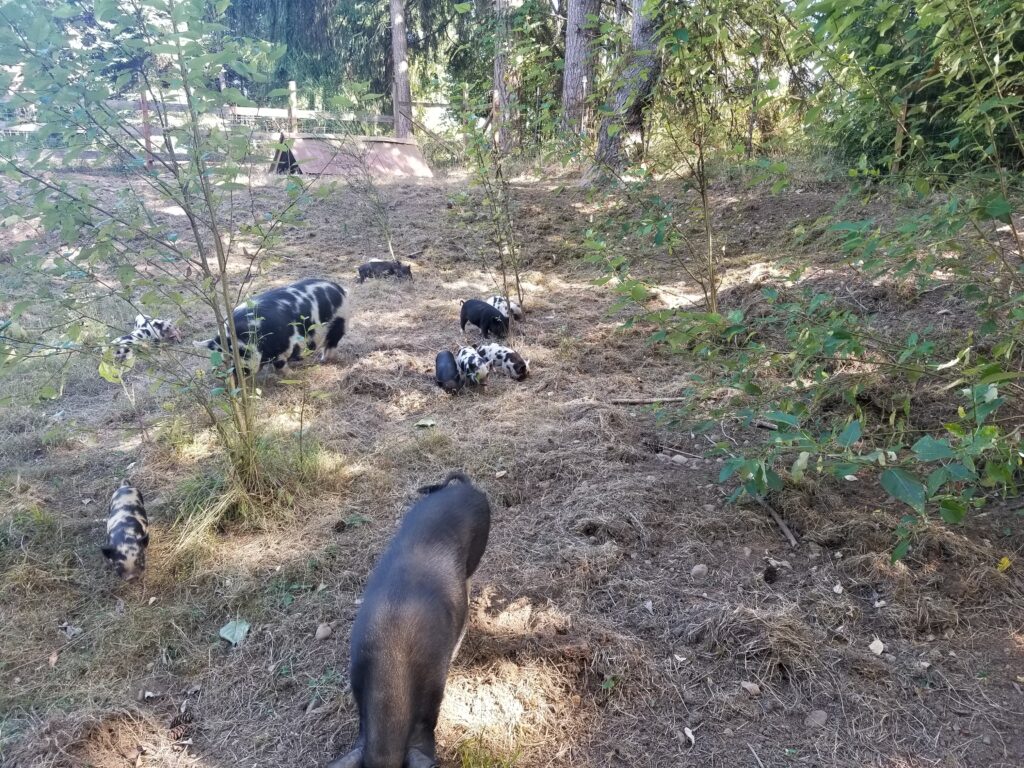
Timing of site preparation should be considered to minimize the amount of time that soil is exposed and susceptible to erosion. In Western Washington, ensuring that the soil is sufficiently seeded ahead of the rainy season (Nov-April) will prevent erosion. This can be achieved with an early spring site prep and seeding or preparing a site throughout the growing season followed by an early fall seeding. When converting a forest to silvopasture, timing is additionally important due to noxious weed pressure. The higher light availability after thinning and associated soil disturbance makes these areas vulnerable to weed establishment. Timing your thinning along with additional site prep (if needed) and seeding is necessary in this scenario. For example, thinning in the late summer just before a fall seeding or thinning through the winter and following with an early spring seeding will reduce the window for weeds to get established.
The type of forage or forage mix you select will depend on the soil conditions, shade level, and livestock you intend to manage. Basic soil tests can help determine important characteristics for forage growth, including acidity. Most forage mixes prefer a pH range of 5.8-6.8 (Gabriel, 2018), with grasses preferring the lower end of that range and legumes preferring the higher end. Depending on the results of soil tests, amendments like liming or fertilizer may be necessary to ensure good forage growth.
A cool season forage mix is generally best for Washington’s climate and the shaded conditions of a silvopasture. This includes species like ryegrass, fescues, orchardgrass, trefoil, and clovers. Seed can be broadcast by hand or with machines like no-till drills and rollers. If doing it by hand, use a seed broadcaster followed by a rake or other implement to cover the seed.
Example mix for cooler season pastures (Gabriel, 2018):
- Orchard grass – 6 lbs per acre
- Birdsfoot trefoil – 6 lbs per acre
- Ladino or red clover – 1 lb per acre
- Ryegrass (Western WA) or Kentucky bluegrass (Eastern WA) – 4 lb per acre
Remember that as shade increases, forage production will decrease regardless of the species you select. Cool season forages are generally not significantly impacted below 35% shade but above that level will produce less biomass compared to being grown in open sun (Angima, 2009). A study by the Natural Resource Conservation Service Plant Materials Center in Corvallis found that in 65% shade, orchardgrass and ryegrass yields were approximately 20% and 25% of typical open-grown yields, respectively (USDA Corvallis Plant Materials Center, 2025). A 65% shade density is considered quite high for silvopasture, but the data demonstrates how shade can impact forage production. However, keep in mind that the goal of silvopasture is not to maximize or maintain forage yields under shade but rather to take advantage of the benefits of tree cover, including reduced livestock stress, fodder production, and producing tree crops and timber products, while also maintaining grazing in those spaces. Shade can also benefit forage production by sustaining growth longer into the dry season after open grown forage grows dormant. It also changes the palatability of forage by increasing the protein content and reducing lignin, although it can also reduce some other nutrients (Buergler et al., 2006).
Allow grasses to grow to 8-12 inches before grazing or mowing for the first time, as forage can be particularly sensitive to overgrazing after establishment (Gabriel, 2018). Monitor the area over the next growing season to determine whether the establishment and productivity meets your objectives. If seeding was not effective in all areas, forage can still be improved through rotational grazing and may not require re-seeding.
Some landowners converting to silvopasture may elect to see what grows back after removing vegetation and thinning. This “wait and see” approach can be effective, especially if there was sufficient existing forage and seedbed prior to conversion, and usually results in more diverse understory. However, this can (and often will) include noxious weeds and unpalatable species. As animals will eat what they prefer first, this can lead to a dominance of weeds over time. Rotational grazing can encourage animals to diversify their grazing habits by focusing them more intensely in smaller areas and moving them frequently but may not eliminate unwanted species entirely. Areas where forage failed to grow and/or weeds have become dominant may need to be tackled through site prep and seeding.
Grazing native forest vegetation like shrubs and ferns is an option for those converting a forest to silvopasture. However, this method will provide significantly less forage for animals compared to grasses and other herbaceous forage. Forest vegetation does not respond positively to grazing in the same way grasses do and will require more resting time to recover. Overgrazing in these spaces could result in denuded vegetation, soil and tree damage, and establishment of noxious weeds. It will likely be necessary to move animals more frequently and keep low stocking rates to sustain grazing in this scenario. Maintaining a higher shade level of 60-70% during thinning can help facilitate growth of native shade tolerant forest vegetation and deter establishment noxious weeds like blackberry or Scotch broom. Browsing livestock (e.g. goats) are better suited for this than traditional grazing species (see the Livestock section). It is also important to be aware of the potential for plants in the forest to be toxic to livestock or have other adverse effects.
Keep Reading:
Rotational grazing is a required component of silvopasture that involves frequently moving livestock through a pasture that has been divided into paddocks. If you’re not prepared to adopt rotational grazing, silvopasture is likely not the right practice for you. The frequent movement and resting periods for paddocks is critical to reducing damage to trees through compaction, rubbing, or browsing. It is particularly important in Western Washington where wetter soil conditions throughout much of the year can lead to lead to greater compaction damage to trees. Rotational grazing has several other benefits, including (Gabriel, 2018; USDA, 2025b):
- Reduced exposure to disease
- Increased forage diversity and capacity
- Improved soil structure, biodiversity, organic matter, and carbon sequestration
- Improved climate resilience (e.g. drought)
- Better distributes nutrients via manure
Although there are clearly significant benefits, there are also some disadvantages to rotational grazing. For example, it incurs greater fencing costs and labor required to move animals frequently. It requires that water (and potentially shade) be accessible in each paddock. It may also require reducing stocking density of your existing livestock operation. The decision to adopt rotational grazing requires weighing the potential costs and benefits against your land management and financial objectives.
Rotational grazing is conceptually simple. A grazing area is divided into smaller paddocks which are periodically grazed. Animals are allowed to graze in the paddocks for a period of 1-5 days, depending on the size, time of year, and forage availability, then moved to another paddock to allow the previous one to rest and recover. The amount of time required for the paddocks to restore will vary based on site conditions and time of year. You need enough paddocks that by the time you return to the initial paddock it has had sufficient time to recover and provide forage for further grazing. From a forage perspective, rotational grazing allows you to take advantage of the growth cycle of grasses to be able to revisit paddocks when forage is at its ideal palatability and quality. In general, this means revisiting paddocks when forage is 6-10 inches tall and grazing it down to 3-4 inches tall (Angima, 2009; Gabriel, 2018). Allowing it to get much taller than that reduces quality, while grazing it lower will reduce the forage’s ability to respond with more growth.
Rotational grazing and forage management more broadly are complex management topics which deserve their own toolkit. While this page only touches on some salient points related to silvopasture, there are many resources available to land managers interested in improving their forage knowledge and management:
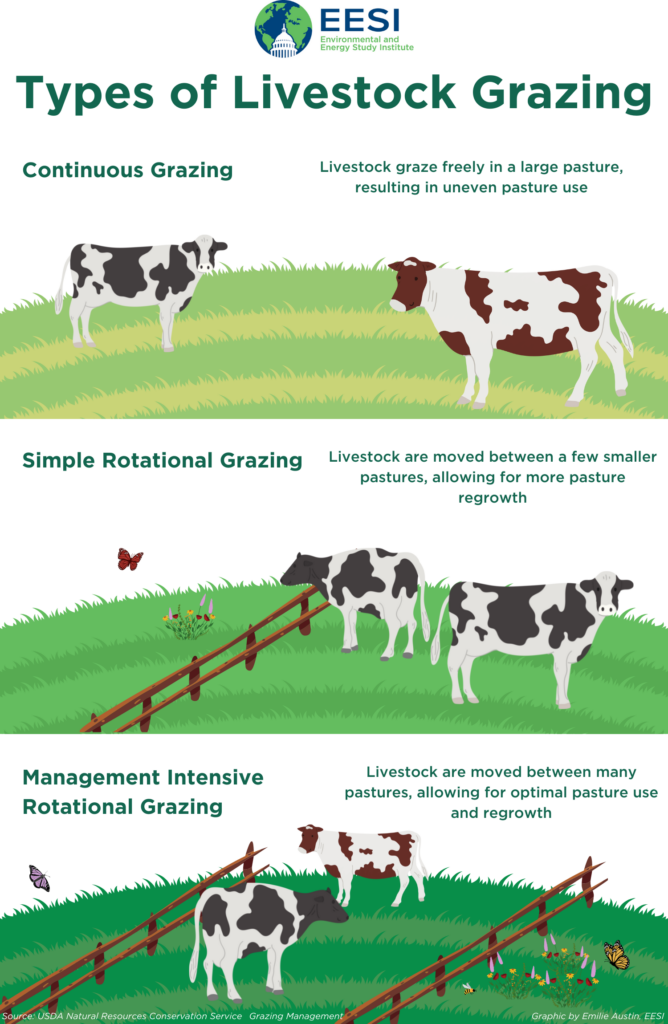
Keep Reading:
Some animals are better suited for silvopasture than others, but all animals have potential to be integrated into silvopasture at some scale. In this section, we will discuss common livestock and how their unique traits and behaviors work within the tenants of silvopasture.
Poultry
Poultry species, including chickens, ducks, and geese, are relatively low risk when it comes to silvopasture. They are very unlikely to cause significant damage to trees directly or via soil compaction even at high densities. However, they can still cause damage to soil if not rotated frequently. Poultry that “till and scratch”, such as chickens and turkeys, can quickly deplete the forage and soil organic matter in an area. This behavior is highly beneficial when paired with ruminants by helping break up manure in a paddock after they have moved through, which accelerates nutrient cycling (Gabriel, 2018). It can also be an excellent method for keeping down competing vegetation around recently planted trees and shrubs, as they generally don’t damage the seedlings. Geese can be good candidates for silvopasture because of their preference for grass in their diet, allowing them to be treated more similarly to ruminants. Turkeys are excellent for nut orchards where they break up pest cycles by feeding on crops on the ground. The till and scratch behavior of chickens and turkeys and the weed suppression benefits of geese can be effective tools for site preparation and maintenance during tree planting.
Some poultry animals, particularly chickens, turkeys, and ducks, are among the most suitable animals for grazing native forest vegetation. Chickens and turkeys can scratch and till for seeds and bugs. Ducks are excellent at preying on slugs and snails, and thus are highly compatible with forest farmed shiitake systems, where slugs and snails are the primary pests (Gabriel, 2018). However, having animals in more heavily forested settings may subject them to greater risk of predation. It may also increase the risk of diseases like bumblefoot in ducks.
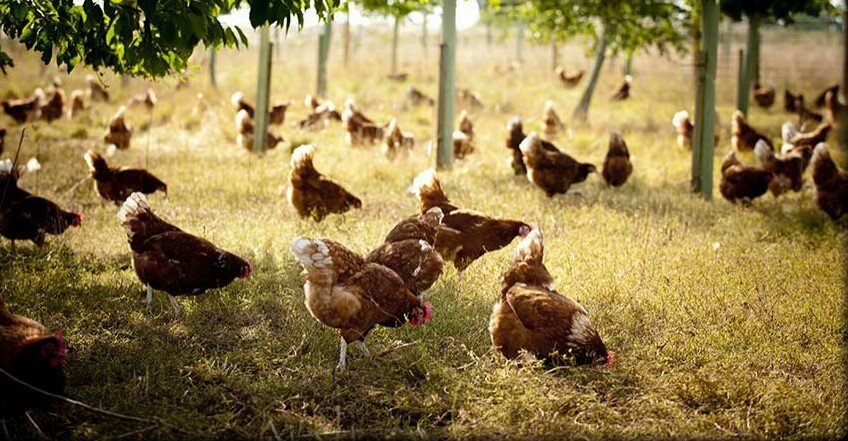
Cattle
Cows are ruminants, along with sheep and goats (discussed in the next section). Cows have the greatest preference for grasses and forbs in their diet, which arguably makes them the most suitable livestock species for silvopasture. Cows are easily trained to respond to fencing as minimal as a single-wire hotline. They are also generally the least “picky” ruminant and are less likely to favor some species of forage over others, especially if concentrated in a rotational grazing system. This will prevent weeds from dominating paddocks over time and ensure a diverse range of productive forage. However, because of their size, cows are most likely to cause significant damage to trees in a silvopasture system via soil compaction. They can also damage trees directly by rubbing on the stems and browsing, although they are generally not likely to chew on the bark of trees like sheep or goats. Greater acreages and more frequent movement are generally required to ensure that trees are not damaged. During establishment, trees will require protection or cattle will need to be excluded from the area entirely. Generally speaking, cows are not compatible with grazing brush or native forest vegetation. Although some breeds, like Scottish highlands, may be more suitable for this than others.
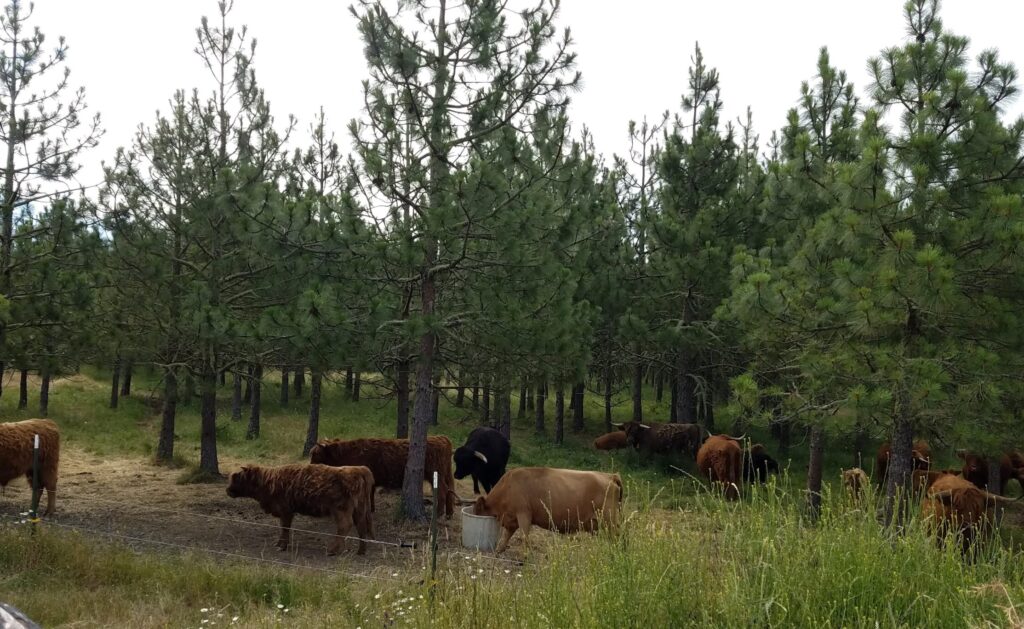
Sheep and Goats
Although they can behave quite differently, sheep and goats are paired together as small ruminants. Compared to cows, they are much lighter and have more variable diets. Goats, for instance, are generally considered to be better browsers, preferring brush over grasses and other forage. Goats are excellent at removing brush to prepare a site, including noxious weeds like blackberry. However, this can make it more difficult to develop long-term grazing opportunities for goats since the spaces they graze tend to transition to grasses over time. Sheep are more of a middle ground between cows and goats and are able to both browse and graze. This makes them more suitable for silvopasture. However, farmers in Western Washington have often reported that sheep like to chew on the bark of trees. Some suspect this behavior is an attempt to utilize the tannins in the bark to deal with parasites and treating those parasites may prevent that behavior. Regardless, sheep silvopasture systems should be monitored regularly for tree damage. It’s also important to note that conifers dropping sap in the spring can damage the coats of sheep reduce the quality of their wool.
Behavior can vary greatly depending on breed with goats and sheep. This is especially true for sheep. Selecting breeds that are compatible with silvopasture is critical. Katahdin, Shropshire, Dorper, Icelandic, and Jacobs are recommended varieties (Gabriel, 2018).
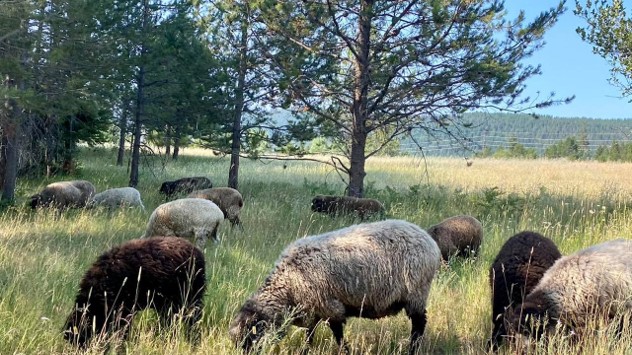
Pigs
Of all livestock, pigs are the most difficult to fit into a silvopasture system and could arguably be considered incompatible. Although behavior can vary somewhat by breed, pigs are “rooters”. They use their body, nose, and hooves to scuff and dig up the soil while looking for insects and roots. This can result in significant tree damage or mortality and limits the ability to sustain long-term grazing. However, pigs are excellent renovators, and this behavior can be harnessed as a site preparation tool for tree planting and/or forage establishment.
The Spanish “dehesa” is an example of an ancient silvopasture system that included grazing pigs beneath tree cover. However, it’s important to note that these practices relied on either very low stocking rates (as little as one pig per 1-5 acres) or grazing more pigs through areas very quickly (Plieninger et al., 2021). Pigs are excellent for “flash grazing” areas to feed on tree crops like acorns, apples, and hazelnuts while they are present. If pigs are going to be maintained in a grazing space long-term, reducing stocking rates will likely be necessary along with implementing a rotational grazing system. Selecting breeds that have a greater preference for grass and other forage, such as Kunekune, is also recommended.
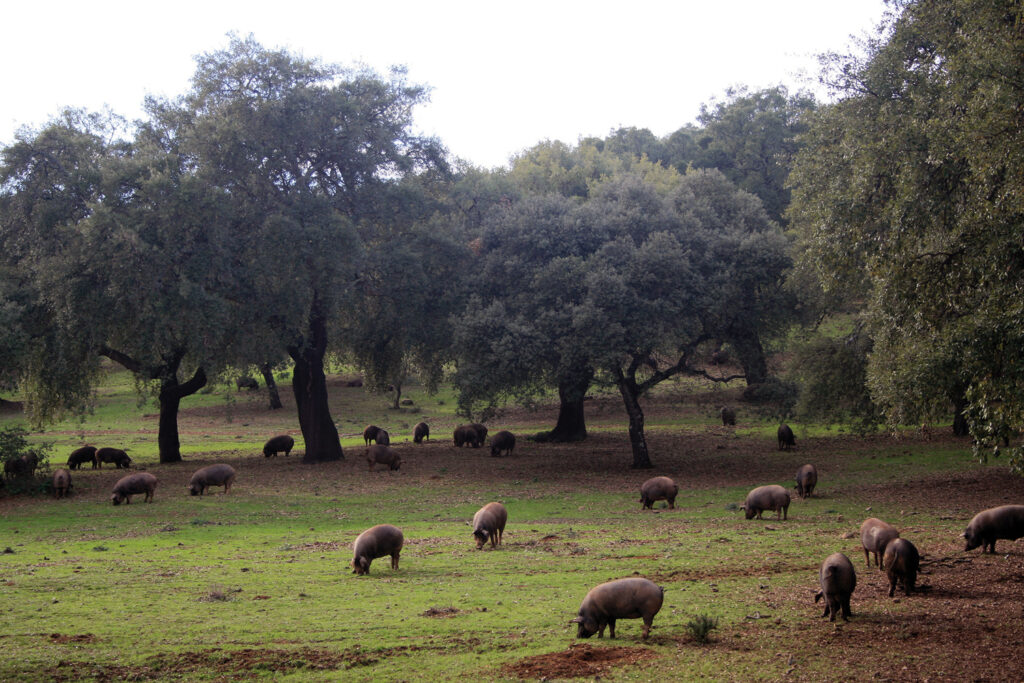
Most people interested in adopting silvopasture will have an existing livestock operation and, depending on the animals they are raising, may find that silvopasture is not right for them. Although the above is broadly true for the different types of livestock, the breed can also have significant effects on their behavior and diets. The table below is adopted from Steve Gabriel’s book “Silvopasture” and describes how different breed characteristics may fit into a silvopasture system. This book is an excellent resource for people new to silvopasture.
| Species | Desired Characteristics for Silvopasture | Some Recommended Breeds |
|---|---|---|
| Chickens, Turkeys | Follow grazing animals and break up manure patties; ground sdisturbance, light tillage | Welsummer, Plymouth Rock, Rhode Island Red |
| Ducks | Pest, slug, snail control; foraging for pests without disturbing ground cover or mulch | Cayuga, Khaki Campbell, Rouen |
| Geese | Weeding grasses, protection of smaller birds | African, Cottonpatch, Shetland |
| Pigs | Rooting, deeper tillage, brush clearing | Kune Kune, Guinea, Berkshire are said to be th eleast in need of grain supplements |
| Sheep | Mixture of grasses, forbs, woody plants; smaller acreage | Katahdin, Shropshire, Dorper, Icelandic, Jacobs |
| Goats | Woods-dominated landscapes; hilly landscapes | Alpine, Lamancha, Nubian, Saanen, Boer, Pygmy; most breeds appear to be good browsers, when trained |
| Cattle | Larger acreage, more open woods, less woody vegetation | Highland, Hereford, Belted Galloway, Longhorn, some Angus do well with brush/tree fodder |
| Species | Mow/Graze | Clear Brush | Till | Eat Slugs and Bugs | Weed Grass Only | Clean Drops | Site Preparation/Renovation |
|---|---|---|---|---|---|---|---|
| Chickens, Turkeys | No | No | Yes, light | Yes | No | Yes | Yes |
| Ducks | No | No | No | Yes | Somewhat | No | No |
| Geese | Yes | No | No | Yes | Yes | No | No |
| Pigs | Some breeds; Kune Kune and Berkshire best | Root around brush | Yes, can go deep | Yes | No | Yes, excellent | Yes, excellent |
| Sheep | Yes | Some breeds strip vegetation and bark | No | No | Can be trained | Somewhat | No |
| Goats | As supplement; prefer browse | Yes | No | No | Can be trained | Somewhat | No |
| Cattle | Yes | Some breeds strip vegetation and bark | No | No | Can be trained | No | No |
Additional Guides and Resources
*Indicates a resource was created for Washington State or the Pacific Northwest
General Silvopasture
- Converting a Pasture to Silvopasture in the Pacific Northwest – National Agroforestry Center (PDF)*
- Forest Grazing, Silvopasture, and Turning Livestock Into the Woods – National Agroforestry Center (PDF)
- Grazier’s Guide to Trees
- Mitigating Heat Stress in Cattle – National Agroforestry Center (PDF)
- Silvopasture (Webinar Recording)
- Silvopasture: A Guide to Managing Grazing Animals, Forage Crops, And Trees in a Temperate Farm Ecosystem (Book)
- Silvopasture: An Agroforestry Practice*
- Silvopasture: Establishment and Management Principles for Minnesota
- Silvopasture in Oregon (Webinar Recording)*
- Silvopasture Presentation – Oregon State University (PDF)*
- Silvopasture Template and Species Table – Snohomish Conservation District (PDF)*
- Silvopasture in the USA: A systematic review of natural resource professional and producer-reported benefits, challenges, and management activities
- Training Manual for Applied Agroforestry Practices: Silvopasture Chapter – UM Center for Agroforestry (PDF)
- What is Silvopasture? – National Agroforestry Center (PDF)
Forage and Pasture Management
- Applying Adaptive Grazing Management – University of Idaho (PDF)*
- How Green is Your Grass? Five Steps to Better Pasture and Grazing Management*
- Inland Pacific Northwest Pasture Calendar*
- Introduction to Pasture and Grazing Management in Western Oregon*
- Pasture and Grazing Management in the Northwest*
- Pastures for Profit: A Guide to Rotational Grazing
- Pasture Management – Pierce County Conservation District*
- Rotational Grazing
- Southwest Washington Grazing Association*
- Western Oregon and Washington Pasture Calendar*
Forest and Tree Management
- Considerations for Establishing Silvopastures on Wooded Sites – National Agroforestry Center (PDF)
- Creating Silvopasture: Some Considerations When Planting Trees in Pastures
- Designing Silvopasture Plantings (Webinar)
- The Grazier’s Guide to Trees (Book)
- Protecting Seedlings Trees and Managing Competing Vegetation with Livestock – Savanna Institute (PDF)
- Woodland Conversion to Silvopasture (Video Series)
Andrus, R. A., Peach, L. R., Cinquini, A. R., Mills, B., Yusi, J. T., Buhl, C., Fischer, M., Goodrich, B. A., Hulbert, J. M., Holz, A., Meddens, A. J. H., Moffett, K. B., Ramirez, A., & Adams, H. D. (2024). Canary in the forest?—Tree mortality and canopy dieback of western redcedar linked to drier and warmer summers. Journal of Biogeography, 51(1), 103–119.
Angima, S. D. (2009). Silvopasture: An Agroforestry Practice What Is Silvopasture?
Batcheler, M., Smith, M. M., Swanson, M. E., Ostrom, M., & Carpenter-Boggs, L. (2024). Assessing silvopasture management as a strategy to reduce fuel loads and mitigate wildfire risk. Scientific Reports, 14(1).
Bekris, Y., Prevéy, J. S., Brodie, L. C., & Harrington, C. A. (2021). Effects of variable-density thinning on non-native understory plants in coniferous forests of the Pacific Northwest. Forest Ecology and Management, 502.
Betzen, J. J., Ramsey, A., Omdal, D., Ettl, G. J., & Tobin, P. C. (2021). Bigleaf maple, Acer macrophyllum Pursh, decline in western Washington, USA. Forest Ecology and Management, 501.
Buergler, A. L., Fike J.H., Burger, J. A., Feldhake, C. M., Mckenna, J. r., & Teutsch, C. D. (2006). Forage Nutritive Value in an Emulated Silvopasture. Agronomy Journal.
Frankson, R., K.E. Kunkel, S.M. Champion, D.R. Easterling, L.E. Stevens, K. Bumbaco, N. Bond, J. Casola, & W. Sweet. (2022). Washington State Climate Summary 2022.
Gabriel, S. (2018). Silvopasture: A guide to managing grazing animals, forage crops, and trees in temperate farm ecosystems. Chelsea Green Publshing.
Handler, S., Pike, C., & St. Clair, B. (2018). Assisted Migration. USDA Forest Service Climate Change Resource Center.
Hanley, D. P., Baumgartner, D. M., & Mccarter, J. (2005). Silviculture for Washington Family Forests.
Oregon State University. (2024). Red Alder (Alnus Rubra). Oregon Wood Innovation Center.
Plieninger, T., Flinzberger, L., Hetman, M., Horstmannshoff, I., Reinhard-Kolempas, M., Topp, E., Moreno, G., & Huntsinger, L. (2021). Dehesas as high nature value farming systems: A social-ecological synthesis of drivers, pressures, state, impacts, and responses. Ecology and Society.
USDA. (2025a). Alley Cropping. National Agroforestry Center.
USDA. (2025b). Rotational Grazing for Climate Resilience. USDA Climate Hub.
USDA. (2025c). Silvopasture. National Agroforestry Center.
USDA Corvallis Plant Materials Center. (2025). 2024 Report of Activities.