To develop capable, caring, contributing citizens through research-based, guided adventure exploration and experiential learning models. We accomplish our mission by building life skills using the natural environment and adventure-based activities within a full value community.
“Every child has inside him an aching void for excitement and if we don’t fill it with something which is exciting and interesting and good for him, he will fill it with something which is exciting and interesting and which isn’t good for him.”
— Theodore Roosevelt
Our Vision
The 4-H Adventure Education Program builds the foundation that enables participant-centered life-long learning. Through collaborative partnerships with students, schools and agencies, we build the capacity for:
Creating fun, safe, stimulating and engaging activities in unique supportive environments that push growing edges through appropriate social, emotional and intellectual risks.
Utilizing the latest research in youth development, including: adventure-based learning, experiential education, and service-learning models.
Accessing tools, training, resources and educational materials.
It is our goal to provide local community members, agencies and schools with training in all aspects of the educational models we employ, empowering them to utilize and adapt these models within their own groups and organizations. Through this process we:
Provide training, mentoring and certification.
Provide direct support, consultation.
Provide quality programs designed to meet or exceed the highest industry standards.
Provide oversight and evaluation of risk management relative to program activities.
Our Philosophy
Youth need more than knowledge to be successful and productive members of society. Youth also need social and emotional skills, such as communication, leadership, cooperation, respect, trust, self-confidence, conflict resolution, decision making and problem-solving skills frequently referred to as “emotional intelligence.”
In today’s world of standardized testing and increasing pressure for academic success, students are having fewer and fewer opportunities to develop these life skills. 4-H Adventure Education, has developed student centered curriculum that uses activities, teaching these critical life skills through hands-on, fun, stimulating and engaging ways.
Our Audience
Unlike other adventure based programs that only work with a select population in our region, 4-H Challenge collaborates with any local school or agency that is interested in developing life skills though experiential education activities. Although we are eager to work with all youth groups, traditionally our largest use has been from groups that serve low-income, at-risk and under achieving youths.
More Information
Trainings and Programs
“Learning Communities at Work”
During this class participants will:
Integrate the key elements of the Learning Communities Model
Practice the core principles of a successful learning community.
Apply the research and theory that supports building learning communities in the classroom.
Learn new approaches to facilitating growth and learning.
Learn tools and techniques for intentionally creating learning communities, including sequencing, framing and debriefing skills.
Develop specific plans for applying these strategies in their current content area curriculum.
A Portable Ropes course is designed for groups and teams to access the benefits of a ropes course experience in any classroom space or setting accessible to them. This is currently the type of WSU 4-H Programming being used at many Seattle Parks and Recreation sites.
Low Ropes Course
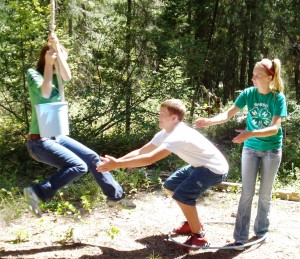
A Low Ropes Course is designed for groups and teams to build communication, trust, and social/emotional learning skills. Low course days range from 1-6 hours long. A day typically starts with introductions, name games, a health check, stretches, icebreakers, and energizers to prepare groups and teams to engage in Challenge Initiatives to help them reach their individual and groups goals. All Challenge Initiatives on a Low Ropes Course occur either at ground level of less than 10 feet of the ground. Each element takes approximately 30 minutes to 1 hour to complete.
High Ropes Course
A High Ropes Courses is designed for individuals to learn to use skills such as coaching and encouragement to reach their goals. The act of overcoming fear and challenges can be peak experience that groups and participants will draw upon for a lifetime. Participants learn that success is not measured by how high a person climbs, but rather through experiences gained from working closely with teammates, building trust among groups, and pushing oneself in a way that is safe and responsible.
Stand Alone High Course Elements
Stand Alone High Course Elements are designed to create a peak experience after an initial low course day. They each take approximately 1 hour to complete. They are usually constructed in the trees and require a belay system for safety.