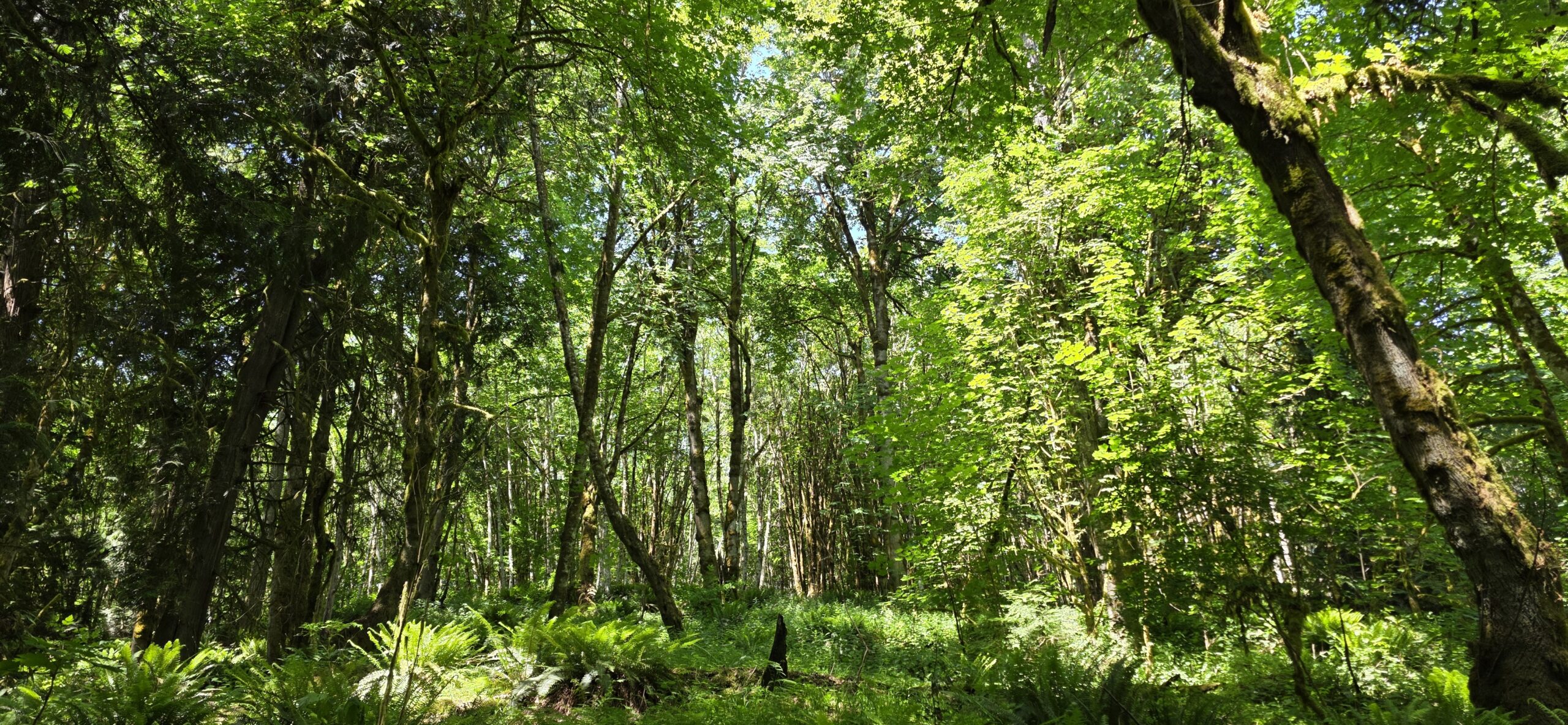
Sugarbushes are important assets in commercial sugaring operations that require long-term management and care. A big part of what makes maple sugaring sustainable is the reciprocity it demands by way of forest stewardship and conserving forests on the landscape. Active forest management will ensure that your trees are healthy and vigorously growing, which will in turn benefit your operations. A healthy sugarbush should provide wildlife habitat, soil health, carbon sequestration, clean water and air, and other ecosystem services, alongside sap.
As discussed in the Financial Planning section, an inventory is an important first step to estimating the potential sap and syrup production on your site(s). An inventory of tappable stems can be as simple as walking through your forest with a counter or pad and paper. Using tree marking paint or ribbon can help you avoid double counting. Having a diameter tape to measure trees and ensure they’re efficient size is also helpful, although over time you can train yourself to assess it by eye. Inventory is also a good time to assess grade and mainline or lateral line routes, so a clinometer or rangefinder may be good to bring along as well.
For a refresher on identifying maple in all seasons, revisit the Picking Your Trees section of the Sugaring Guide for Beginner’s and Hobbyists. When inventorying your maple trees, consider the following:
- Trees should be 7-8″ or greater in diameter at breast height (4.5 feet)
- Choose only healthy trees with no signs of damage or disease
- Trees with multiple stems can sustain multiple taps and produce more than single-stem trees
- Larger tree crowns and diameter correlate to better sap yields
- Avoid tapping any trees near old dump sites or on contaminated soils
- Consider your mainline and lateral line needs while inventorying for material purchases
An alternative approach to inventory is to use forest sampling, a forestry technique where several small areas of the forest are measured and the data is extrapolated to describe the larger forest. Forester’s use this method to asses the structure and composition of a forest, determine productivity for timber and non-timber products, and identify forest health issues, which informs their management plans and practices. This approach can be helpful to inform sugarbush management and address any forest health or productivity issues that might impact your sap production.
The most common form of forest sampling is to use fixed radius plots. With this method, circular plots of a fixed area (e.g. 1/20th of an acre) are scattered throughout a forest and the trees that fall within the circle are measured and recorded (e.g., diameter, height, species). The data is then averaged and projected across the forest area to better understand its composition.
This approach can be particularly efficient when forests have a more or less consistent composition of species throughout. For instance, if your sugarbush is predominantly bigleaf maple, throwing out a handful of plots to determine average diameter and number of trees per acre will be easier than tallying each maple individually. The more diverse a forest is, the more plots are necessary to increase certainty in the data.
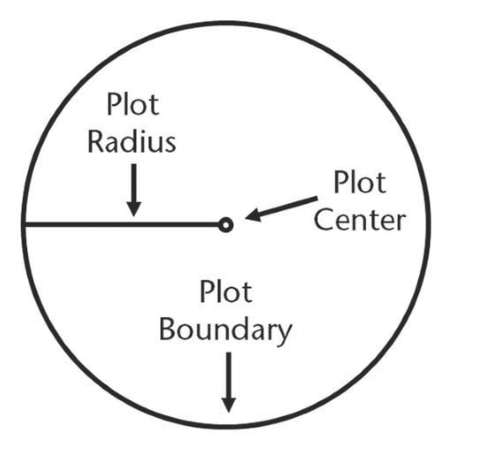

| Plot Size (acres) | Radius (feet) |
|---|---|
| 1/5 | 52.7 (52’8″) |
| 1/10 | 37.2 (37’2″) |
| 1/20 | 26.3 (26’4″) |
| 1/30 | 21.5 (21’6″) |
| 1/40 | 18.6 (18’7″) |
| 1/50 | 16.7 (16’8″) |
| 1/100 | 11.8 (11’10”) |
To learn more about forest inventory, read the WSU Extension publication Basic Forest Inventory Techniques for Family Forest Owners.
Forest inventory can be challenging if you don’t have any forestry experience. Luckily, your local Conservation District Forester or DNR Service Forester can likely help you and even provide the necessary tools.
Spotting a Great Sugarbush
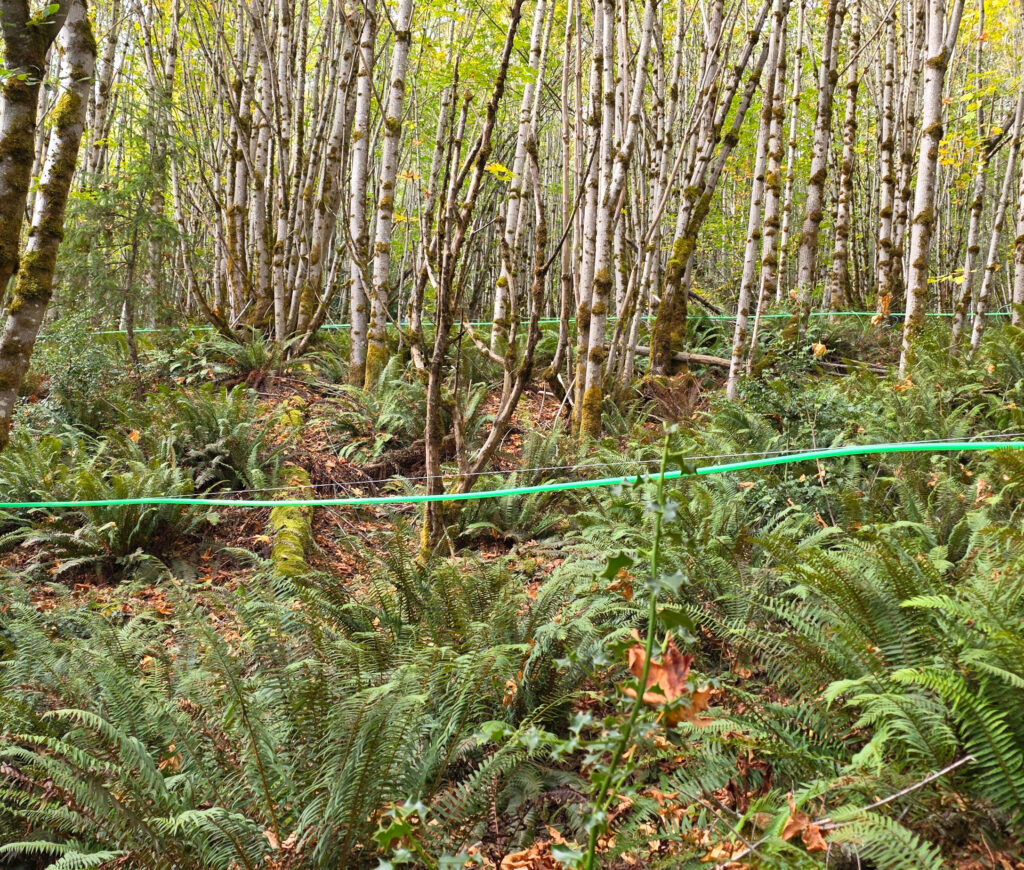
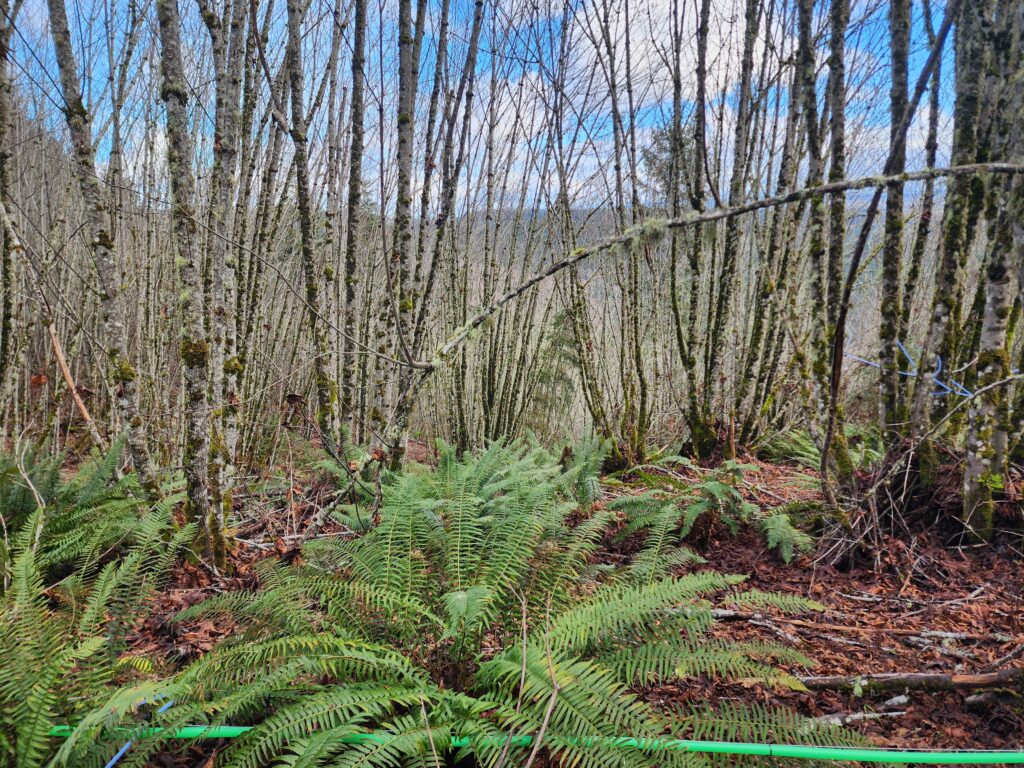
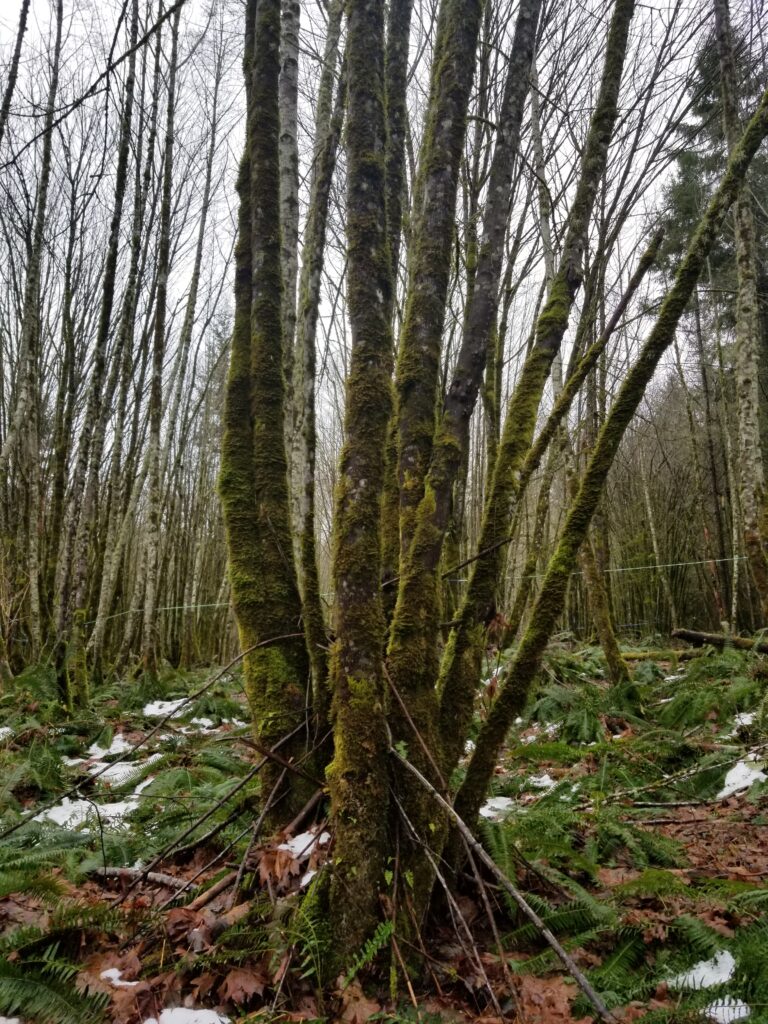
Sugarbushes come in many shapes and sizes, but the silvicultural characteristics of bigleaf maple have the potential to create maple-dominant forests that can be ideal for sugaring. Bigleaf maple responds to being cut by “stump sprouting” or producing multiple new stems from the cut stump (often dozens). These stems grow vigorously because they are taking advantage of an established root system. This fast growth and ability to outpace other trees that are planted after harvesting is the reason that they have been considered a “weed tree” by timber industry. If left untreated, areas where maple was harvested can create dense forests of maple trees with multiple stems and, as mentioned, each stem can be treated as an individual tree when tapping.
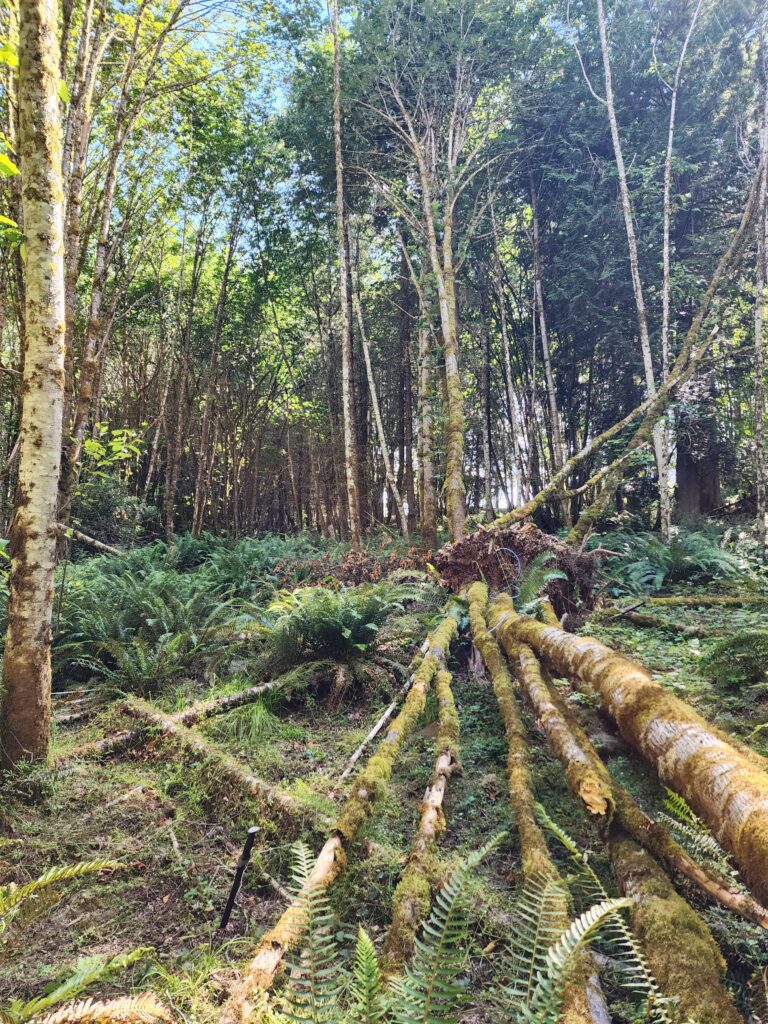
Forests like the ones pictured below exist all over Western Washington, and are ideal for commercial maple sugaring operations. That’s not to say more diverse forests with a lower maple density aren’t viable. They can be just as lucrative, but require more forestland and greater amounts of tubing to connect all of the trees. Maple-dominant forests like these are generally easier to design tubing systems for and produce a lot more sap with less acreage.
Silviculture is the art and science of managing forests. For foresters, its the “toolbelt” of practices and treatments that allow them to manage forests for a wide variety and combinations of objectives including timber products, non-timber products, wildlife habitat, recreation and aesthetics, and water quality, among others. In the context of sugarbush management, silviculture is the practice of tending maple trees and the forest more broadly to enhance forest health and resilience, produce sap, and provide other ecological benefits.
Planting
The vast majority of commercial syrup producers will be working within an existing forest. However, planting maples to create a new sugarbush or expand an existing one is also an option. Bigleaf maple is a fast grower, much faster than sugar maple, and can grow to a tappable size in 10-15 years on productive sites (fun fact: bigleaf maple is also the largest maple species in North America).
Matching species to site is important when planting maple, particularly in the context of hotter, drier summers. Bigleaf maple is not drought tolerant, but it also doesn’t grow on poorly drained sites with excess moisture. Deep, moist soils with high loam and silt content are ideal, but clay soils can also be suitable (use the NRCS Web Soil Survey and this Extension guide determine the soils at your site). Toe slopes (colluvial) and stream banks (alluvial) tend to be areas where bigleaf maple thrives, as well as north and east facing slopes. There is significant overlap between ideal site conditions for bigleaf maple and riparian habitat, which makes maple sugaring an ideal practice for working riparian buffers.
Plant seedlings in the late winter or early spring. The recommended spacing will vary based on objectives. Planting densely (e.g. 10′ x 10′) will force trees to prioritize height growth over diameter and expedite canopy closure, but will require thinning to a lower density after 10-20 years. Planting less densely (e.g. 15 x 15) may be recommended for sugarbush management because trees will prioritize diameter and crown growth and it will reduce the need for thinning. Mulching and/or irrigating trees may be required in the first few years, especially during particularly hot and dry summers. Protecting trees is imperative, as deer, elk, rabbit, and other animals will likely browse on the seedlings. Cages, tree tubes, or co-planting with Sitka spruce are all strategies that help deter animal browse.
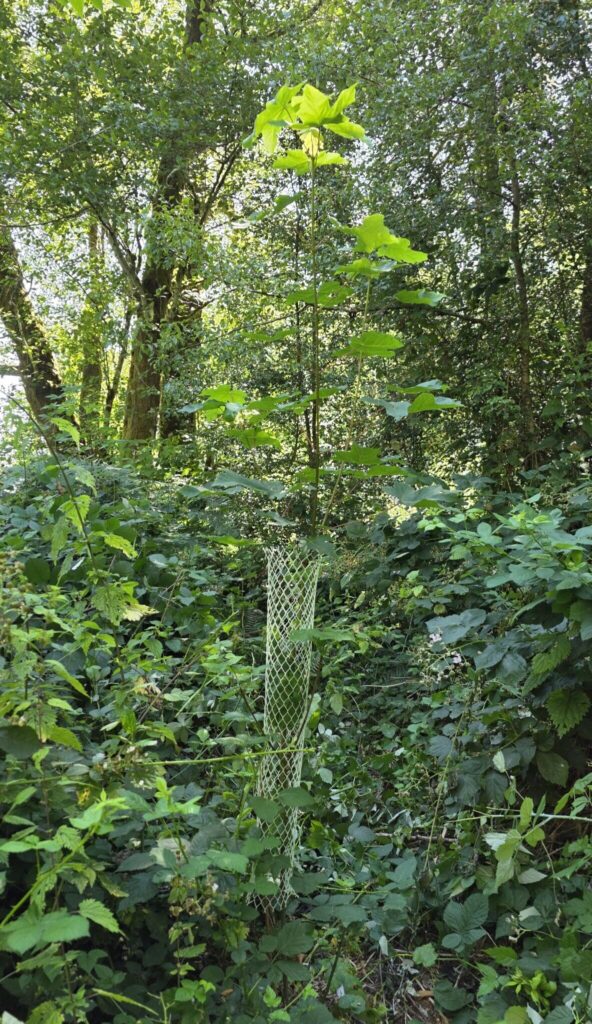
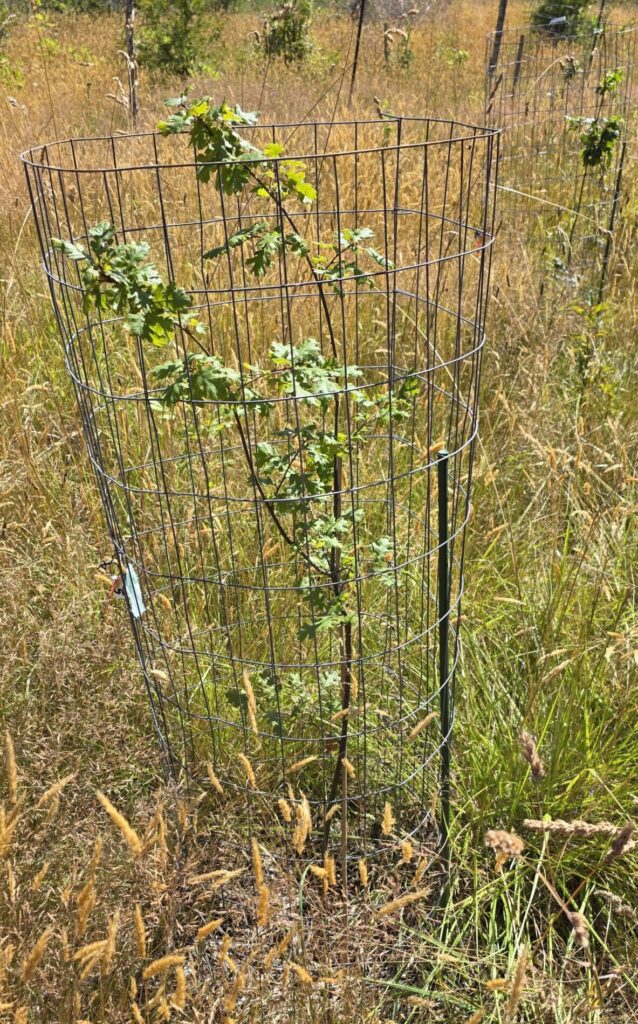
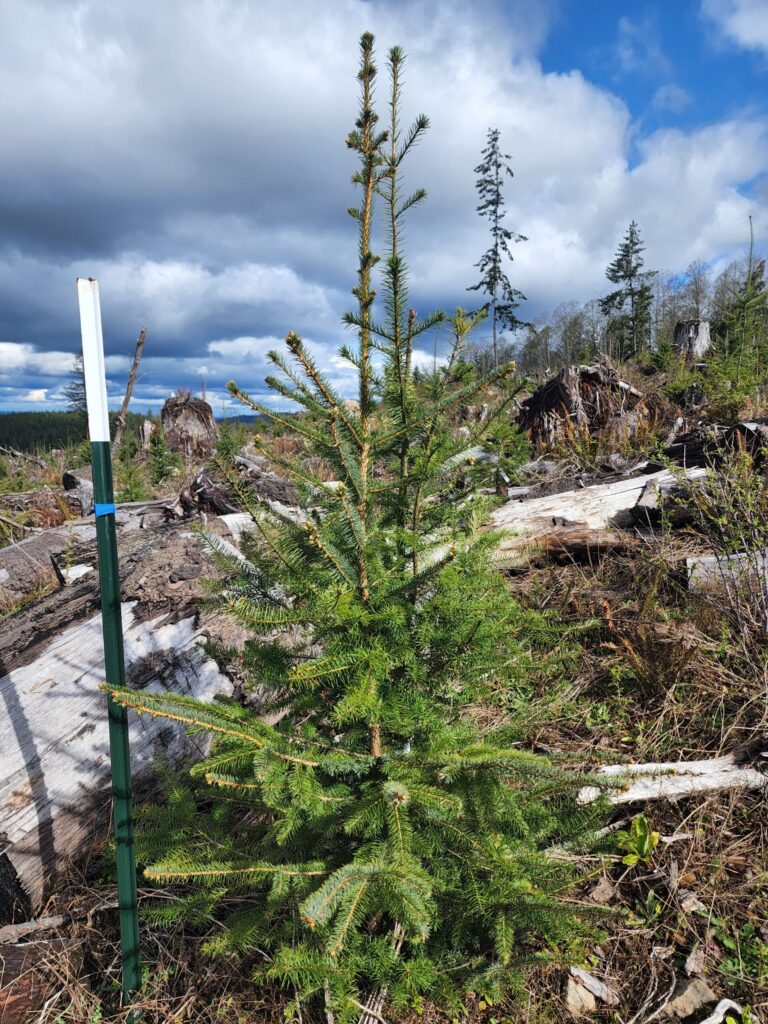
When planting a new sugarbush, it can be tempting to plant exclusively bigleaf maple, but consider incorporating at least 20-30% other species. While bigleaf maple provides a number of ecological benefits on its own, diverse forests are healthier and more resilient to climate change and other stressors. Douglas-fir, red alder, western redcedar, grand fir, and western hemlock are all commonly found growing alongside bigleaf maple.
It helps to have a trained eye when identifying the proper site conditions for planting bigleaf maple. Reach out to the Washington Department of Natural Resources Service Forestry Program or your local Conservation District for site evaluations and assistance.
Coppicing
Coppicing is the practice of cutting a tree or shrub to the base to stimulate stump sprouting. It can be done to produce short-rotation fiber for firewood, mushroom substrate, basketry material, and biofuel, or to rejuvenate production of fruits and nuts. Not all species respond to coppicing but bigleaf maple is a famously good stump sprouter and an ideal candidate for coppice management.
For sugarbush managers, coppicing may be an effective tool for maximizing sap yields because multi-stem trees produce better than single stem trees. In practice, it is most likely to apply to new plantings of bigleaf maple over cutting mature trees in an existing forest. Although the latter will likely still respond to coppicing, the surrounding canopy and subsequent shade will limit the growth of the stump sprouts. Newly planted trees should be allowed to establish before coppicing, ideally waiting until they are at least 2-4 inches in diameter. Cut trees a 3 to 6 inches off the ground to leave a stump. It’s important to return to the trees and manage the subsequent stump sprouts by thinning them out to maximize growth. This should be done a few years after coppicing to retain 5-10 widely spaced, vigorous stems. It may benefit to return a second time 5-7 years later and thin to 3-5 of the best stems.
To learn more about coppice management, visit Coppice Agroforestry.
Thinning
Thinning is one of the primary tools forester’s use to ensure forests are productive and healthy. It also benefits wildlife habitat, carbon sequestration, and wildfire resilience. Although it can be counterintuitive for those unfamiliar with forest management, cutting trees to reduce forest density reallocates nutrients, water, and sunlight to the remaining trees, ensuring they maintain vigorous growth and resilience to pests and other stressors.
Forest stands dominated by multi-stem bigleaf maple trees often become overstocked, which slows growth and can reduce sap yields long-term. Thinning out stems within trees (as in coppice management) or felling whole trees to reduce stand density will promote tree growth and the creation of sapwood for tapping. In mixed stands, targeted thinning to remove trees around maples can provide them with more space and resources to grow. It’s important not to thin too heavily and achieve a healthy balance between reducing stand density and opening up the canopy so much that you dramatically increase sun exposure and accelerate soil moisture loss. Working with a forester will help you determine if your stand is overstocked and, if it is, create a prescription for thinning. The Washington Department of Natural Resources Service Forestry Program or your local Conservation District can offer free consultations and forest health assessments. You can also hire a consulting forester.
Like any tree, bigleaf maple is susceptible to pests and abiotic stressors that can reduce growth, damage, and ultimately kill trees. As a sugarbush manager, it’s important that you’re familiar with them and how to prevent or treat them.
Many of the pests mentioned below can be difficult to identify without a background in forest management. For assistance, contact a forester with the Washington Department of Natural Resources Service Forestry Program.
Diseases
Bigleaf maple and hardwoods more broadly are fairly resistant to root diseases in Western Washington. Two exceptions include armillaria and Kretzchmaria deusta (brittle cinder). These are more likely to occur in dense stands where trees are losing vigor due to competition or are subject to stressful site conditions (e.g. drought). Proactive thinning to manage stand density and encourage tree vigor may help prevent root disease. Where it occurs, it’s common to see trees tipped over with little or no root ball and symptoms (crown dieback, reduced growth) spreading through root to root contact. Since these root diseases are generally secondary to other stressors, treatment may not be necessary or helpful. When necessary, removing all affected trees and a buffer of adjacent susceptible trees can help prevent further spread.
Heart and butt rots are common in bigleaf maple, particularly Ganoderma applanatum (“Artist’s conk”). These fungal pathogens feed on the heartwood of trees, which generally doesn’t effect their growth significantly but does reduce their structural integrity. Since they primarily affect older trees and don’t spread easily, they are generally not a major concern for sugarbush management. However, tapping into a tree with heart rot should be avoided if possible. Management is rarely necessary, but pruning only during the dormant season (November-March) may prevent spread.
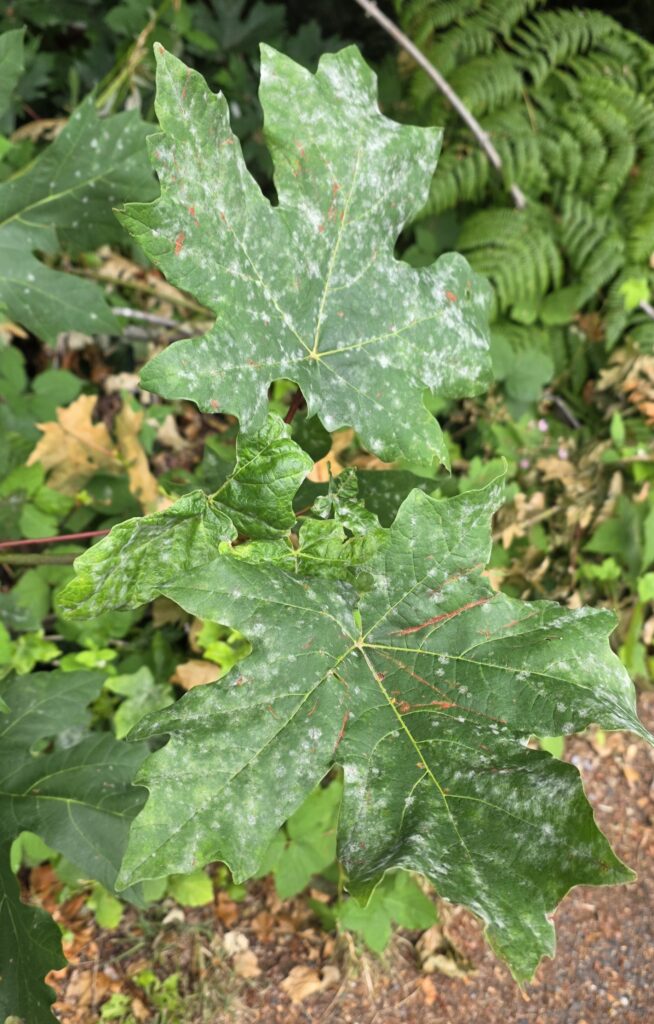
Powdery mildew is a foliar disease that causes a build up of a white fungal body on the surface of the leaf. It’s common immediately after particularly wet, warm springs and a year or two after. Although it can reduce the productivity of the leaves, it’s generally not significant and rarely impacts the long-term health of the tree. Speckled tar spot is another foliar disease that creates black tar-like spots on the leaves, often in the late months of the summer. Like powdery mildew, it is not a significant concern for tree health.
Sooty bark disease is a growing concern for maples in Western Washington. This fungal disease cause cankers below the bark causing branch dieback and often tree mortality. It’s most aggressive on landscape maples, but can also affect bigleaf maple. Exposure to other stressors like compaction, drought, or other pests, make trees more susceptible to sooty bark. Prevention through cultural controls like thinning to encourage vigorous growth are the best form of management. Where it has been found removing and burning affected trees to reduce spore load may help prevent further spread. However, the fungal mats of sooty bark disease are an irritant that can be harmful to human respiratory systems, particularly those with asthma or other respiratory conditions. Hiring professionals for removal or wearing masks when doing it your self is recommended. Removing during the winter can also help prevent exposure to the spores.
Insects
There are very few insect pests that cause significant damage to bigleaf maple. Some native leafhoppers and gall mites may feed on foliage, but the damage is typically negligible.
Animal Damage
Animal damage is primarily a concern while trees are saplings and being established. During this time deer, elk, rabbits, mice, and voles may feed on the foliage, stems, and roots, causing significant damage and mortality. Protecting saplings with cages, tree tubes, or other methods is recommended until they reach a height above the browse line and have sufficient diameter to withstand minor stem damage.
Mature trees are still susceptible to some animal damage. For example, porcupines may feed on new branches, deer will rub their antlers on the trunk, and sapsuckers can drill holes in the bark while feeding on sap or insects. However, these are not typically widespread and rarely require management.
Climate
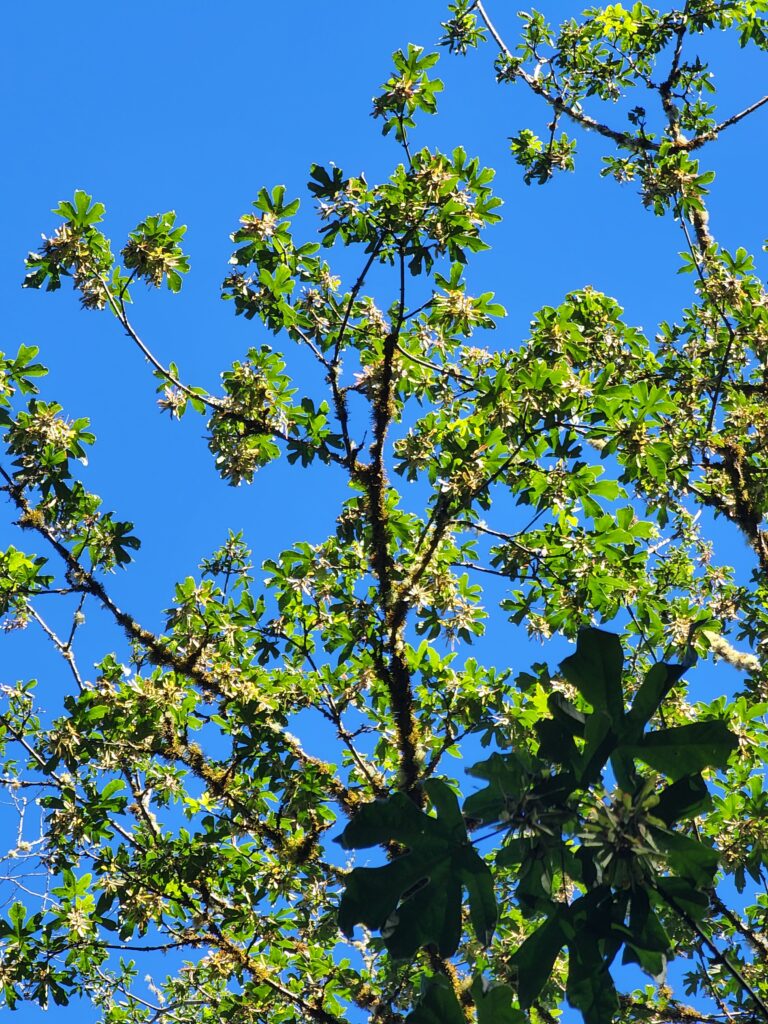
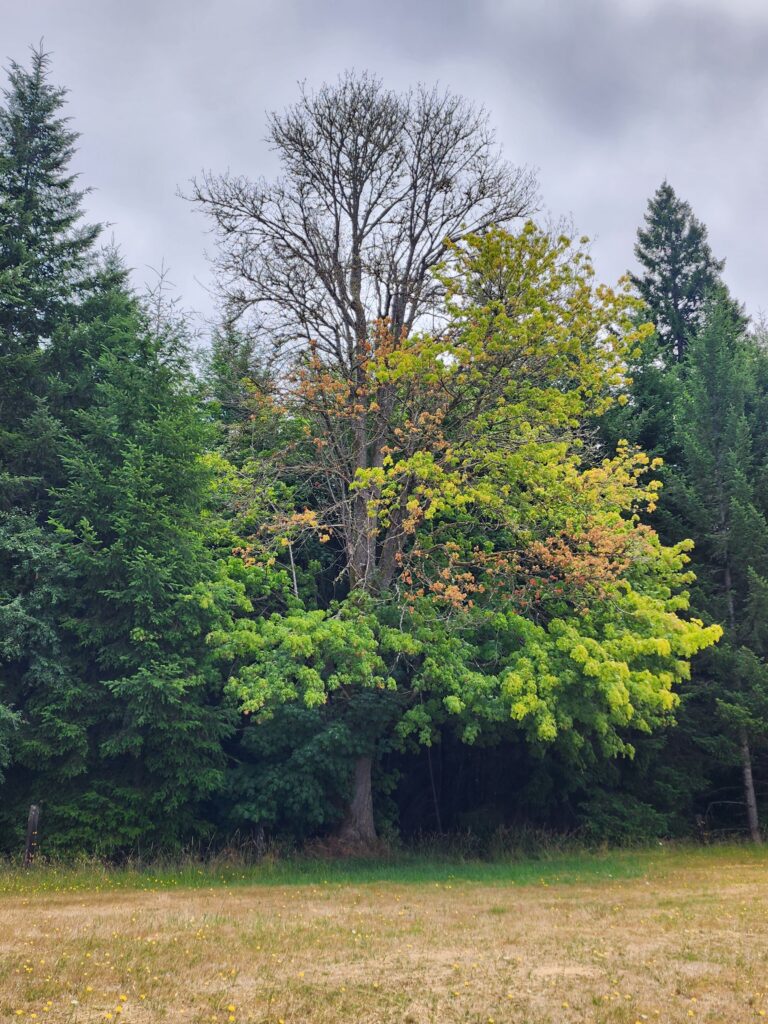
Climate (or abiotic stressors) are an important considering in the midst of climate change, particularly drought. Bigleaf maple is not drought tolerant and hotter, drier summers are certainly having an impact. So much so that the term “bigleaf maple decline” has been coined to reflect that there are a significant number of trees dying in Western Washington. The symptoms of bigleaf maple decline include canopy die back, reduced leaf size, leaf scorch, susceptibility to other pests, and mortality. Fortunately, the damage is largely restricted to sites that are predisposed to drought stress, such as parks, yards, forest edges, and urbanized areas. Where forest canopies remain intact, the damage to bigleaf maples appears to be limited. This stresses the important of maintaining in-tact, functional forests with closed canopies, especially in maple dominant stands, while also thinning to reduce water stress in trees.
Seed zone migration is a forest management approach that can increase climate resilience. This means selecting plant stock and seed from regions where the climate is closer to anticipated conditions under climate change in the coming decades. For example, someone in Southwest Washington might consider purchasing bigleaf maple or other trees with genetics from Western Oregon. These trees may perform better under increasingly hotter and drier conditions.
Diversity is another important strategy for climate resilience. When forests are comprised primarily of one species of a similar age class, the damage from climate stressors or pests can be widespread. Managing for a diversity of species can reduce the spread of pests and disease, while “hedging your bets” if one species does particularly poorly. Structural diversity, which refers to diverse age classes, densities, and sizes of trees, can also contribute to overall diversity and resilience of a stand. Practices like variable density thinning introduce structural diversity to uniform stands and accelerate mature and old growth traits in forest.
To see an example of climate adaptation in bigleaf maple sugaring, read the case study for Neil’s Bigleaf Maple Syrup in Acme, WA.
Technical Assistance Programs
- Conservation Districts
- Programs offered vary by county, may provide technical and cost-share assistance for forestry and agroforestry planning, design, and implementation or related fields. Several conservation districts also have annual plant sales where bigleaf maple seedlings can be purchased.
- Natural Resource Conservation Service
- Provides technical assistance and planning in natural resource management, including forestry and agroforestry, typically as a function of their cost-share programs (EQIP, CSP, etc.).
- Washington Department of Natural Resources Service Forestry Program
- Provide forest health assessments and management advice, planning resources, and cost-share assistance to complete forest restoration work. Visit the Landowner Assistance Portal for other forest owner programs.
- Washington Farm Forestry Association
- A private forest owner association that offers peer-to-peer learning through monthly meetings, an annual conference, and twilight tours of forest properties.
- Washington State University Extension
- Programs offered vary by county, may provide technical assistance and other resources for forestry and agroforestry planning and design.
To learn more about forestry assistance programs in Washington State, read the WSU Extension Fact Sheet Forestry Education and Assistance for Washington Forest and Woodland Property Owners.
Technical Guides and Resources
- Assessing Tree Health – WSU Extension Fact Sheet FS055E
- Backyard Forest Stewardship in Western Washington – WSU Extension Manual EM026E
- Basic Forest Inventory Techniques for Family Forest Owners (PDF) – PNW Extension Bulletin PNW630
- Bigleaf Maple Managers’ Handbook for British Columbia – B.C. Ministry of Forests
- Bigleaf Maple Biology and Management – Oregon Wood Innovation Center
- Climate Resilience Guidance for Small Forest Landowners – University of Washington Climate Impacts Group
- Competition and Density in Woodland Stands – OSU Extension Publication EM9206
- Ecology and Silviculture of Bigleaf Maple (PDF) – BC Ministry of Forests Extension Note 33
- Guide to Variable Density Thinning Using Skips and Gaps (PDF) – USDA Forest Service
- Hardwood Silviculture Cooperative
- Hardwoods of the Pacific Northwest – OSU Forest Resource Laboratory Research Contribution 8
- Forest Ecology in Washington – WSU Extension Bulletin EB1943
- Forestry Education and Assistance for Washington Forest and Woodland Property Owners – WSU Extension Fact Sheet FS043E
- Forest Health Watch: Sooty Bark Disease – WSU Extension
- Native Plant Nurseries in Washington
- Silviculture for Washington Family Forests – WSU Extension Bulletin EB2000
- Silvics of Bigleaf Maple – U.S. Forest Service
- Terminology for Forest Landowners – WSU Extension Bulletin EB1353
- Trees of Washington – WSU Extension Bulletin EB0440
- Wildlife in Broadleaf Woodlands of Oregon and Washington – Woodland Fish and Wildlife Series
For more forest management resources, visit the WSU Extension Forestry page.