Washington State University Extension Mason County helps people put research-based knowledge to work, improving their lives, communities, and the environment.
To realize this mission, faculty and staff plan, conduct and evaluate research and experience-based educational programs to improve the lives of Mason County residents.
WSU Extension Mason County also employs the assistance of hundreds of volunteers and community partners and provides access to the resources available at Washington State University and the National Land Grant University Extension System.
Partnerships
Mason County and Washington State University have a long-standing partnership in providing educational programs and research-based information to residents throughout the county. This partnership ensures that resources are committed from Federal allocations and University funds to keep important educational programs available in Mason County.
- Early Learning Coalition
- Shelton Timberland Library
- Mason Conservation District
- Mason County Health Department
- Hood Canal Salmon Enhancement Group
- Hood Canal Coordinating Council
- School Districts—Shelton, Pioneer and Hood Canal
- Saints’ Pantry Food Bank
- Mason General Hospital
- Washington Conservation Corps
- South Sound Reading Foundation
- Mason County Therapeutic Court
- Community Services Offices
- Blue Zones Activate Mason County
- Economic Development Council of Mason County
- Shelton Farmers Market
- United States Forest Service
- Washington State Parks
- Washington State Department of Agriculture
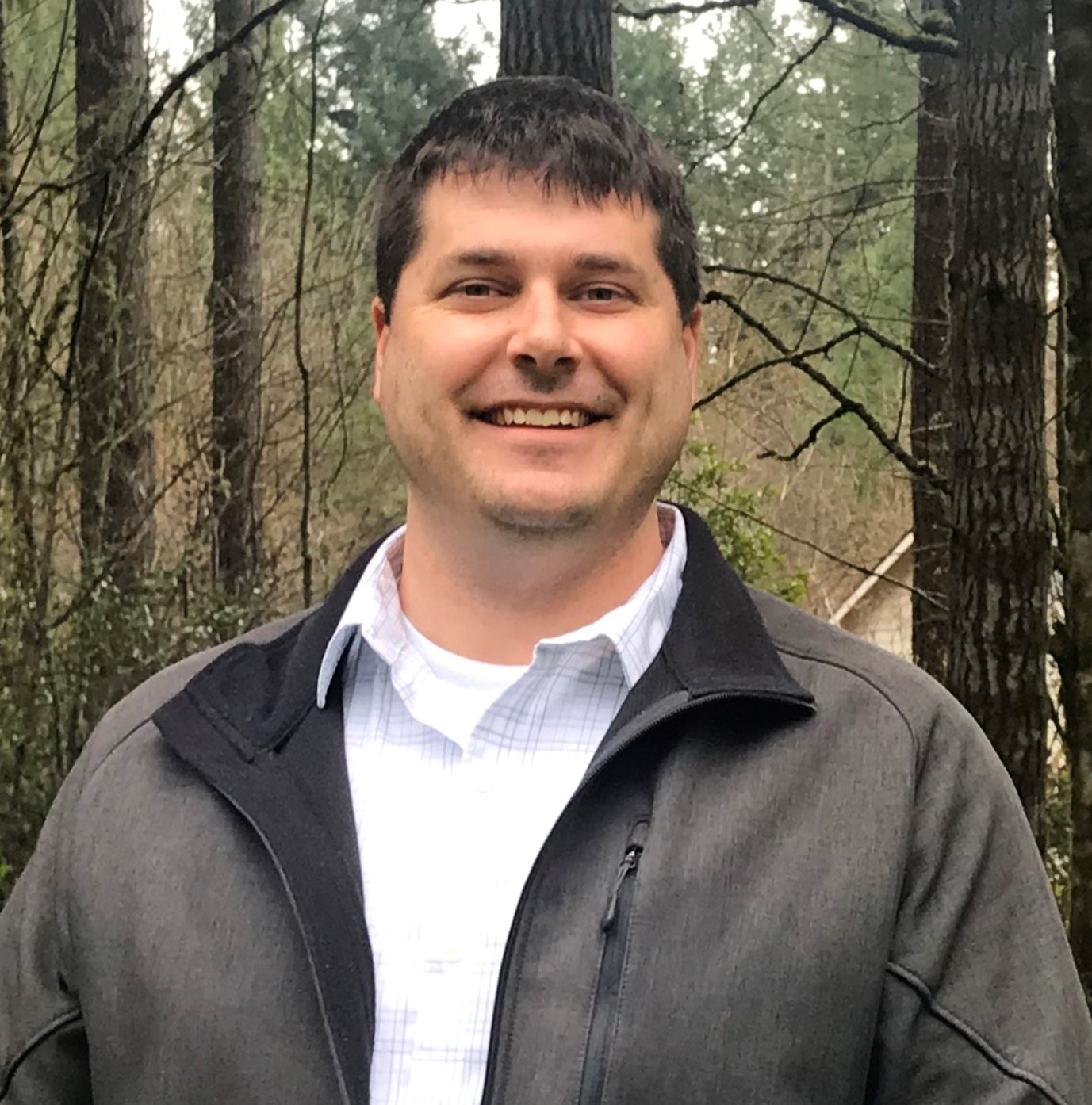
Dan Teuteberg, County director & 4-H Youth Development Specialist
360-427-9670 Ext. 686
WSU Extension Mason County
360-427-9670 Ext. 680
Facebook Pages
- Facebook pages:
- Mason County 4-H
- Mason County Noxious Weed Control
- Mason County WSU Master Gardeners
- WSU Small Farms Mason County
4-H Youth Development
4-H Teen Conference in Pullman
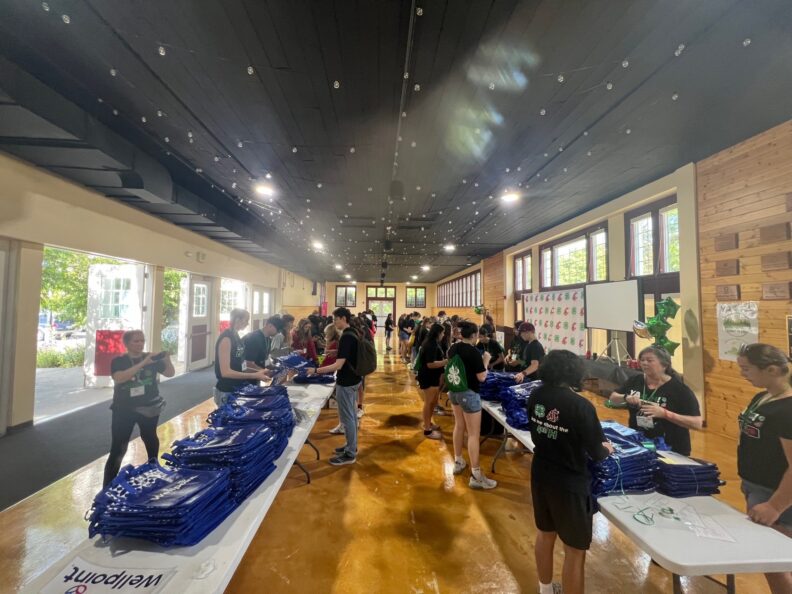
This summer, a group of Mason County 4-Hers traveled to Pullman to participate in the State 4-H Teen Conference at Washington State University. This annual event offers a unique and meaningful opportunity for teens to explore college life, meet leading educators, and participate in a variety of hands-on learning workshops. Beyond academics, the conference encourages leadership growth, personal development, and peer connection across counties. For many of our youth, it’s a first glimpse into higher education and a chance to imagine their future paths—all while forming strong bonds with fellow 4-Hers from across the state. The experience left participants feeling empowered, inspired, and more connected to the broader 4-H community.
Successful Summer Camp Collaboration
Mason and Grays Harbor 4-H communities partnered this year to host an unforgettable summer camp that brought together youth from across both counties. This camp is more than just a fun getaway—it’s an invaluable opportunity for youth to build independence, grow as leaders, and create lasting friendships. Thanks to the tireless dedication of our volunteer-led Camp Committee and outstanding group of 35 teen counselors, over 85 campers had a safe, fun-filled, and enriching experience. Camp traditions, waterfront adventures, and team challenges helped youth gain confidence, explore new skills, and connect with nature. This collaboration continues to be a shining example of what 4-H can do when communities work together to provide transformative experiences for our youth.
Grays Harbor County Fair Participation
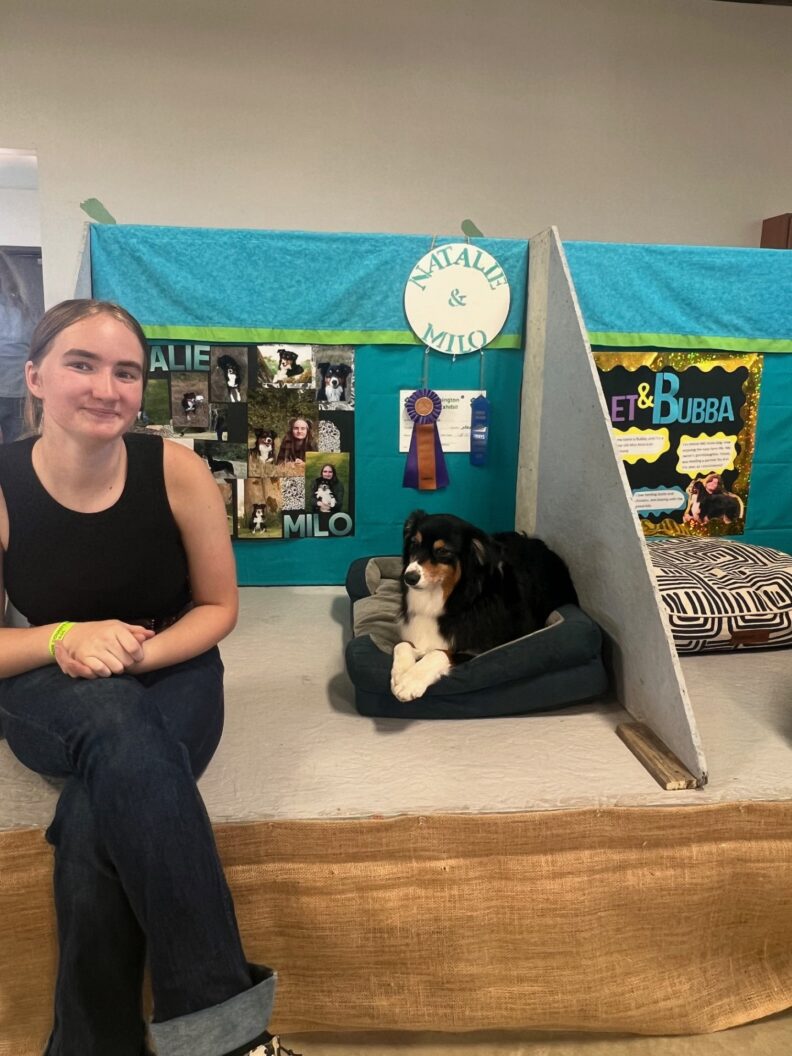
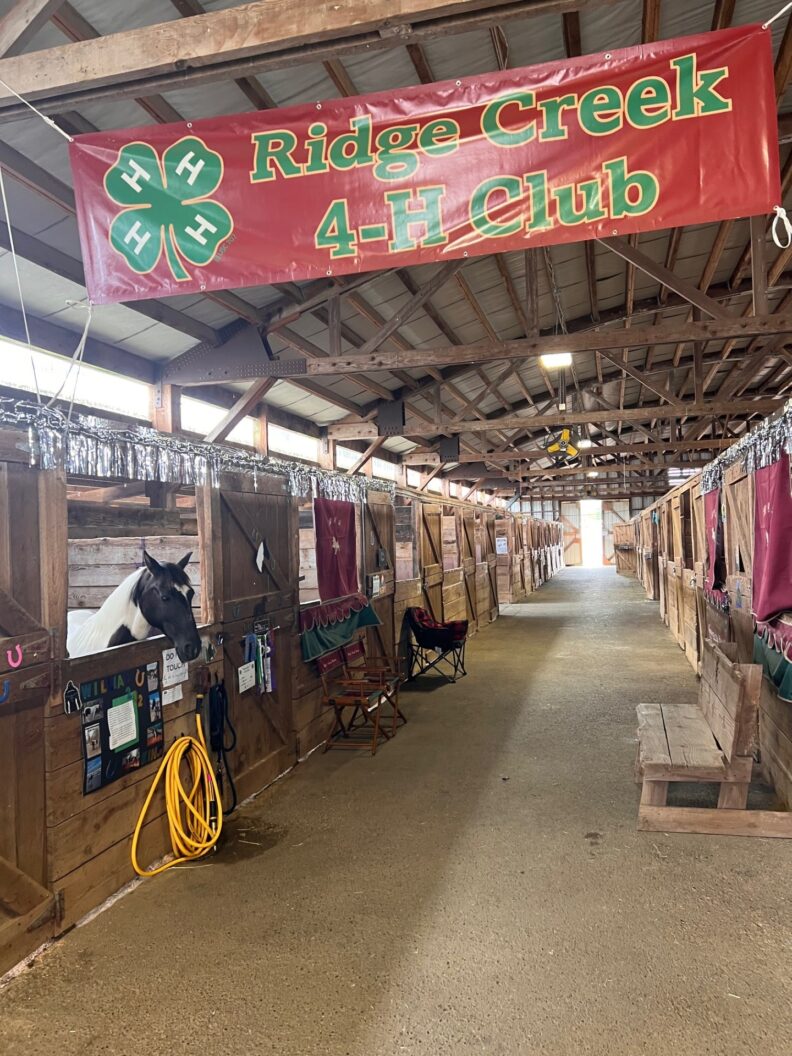
Mason County 4-Hers showed up in full force at this year’s Grays Harbor County Fair! Youth participated across a wide range of project areas—from Still Life and Table Setting displays to Rabbit, Dog, and Horse projects. The Ridge Creek Riders Horse Club continued to grow, and our Still Life exhibits brought creativity and talent to the forefront. Fairs are a cornerstone of the 4-H experience, allowing youth to showcase the results of their hard work and dedication while engaging with the broader community. We’re incredibly proud of how our members represented Mason County—with enthusiasm, responsibility, and a strong sense of pride. Several of our youth will even be heading to the State Fair to represent our program in dog, horse, and still life project areas. These opportunities reinforce the importance of public presentation, goal setting, and follow-through—skills that will serve them for life.
Number Recap:
SNAP-Ed Nutrition
Veterans Village Residents Whip Up Healthy Dishes with Bounty of Fresh Summer Vegetable
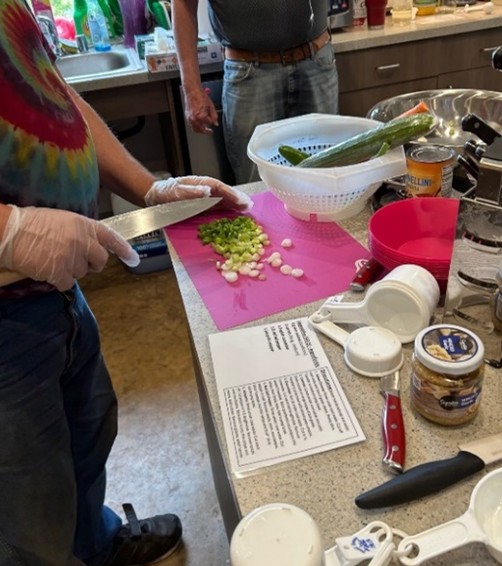
Residents at New Horizons’ Veterans Village in Shelton gathered with SNAP-Ed for two monthly cooking workshops in their community kitchen. Participants learned how to make healthy meals on a budget that were full of summer fresh fruits, vegetables, and herbs, many of which are tended in their on-site garden. June’s meal plan featured turkey meatballs with tzatziki, a cold couscous vegetable salad, roasted asparagus, and a minted honey lime fruit salad. July’s menu included chicken Caesar spinach wraps, tossed salad with vinaigrette, and strawberry rhubarb oat bars. Cooking tips, ways to include more fruits and vegetables daily, and resources on food access programs were shared. Not only did the residents greatly enjoy the recipes and cooking together, but many were also inspired to plan more future healthy meal sharing, strengthening their health and community.
Making Every Bite Count During Mason County Therapeutic Court Life Skills
Participants in Life Skills learned how to stretch food budgets and feed their families well during Food Smarts nutrition lessons. Classes met monthly and explored topics of planning balanced meals, shopping strategies, using nutrition fact labels to make healthy choices, and ways to involve children in meal and snack preparation. Attendees reported consuming less sweetened beverages, eating more fruits and vegetables, being more active, improved food security, and looking forward to cooking with their children.


Supporting Nutrition and Food Access
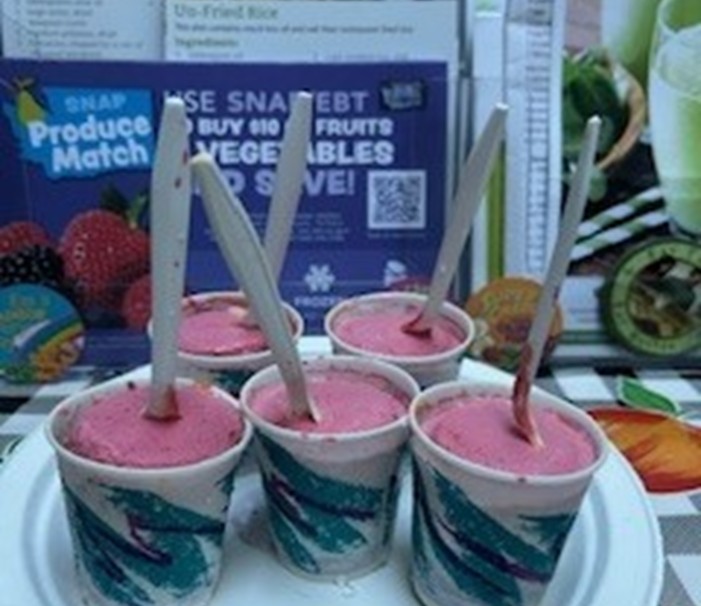
SNAP-Ed tabled several outreach events throughout the county sharing information on food access programs, such as Farmers Market Nutrition Program, SNAP Produce and Market Match, SUN Bucks, and Summer Meals. Also included were recipes, Eating Well for Less cookbooks, gardening/cooking/shopping tips, and recipe demonstrations with taste samples.
Number Recap
Master Gardener
Catalyst Park ‘Open Garden’ Event Success
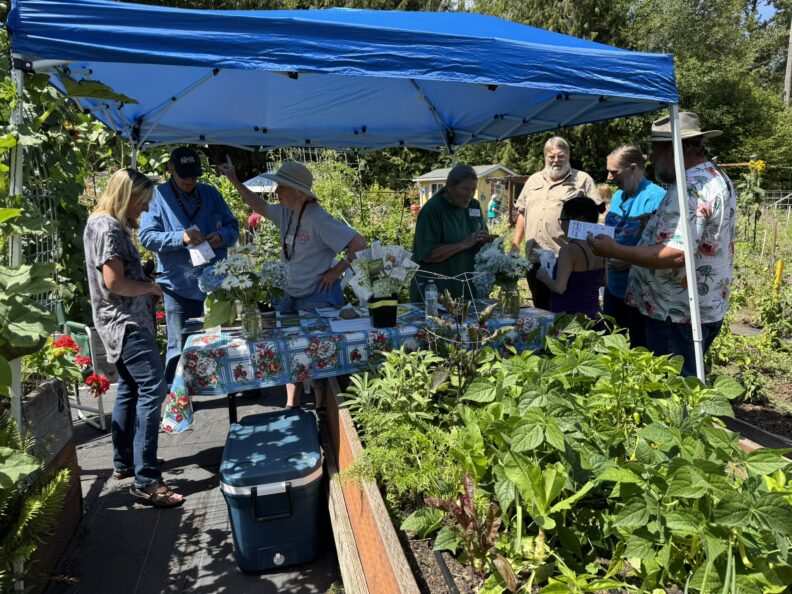
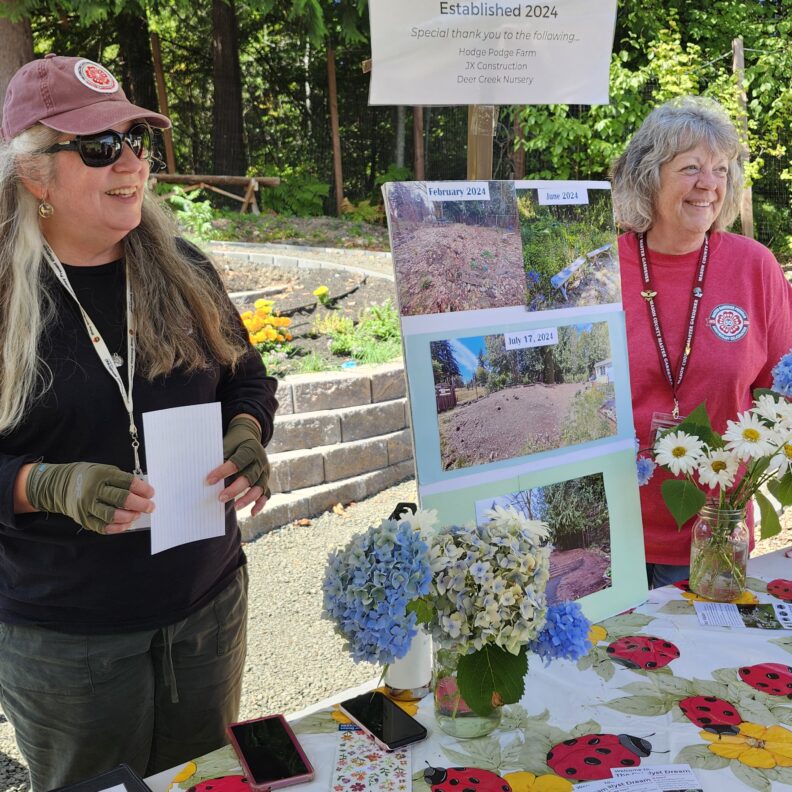
This year we decided to host the first Open Garden event at Catalyst Park, intended to give community members an opportunity to view the different demonstration gardens and learn from Master Gardeners, and to give us an opportunity to recruit more volunteers and showcase all of the hard work our program does. The community responded with more than 35 attendees! Our hard-working volunteers showed up to show off our county-wide programming, with tables that provided information on the community garden, pollinator garden, food bank garden, mason bee fostering program, Catalyst Dream Team, WSU Raised Beds demonstration garden, North Mason projects, Ask a Master Gardener service, and the Master Gardener Foundation of Mason County. Attendees were provided with passports so that they could receive a sticker at each station for talking to the volunteers; completed passports won them a prize of a homemade lavender sachet or seed packet!
Thriving Community Garden Workshops at Catalyst Park
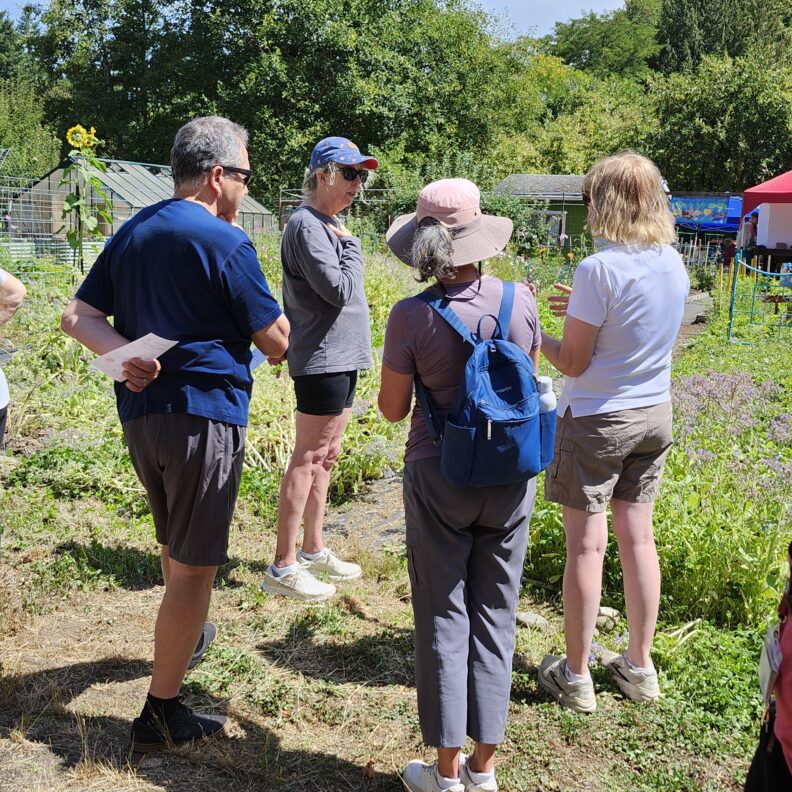
Our Community Garden Workshops at Catalyst Park, originally only available to community gardeners, have been experiencing incredible success for only their second year open to the public! In 2024, we averaged 9 participants per class; this year, we are just over halfway through the classes and are already averaging 18 per class, with a record-breaking 23 participants on August 9th. In response to the community’s interest, our workshops this year are going to be continuing much later into the fall. Upcoming workshop topics include seed saving, bulb lasagna, and native plant propagation. For more information and to register, go to: 2025cgworkshops.cheddarup.com
Number Recap:
Small Farms
Successful Septic System Education
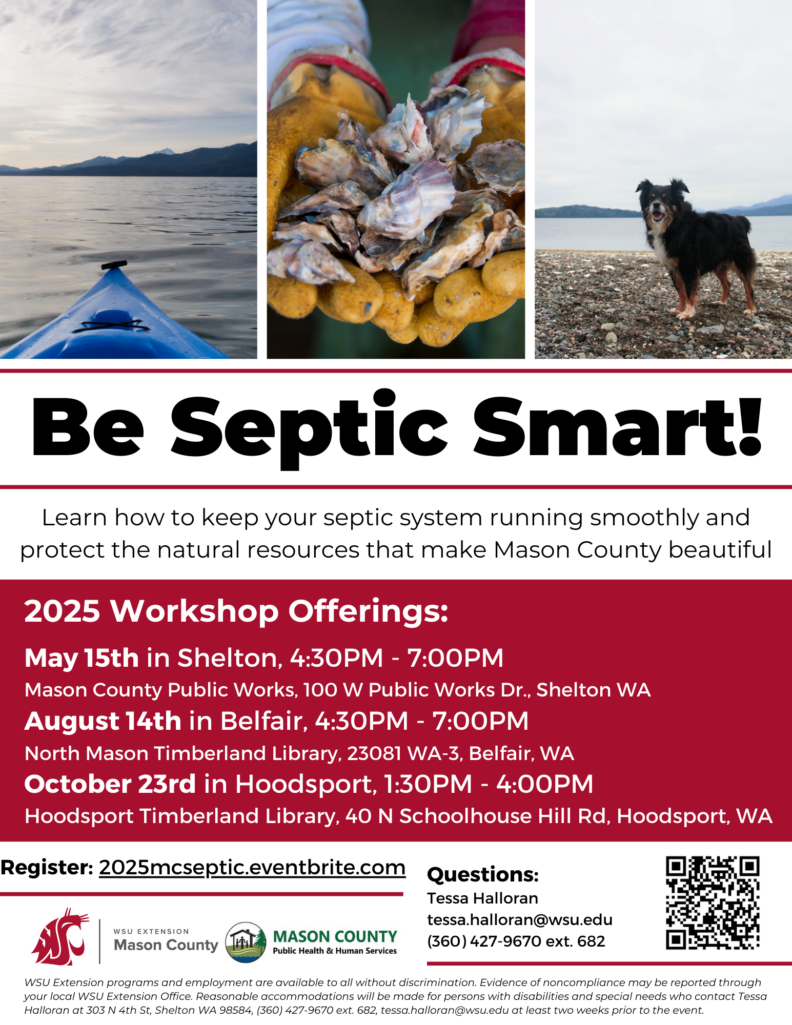
The Small Farms Program and Mason County Environmental Health are hosting two more septic education workshops in 2025 in addition to the workshop hosted earlier this year in Shelton. One will be at the North Mason Timberland Library on August 14th, which reached capacity at 40 registrants; another will be held on October 23rd at the Hoodsport Timberland Library, which currently still has room. Topics covered include different types of septic systems, how they function, basic maintenance, best landscaping practices, local resources, and financial assistance. For more information, go to: extension.wsu.edu/mason/agriculture/classes
Two Upcoming Cultivating Success Courses
Cultivating Success™ farming courses are run by a team of statewide WSU Agriculture and WSU Food Systems staff.
Cultivating Success™ ‘Explore Your Farm Dreams’ was offered as a three-hour online class on August 18th from 6pm-9pm. With recently updated exercises and resources, this course gave participants the necessary tools and concepts to evaluate their resources and decide if farming (and what kind of farm) might be the best fit.
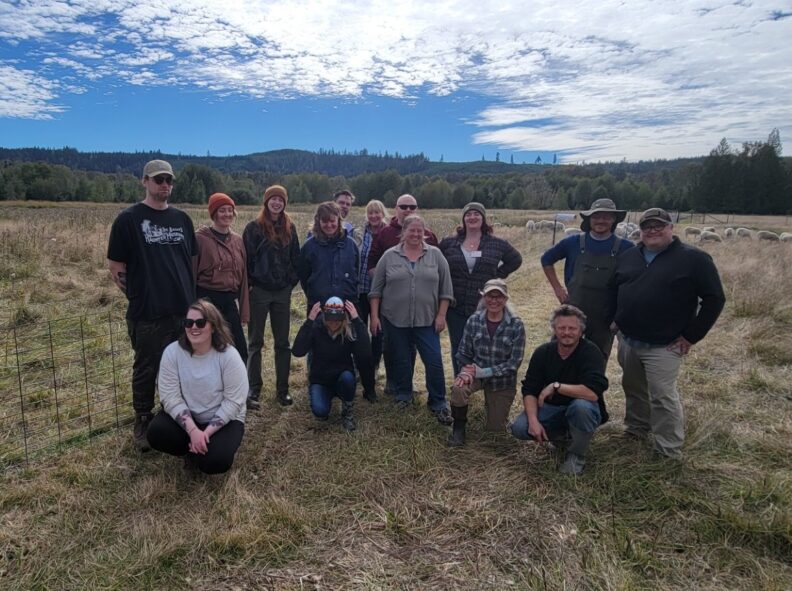
Cultivating Success™ ‘Whole Farm Planning’ will follow. This online course walks participants through the step-by-step process of creating a well thought out plan for their land, life, and farm business. Half of the course topics are offered via online classes with WSU faculty and farmer speakers, and the remaining half are taught through one-day in-person intensives at farm sites throughout the state. The Small Farms Program Coordinator in Mason County will be working with one of our local farm sites to provide an intensive for course attendees in the Southwest Washington region.
Go to cultivatingsuccesswa.org for more information.
Number Recap:
Noxious Weed Control
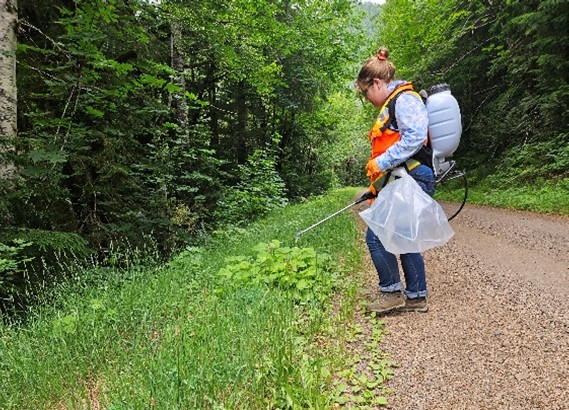
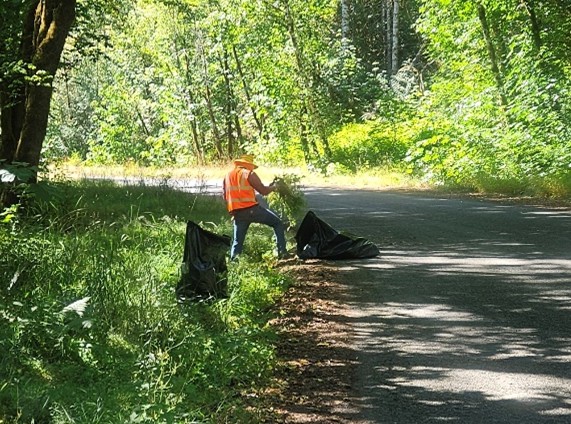
This summer Mason County Noxious Weed Control Board (MCNWCB) has been focused on weed control at County-owned properties, Washington State Parks, and in the Olympic National Forest. We’ve also been providing technical assistance with noxious weed identification and control advice to private landowners and public land managers.
Our largest project this summer is survey and control of invasive weeds in the Olympic National Forest. So far this year we’ve surveyed 185.6 acres and controlled weeds on 140.32 acres.
MCNWCB received Washington State Department of Agriculture (WSDA) funding to control shiny geranium, lesser celandine and perennial pepperweed. This year, we treated over 14 acres for these species. We were also instrumental in forming a shiny geranium communication plan with Washington State Department of Transportation, Pierce and Kitsap County.
WSDA awarded MCNWCB funding to continue knotweed control on Finch Creek, Stimson Creek, Mission Creek, Sherwood Creek, Coulter Creek and Case Inlet. We are currently working on landowner outreach to gain permission to treat knotweed sites.
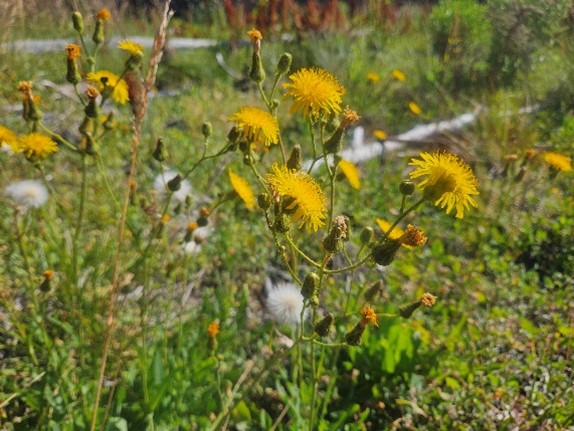
MCNWCB assists Washington State Parks with noxious weed control. This summer we’ve controlled meadow knapweed and scotch broom at Lake Isabella State Park and follow-up control of perennial pepperweed and perennial sow thistle at Belfair State Park.
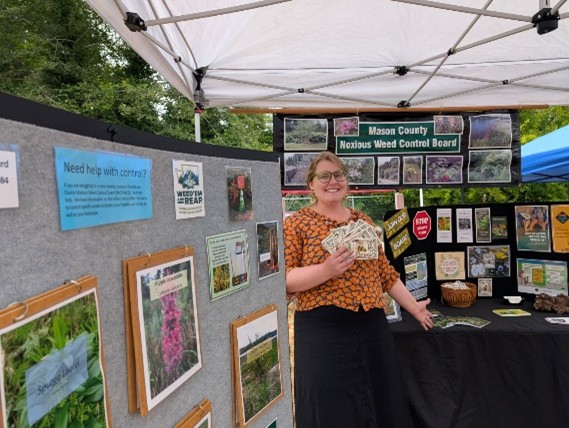
This summer, we’ve attended Allyn Days and the Grays Harbor County Fair. Later this year we’ll be at Oysterfest and will co-host an Early Detection and Rapid Response (EDRR) training with Kitsap County Noxious Weed Control Program and the Pacific Northwest Invasive Plant Council. Pesticide Applicator License credits will be available to participants of EDRR training.
Numbers Recap:
Our Team
Mason & Grays Harbor County Director & Youth Development Specialist
Office Manager & Food Safety & Food Preservation Assistant
4-H Program Coordinator
falyn.taylor@wsu.edu