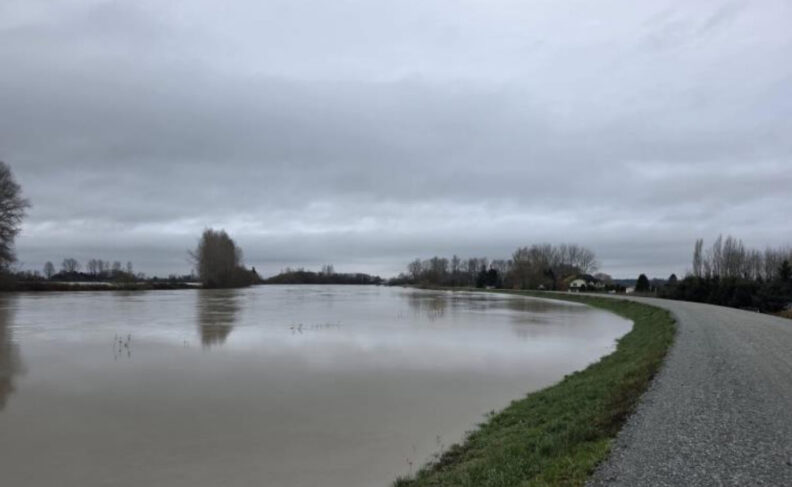
Historical Flooding in Western Washington – December 2025

This past week, you may have seen news coverage about the severe flooding that occurred in Western Washington. This historical event hit close to home for us at WRASAP, as we are located in the heart of the Skagit Valley, which is rich in agricultural activity. The flooding created numerous challenges for residents in both rural and urban areas as water levels rose. Many people evacuated their homes and lost irreplaceable belongings, including pets and livestock. At WRASAP, we want to ensure that everyone is informed about our available flood resources and partnerships that can provide assistance during such disasters.
It’s important to remember that flooding serves as a reminder of the many stressors farmers face that are beyond our control. However, one thing we can do is prepare. In some areas, flood season comes around every year, so it’s crucial to have plans in place, such as designated locations for evacuating livestock, moving equipment, and ensuring your own safety and the safety of your employees.

When in an emergency, one thing to keep in mind is that decision-making is at the forefront of making a plan. Making informed decisions based on information that is credible is essential for emergencies. Psychological research describes two modes of thinking in emergencies: fast, intuitive decisions and slower, analytical reasoning. The fast mode relies on mental shortcuts (heuristics) and “seen this before” pattern recognition, which can be efficient but also vulnerable to systematic errors. The slower analytical mode is more deliberate and rule-based and can reduce mistakes, but is harder to use when situations are fast-moving and emotionally charged. High-quality emergency plans often blend both modes by using pre-planned checklists and protocols (to support analytical thinking) alongside scenario-based training that strengthens safe, intuitive responses.
Here are a few steps you can take:
- Get in touch with your local county or city emergency services department to connect with local dike experts.
- Maintain communication with other local farmers. Farmers have a deep understanding of water dynamics and the land they work on. Collaborating and supporting each other as a community is vital in these situations.
- Have a plan – make a checklist of belongings to take with you, such as important documentation and other irreplaceable belongings. Also, make a plan if needed to evacuate livestock and equipment to higher ground. A Flood Recovery Checklist can be found at North Dakota State University.
We would like to take a moment to acknowledge the incredible efforts made last week here in Western Washington. We are grateful to the Army National Guard for their assistance with evacuations and to the wonderful community members who volunteered their time, equipment, and materials to ensure the safety of our valley. We also owe a significant debt of gratitude to our dedicated local dike commissioners, who worked tirelessly to assess river conditions. We truly could not have navigated this crisis without the support of our community members.

If you were affected by the flood and need additional resources, the AgriSafe Network has valuable resources for farmers and farm workers affected by flooding:
- Health Effects of Flooding
- Cold Weather Flood Risk Factors
- Warm Weather Flood Risk Factors
- Flood Recovery Checklist