What is a Cover Crop?
It’s any crop grown for the protection and enrichment of the soil. Cover crops are one of the most effective ways to improve soil health, reduce outside inputs, and protect natural resources.
Why use a Cover Crop?
Prevent erosion

Leaves soften/slow rainfall while robust root systems hang on to soil.
Retain nutrients

Plants take up unused nitrogen/nutrients storing them for next season’s crops.
Improve water quality

Sediment and nutrients are held by the cover crop, preventing them from leaching into surface and ground water.
Reduce weeds

Rapidly establishing cover crops smother weeds before they have a chance to grow.
Increase organic matter
Once turned into the soil, plant parts decompose at different rates to provide continuous supply.
Control soil pests & disease

Some cover crops provide a natural fungicide-type effect on pathogens, while others enhance beneficial soil biology.
Break up heavy soils
Daikon radish and others with large root systems can help break up hardpan and lighten heavy clay soils.
Fix nitrogen
Using legumes like crimson clover and field peas increase available nitrogen for the next crop.
Save money
Over time, the use of cover crops can help reduce the need for fertilizer while helping increase yields.
Cover Crop Resources for Gardeners
Cover Crops in Western Washington
Cover Crops in the Garden from OSU
Cover Crop List with coverage by 100 sq ft
Successful Cover Crop Management in Home Gardens
Cover Crop Resources for Farmers
Cover Crops on the Intensive Market Farm
Crop Rotation on Organic Farms
Cover Up with a Winter Cover Crop from Snohomish Conservation District
Cover Crops Best Management Practices
Cover Crops in Vegetable Production
Combining Strip Tillage and Cover Crops
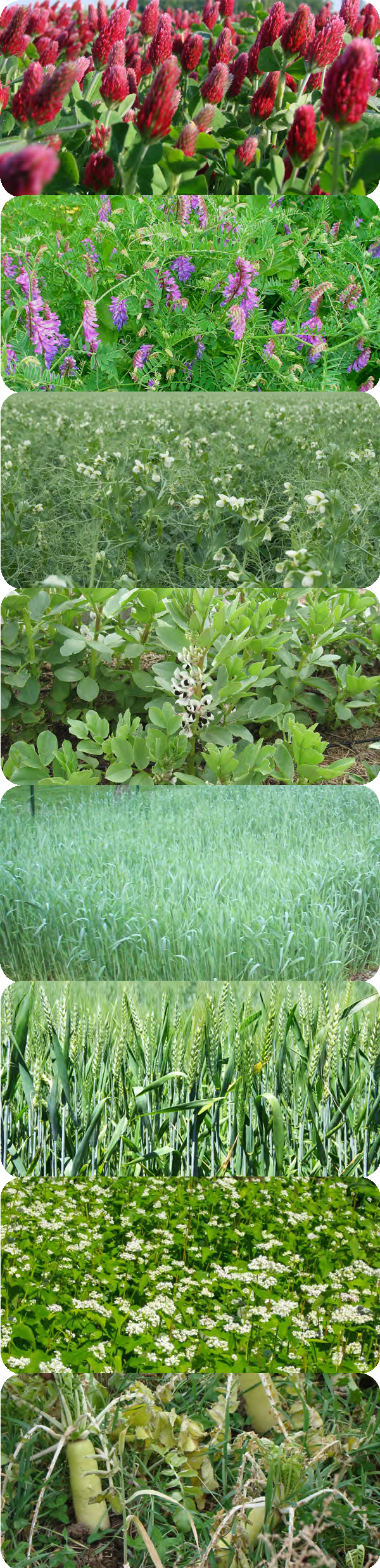
Examples include:
CrimsonClover
Vetch
FieldPeas
FavaBeans
AnnualRye
WinterWheat
Buckwheat
DaikonRadish