
""

About us

Cultivating plants, people, and communities since 1973

The WSU Extension Snohomish County Master Gardener Program
butterfly on a flower.

WSU Extension Snohomish County Master Gardener (MG) Volunteers are university trained community educators serving the citizens of Snohomish County. Master Gardeners provide research-based information on a wide variety of home horticulture issues, including plant problem diagnosis and treatment, environmentally sound gardening practices, water conservation, pest identification, Integrated Pest Management, Natural Yard Care, and plant selection, installation, and maintenance.

Each volunteer is required to contribute a minimum number of both service hours and continuing education hours annually. Their first year they must also participate in an extensive basic training program designed to prepare them to be Volunteer Community Educators in Horticulture and Environmental Stewardship.

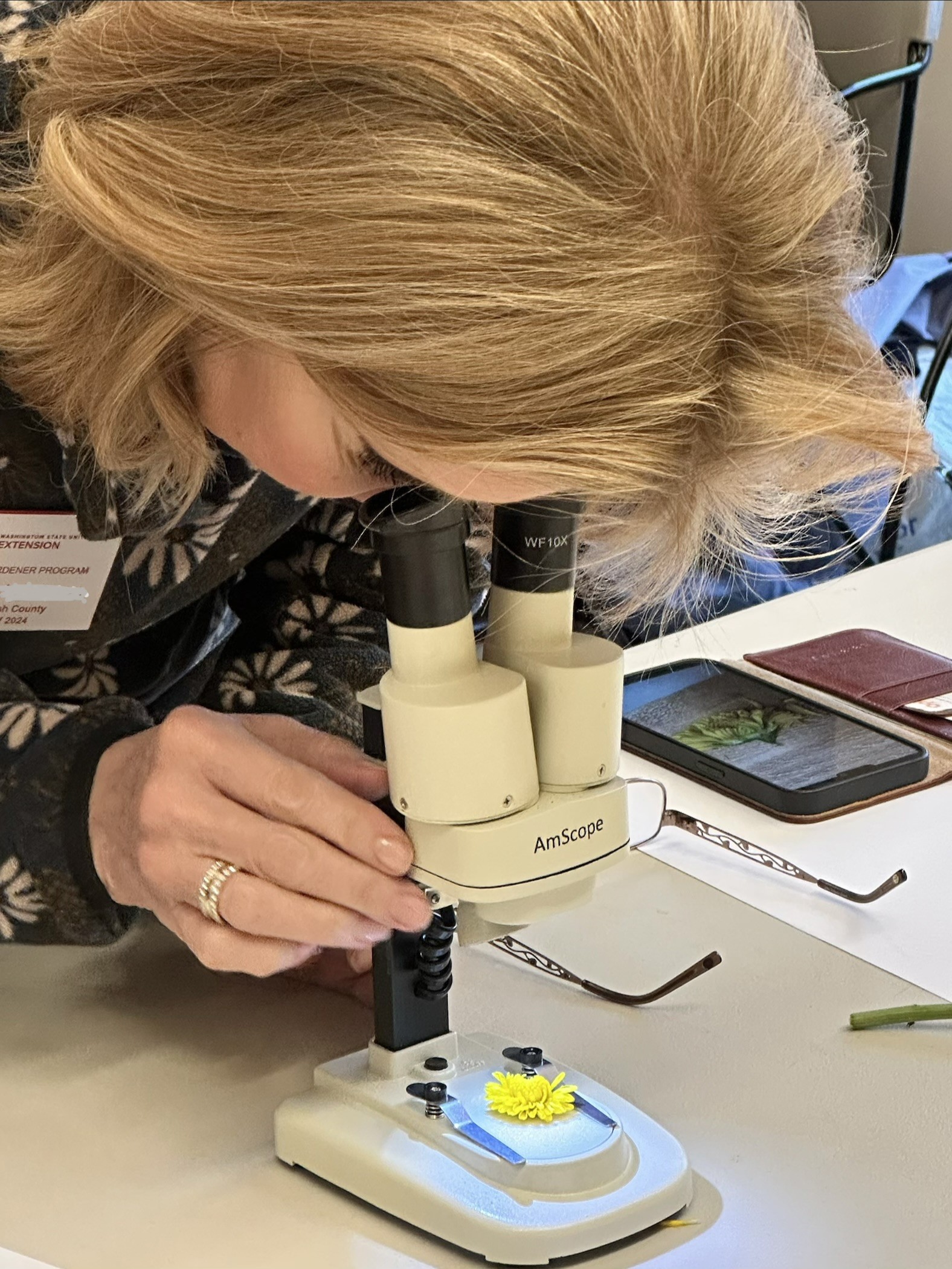
MG basic training covers such topics botany, soil science, integrated pest management, weed identification and management, plant pathology and plant problem diagnosis, entomology, pesticide safety, vegetable and fruit crops, landscape ornamentals, planting and pruning of trees, and home lawns. It includes approximately 60 hours of classroom instruction over three months plus 3-5 hours a week spent on homework and online training using their home computer. The goal is to teach MGs how to find the answers to questions when asked. They are not expected to try to know everything but rather know where to look for answers. No memorization is required, and all training quizzes and tests are multiple choice and open book.

After initial training, working at plant diagnostic clinics is a primary activity of Master Gardeners, both at seasonal community clinics and at the year-round office clinic location at Willis Tucker Park south of Snohomish. MG volunteers handle walk-up questions about home horticulture problems and practices at community clinics, while at office clinic they also answer telephone and email inquiries. Master Gardeners learn to use a variety of resources to identify plant materials, diagnose plant problems, identify insects and insect damage, detect plant diseases, determine incorrect cultural practices, etc. This enables them to provide appropriate recommendations for treatment and management of home horticultural problems and provide information on safe and effective gardening and landscaping practices. Master Gardeners do not address commercial agriculture questions.

Snohomish County also has two demonstration gardens that educate gardeners about plant materials and gardening techniques. MGs not only plant and maintain the gardens but also use the gardens to teach the public about sustainable gardening. Instruction might involve appropriate plant selection including native and drought tolerant plants, food gardening, low water-use gardening techniques, and a wide variety of specialty gardening.

Master Gardeners also serve the program in a variety of other ways. They are in demand as public speakers, where they develop and give talks and demonstrations on their favorite gardening topics. Some work with schools, 4-H or other youth programs to involve children in gardening. Volunteers who enjoy writing can participate in the research and writing of brochures and articles. Others work on specialty projects such as the rainscaping and natural yard care initiatives, and Growing Groceries, a program to mentor and teach people how to raise their own fresh produce. Many are involved in the Snohomish County Master Gardener Foundation, which provides financial support of MG Program activities through fundraisers such as an annual plant sale and a winter speaker series.

Because there are so many ways for Master Gardeners to use their knowledge and serve our community, they have the opportunity to develop new skills as well as engage in their passion for gardening. Over the long term, they will continue to broaden their horticulture knowledge and develop interpersonal, organizational and leadership abilities. And for many Master Gardeners, the friendships, the camaraderie, and the pure delight of working with people of shared interests toward a collective and worthwhile goal keeps them in the program year after year.

One definition of a sustainable garden is that it thrives with minimal inputs of labor, water, fertilizer, and pesticides. The WSU Master Gardener Volunteer Program thrives on enthusiastic inputs of training, knowledge, ability, time, energy and dedication, and produces maximum outputs of community education, personal development, environmental improvement, and volunteer satisfaction.


The following links will take you to the state WSU Extension Master Gardener website. Simply hit the back button to return to this page.

Our Vision, Mission and Values

Master Gardeners inspecting greenhouse plants

Our Vision

Highly recognized, diverse, and fully supported, WSU Master Gardener volunteers are the go-to resource for communities seeking research-based, innovative solutions for their ever-changing horticulture and environmental stewardship needs.
Feeding a compost bin

Our Mission

Engaging university-trained volunteers to empower and sustain diverse communities with relevant, unbiased, research-based horticulture and environmental stewardship education.
Extension Master Gardener taking inventory

Our Values

We value personal and professional research and discovery because it encourages us to stay current about horticulture and environmental stewardship to meet the unique educational needs of our communities.

We foster and benefit from an atmosphere of diversity and inclusivity because our differences inspire creative thinking and innovative solutions.

We act with integrity because trust, truthfulness and respect create a healthy and positive culture.

We are committed to stewardship and sustainability, serving as ethical and responsible agents of our natural resources, human resources, and University resources.

We collaborate because together we empower healthy and resilient communities.

We are a dynamic and responsive program where knowledge inspires change.

Our Priorities

""