Originally published June 21, 2025 in the Yakima Herald-Republic. Minor edits have been made for web publication and accessibility.
by Don Flyckt
Salt and Vinegar for Weed Control?
It has been my experience that controlling weeds is not an enjoyable part of gardening. It is time-consuming, physically demanding, and never-ending. If only there was a quick and easy solution.
After a bit of late-night internet research, I stumbled upon what was described as a safe and natural way to kill weeds. All I needed was a mixture of salt and vinegar.
The Myth
Salt and vinegar are common household items routinely used in cooking and cleaning. The logic goes that if a chemical is safe enough to eat or to clean your house, it must also be safe for the environment. Unfortunately, this is a dangerous oversimplification.
Household Vinegar is Not Horticultural Vinegar
Household vinegar is the product of a two-step fermentation process. In the first step, yeast converts the sugar from apples, wine, barley, or rice into alcohol. In the second step bacteria converts the alcohol to acetic acid, the primary ingredient in vinegar. This natural fermentation process produces vinegar with an acetic acid concentration between 5% and 8%.
Horticultural vinegar is available in many gardening stores and has an acetic acid concentration between 10% and 30%. It is not the product of a natural fermentation process but is produced in a petrochemical facility by reacting methanol and carbon monoxide.
Before using horticultural vinegar, be sure to read and understand the warning label. Due to its corrosive nature, it will have a “danger” label which states it may cause irreversible skin and eye damage. Gloves and goggles must be worn when using horticultural vinegar.
Studies indicate that acetic acid concentrations of 10 to 20% are needed to provide weed control. Spraying dandelions or purslane with household vinegar (5% acetic acid) will not be very effective.
How Salt and Vinegar Kills
Both salt and vinegar damage plants by dehydrating the plant’s foliage, either by damaging the plant’s cell walls or by disrupting the plant’s water balance. This dehydration process causes the plant to wilt and brown. Potentially, the above ground portion of the plant will die.
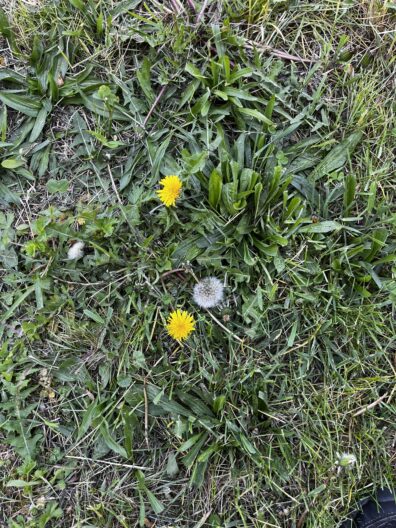
Salt and vinegar are contact herbicides, meaning that they only damage the plant tissue they directly touch. This type of herbicide is no more effective than mowing or burning weeds. Contact herbicides are not selective and will damage desirable and undesirable plants. Since they only damage the above ground portion of the plants, most weeds and grasses with good root systems will recover.
Collateral Damage
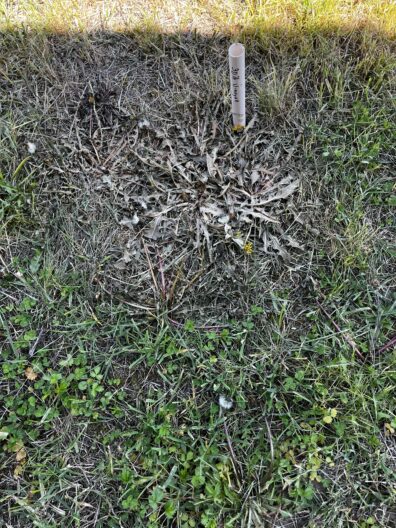
Routine applications of salt and vinegar will cause significant collateral damage. This damage might be acceptable if it provided effective long-term weed control, but it does not. Repeated applications are required.
Soil organisms like insects, worms, bacteria and fungi are essential for soil and plant health. The soil will become unhealthy if repeatedly sprayed with salt and vinegar.
Vinegar reacts very quickly with the soil, leaving behind a soil that is slightly lower in pH and with a slightly higher acetate salt concentration. Unless the salt is leached from the soil it will remain, making the soil less fertile until it is leached away with water.
The Test
I decided a test was still necessary to decide if salt and vinegar had the potential to be an effective weed control tool. Fortunately, my property has numerous very healthy dandelions and plantains that would be great test subjects.
After locating a couple dandelion and plantain subjects, I sprayed them with household vinegar (5% acetic acid) or horticultural vinegar (30% acetic acid). I could not force myself to add salt to the vinegar solution. It is my responsibility as a gardener to improve the soil, not intentionally damage it, which I would have been doing by adding the salt.
After 24 hours the dandelion sprayed with apple cider vinegar showed a bit of wilting and some browning. The plantain showed no visible effects. A couple weeks later the dandelion was showing signs of a strong recovery and the plantain continued to be a vigorous weed.
After 24 hours the dandelion/plantain sprayed with horticultural vinegar were brown and appeared to be dead. A month later these weeds and nearby plants unintentionally sprayed showed no signs of recovery.
This simple test suggests that agricultural vinegar is a strong contact herbicide. However, the collateral damage from its use makes it a poor choice for weed control in any garden or yard. Potentially, the mixture could be used to control weeds in a driveway or sidewalk. However, its corrosive nature will eventually damage the concrete.
Integrated Pest Management (IPM) is a much better approach for weed control. IPM employs a combination of methods to control pests while minimizing harm to the environment. These methods include biological control, physical barriers, and when necessary, carefully selected chemical control options.
Repeated applications with high concentrations of salt and vinegar are necessary for temporary weed control. Mother Nature is resilient and she will recover but her recovery from numerous applications will be long and difficult.
Save the salt and vinegar to be used as a seasoning for potato chips, or add olive oil and use it as a dressing for a delicious dandelion and plantain salad.