Squash Bees and Jack-O-Lanterns
by Don Flyckt, WSU Yakima
County Master Gardener
As you carve a Jack-O’-Lantern this Halloween season, take some time to reflect on how a bee made this annual ritual possible. Without a bee to pollinate the pumpkin flower, there would not be a pumpkin to carve.
It is very likely that your pumpkin was pollinated by a native squash bee. This bee is a relatively new resident of the Pacific Northwest. The first documentation of a squash bee in the Pacific Northwest was in 2016. Squash bees are native to central Mexico and the southwestern United States.By following the spread of cultivated squash plants, squash bees have expanded their native range to include the Pacific Northwest.
Prior to the arrival of squash bees to the Pacific Northwest, pollination was performed by other native bees, insects, commercial honey bees, or by hand pollination. If there is a lack of squash bees, commercial squash growers continue to use managed honeybees for pollination. But honey bees are inefficient pollinators of squash plants and require beekeepers to provide high hive densities to ensure adequate pollination.
A Beautiful Relationship
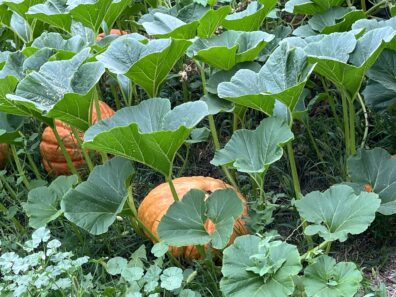
Pumpkins are a member of the Cucurbita genus, which includes squash, zucchini and gourds.Plants in this genus have both male and female flowers on the same plant. The female flower needs to be pollinated with pollen from a male flower. The flowers open at dawn, wilt, and close by midday. If the female flower is not pollinated in this short period of time, the developing fruit will yellow, shrivel and fall off the vine.
Squash bees are highly efficient pollinators. A healthy population of squash bees will pollinate all the available flowers before the honeybees are even awake. Squash pollen is heavy, sticky and spiny. It contains a bitter compound called cucurbitacin which deters most insects, including honeybees. The squash bee has adapted to the point where this sticky, bitter pollen is the only pollen they forage on for their survival.
The squash bee’s life cycle is perfectly timed to support their host plants. The squash bee emerges at the same time squash, zucchini and pumpkin plants begin to bloom. The female digs a nesting tunnel near a squash plant and provisions individual chambers with balls of pollen and nectar before laying a single egg in each chamber. The next generation overwinters in the ground as pupae and larvae, completing their development to emerge the following year.
How to identify a Squash Bee
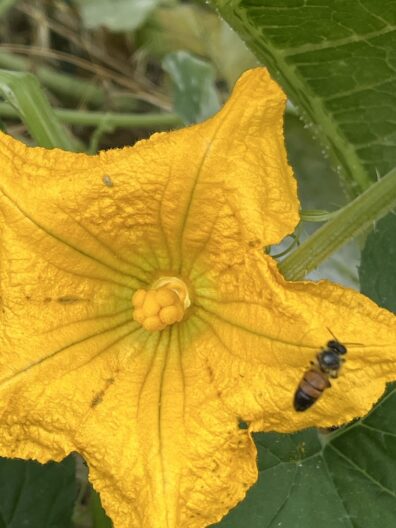
It is easy to confuse squash bees and honeybees. They both have similar black and yellow coloring. To avoid any confusion, look for squash bees shortly after sunrise, when the squash flowers first open. Honeybees are not active during this period. Squash bees and an occasional bumblebee will likely be the only bees visiting the flowers. The female squash bees will be aggressively collecting pollen from the newly opened flowers. The male squash bees will be darting between flowers in search of females.
You will quickly notice that squash bees are larger, hairier, and have rounder faces and longer antennae than honey bees. They also carry pollen differently than honeybees. They have very hairy legs allowing the pollen to stick to the entire leg, while honey bees carry pollen in specialized structures on their legs.
An Opportunity
Observing squash bees provides gardeners with the opportunity to observe and appreciate the beauty and complexity of native bees. Squash bees are also an example of the many challenges researcher have in understanding native bees and what can be done to help them survive
The squash bee is a specialist that depends on a narrow range of plants for their pollen and survival. It is estimated that between 30 and 50% of native bees are specialists. The remaining native bees are generalists, meaning they feed on a wide range of flower types.
While the close relationship between a plant and insect is fascinating, it is also a challenge to their survival. The extinction of a specific native plant will likely lead to the extinction of the specialist bee species that depends on it. If the plant and the insect respond to our changing climate in different ways, neither will survive.
Researchers still have much to learn about native bees, the threats they face, and how to help them survive. Until we know more, gardeners have an opportunity to make a significant contribution. Provide a diverse mix of flowers that bloom continuously from early spring until late fall. Provide nesting sites and protect any nests that you are lucky enough to find.
It is sometimes easy to forget the important role that native bees play in our gardens, commercial agriculture, and ecosystems. This Halloween, remind yourself that your beautiful Jack-o-Lantern may not have been possible without a native bee.