Iris Care
by Melody Westmoreland, Master Gardener
My irises are all bloomed out. Now what?
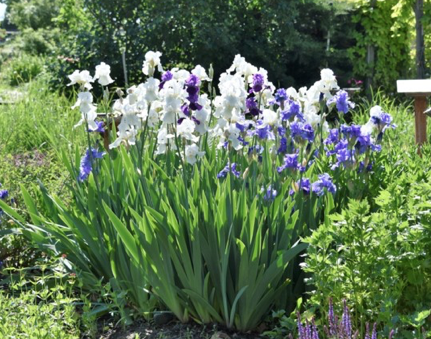
Irises have been featured in cultivated gardens since the early 1600’s – that we know of for certain. All irises were classified by Linnaeus in the 18th century, and then given a modern treatment by W.R. Dykes in his “The Genus Iris” written in 1913. Suffice it to say they’ve been around a long time. And, why not? This perennial is a beloved garden addition that brings beauty and blooms from early spring to high summer. There are so many varieties and colors it’s hard to even wrap your head around the possibilities, much less choose the ones you absolutely have to have. But, what about after they are done blooming? What then?
The iris is a plant that requires specific care once the flowering is complete. Two of the most important tasks are post-bloom maintenance and periodic division. Together, these practices prevent overcrowding, reduce the risk of disease, and ensure a spectacular display year after year.
Like any flowering plant, once an iris finishes blooming, their energy shifts from producing flowers to replenishing the rhizomes; the thick, horizontal stems that store nutrients for the plant. If you don’t take care of them at this stage, the plants may weaken, becoming more susceptible to pests and diseases and produce fewer flowers the following year.
Your first task will be to deadhead the spent flowers. Cut the flower stalks down to the base. This will prevent the plant from consuming energy there that otherwise would go to the rhizome. Use clean, sharp pruners to avoid spreading disease.
Leave the leaves intact through the summer. They will continue photosynthesis, feeding the rhizome. Remove only leaves that are yellowing, spotted, or damaged. At the end of summer, or early fall, you can trim the foliage back to about six inches. Many folks trim the leaves in the shape of a fan for esthetic beauty but that is not necessary for success. Just make sure they’re trimmed back, whether or not you are planning to divide them. It is important to check the leaves for iris borer damage (in the form of chewed leaves or mushy rhizomes) and fungal leaf spot. If you find any damage, remove and destroy the affected foliage.
Although irises are drought tolerant once established, a deep watering every 7-10 days helps to replenish the rhizome reserves. Make sure you don’t overwater as this can cause rot. Applying a light dose of low-nitrogen fertilizer (5-10-10) after the bloom is finished supports root and rhizome development without encouraging excessive leaf growth.
Over time, iris clumps become crowded. This leads to fewer blooms, smaller flowers, and increases the risk of disease. Division rejuvenates the plants by giving each rhizome enough space, light, and nutrients to thrive. And, you get more plants! The best time to do this is mid- to late summer so the plants will have enough time to recover before winter.
Lift the entire clump, taking care not to damage the rhizomes. Shake or wash off any soil to see the rhizomes clearly. Break or cut them apart so each division has a firm, healthy rhizome section about 3-4 inches long, several healthy roots, and at least one fan of leaves. Discard any old or diseased plants. Trim the foliage back to about 6 inches. Replant them promptly so the top of the rhizome is just at or slightly above the soil level. Space them 12-18 inches apart, with leaf fans facing the same direction for a neat look. Water them in well to settle the soil around the roots but avoid heavy watering until new growth appears.
Some common mistakes to avoid are planting iris rhizomes too deep, dividing them too early or too late, overcrowding them after replanting, or neglecting to check all plant material for pests. If you take your time, you will be able to enjoy abundant blooms year after year.
Sadly, the Yakima Chapter of the Region 13 American Iris Society closed a few years ago. The Region remains vibrant, however, and there are multiple chapters around the state. For more information go to their website, or contact John Vacchiery, the 2026 President.