Spiders – (They’re good to have around!)
by Carol Barany, Yakima Master Gardener
If you’re decorating your home for Halloween, you already know that the spider is a seasonal icon guaranteed to spook most of the trick-or-treaters coming to your door.
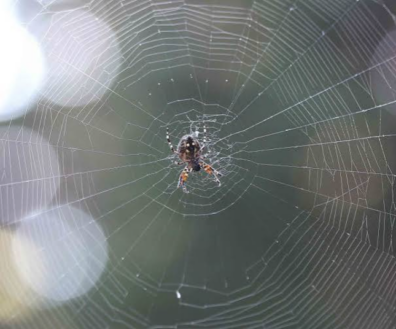
Unfortunately, many of us, avid gardeners included, have yet to outgrow our childhood fear of spiders. Spiders move quickly and unpredictably, and webbing allows them to drop unexpectedly from above or hide in tight spaces. It could have something to do with a spider’s multiple eyes and legs, or alien body shapes.
The human brain evolved to rapidly detect spider-like shapes and erratic movements before conscious thought kicked in. Our early ancestors who could quickly spot dangerous creatures had a better chance of surviving.
Despite our fears, spider expert and arachnid curator Rod Crawford of Seattle’s Burke Museum has found that our most common beliefs about spiders being dangerous are nothing more than urban legends or misconceptions. He should know. Crawford has spent more than fifty years studying spiders.
Unexplainable wounds to the skin are often misdiagnosed, and true spider bites are very rare. Most supposed ‘spider bites’ are actually skin infections, or reactions to something else. Unless you actually see a spider biting you, you can’t assume that an uncomfortable skin reaction was caused by a spider.
In fact, there are only two spiders in Washington State posing potential harm to humans.
The Western Black Widow, identified by a shiny black body and a red hourglass shape on the underside of their abdomen, is found in Eastern Washington. However, they are reclusive, shy, and bites are rare unless this spider is handled or accidentally pressed against.
Yellow Sac spiders are a species of some medical concern because a bite can cause localized pain similar to that of a bee sting. But the swelling resolves quickly and does not result in the dreaded severe necrotic wounds.
Hobo spiders and Brown Recluse spiders have a nasty reputation and have been feared in the Pacific Northwest for generations.
The Washington State Department of Health reports that Hobo spiders are reluctant biters and not considered as dangerous as previously believed. Past claims that Hobo spider bites cause necrotic tissue wounds have been disproven by current research, and the CDC removed them from its lists of dangerous pests.
If it makes you feel better, Brown Recluse spiders live primarily in the south-central and Midwestern United States. Sightings outside this region are very rare but can happen when these spiders travel long distances inside boxes or furniture. Brown Recluse spiders are not established in Washington State, and Washingtonians would have to travel as far east as Nebraska before they encountered a native Brown Recluse, according to Crawford.
Instead of creatures to be feared, spiders are vital to our ecosystem and do little harm to garden vegetables, fruits, or flowers. With more than 800 species of spiders in Washington State, the average pesticide-free Yakima garden is likely home to 20 to 25 species.
Strictly carnivorous, the pest control that these spiders provide is huge and under-appreciated. WSU Extension research showed that spiders are often the most plentiful general predators found in home landscapes, helping prevent damaging pest outbreaks without pesticides. General estimates show that one typical spider can kill and eat as many as 2,000 insects annually.
Got spiders? University studies have shown that mulched garden plots have 10 to 30 times more spiders resulting in 60% to 80% less insect damage compared to bare-ground plots. The mulch provides an ideal microhabitat for beneficial predators that control pest insects.
Spiders can be found in a range of garden habitats corresponding to their different behaviors and preferences for prey.
Web builders catch flying insects such as flies, mosquitoes, and moths.
Hunting spiders patrol constantly searching for prey. Some species specialize on ground-living prey while others roam over plants and trees. Some prefer to hunt on structures like fences and buildings.
Ambush spiders quietly wait in blooming flowers for insects seeking nectar or pollen. Some sit on leaves waiting for an insect to land.
Outdoor spiders survive winter outdoors by entering diapause, a dormant biological state where metabolism slows dramatically, movements are minimal, and feeding almost stops entirely. Some outdoor species produce a glycol substance that acts as natural antifreeze in their bodies and allows them to remain active. Other outdoor species die after the first frost but leave behind silky egg sacs where their spiderlings stay protected and dormant until spring.
Most of the spiders we see indoors during winter have been living inside all year long, hunting other indoor pests, and are not recent invaders from the cold.
Spiders are harmless, shy creatures that prefer to avoid humans and provide inestimable benefits to gardeners by controlling pest populations.
Halloween icons, the only reason you should let them spook you is if you’re a bug and it’s a spider’s lunchtime.