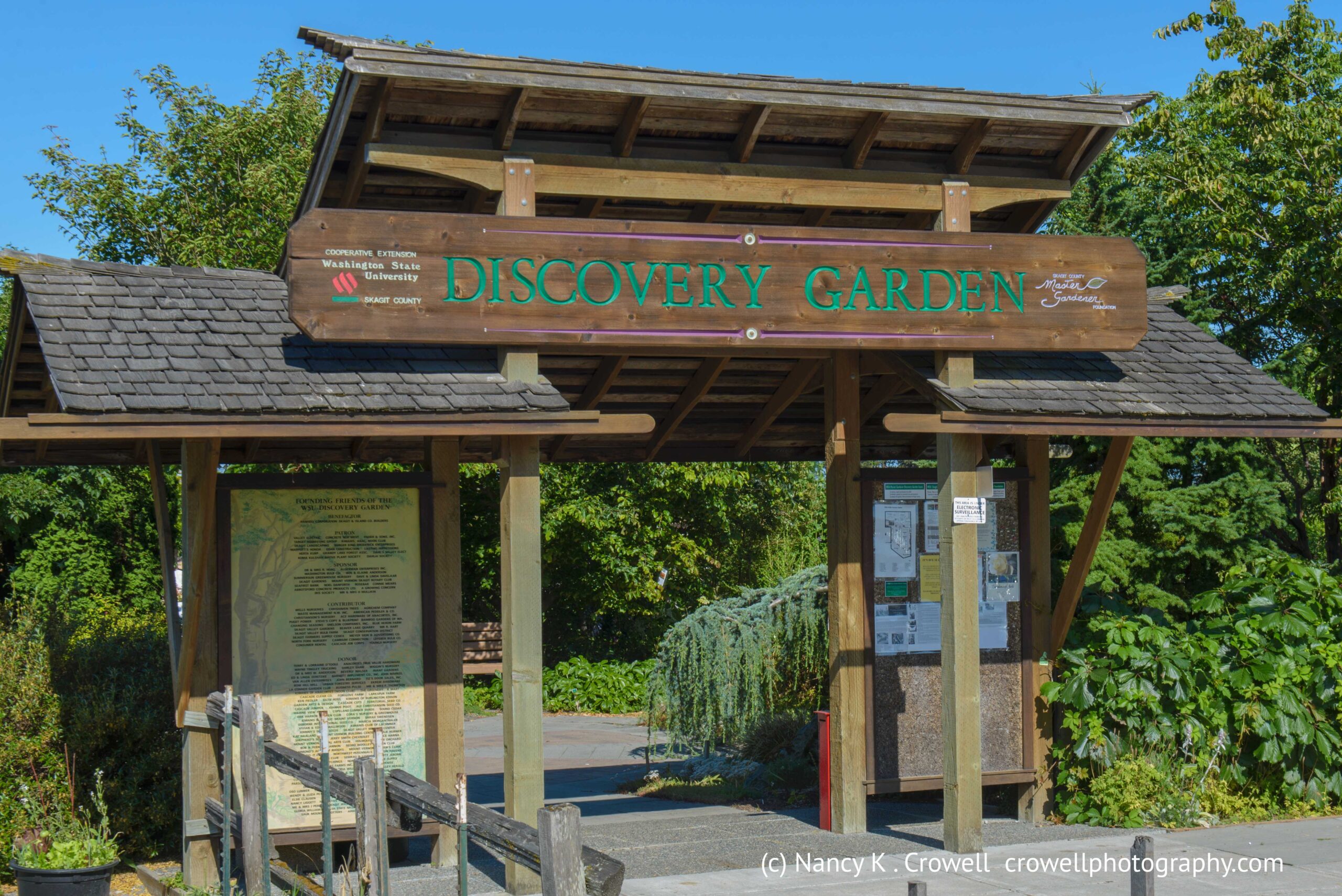
Skagit County Discovery Garden
Growing the Discovery Gardens since 1996
In 1994, the Skagit County WSU Extension Master Gardeners had a vision for a garden that would demonstrate best practices for gardening in the Skagit area. After two years of planning, the garden’s first structure of trees and fences was placed in the fall of 1996. Over the following two years, many committed WSU Extension Master gardeners, along with the help of the community, planted the gardens.
Skagit County WSU Extension
Master Gardener Discovery Garden
WSU Northwestern Washington Research & Extension Center
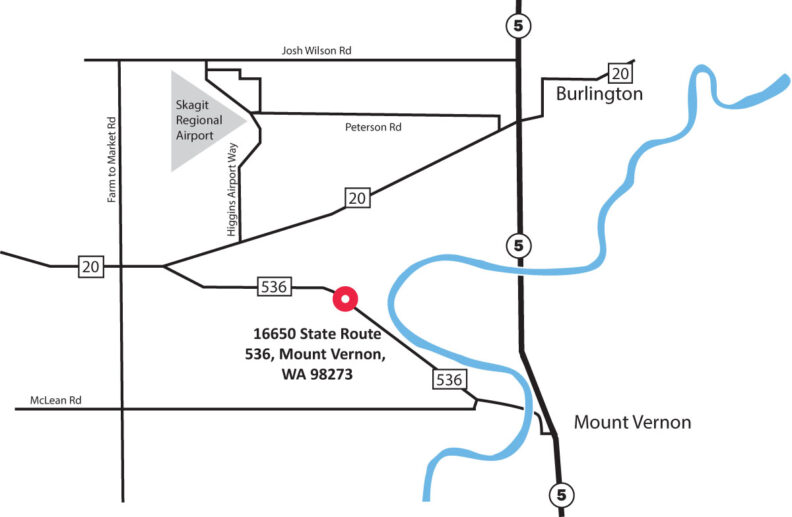
16602 State Route 536 (Memorial Hwy)
Mount Vernon, WA 98273
History of The Discovery Garden
- Design begins in 1994 to incorporates smaller, themed gardens into a larger garden.
- First donated trees, structures and fences are installed in 1996.
- Most of the smaller mini-gardens are completed by 1998.
- The garden (see map below) as it appears curently.
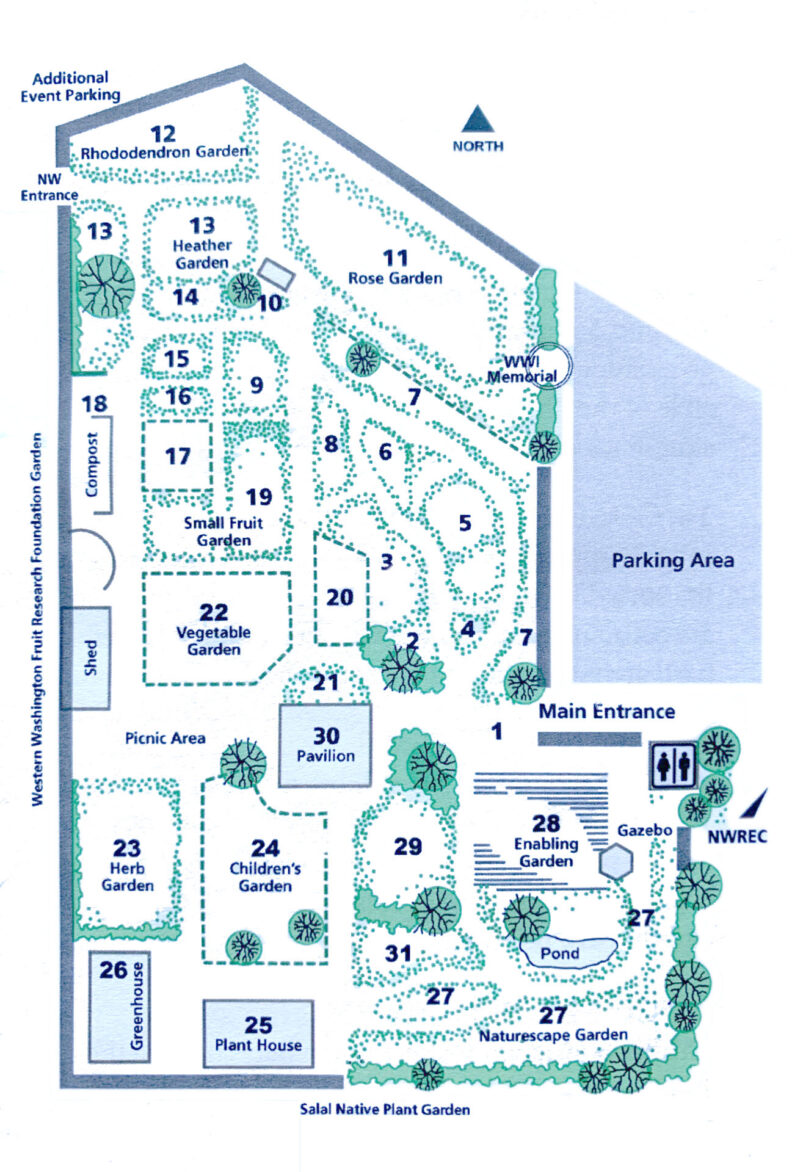
- ENTRANCE GARDEN The small gardens fronting the fountain and lining the path to the pavilion greet visitors with plants having year-round interest. Easy-care, layered plantings are chosen for the Pacific Northwest climate.
- SHADE GARDEN Does your garden have a “shady” personality? This garden suggests alternatives to sun-loving plants so that even a shady garden can bask in color, texture and smell.
- COOL COLOR BORDER Are you needing to feel cool and relaxed? This border creates a cool-feeling border by including plants with texture and shades of blue, green, purple, lavender, silver and white.
- POLLINATOR GARDEN The Pollinator Garden is planted with an assortment of both native and non-native shrubs and perennials. Plants chosen are known to be nectar and pollen sources for diversity of pollinators.
- JAPANESE GARDEN There are five distinct types of Japanese gardens: hill and pond, dry landscape, tea, courtyard and stroll. Ours is of the stroll design. Odd numbers of plants and stones are used in groupings and spaced unevenly. Dry rock beds symbolize rushing rivers; large rocks represent mountains. Not surprisingly, water features are an integral part of Japanese gardens.
- EASY CARE GARDEN Once their root systems are well established, plants in this garden require little maintenance. In the fall, we clean and mulch to add nutrients to the soil and keep weeds down. In the spring, a bit of weeding is needed, but by summer, the foliage is so dense that very few weeds appear. Watering can also be kept to a minimum except during periods of drought.
- FOUR SEASONS GARDEN Year-round interest with minimal care are key to maintaining this diverse mixed border garden. A rail fence, trees and shrubs form a backdrop for perennials, vines and biennials punctuated by running ground covers. Annuals and bulbs add a pop of seasonal color. Evergreens and foundation specimens anchor the garden’s silhouette.
- FALL and WINTER GARDEN Featured here are plants that perform from September to March. Fall-blooming perennials, bright berries and brilliant foliage give way to bare branches and beautiful bark. Evergreen foliage, winter blooms and early bulbs make way for the onset of spring.
- DOC’S ARBOR Richard “Doc” Hoag was one of the visionary master gardeners who planned and designed the Discovery Garden. Doc, who enjoyed growing grapes and making wine, is remembered with this grape arbor.
- ORNAMENTAL GRASS Grasses mingle well with perennials and shrubs. These selected varieties offer screening, provide texture or create a relaxing atmosphere. Grasses for different growing conditions provide many options to consider.
- ROSE GARDEN Master gardeners assumed care of this garden from the local rose society in spring 2006. The garden, also the site of the Skagit County WWI monument, is currently being renovated and re-designed.
- RHODODENDRON GARDEN Begun in 2007, this garden is designed to provide a harmonious space to view the wide variety of rhododendrons that can be grown in the Pacific Northwest climate.
- LLOYD EIGHME’S HEATHER GARDEN With year-round interest, something is in bloom every month in this garden. These varieties show growth patterns from ground covers to tree forms.
- IRIS GARDEN The iris plantings display different species and their bloom cycles from early spring throughout the winter. Rocks create “rooms” for companion plantings that provide interest while the irises are resting.
- GROUND COVERS Ground covers can be used to smother weeds, fill in areas under trees, stabilize hillsides, soften the edges of pathways and reduce evaporation. Showcased here are commonly available shade- and sun-tolerant plants.
- SUCCULENTS Hens and chicks, sedums and stonecrops are easy to grow and are hardy in this area. Available in a wide variety of textures, shapes, sizes and colors, succulents are drought tolerant and easy to propagate. They are low maintenance plants requiring well-drained soil and full sun for optimal growth.
- DIG-IT SCHOOL GARDEN Master gardeners host day-long field trips for Skagit County 2nd and 3rd graders. DIG-IT, one of six activities during the day, gives students hands-on gardening experience in the style of the Three Sisters garden—beans, corn and squash—a planting technique used by native cultures.
- COMPOSTING AREA Magic happens here! Throughout the growing season, the sorted and chipped prunings, browns and greens are combined and turned. Mother Nature does her part
- SMALL FRUITS Berries, Berries, Berries! Exhibited here are Heritage, Willamette and Blackcap raspberries along with three types of strawberries. Thornless boysenberries, triple crown blackberries, black and clove currants and rhubarb round out the other small fruits.
- COTTAGE GARDEN This somewhat whimsical garden dates back to the 1300s when space was limited around each home. Ornamental and edible varieties were commonly planted together to maximize every available inch.
- FUCHSIA GARDEN Originally planted by members of the North Cascade Fuchsia Society, all the varieties in this garden are hardy enough to survive Skagit County winters. Even in the shade of the pavilion, the garden blooms in beautiful colors from early summer until frost.
- VEGETABLE GARDEN Raised, no-till garden beds and easy access pathways are featured in this garden. Old favorites and new varieties are showcased in a home-style garden fit for our Pacific Northwest maritime climate. Techniques demonstrate maximizing micro-climates within the space, show various trellising styles and produce a wide range of vegetables and flowers in an attractive setting.
- HERB GARDEN Skagit Valley’s climate is perfect for herbs. The typical English herb garden’s structure, history, purpose and order have been interpreted for Northwest living. Different hedging materials surround the formal design creating a room-like feel with themed gardens informally planted within.
- CHILDREN’S GARDEN In this garden parents and children share the pleasure of gardening and find ideas for their own yards. The entry through a weeping mulberry is a perfect place to play hide-and-seek. Visitors enjoy a snack with Alice and the Queen of Hearts at the picnic table. A game of checkers, a splash in the water, or helming the boat are also possibilities. Kids of all sizes can exchange a book at the Children’s Garden Lending Library.
- PLANT HOUSE This is where master gardeners propagate and nurture perennial plants through-out the year for the Plant Fair each May.
- GREENHOUSE Master gardeners start seeds and take cuttings for new plants that are used in the Discovery Garden or sold at the Plant Fair. Public classes on plant propagation and seed starting are also held here.
- NATURESCAPE As the largest of the mini gardens, Nature scape is a quiet place to contemplate the natural surroundings. Perennial native and non-native plants attract numerous birds, butterflies, small mammals, amphibians and reptiles. A treed windbreak, meadow and pond accent the plantings.
- ENABLING GARDEN Concrete pavers simplify wheelchair and walker access to raised beds and espaliered trees. Benches are strategically placed for resting and contemplation. A display case illustrates correct body positions. Included in the case are ergonomic tools to promote gardening for those with limited strength, energy or physical abilities.
- JOE’S PLACE The large anchor at the entrance is in memory of Navy veteran, Joe Dupré, an early graduate of the Master Gardener Program. Some of Joe’s favorites plantings reside here—primroses, fuchsias, fig tree and ferns.
- THE PAVILION Master gardener work party lunches are held in this sheltered gathering place. The pavilion is also used for public educational activities, seminars and workshops.
WSU is an equal opportunity provider. If you need a reasonable accommodation or language access to participate in an event, please contact Alex duPont, Skagit County WSU Extension Master Gardener Program Coordinator, at alex.dupont@wsu.edu or (360) 395-2367 at least two weeks prior to the planned event. Language access services, such as interpretation or translation of vital information, will be provided free of charge to limited English proficient individuals upon request.