This page will cover the tools and methods used for processing sap into syrup at a commercial scale. The guidance on this page assumes a basic knowledge and experience with processing maple syrup. If you’re new to sugaring or want a refresher, visit the Sugaring Guide for Beginner’s and Hobbyists to get the basics.
If you’re interested in starting a commercial bigleaf maple sugaring operation and would like technical assistance, contact Patrick Shults (patrick.shults@wsu.edu).
The objective of processing sap into syrup is concentrating the sugar content to approximately 67% sugar (brix). The steps below include pre-concentration, reverse osmosis, evaporation and finishing, filtering, and bottling or storing.
Tanks
All tubing systems will empty into a large sap tank for processing. Even if you’re using buckets and bags, you’ll need to have a large tank to empty sap into to process commercial quantities of sap. Remember that bigleaf maple sap is lower in sugar content and 60-90 gallons of sap are needed to produce a gallon of syrup. As a result, producers in the Pacific Northwest require greater sap storing capabilities compared to producers in the eastern U.S.
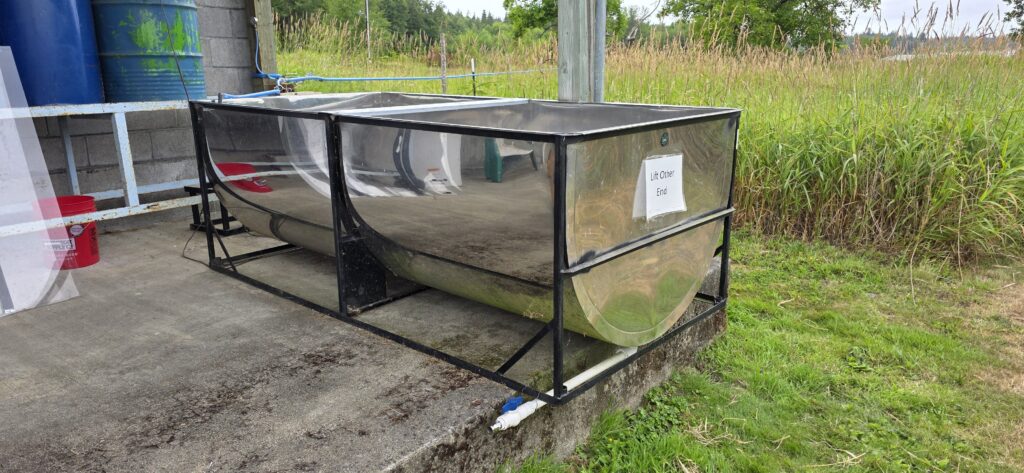
Any container intended to be used for storing sap should be food-grade. Stainless steel is the most popular choice because it’s easiest to keep clean, but some producers may use plastic because it’s cheaper and easily accessible. If using plastic, keep in mind that it will require more regular cleaning to avoid the build-up of a biofilm over time. Plastic containers should have a removable top that allow you to reach in and routinely clean, scrub, and drain. Maple syrup equipment suppliers sell plastic and steel tanks specifically designed for syrup collection. They can be costly to ship, but working with the supplier to fill the tank with other supplies you need (tubing, taps, etc.) will help cut down on overall costs.
Some local industries may be good sources for sap storage equipment. For instance, dairy farms may be a good source for stainless steel tanks, including refrigerated tanks. A refrigerated tank will keep the sap cool and avoid spoilage while it’s waiting to be processed. This can be particularly useful if your sap production outpaces your processing or conversely allowing you to save up small amounts of sap to process during weak runs.
Sap Treatments
Treating sap prior to concentrating can help reduce spoilage and sugar conversion, while greatly extending the shelf life of sap. These methods are relatively new and still being explored, but primarily consist of bead filters, UV treatment, or ultrafiltration that remove microorganisms. Oregon State University is currently researching how these methods can be utilized to address cleaning and maintenance needs and sap quality in the Pacific Northwest.
Testing Brix and Tracking Production
Testing brix in commercial operations uses the same equipment as discussed in the Sugaring Guide for Beginner’s and Hobbyists, including field refractometers, digital refractometers, and hydrometers. Knowing the sugar content of sap and tracking how it’s changing over the course of a season is more important in commercial operations because it will give you an idea of how much syrup to expect. It’s normal to have a certain amount of losses due to filtering and syrup remaining in the pan or sugar sands. For large, streamlined operations a loss rate of 5-10% is normal, but it can be higher for smaller operations with less efficient equipment. If after taking this into account you’re still not achieving the production you should based on the brix of the sap you’re collecting, that will alert you to inefficiencies in your system (producers call this “losing sugar”).
Sap to Syrup Ratio
The equation below is used to help tappers determine how many gallons of sap are needed to make one gallon of syrup.
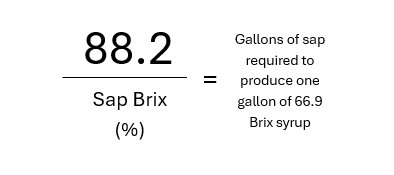
Subtle changes in sugar content can have big impacts on the sap to syrup ratio. For example, a small increase to from 1% to 1.2% sugar means 15 less gallons of sap are required to produce a gallon.
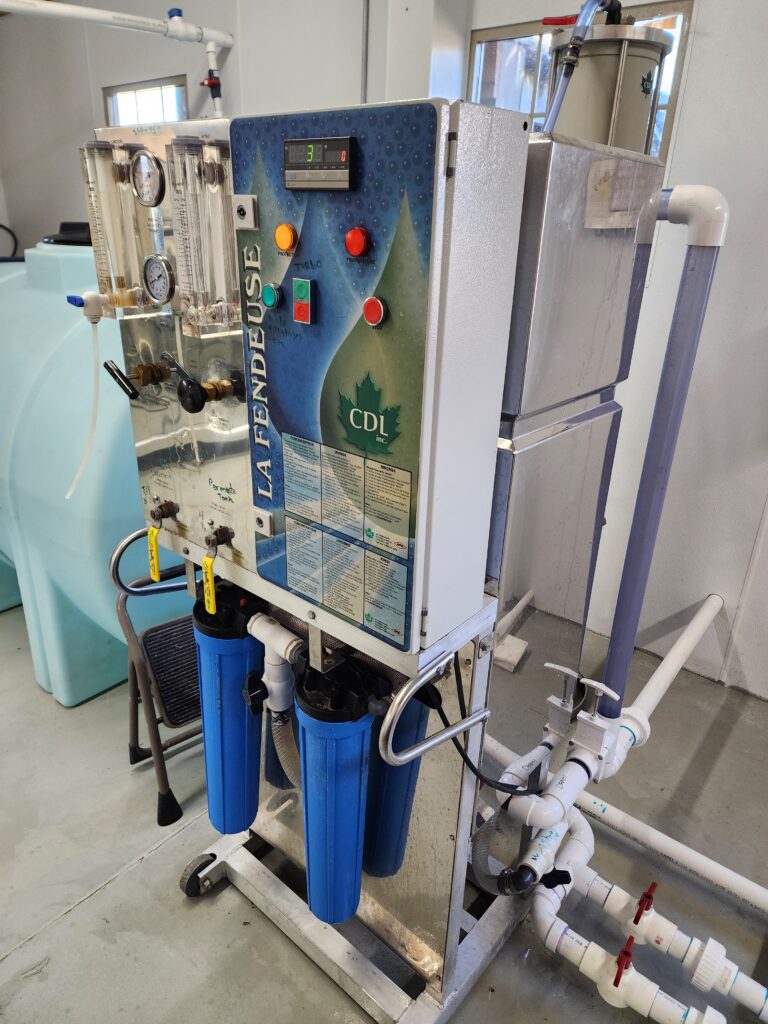
Reverse osmosis (RO) is critical technology for commercial producers in the Pacific Northwest, where we’re often processing twice the amount of sap to produce the same amount of maple syrup compared to producers in the eastern U.S. Reverse osmosis machines utilize high-pressure pumps and membranes with microscopic pores to concentrate the sugar content of sap without boiling. Commercial grade RO can remove more than 90% of the water, saving a massive amount of time and fuel. Any maple syrup maker considering commercial production will need RO to be viable.
RO machines come in many different sizes and capacities. As discussed in the Sugaring Guide for Beginner’s and Hobbyists, there are small-scale options for hobbyists and these may also be suitable for very small commercial operations. However, most commercial producers will require machines with more capacity, which is measured in the amount of gallons of sap that can be processed in an hour, keeping in mind that sap is typically run through RO at least three times to maximize the concentration between boiling. It could also be thought of as the amount of water being removed per hour, which would be 50% of the gallons processed (e.g., a 200GPH machine would remove 100 gallons of water per hour). The processing power required is based on the number of taps, expected sap production, and the amount of time you have available to process the sap multiple times.
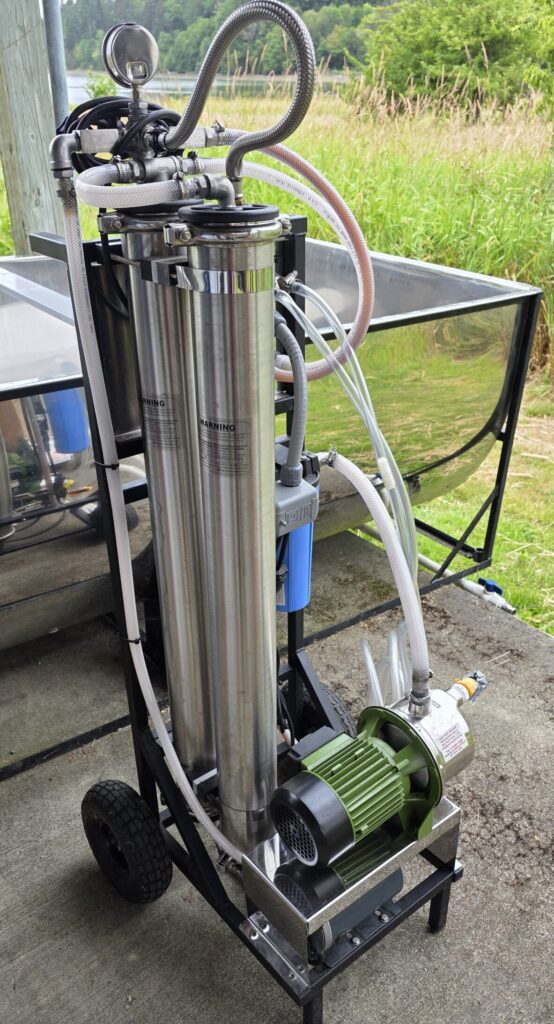
Reverse Osmosis Example
Imagine you have 400 taps on vacuum and anticipate a peak production of two gallons per day, it’s important you’re able to fully process at least 800 gallons in a day. Since the RO removes roughly 50% of the water on each pass, this means being able to process 800 gallons at 1 Brix, then 400 gallons at 2 Brix, and then 200 gallons at 4 Brix to to concentrate the sap to around 8 Brix. This removes a little less than 90% of the water. In total, this would be processing 1400 gallons during peak production. With an RO that can process 100 gallons an hour (GPH), you could do this in about 14 hours, allowing you to process all sap within one day.
| Number of Taps | Anticipated Max Daily Sap Production* | Minimum Recommended RO Processing Power (GPH)** |
|---|---|---|
| 250 | 500 gallons | 50 GPH |
| 500 | 1,000 gallons | 100 GPH |
| 1,000 | 2,000 gallons | 180 GPH |
**GPH – Gallons per hour
Fortunately, RO machines don’t require constant monitoring and can be started and allowed to run on their own while you go about other tasks like fixing vacuum leaks or managing the evaporator. They do, however, require somewhat frequent rinsing and periodic washing using specialized soaps. Maintenance will vary by machine but, generally, it’s recommended to rinse daily and clean with soap every few days to a week, or at the end of each sap run. Purified water is required to clean RO machines. Fortunately, they produce purified water (also called “permeate”) as a bi-product of sap concentration, so it’s recommended to keep as much permeate as possible. Plastic tanks are great, cost-effective options for storage.
Check your manufacturer’s instructions and be sure to follow their recommendations closely for maintenance during the season and off-season storage.
Important: RO machines are sensitive to temperature and cannot be left out during freezing conditions. Be sure to store them in a heated facility when not in use. Also, bleach can destroy RO membranes. So, be sure to not use any chlorinated water and rinse well after using any bleach for sanitation.
Boiling (or evaporating) is how we remove the remaining water in concentrated sap to reach 66-69% brix and be considered syrup. Remember that the reason this brix range is important is that, below this level, there is enough water to facilitate mold growth and, above it, the syrup can crystalize into sugar.
Evaporators
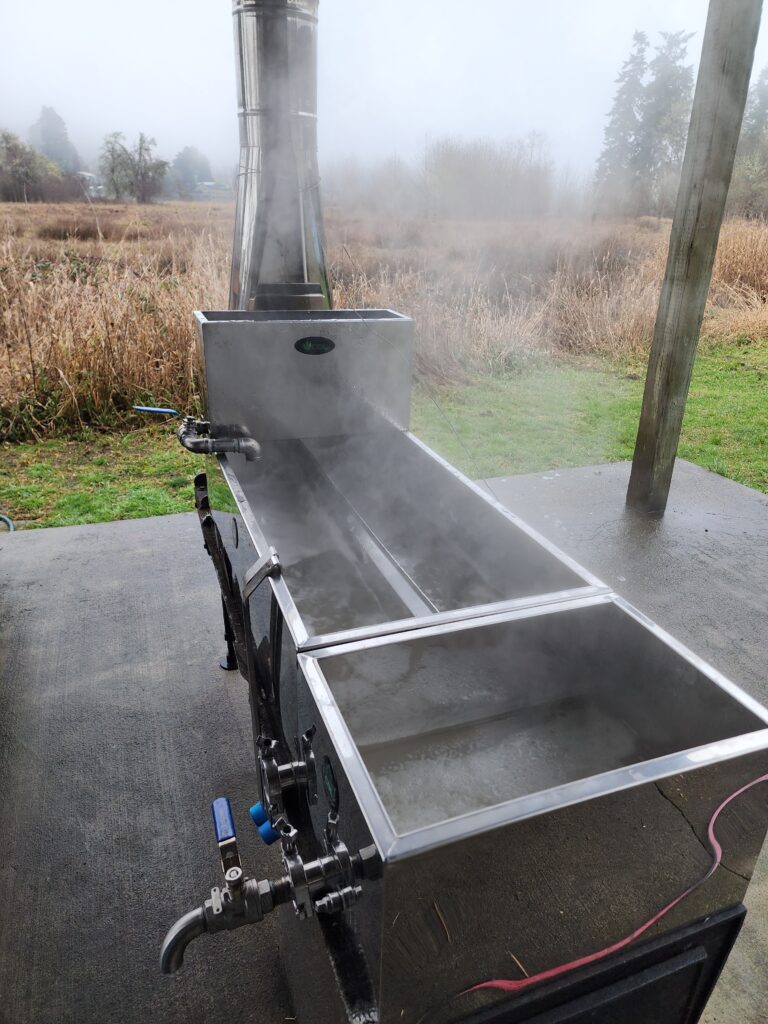
While hobbyists may get creative in how they complete the boiling process, commercial producers will largely rely on customized machines designed to efficiently boil sap, called evaporators. Evaporators are the heart of the sugar shack, and consist of an arch that houses the heat source and a pan, where the sap is boiled. Wood fire is common heat source, but propane is also feasible when the sap has been pre-concentrated with reverse osmosis. The evaporating pan is typically stainless steel and can incorporate multiple features that maximize the efficiency of the boil. Most producers pump concentrated sap into a smaller tank above their evaporator so that they can gravity-feed it while processing.
Sugaring evaporators come in many different sizes and include a variety of customizable features. They are typically rated based on the amount of water they can boil off in an hour. Below are some key considerations and features to have in mind when purchasing an evaporator:
- Pan size – Pan size is the first decision point when buying an evaporator. Smaller pans are lower cost but have less capacity and often a slower evaporation rate. A 12 inch by 20 inch pan can boil off 1-2 gallons per hour, while a 24 inch by 48 inch pan can boil off 10-15 gallons per hour, and suppliers make very large pans (>10 feet) that can boil off hundreds of gallons per hour.
- Fuel type – Fuel type is an important consideration as well. Wood heat is cheapest if you have access to firewood and can provide the labor to collect it, but propane is easier to control and may improve syrup quality. On the other hand, some people prefer syrup with a slightly “smoky” flavor that wood heat can provide.
- Divided pans – Evaporator pans may be divided into multiple sections to improve the boiling efficiency. This creates a sugar gradient where denser “pre-syrup” gathers on one side while fresh sap is added on the other end.
- Sap warming pan – A sap warming pan is a cheap and effective way to include the boiling efficiency. This pan sits on top of the boiling pan and stores a small amount of sap. The steam from the boil warms the sap before it’s added and prevents cold sap from being added and disrupting the boil.
- Drop flue – A drop flue is a pan design that has deep, downward extending channels at the bottom to maximizes the surface area exposed to heat and increase the boil efficiency.
- Float box – A float box is an analogue device that can be added to the side of an evaporator pan to maintain a consistent level of sap in the pan. As the water evaporates and the sap level reduces, the float falls and adds sap from the warming pan. A level of 1-2 inches is most efficient for boiling.
- Auto-draw off – This is a digital device that can be added at the draw off point of the pan to automatically take pre-syrup off once it hits a predetermined brix level. This allows you to draw off to a finishing pan and avoid burning syrup as it approaches 66% brix. This combined with a float box maintain consistent levels of sap and brix in the pan.
- Ventilation (“hood”) – If you’re evaporating inside of a sugar shack, an overhanging hood and ventilation system will be required to pump the steam out of the building.
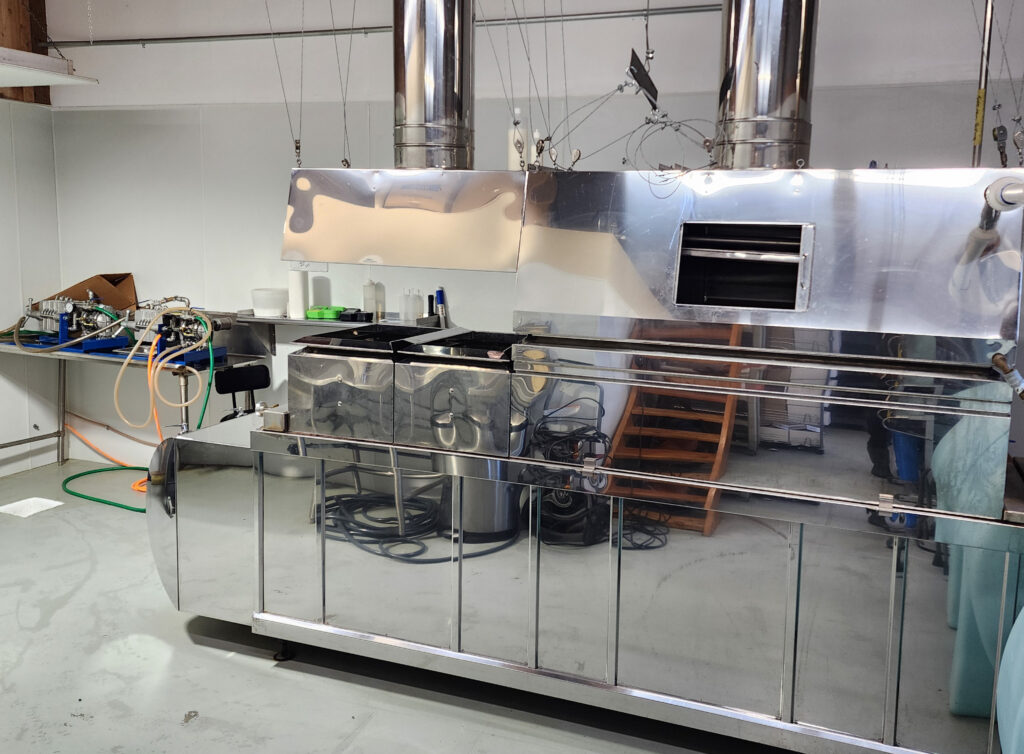
Everyone’s sugar shack will look a little different based on the site conditions, scale of the operation, and available resources. It may be a small barrel evaporator underneath a pop-up canopy that can boil off 10 gallons per hour, or an industrial 12′ evaporator in an indoor sugar shack boiling off hundreds of gallons per hour.
Currently, producers in the Pacific Northwest lack a local equipment supplier and have to ship evaporators and other equipment from the Midwest or Northeast. While this can be costly, the time and energy savings from using specialized evaporator over a homemade setup are usually well worth it. It is also possible to work with a local fabricator to design and produce an evaporator, but it may not result in any savings.
Finishing
Finishing syrup refers to the process of slowly bringing syrup to it’s final brix content of 66-69%. Many producers draw off “pre-syrup” from the evaporator at around 40-50% brix and finish it on a less intense heat (e.g., propane stove) to avoid burning and caramelization. This is particularly important on smaller, wood-fired evaporators that don’t have a way to reduce the pre-syrup’s exposure to intense heat, whereas larger, more expensive evaporators that run on propane or oil may feature a built in finishing pan.
Just as in hobby scale production, regularly testing the syrup at this stage is critical. The pre-syrup will concentrate more quickly as water continue to boils off and maintaining a low boil with regular testing will avoid overconcentrating. If you do over concentrate, you can always add in fresh sap or distilled water to dilute it back down (while still boiling). If you’re evaporator has a finishing pan and auto-draw off, you can complete the entire process on the evaporator while constantly testing brix. Otherwise, a digital refractometer or hydrometer, is recommended to test brix at this stage. However, keep in mind that the temperature of syrup will effect the brix reading (typically underestimating brix while hot), and allowing the syrup to cool before testing will give you a more accurate reading. A “Murphy Cup” is a type of hydrometer that compensates for the effect of temperature on brix readings, and is a favorite for hobbyist and commercial producers.
Filtering out sugar sands (also called “nitre”) is much more important when producing syrup commercially. As a refresher, sugar sands are minerals that precipitate during the boiling process. They’re harmless and safe to eat, but have a slight bitter taste and give syrup a cloudy appearance that is generally off putting to consumers. Filtering is done immediately after syrup is finished while it is still hot. While hobbyists can simply allow the sands to settle and pour off the syrup, this is inefficient for commercial operations and will result in significant losses. Specialized filtering equipment is available to make this easy and ensure that all or most of the sands are filtered out, while reducing the amount of syrup lost in the process.
There are a few different types of filtration equipment available to producers. At the low cost end, a cone filter can be a viable option for small scale production (e.g. 10-20 gallons). This is a series of cone-shaped polyester and wool filters that use gravity to push the syrup through the bottom of the cone. Stainless steel tanks and steam trays are available to help keep the syrup hot during this process. Cone filters are cheap and reusable but are also cumbersome and can increase losses by trapping syrup in the filter. A step up from a cone filter would be a steam filter/bottler. This is a square, stainless steel tank that filters syrup while also bringing it back up to a sufficient heat for bottling. Some filter/bottlers also feature a vacuum valve that allow you to connect a shop-vac and pull the syrup through the filter, resulting in less losses and a faster filtering process. At the high end, a commercial filter press is the fastest option with the least amount of syrup loss and will provide the highest clarity in the syrup. It forces warm syrup and diatomaceous earth under pressure through specialized paper filters, resulting in a clear syrup that is ready for bottling.
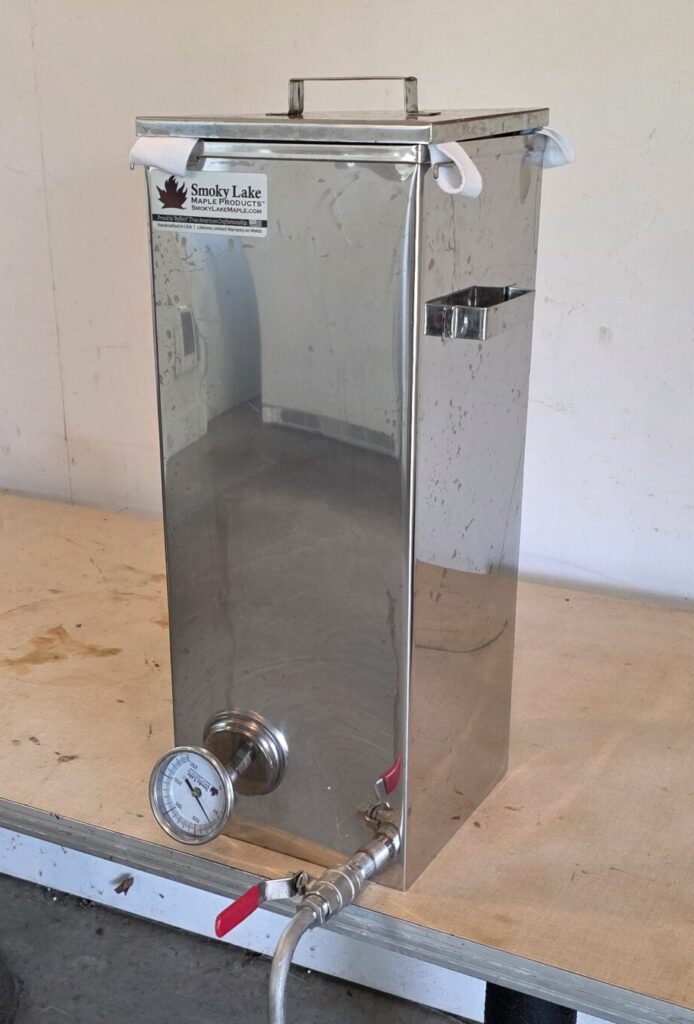
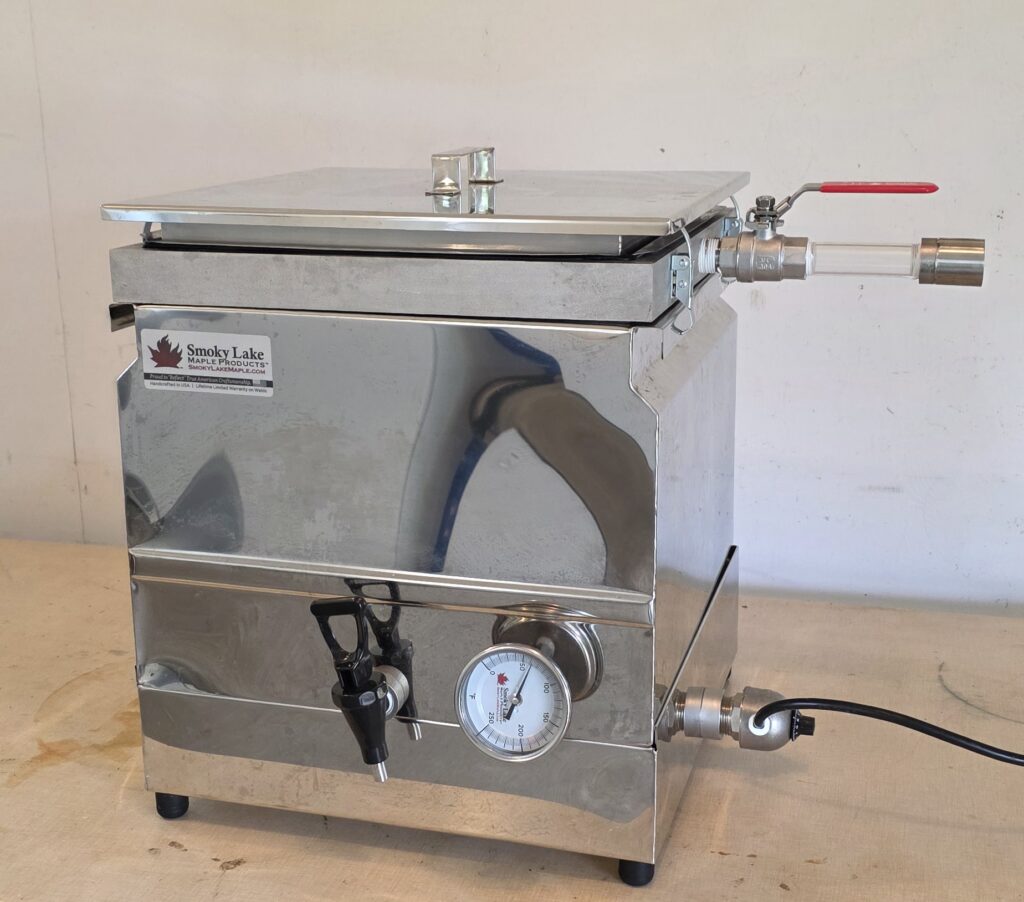
Bottling in commercial operations is largely done the same as in hobby scale set ups, with the exception that equipment like filter/bottlers streamline the process. Bottling, or “hot packing” as it’s called in sugaring, requires reheating the syrup after filtering to 185-190F, pouring it into a sterilized bottle, placing a cap on, and inverting the bottle upside down for approximately five minutes to sterilize the bottom of the lid. This will produce shelf-stable syrup ready for sale (after labelling). Glass is ideal for bottling, but food-grade, heat resistant plastic bottles can also be used. The shelf life for maple syrup in glass is five years, while plastic is two years – although some producers say it can last much longer for personal uses. Maple equipment suppliers provide a variety of bottles, but these can also be purchased from other (non-maple) food industry suppliers.
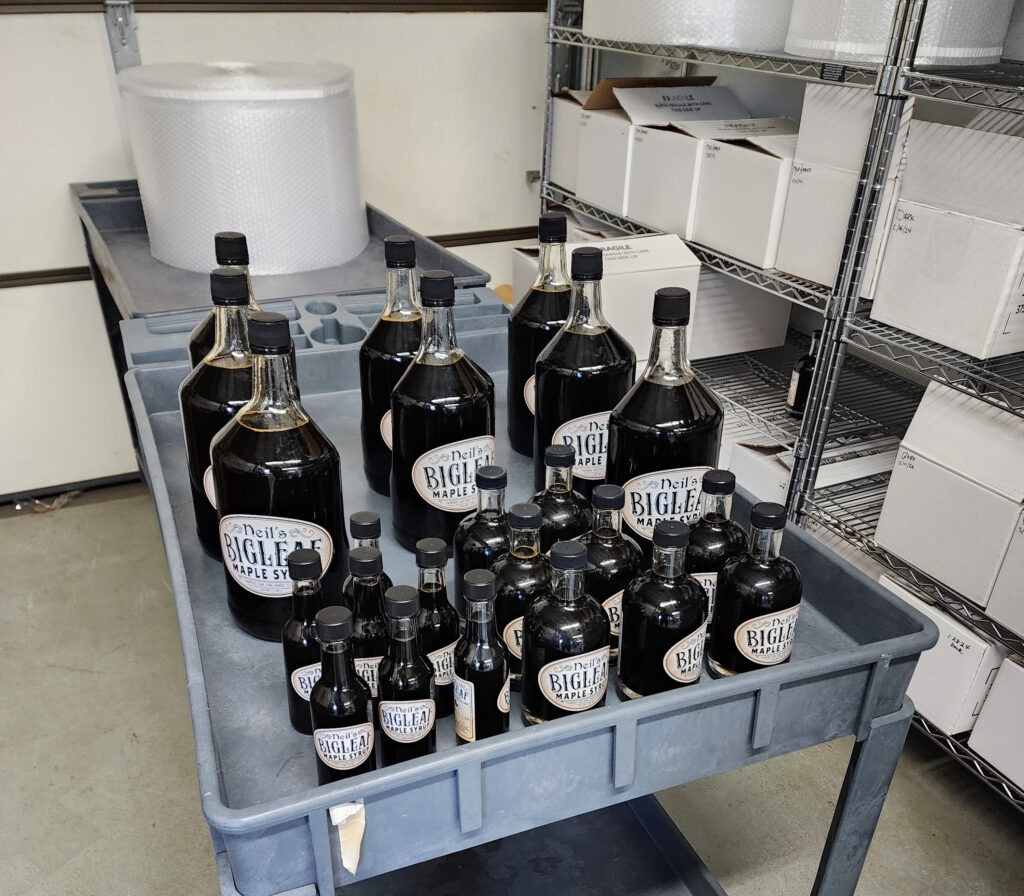
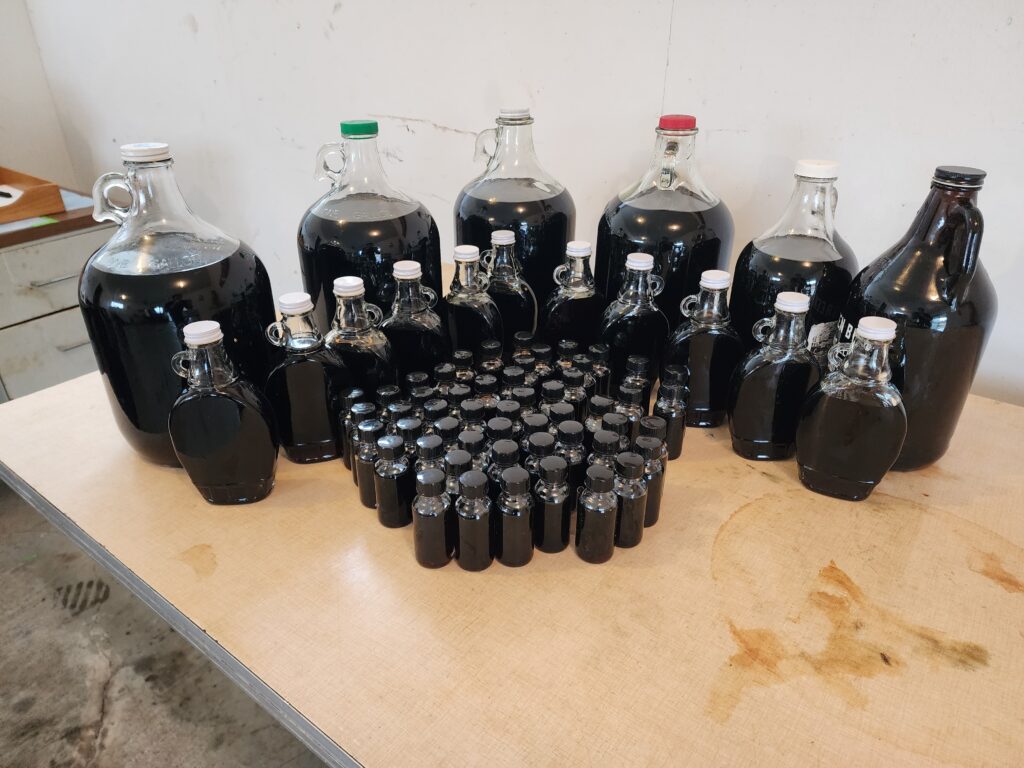
From a food safety perspective, maple syrup is considered very low risk. One obvious reason for this is that sugaring requires an intense “kill step” in the form of boiling, which kills any microorganisms that may be in the sap. A second, but equally important reason, is that the active water content in maple syrup (at 66-69% Brix) is too low to facilitate growth of mold or bacteria. When hot packed at a sufficient temperature (185-190F), maple syrup can remain shelf stable for several years without risk of spoiling.
That said, it’s still important to take the proper food safety precautions to ensure that no contaminants enter the syrup, especially during bottling, which should be done in a covered, walled facility. Other activities and precautions, like cleaning tubing systems and equipment regularly, covering sap tanks, covering the evaporator (e.g. pop-up canopy) if outdoors, washing hands regularly, sanitizing working surfaces, and keeping a tidy sugar shack will ensure a safe food product and improve the quality of your syrup.
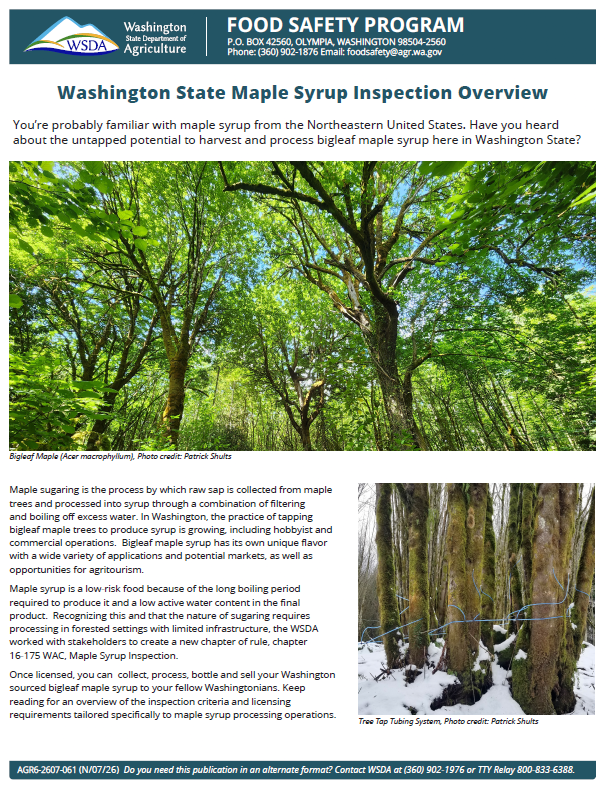
Selling maple syrup within the state of Washington State requires an inspection by the Washington State Department of Agriculture (WSDA) to achieve a Maple Syrup Food Processor License. Recognizing that maple syrup is a low-risk food product, the WSDA developed separate inspection guidelines in 2026 that reflect the fact that syrup is often produced on remote properties with limited infrastructure and facilities. The updated inspection guidelines allow for temporary or rustic infrastructure, use of portable toilets, and hauling in potable water.
To view the requirements and inspection criteria read the Washington State Maple Syrup Inspection Overview (PDF). Read the requirements carefully and work with an inspector to ensure that you are meeting code. To learn more or apply for the Maple Syrup Food Processor License, visit the WSDA’s Food Processors webpage.
Interstate sales are regulated by federal agencies such as the USDA and FDA. To sell out of state, you must follow all state requirements as well as FDA regulations for food businesses and USDA maple syrup grading standards (including labelling requirements), as well as the delivery state’s regulations. Currently, the vast majority of the market for bigleaf maple syrup is local, so new producers are not likely to need to consider interstate commerce right away, but may consider it if/when their operation grows.
At the end of the day, we’re harvesting sugar from trees, and sugar is a very versatile substance. The biggest market for maple-based sugar products is in syrup, but there are many other possible food products that can be developed and marketed. For example, you can boil more water out of maple syrup to make cream or crystal sugar. It can be used as a back sweetener for beer, liquor, or other fermented beverages, or used in the fermenting process itself. Some people partially concentrate it to 2-4 Brix and drink it as a semi-sweet beverage, which can also be carbonated to produce a seltzer. It can be incorporated into baked goods and sweets, sauces and marinades, or as a coating (e.g. maple-coated nuts). Bigleaf maple sugar is particularly versatile because of it’s bold and unique flavor, making a little go a long way.
Keep in mind that, aside from syrup and raw maple sugar, most other maple-based food products will require additional processing and have a higher active water content in the finished product, both of which will incur different regulations and often more intense state and federal requirements for food processing facilities, sales, and shipping. If you have a Food Processing License in Washington State, this covers several different types of foods, but be sure to work with your inspector to be sure you’re following all of the standards for any new food product you intend to develop.