The second class in the WSU Kitsap Extension agritourism series took place on Bainbridge Island at Bluetree Farm and Forest. The focus was Value-Added Products and On-Farm Experiences. Participants began the class in the shade of the patio, in the same spot where farmer Stephanie Leong hosts seasonal farm to table dinners. She began the class speaking about these dinners and other ways she diversifies the income streams of her farm. This gives her flexibility and less dependency on making her entire income during the busy months of the growing season.
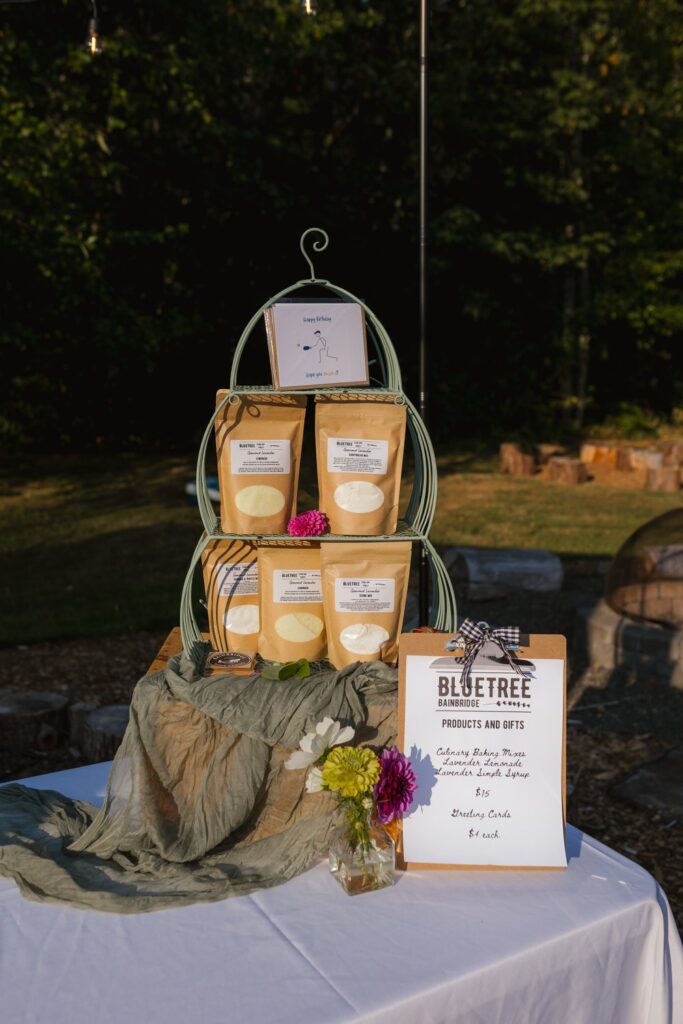
The value-added products that Stephanie sells are scented or flavored with lavender, including body butter, cold-pressed soap, loose culinary buds, and baking mixes. There are different regulations and laws to follow according to what’s being sold on the farm, whether it’s an event or an edible product or a bar of soap.
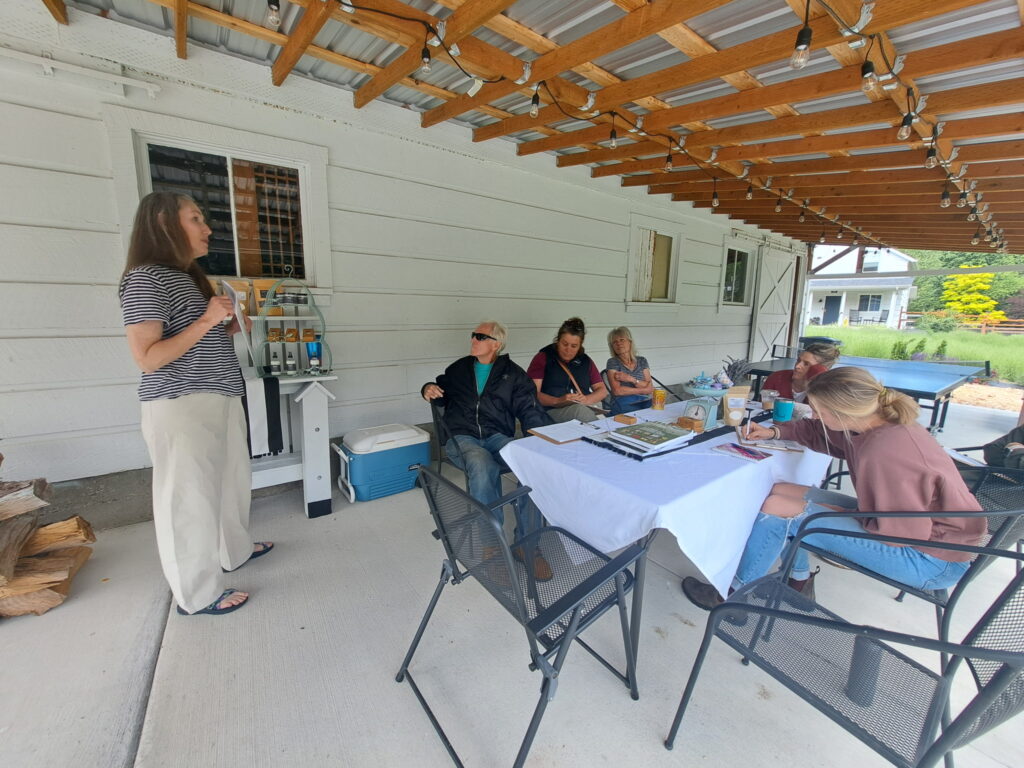
Copies for the WSDA Green Book were passed around, a great resource for checking state regulations. Stephanie shared her own experiences with regulations. For instance, since she doesn’t have a commercial kitchen, she is working with a local caterer who will cook the meals for the farm to table dinners. This collaboration allows Blue Tree Farm and Forest to still host events and have an income stream and at the same time provide income for another small, local business.
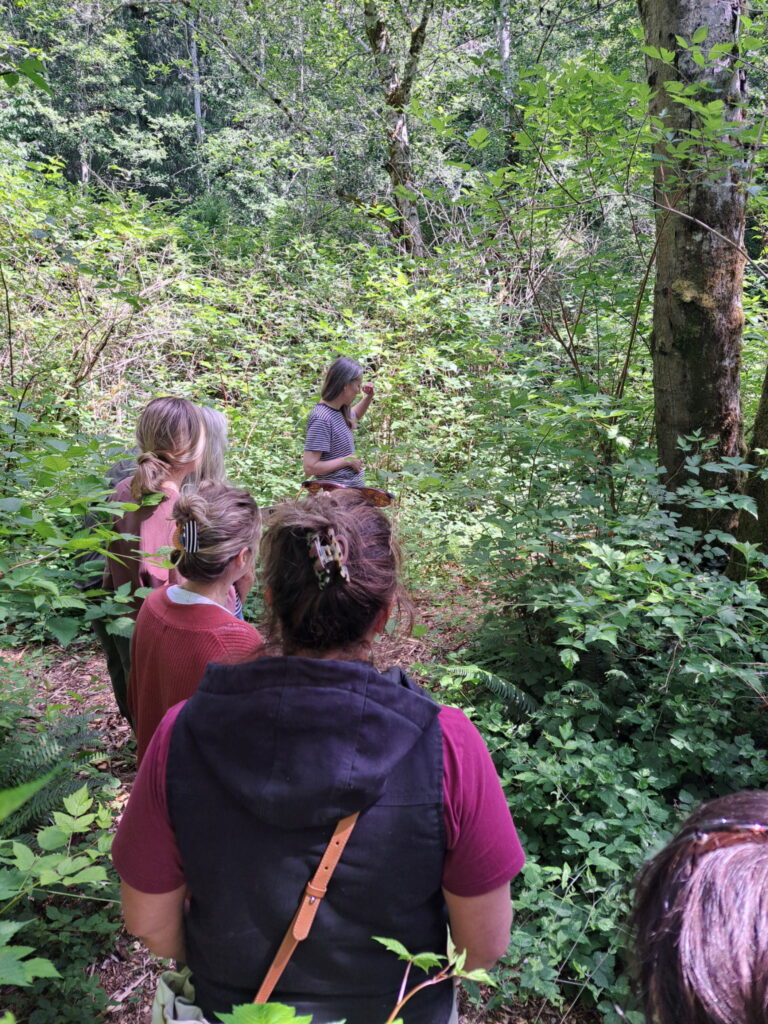
The class then walked the farm property, following a walking path to a patio and a massive big leaf maple, both of which extend the farm’s event space. The tour wound it’s way into the native food forest, following the well-maintained paths. Salmonberries were in abundance and grew lushly along the trail, intermixed with Indian plum, elderberry, Pacific and evergreen huckleberry, and thimbleberry. Robins and white-crowned sparrows called out as they flitted between the branches of the understory. Visitors to the farm will be accompanied by an audio tour that Stephanie is currently designing with her children, to be easily accessed on customers’ phones.
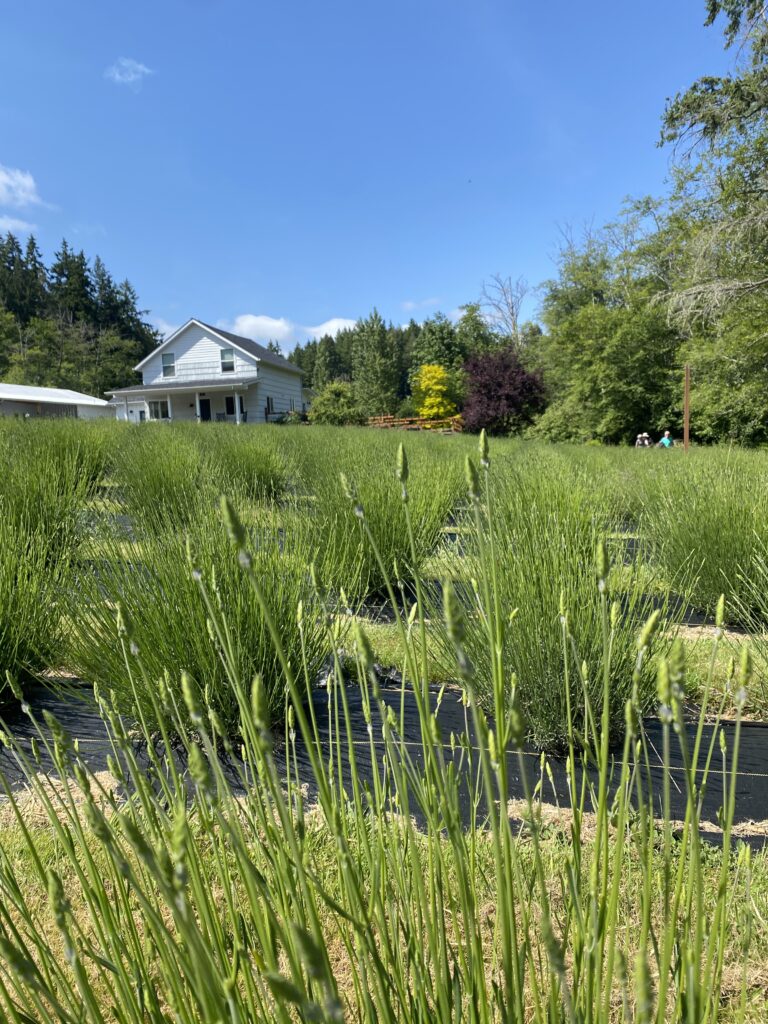
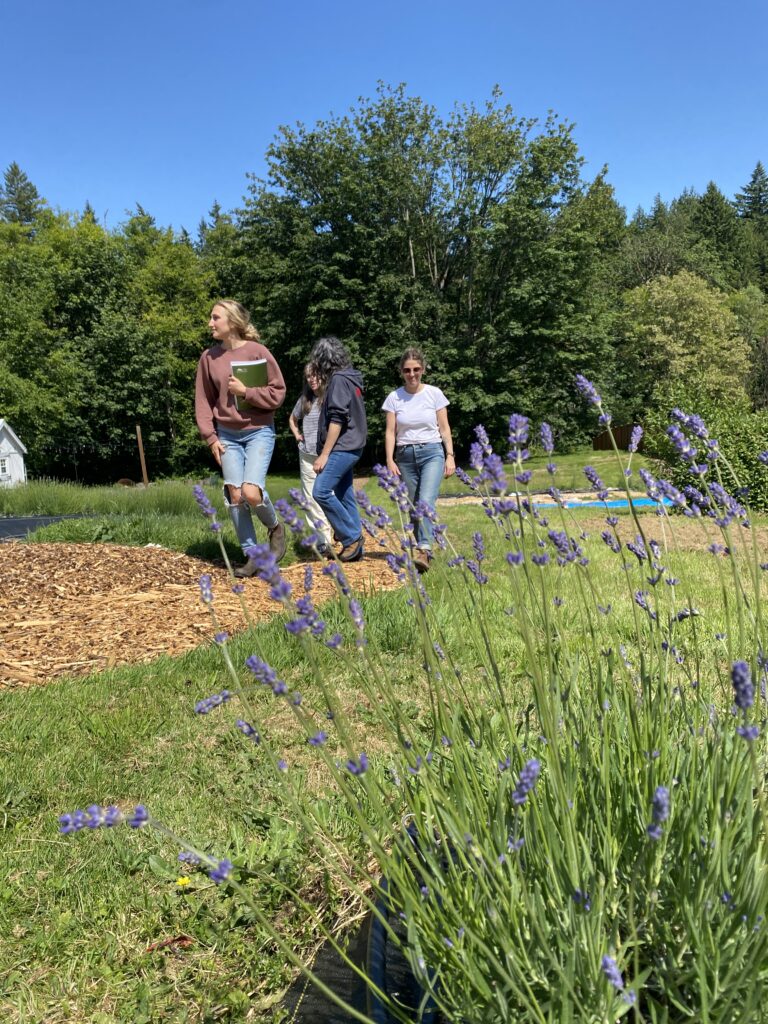
The tour ended in the lavender fields. While some of the plants hadn’t yet blossomed, the culinary lavender plants were in full bloom and buzzing with bees, some who came from the farm’s apiary. The class was a helpful example to participants in how farm business can be spread out across the year to make income more balanced: from walking tours and seasonal dinners to value-added products that are shelf-stable and can be created and sold while the plants are dormant.
If you are seeking assistance understanding regional and state regulations for your farm agritourism business, please reach out through our Farmer Technical Assistance Program. To stay up-to-date on the last agritourism class in September and on all other farm classes and workshops, sign up for the Regional Small Farms newsletter.