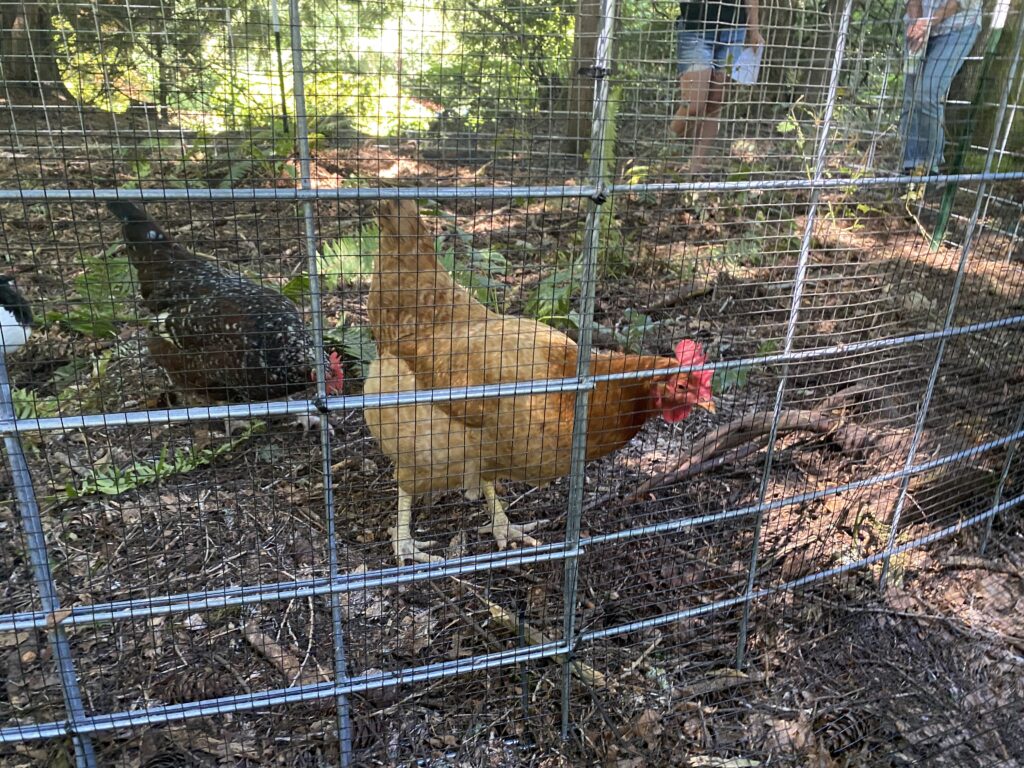
The latest iteration of Living on the Land Workshops occurred at Happy Grounds Farm and Sanctuary on the border of Poulsbo and Silverdale. The subject was raising chickens. While there were many fresh faces, several attendees had come to the previous class on chicken keeping, showing that even when the subject is the same, there’s value in learning from different farmers in different settings. The same goes for experience levels; some participants had been raising chickens for decades and yet they still walked away with new knowledge.
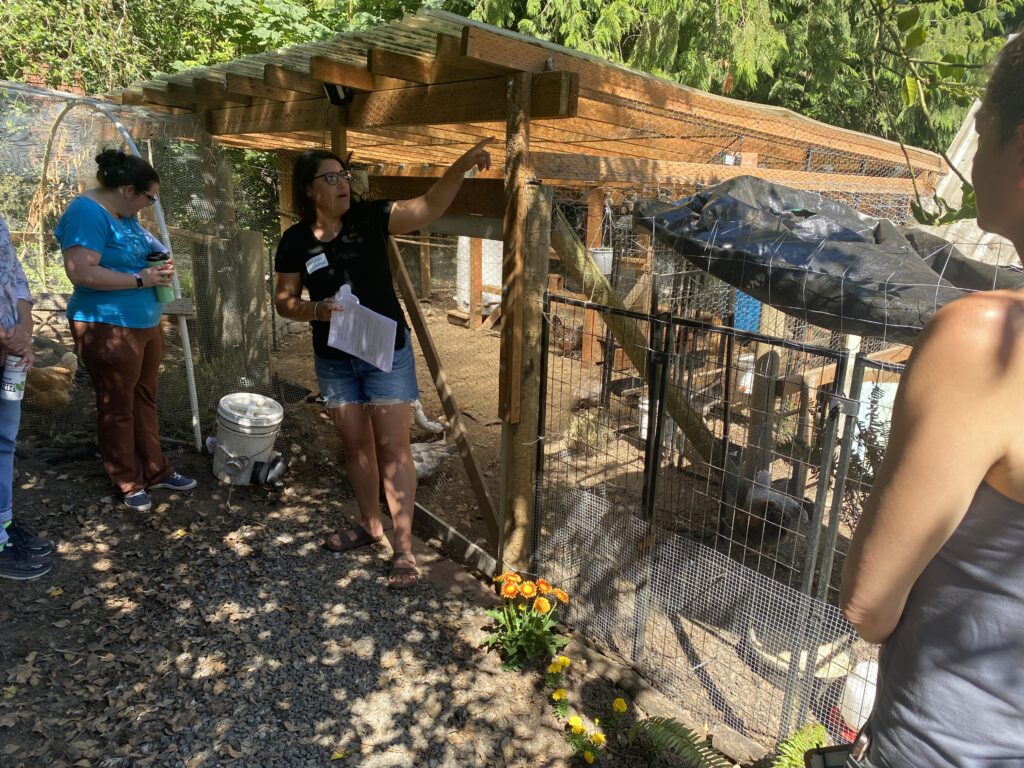
The format of the class was based around sharing experiences, stories, and knowledge. Happy Grounds is owned by Karissa and Geno Holcombe. Karissa was the teacher and she encouraged people to jump in if they had a question or heard something that related to their own experiences with raising chickens. This resulted in lively discussions about whether cedar chips were appropriate bedding for chickens (cedar oil can be harmful to poultry, especially to chicks) and if chickens can be completely free-range (it depends on location and whether local predators have discovered the flock). An all-time favorite tip from the class was how the Holcombes reduce bedding costs in their nighttime coops: they lay down straw and on top of this lay down a sheet of erosion control blanket. This allows the chickens to peck and scratch, but keeps the straw from immediately being kicked out of the coop.
The Holcombes raise chickens as rescues instead of for commercial profit. This means their chickens come from a wide variety of backgrounds, including a rooster from a cock-fighting operation. Since there are often new additions to their flock, they have a quarantine area as a biosecurity measure. This was the result of a lesson learned the hard way. In the past, they integrated newcomers immediately. Then one day they brought in a few new chickens who unbeknownst to them had mites. They subsequently infested the entire flock and it took over six months of rigorous treatment and cleaning to eradicate the infestation.
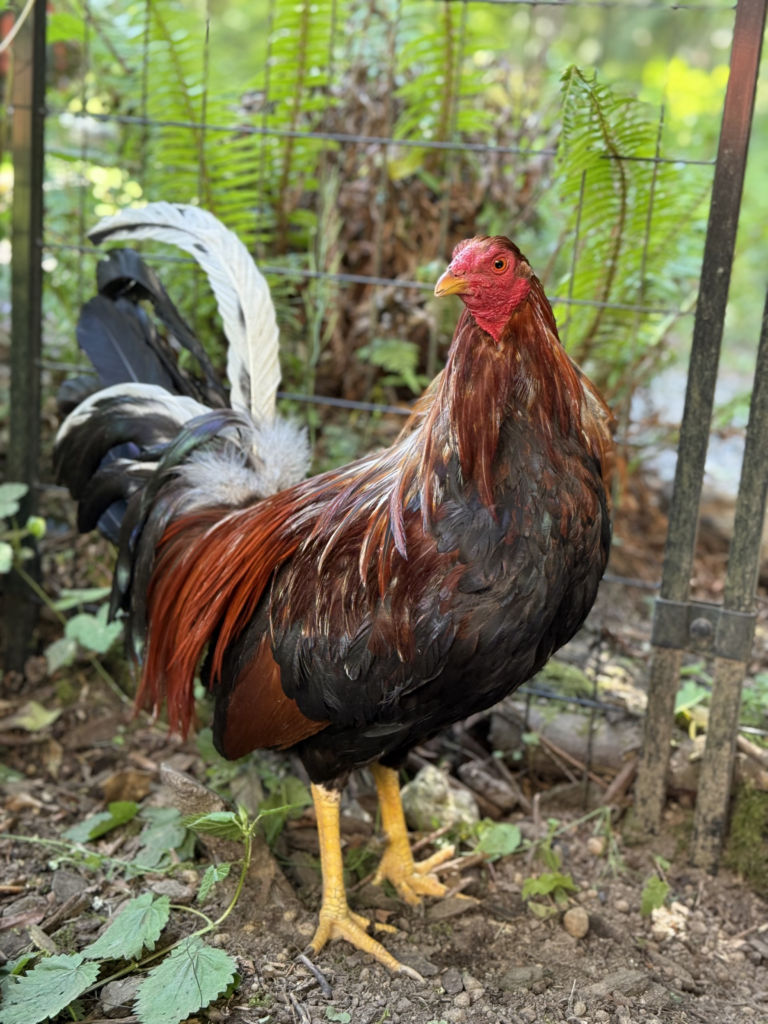
Their farm also has an area where new chickens are separated from the main flock but close enough to see each other and talk. When it comes time to integrate them, the familiarity between the new and old chickens reduces fights amongst the various members of the flock who are trying to determine pecking order. In this way they were able to integrate the former cock-fighting rooster named Carlos. Though the Holcombes were initially nervous about Carlos, he only got into two minor scuffles once he was allowed into the main chicken coop. Before his life on the farm, Carlos lived in a cage and his only interaction with other chickens was when fighting. Now he struts around proudly with his hens, working hard to protect them from predators.
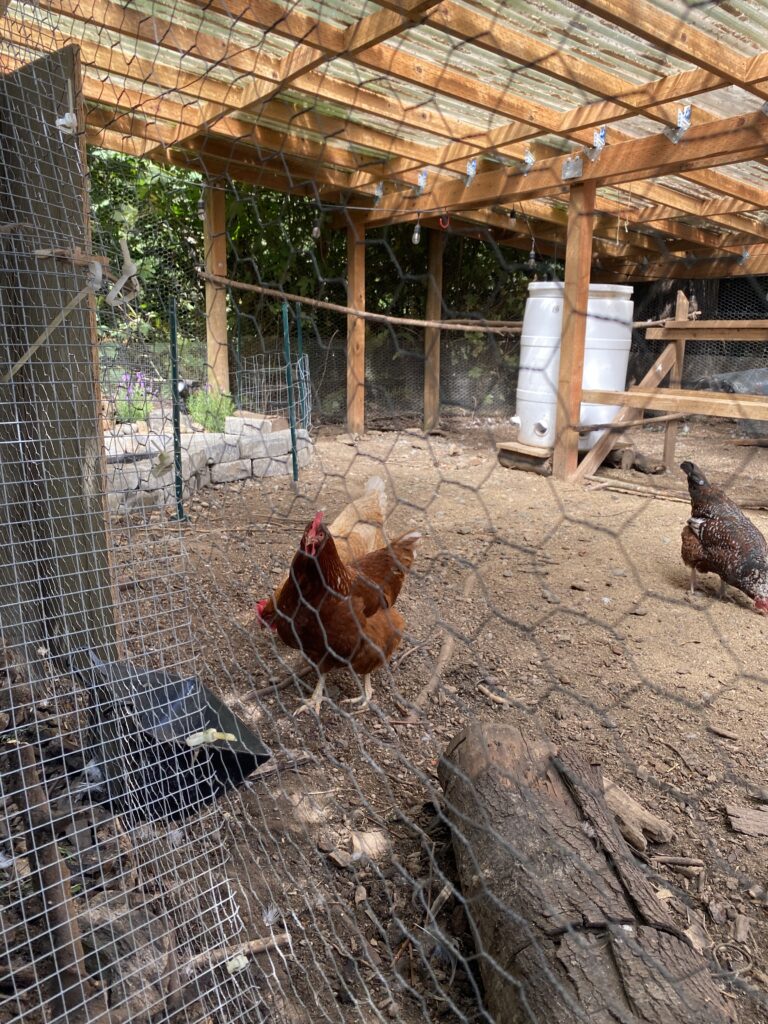
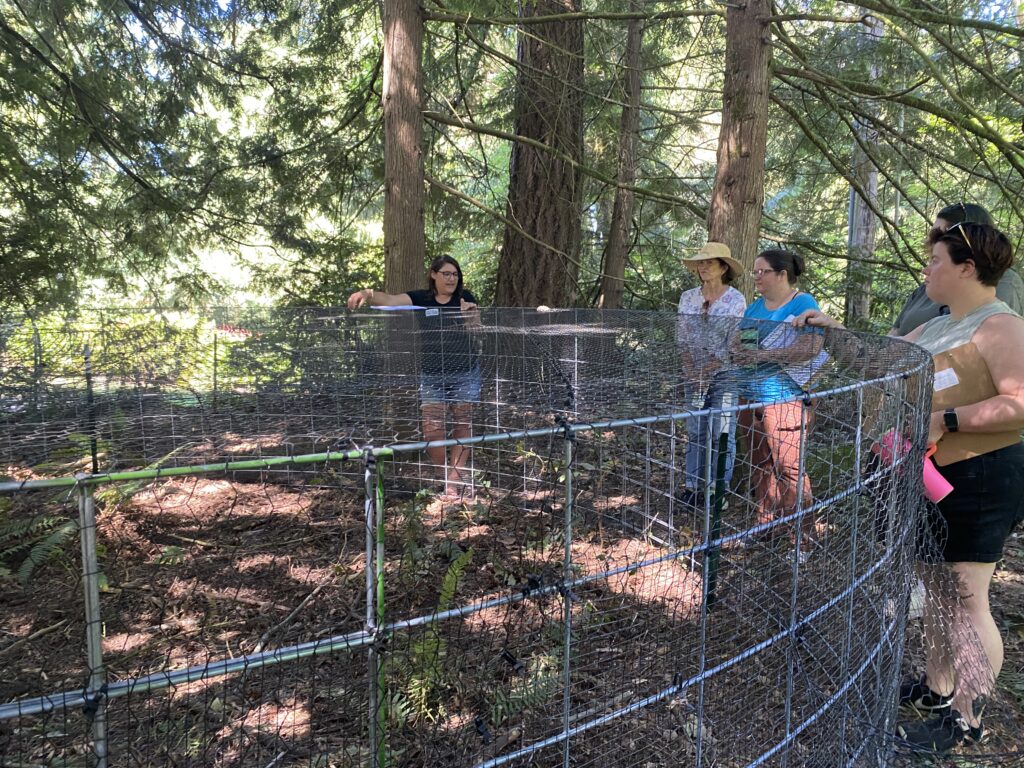
Predator control has been another hard lesson for the Holcombes. Once the eagles, hawks and raccoons learned where their flock was, the farmers realized the only time their chickens could be loose was when the family was outside with them. Raccoons are especially brazen and will steal fowl in broad daylight. This has led to creative constructions of semi-mobile chicken coops that allow the flock to explore while staying safe. They classify their various coops into three categories: low cost, medium cost, and high cost. Trial and error has allowed them to fine-tune their setup; they now rely heavily on cattle panels and hardware cloth to construct relatively low-cost coops. The bottom half of the coops are also lined with a finer mesh wire, preventing roving raccoon paws from grasping unsuspecting chickens. They bury the wire several inches below the soil so predators can’t access the coops by digging.
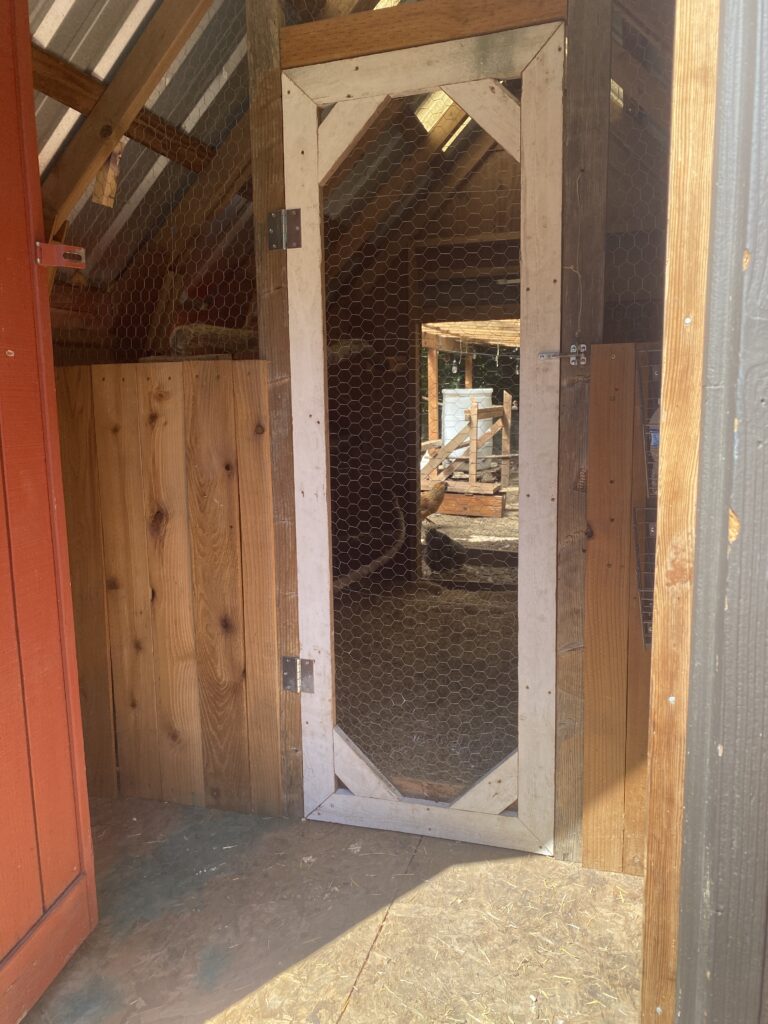
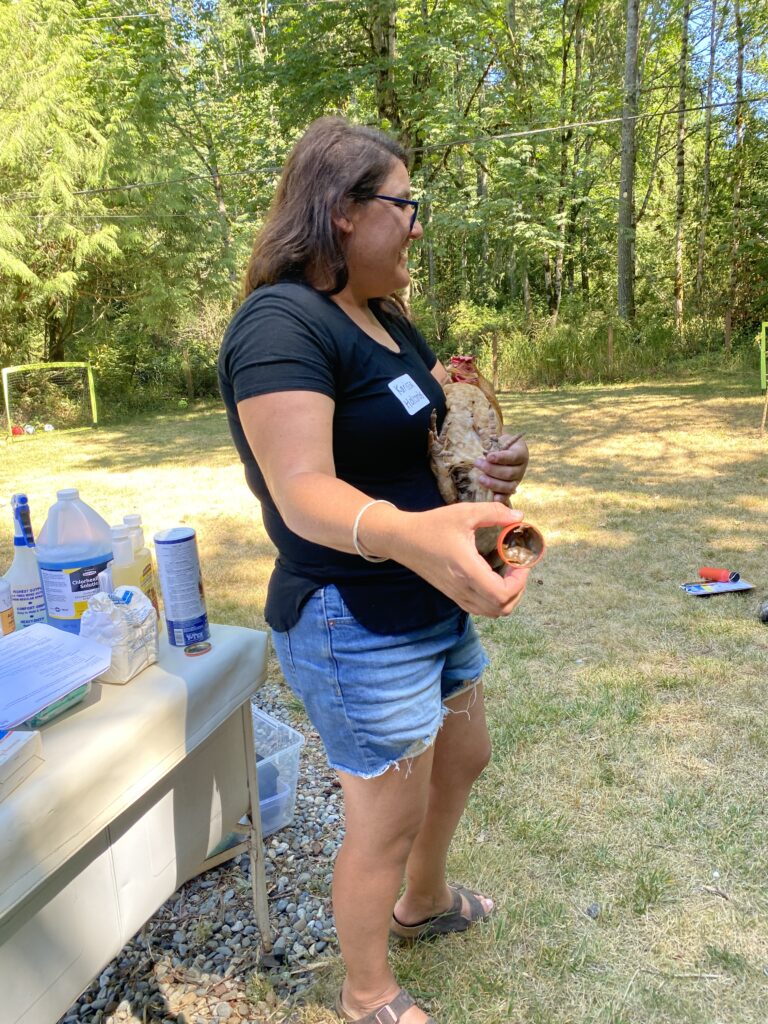
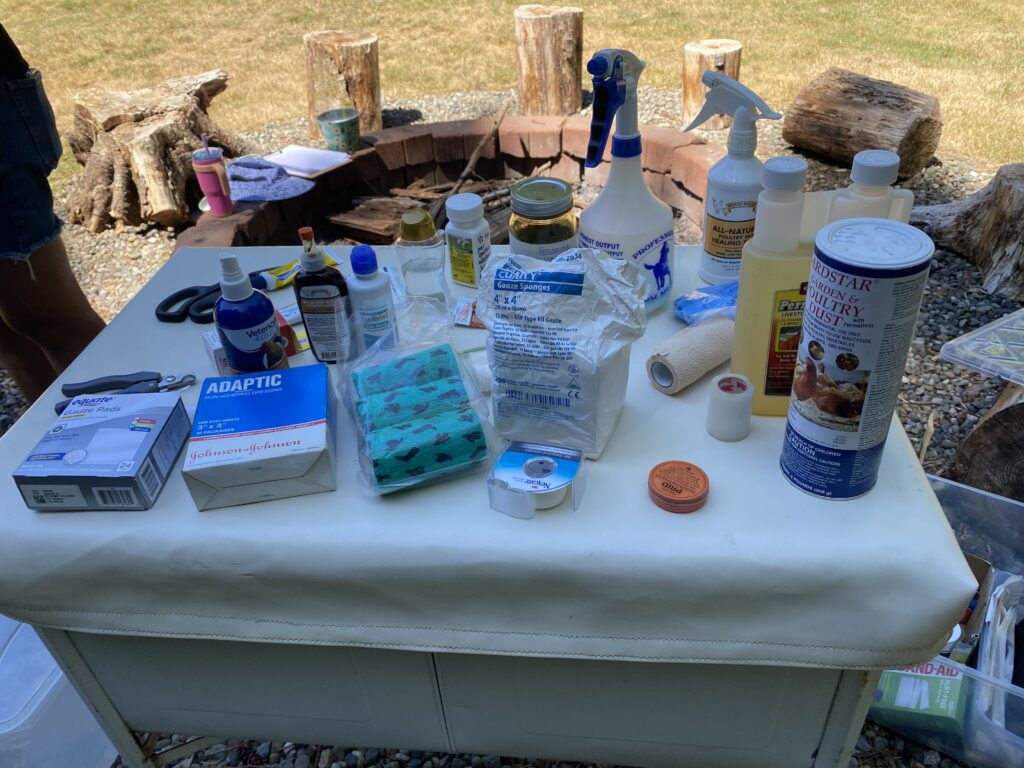
The class ended with Karissa showing the contents of her chicken first aid kit. They keep this in a readily accessible bin; when emergencies arise in their flock, they can respond quickly. Though there are a few vets in the area that treat poultry, the bill can be steep and there is often at least a few days’ wait. Over the years, the Holcombes have treated prolapses, bound eggs, broken legs and a variety of injuries and infections. Though they sometimes are unable to save their birds, they do what they can to continue educating themselves in chicken care. This allows them improve their chickens’ quality of life and provide them with the dignity they deserve, as well as share the lessons they’ve learned with local farmers and chicken caretakers.
For additional resources in raising chickens and caring for them, please see the following links:
Beginners Guide to Raising Chickens, North Dakota State University
A brief, simple guide to everything you need to know before first acquiring chicks.
Poultry Resources for Small Farms, Oregon State University
A collection of articles concerning raising poultry, including properly raising chicks.
Poultry Resources, Peninsula Poultry Breeders
Though the organization is no longer active, the webpage for this local group is still maintained and this includes their poultry resource page, which contains a wealth of information for chicken keeping in our region.
American Pastured Poultry Producers Association
Contains an expansive selection of resources for anyone raising chickens on pasture, from large scale producers to those raising chickens on a small or non-commercial scale.
A YouTube channel and podcast hosted by three poultry producers with a combined 70 years experience in raising poultry.
WSU Extension resources
Webpage with a few poultry resources, including cage designs for mobile chicken tractors.
Chicken Keeping 101, WSU Regional Small Farms
YouTube webinar. Explains the basics of keeping chickens, including information for small producers.
If you’d like to stay up-to-date on the latest Living on the Land Workshops, check the homepage and sign up for the Regional Small Farms Newsletter, which sends out a monthly digest of local events and information relevant to farmers as well as emails about upcoming educational opportunities.
WSU Extension programs and employment are available to all without discrimination. Evidence of noncompliance may be reported through your local WSU Extension office.