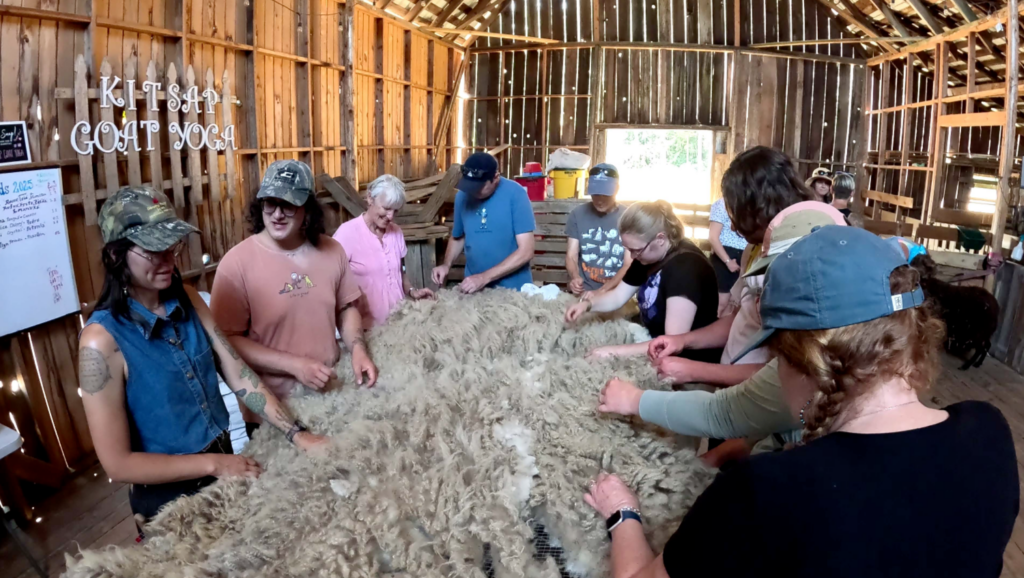
Shearing is an annual event most shepherds are familiar with. Some farmers raise hair sheep, which don’t need to be sheared because they shed their coats naturally. Some farmers raise sheep that need to be sheared twice a year, in the spring and fall. Some farmers raise Angora goats, llamas or alpacas, so they too must become acquainted with their local shearer. When shearing day arrived at Sage & Willow Farm in Poulsbo, the public were invited to witness the event and learn about the process.
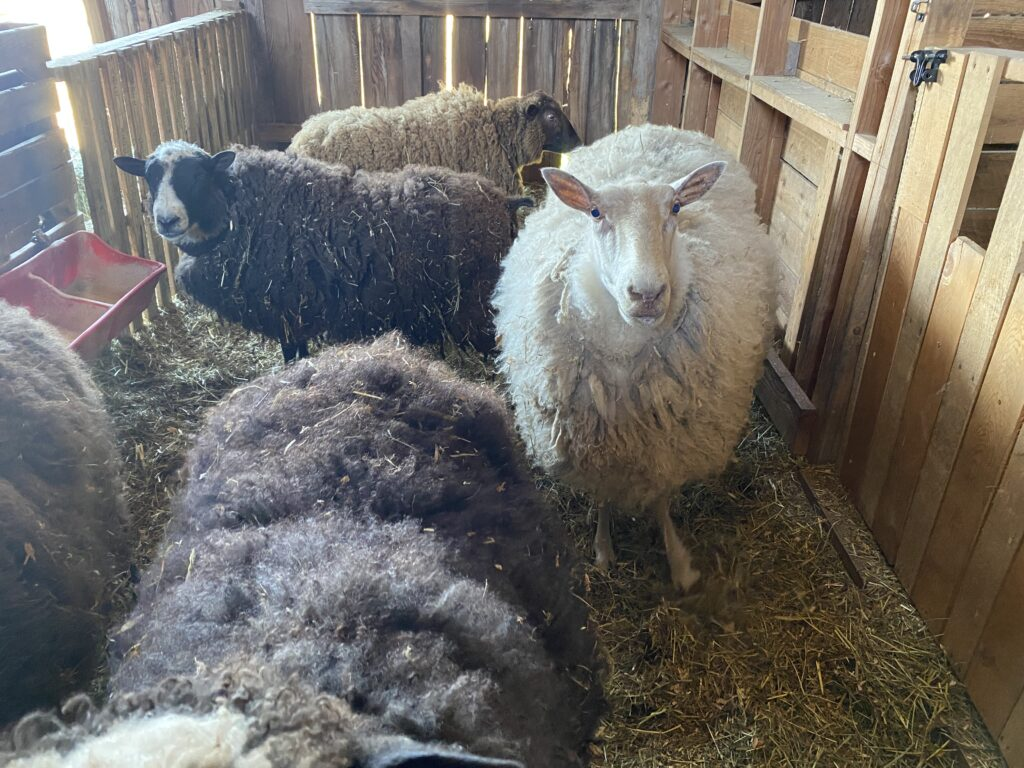
Participants began the class stepping into the cool shelter of Roni’s historic barn. In the past, it was the heart of a dairy cow operation; now the barn is used for raising goats and sheep. Here Roni taught participants how to skirt fleece, using fleece from a prior shearing that hadn’t yet been sent to the wool mill. When sheep are sheared, their wool is cut off in one large piece; this is the fleece.
Skirting is the act of cleaning the fleece before it gets sent off to the mill, where it can be turned into roving or even yarn and used by fiber artists like knitters, crocheters or weavers. The skirting process started by unfolding the fleece onto a large wooden table with a wire mesh topper, which allows for hay and other vegetative matter to fall off the fleece to the barn floor. This table is called the skirting table. When skirting fleece, participants not only were discarding vegetative matter. They also pulled out matted fleece, second cuts and any dung or manure.
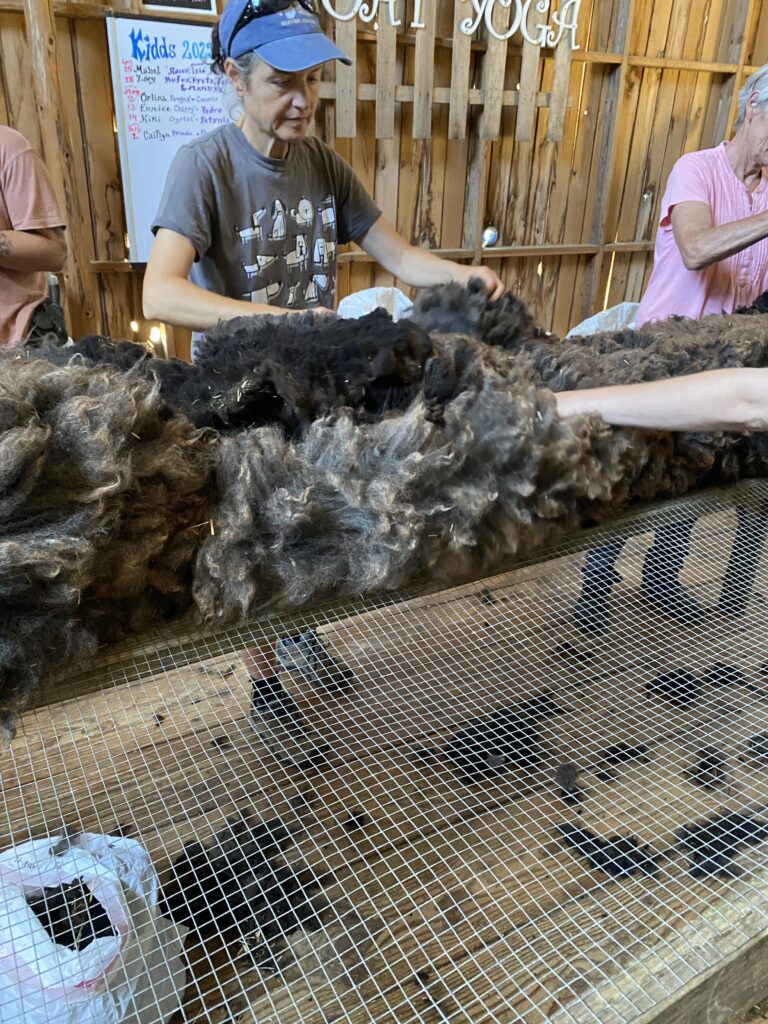
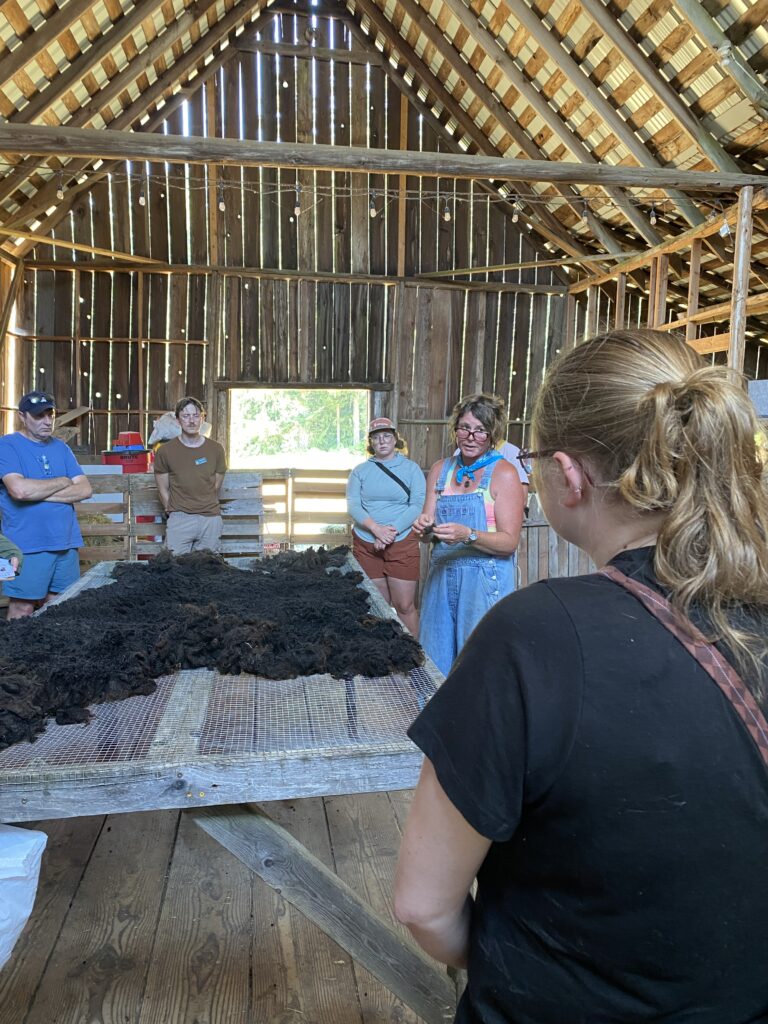
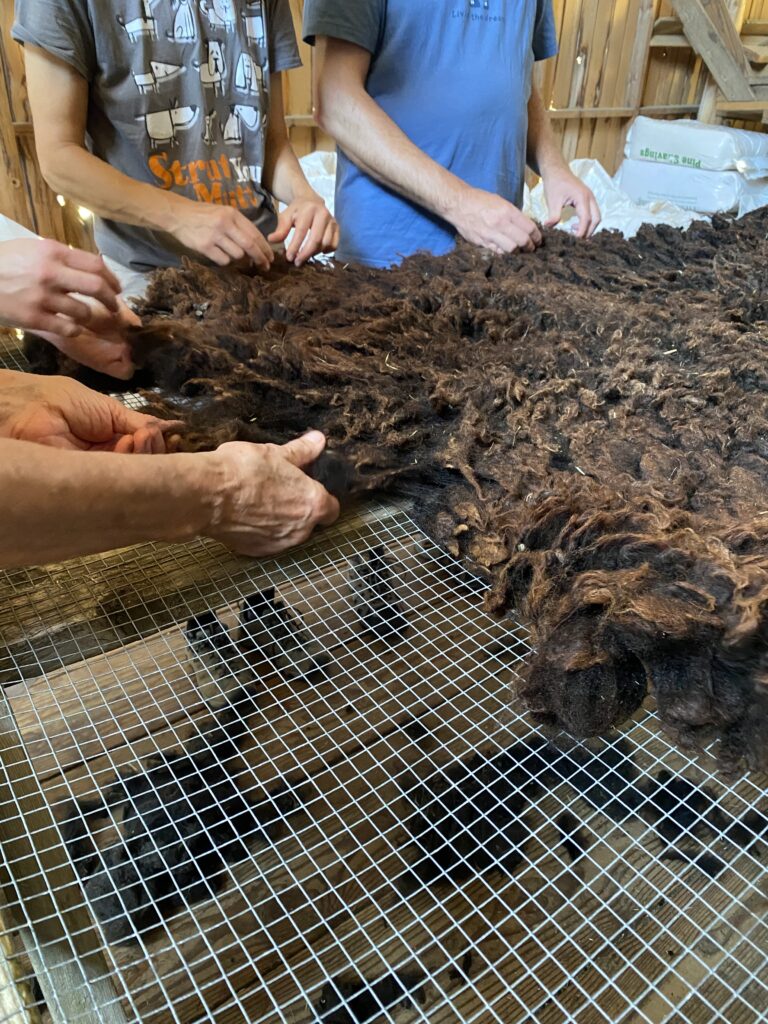
Roni raises Finn sheep, which are especially prone to fleece that mats easily. She said ideally they are sheared twice a year, but financially that’s not always possible. When the sheep go a year in between shearing sessions, their fleece is more likely to be matted. But there is a fiber artist in the area who prefers matted fleece and who will gladly turn the fleece Roni sends into a high quality product. Second cuts occur when the shearer has to go over the same area twice with the clippers, resulting in a shorter fiber. An experienced shearer will avoid this as much as possible.
Luckily for Roni, the shearer she works with has been honing her skills for the past 18 years. Elizabeth Resager is well known in the area, as she offers her services in Kitsap as well as out on the Olympic Peninsula. The second half of the class was spent watching her shear and learning from her and Roni about the entire process, from beginning to end.
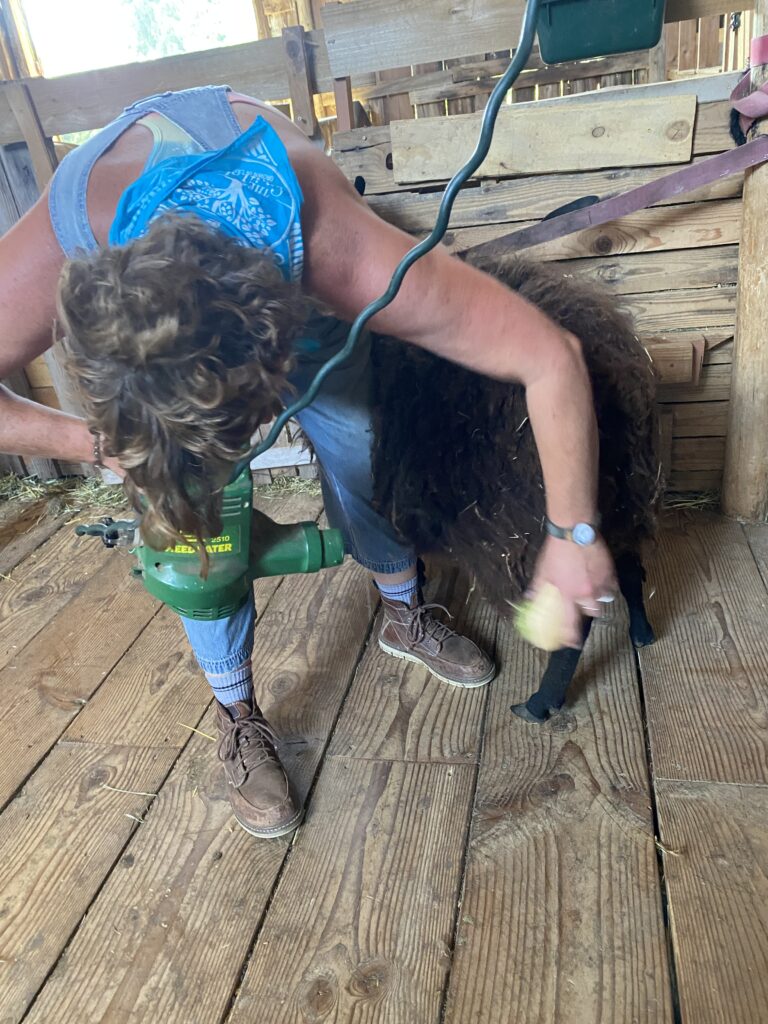
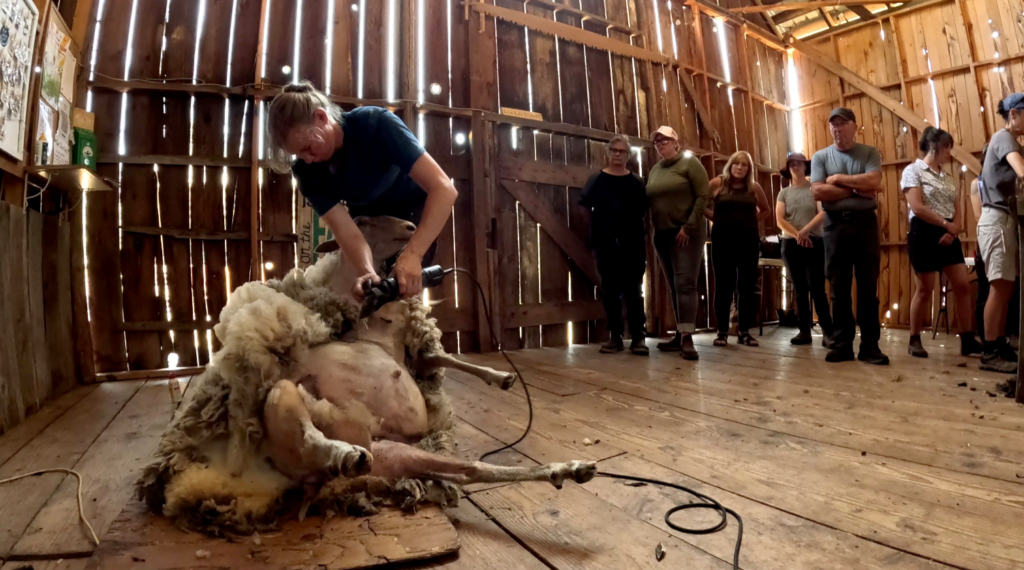
Roni brought the sheep into the barn the night before, so their coats were as dry and clean as possible, and she withheld food and water for the same reasons. Wet wool not only affects the final product; it’s also dangerous to the shearer, who works with electrical clippers. Before Elizabeth sheared them, the sheep were quickly brushed and got a once-over from a small leaf blower, to remove as much vegetative matter as possible. Elizabeth then deftly flipped the sheep onto their rumps and began her work with the clippers. Shearing is a structured process of moving the sheep through a series of positions and following the same pattern of clipping each time, in order to produce a consistent, high-quality fleece.
The trick to making the process smooth is how the sheep are handled beforehand, Elizabeth noted. They are brought inside the night before and kept in a small area, so no one has to chase them and make them associate shearing with anxiety. Their handlers remain calm throughout the entire process and make it as efficient as possible to limit stress.
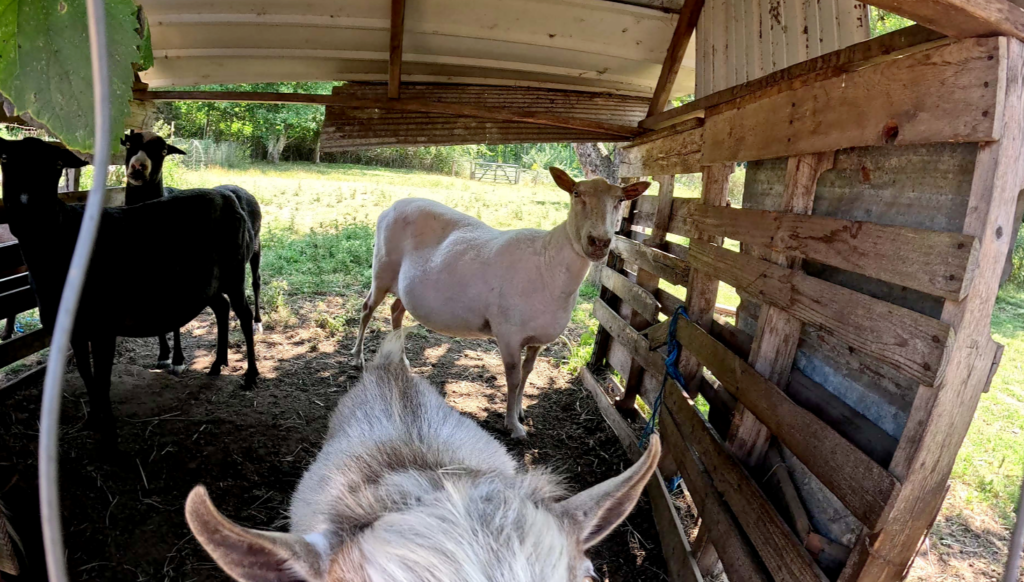
Before the sheep were released, Elizabeth decided if they needed to be treated for parasites. As she was shearing, she looked for signs of hair loss, from rubbing and itching, or for the physical presence of the parasites or their eggs. Roni kept a few different insecticides nearby, just in case they were needed. She also kept a bleed stop powder, to use if the sheep got nicked by the clippers. Fortunately, no treatment was necessary. Roni ended the shearing session by leading each sheep to their summer paddock, where they enjoyed the hot summer weather suddenly unburdened by a year’s worth of fleece.
To learn more about the shearing process, please see the following resources:
How to Shear Sheep, PennState Extension
In this 15 minute YouTube tutorial taught by Mike Fournier, a former extension educator, demonstrates shearing and the six positions when shearing.
A Little Preparation Makes a Successful Shearing Day, Cornell Cooperative Extension
A short article on various considerations for shearing day, including accommodating the needs of your shearer. Included in this article is a link to a webinar that expands upon this topic.
Sheep Shearing at the Smithshyre, Twisted Strait Fibers
A 5 minute YouTube video filmed at what is now Sage & Willow Farm; shows Elizabeth shearing with commentary explaining what she’s doing. Goes on to explain the skirting process.
Tipsheet: Organic Management of Internal and External Livestock Parasites, ATTRA NCAT
Article that includes ways to manage external parasites organically; find subsection “External Parasites” to learn more.
Guide for Control of External Parasites of Sheep and Goats, New Mexico State University
Short guide on common external parasites and their management through conventional means, including dosages and withdrawal periods.
If you’d like to stay up-to-date on the latest Living on the Land Workshops, check the homepage and sign up for the Regional Small Farms Newsletter, which sends out a monthly digest of local events and information relevant to farmers as well as emails about upcoming educational opportunities.
WSU Extension programs and employment are available to all without discrimination. Evidence of noncompliance may be reported through your local WSU Extension office.