September is the time of year when the days shorten and the nights cool. It’s also an incredibly abundant and busy time on the farm and in the garden; crops hang heavy on bushes and vines and storage crops are hauled out of the field to cure for the long winter ahead. Autumn is the time of year that humans, for many thousands of years, have looked far ahead to spring, because now is when seeds need to be saved, processed and protected so they can flourish when the days warm and lengthen once more.
The last of the Living on the Land Workshops took place in early September and the subject was all about seed saving. Such a subject is not only tied to the rhythms of seasons and the practices of gardening and farming, but also history and culture. The class was taught by Susana Cabrera-Mariz of the Organic Seed Alliance, who has a long history of working with and growing seeds sustainably and organically. She shared not just practical information but also stories and cultural wisdom that’s been passed down to her from years of learning.
An example of this intersection of practical, cultural and historical information contained in seed saving is the different varieties of seeds and what they mean. There are the relatively new varieties of Genetically Modified Organism or GMO seeds, whose genetic material is altered and patented, which means owned by a corporation. There are hybrid seeds, who come from deliberately cross-pollinated varieties. Both GMO seeds and hybrid seeds need to be purchased every year. GMO seeds are copyrighted material. Hybrid seeds won’t breed true; if the seeds are saved, they will exhibit traits different from the parent plant, some of them undesirable.
Then there are open-pollinated seeds, which can be purchased or gifted once, grown and then saved again and again. Heirloom seeds fall within this category; they are generally defined as a seed which has been saved for 50 or more years. Open-pollinated means the seeds can be saved and will grow true to type, unlike hybrid seeds.
There are also landrace and grex varieties of seeds; these are Indigenous methods of plant breeding and it’s a practice with ancient roots. An example of landrace gardening is growing many different varieties of squash together, allowing them to cross pollinate. The purpose is not maintaining the traits of a single variety but mixing the gene pool and maintaining many different varieties, locally adapted to the region and microclimate.
Susana has experiences of growing grex varieties as well; an example she shared was growing spinach. She planted over 300 varieties of spinach, both wild and domesticated, with seeds that came from all over the world. As a sum, the plants represented a full expression of spinach genetics. For example, some of the leaves were savoyed, some were smooth and some were spiny. All traits were welcome, no plants were culled and they were allowed to cross pollinate at will. The seed was saved from all plants without discretion and then sent to different farmers. Farmers will then plant this seed and begin selecting for traits they seek in spinach, specific to their soil type, climate and farming practices.
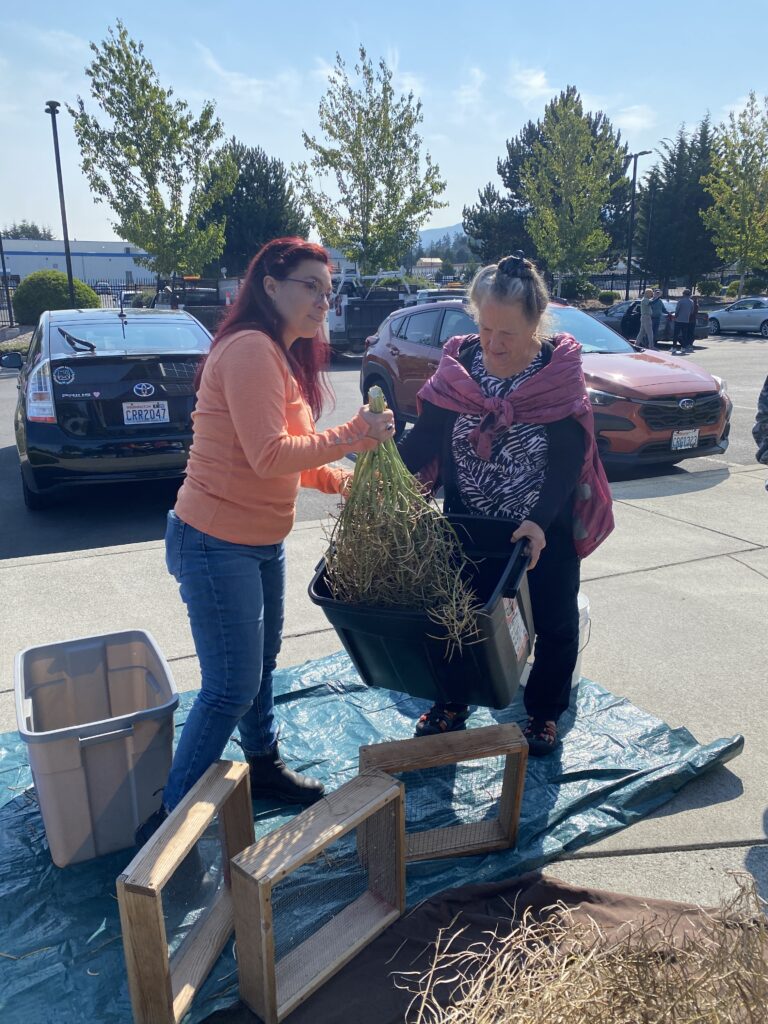
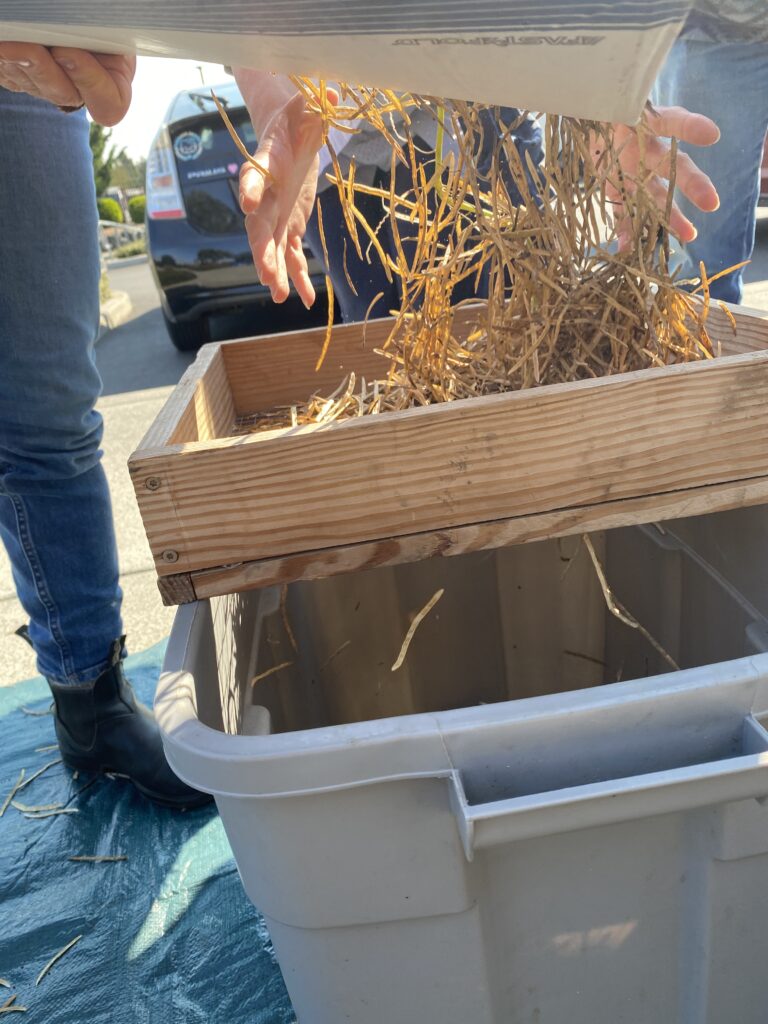
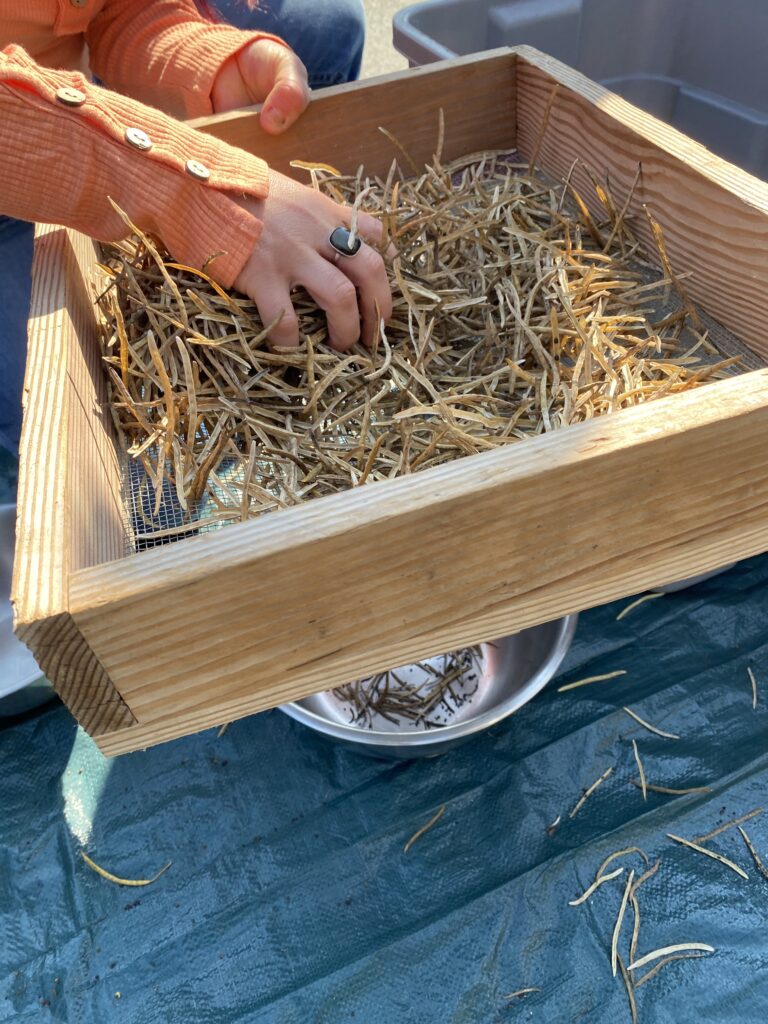
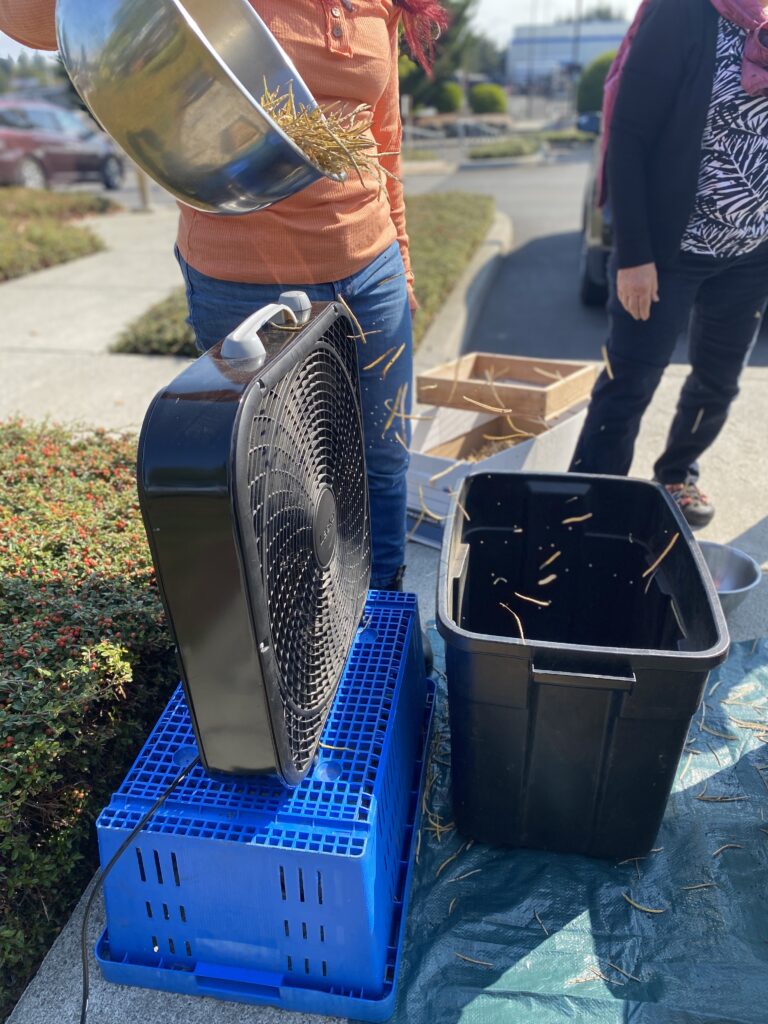
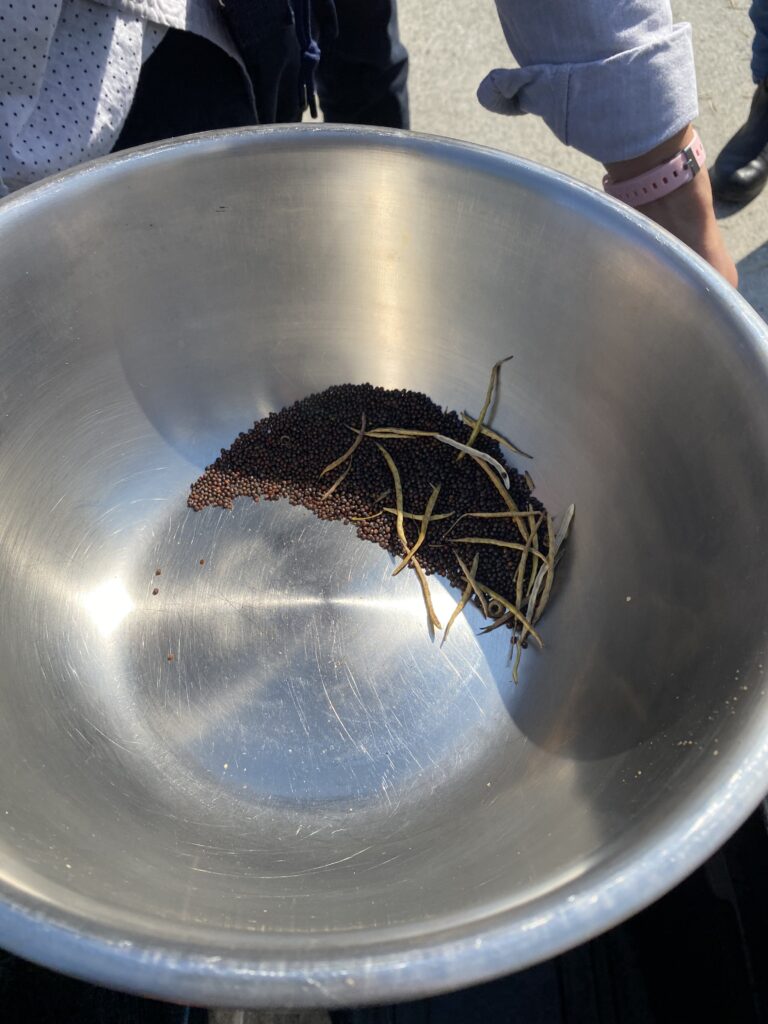
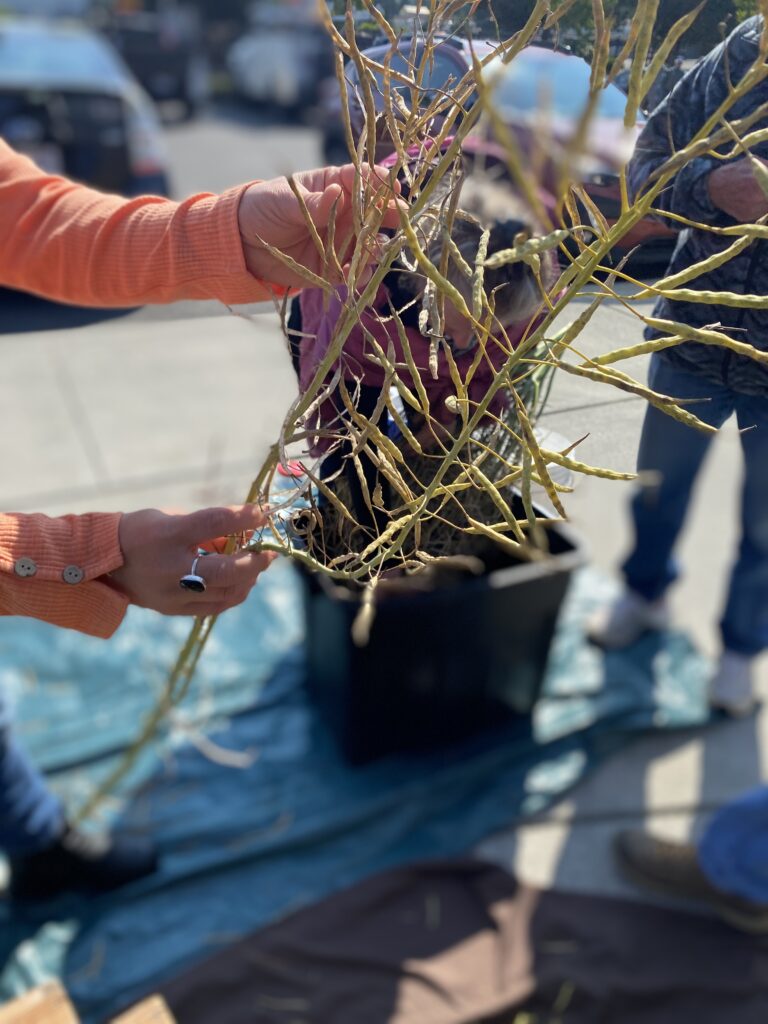
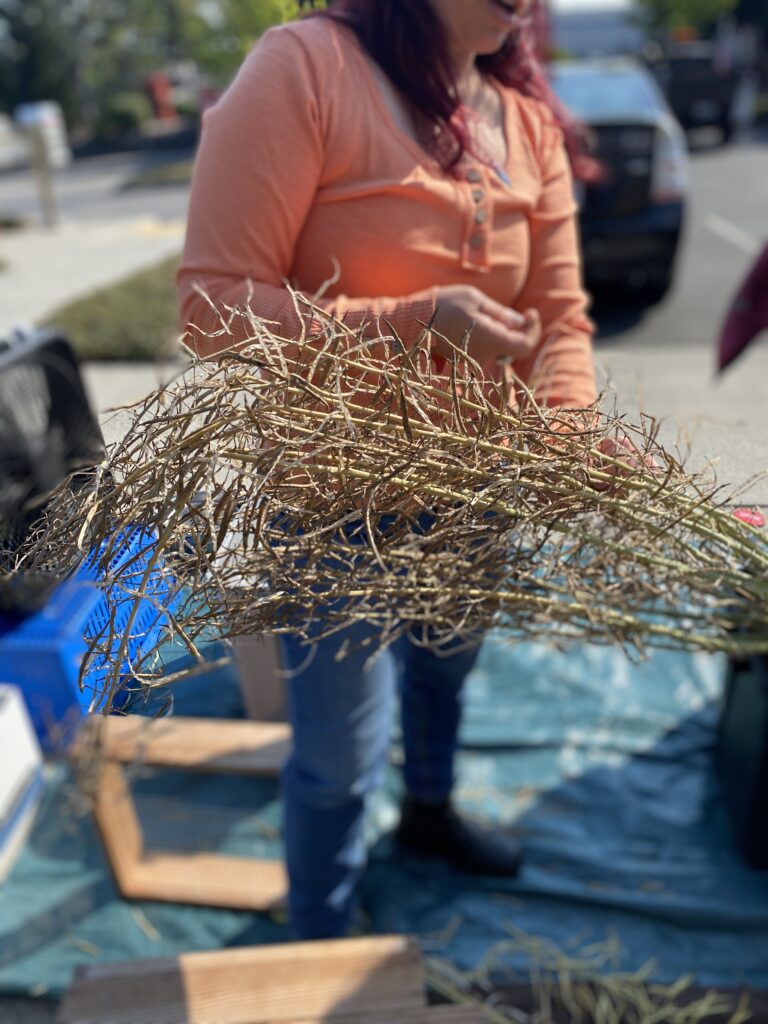
Beyond conversations about botany, growing practices, soil health and the many seed saving mentors and resources available online and in print, the class focused on the practical methods of seed saving. The first seed saving the class practiced was De Cicco broccoli seed; the thin, dry pods clung to tall stalks of broccoli that Susana had recently harvested from the field. Participants first threshed the seeds, which is the act of removing the seeds from the pods. They did this by banging the stalks against the inside of large plastic tubs so the pods fell off, some of them shattering and releasing the tiny black-red broccoli seeds. Then the class crushed and rolled the pods over screens, further releasing the seeds. Next came the winnowing, which involved pouring one bin into another, back and forth, using wind to separate the pods from the seeds until the seed was completely clean.
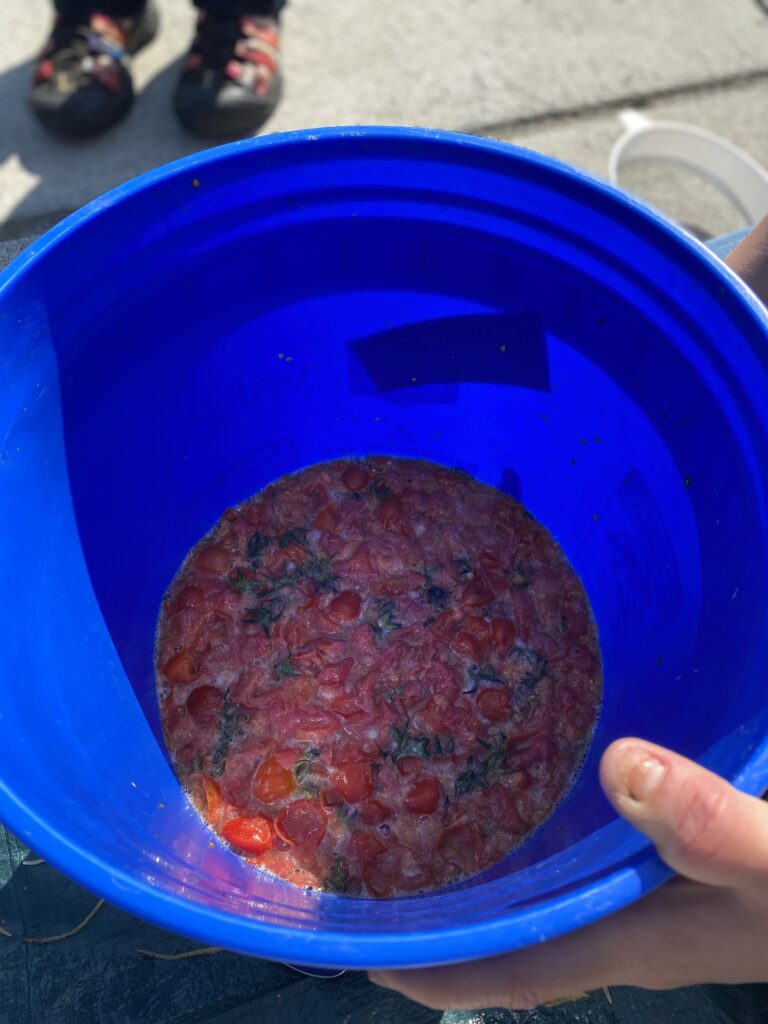
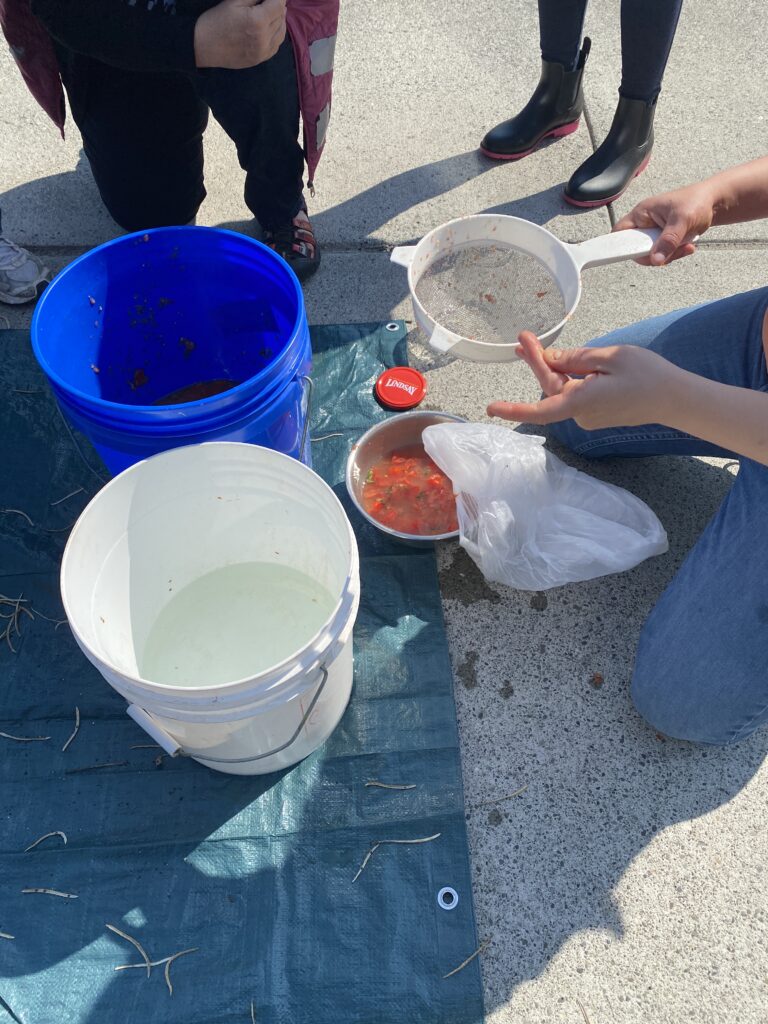
Then the participants learned about processing wet seeds, in this case a USDA variety of red cherry tomato. Susana had smashed the ripe cherry tomatoes in a bucket a few days prior, allowing the seeds to ferment, a process which separates the gelatinous outer of the seed. Participants practiced straining seeds from the rest of the tomato and decanting them, which is the act of rinsing the seed until it’s clean enough to spread out on a surface to dry. When the seed dries, it becomes plump and fuzzy.
Susana shared other practical information throughout the classes, such as pinching or smashing the seed with a blunt object to test its dryness; a properly dried seed will break or shatter instead of smoosh. Seeds should be left out longer than anticipated to dry and Susana suggested storing seeds in the freezer, in a glass jar or mylar bag.
A subject such as seed saving is vast and as complex as the myriad peoples, regions and cultures that grow seeds. Two classes isn’t nearly enough time to do the subject justice. But as many of the growers in the class saw, it can also be a simple practice, such as saving the seed from a few tomatoes, and using the powers of observation to deepen learning over time.
To learn more about saving seeds, Organic Seed Alliance and the Organic Seed Commons offer extensive education and resources. There is also The Seed Farmer Podcast, the Seeds and Their People radio show and Seed Saving 101, a YouTube webinar from FarmFolk CityFolk.