By Sharah Truett
Howdy farmers! We are coming off a very dry spring and summer in 2025. Here at the WSU Extension Office of Clallam County, we are trying to get you more information about water conservation and drought planning. To that end, let’s talk about soil moisture and important irrigation periods on the farm.
There are two main reasons for irrigating vegetable crops: Most vegetables have shallow roots which rarely exceed 24 inches, so they can’t access deep water. In addition, the final vegetable product is often priced by weight and appearance, both which are heavily affected by soil moisture.
Different crops require very different amounts of water, but for all crops there are two especially sensitive periods for soil moisture: During harvest and 2 to 3 weeks before harvest. Water shortages around the time of harvest can really impact profit.
Here are some critical moisture periods for different crops:
Leafy vegetables
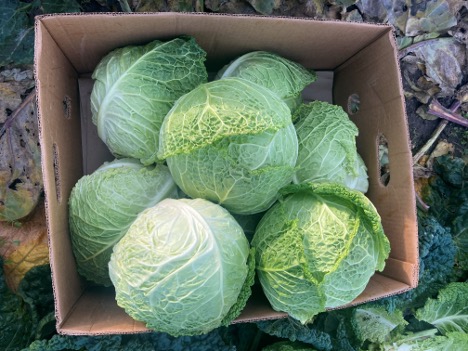
Cabbage, lettuce and spinach should be planted at or close to maximum field moisture capacity. They have shallow roots and benefit from frequent irrigation. Cabbage and lettuce are especially sensitive to water stress during the start of head development through to harvest. You must be careful, however, because overwatering can result in burst heads.
Broccoli and cauliflower
These brassicas need frequent irrigation to prevent reduced growth and premature head formation.
Root, tuber and bulb crops
For carrots, beets, radishes, potatoes, and onions, the most sensitive time for watering is when their storage organs enlarge. Carrots especially require an even and abundant supply of water throughout the season. Water stress causes small, woody and poorly flavored carrots. Uneven irrigation can also lead to misshapen roots in carrots.
Fruit and seed vegetables
Cucumbers, melons, pumpkins, squashes, snap beans, peas, peppers and tomatoes are the most sensitive to moisture stress at flowering and as fruit and seeds develop. Fruit set on these crops can become seriously reduced if water becomes limited. For tomatoes, regular watering during the period of fruit enlargement can reduce fruit cracking and blossom end rot.
Here are some strategies to reduce water stress during especially dry summers:
- Reduce the size of the area you have planted. Concentrate on the most productive land on your property, and take more marginal land out of production
- Select drought tolerant varieties and crops. Short season cultivars generally use less water.
- Irrigate at the beginning of the season if you don’t have adequate soil moisture
- Establish uniform plant stands
- Consider using transplants to skip the precise and careful irrigation required during germination and emergence.
- Use mulches and row covers to increase plant growth rate and reduce evaporation
- Consider drip irrigation
- Improve irrigation scheduling by using an online app
- Maintain proper soil structure and fertility for maximum water holding capacity
- Achieve good weed control to reduce competition for soil moisture.
- Maintain good plant health. Insects and disease can reduce a plant’s ability to use water efficiently.