The Kitsap Farm Mentor Program provides a multidisciplinary study in sustainable agriculture. Developed by farmers and the WSU Extension offices in Kitsap and Jefferson Counties, the program provides curriculum support for approved farmer mentors.
Formal instruction is provided by each farmer mentor and WSU specialists. Farm mentors provide their chosen interns with comprehensive instruction in the operations of their farm. Farm-based learning is supplemented by intensive workshops in topics such as soil health, pest management, crop planning, business planning, and growing specialty crops.
Kitsap Farm Mentor Program Goals:
The Kitsap Farm Mentor Program’s main goal is to provide support to approved Farm Mentors who then collectively provide instruction and hands-on learning in small farm agricultural practices while celebrating Kitsap County as a farming community.
Role of WSU & Farmers
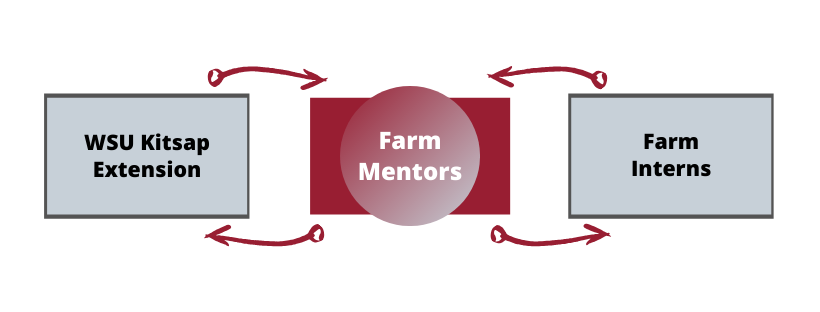
Farmers: During the internship process, the farm is the classroom and the farmer is the on-site instructor. Farm Mentors share their education, knowledge, and skills to enrich the learning of their farm interns.
WSU Kitsap Extension: The Kitsap Farm Mentor Program is administered through the WSU Kitsap Extension office. The program is designed to provide support and administrative assistance to the Farm Mentor group to further their success in training the next generation of skilled farmers. The program does not provide matchmaking with interns, communicate on behalf of interns, or contract with interns in any fashion.
Farm Mentors
Butler Green Farms
Full Tilth Farm
GRACE Garden
Laughing Crow Farm & Bainbridge Vineyards
Brain Bridge Vineyards
info@bainbridgevineyards.com
Persephone Farm
Roots Farm
Applying to be a Farm Mentor
Prospective Interns:
If you are an intern looking for a host farm in Kitsap, please apply directly to the farm of your choice. A full list of approved Kitsap Farm Mentors and their contact information can be found on the sidebar of this page.
- WSU does not provide matchmaking or public promotion of available intern positions for Farm Mentors.
- WSU does not vet or endorse farm interns to Farm Mentors.
- WSU does not take part in any private agreements between Farm Mentors and their interns.
Contact the Kitsap Farm Mentor Program Coordinator with any questions.
Kitsap Farm Mentor Program Overview
Program Goals
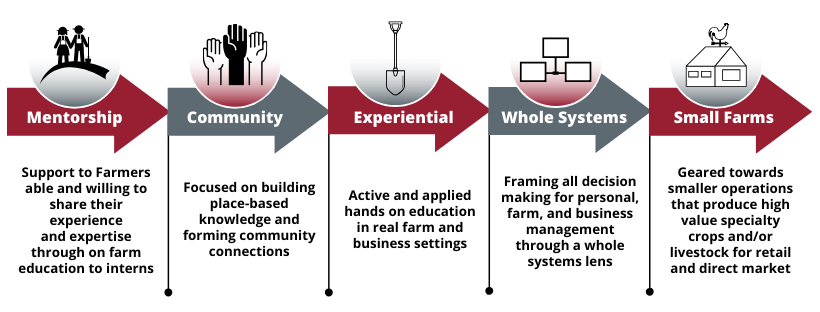
The goal of the Kitsap Farm Mentor Program is to provide support to approved Farm Mentors who collectively provide instruction and hands-on learning in small farm agricultural practices while celebrating Kitsap County as a farming community. The core values of this program are:
- Mentorship – Providing support to Farmers able and willing to share their experience and expertise through on farm education to interns.
- Community – Focused on building place-based knowledge and forming community connections.
- Experiential Learning – Active and applied hands-on education in real farm and business settings.
- Whole Farm Systems – Framing all decision making for personal, farm, and business management through a whole systems lens.
- Small Farms – Geared towards smaller operations that produce high value specialty crops and/or livestock for retail and direct market.
Farm Mentor Roles
During the internship process, the farm is the classroom and the farmer is the on-site instructor. As a Farm Mentor your education, knowledge, and skills are rich resources in which interns can benefit greatly. Farm Mentors are expected to commit time to the following educational activities and components of the program:
Planning & Curriculum Meetings:
- Take part in two (2) farmer-mentor group meetings (meetings scheduled in Winter/Early Spring) to develop the season curriculum with the WSU Kitsap Extension Program Coordinator. If unable to attend in person, farmers must provide feedback via email or phone as able.
- Farm Mentors are expected to attend both the group’s program kick-off meeting (April)
as well as the program closing meeting (October/November). - Additional ongoing email communication with WSU Kitsap Extension Program
Coordinator and farm mentor group to solidify curriculum and season activities. - Participate in program evaluation with WSU Kitsap Extension at the end of the season.
Provide Focused Educational Offerings Through Multiple Avenues:
- Kitsap Farm Mentor Group Classes: Provide interns focused instructional days on farm that consist of 1-2 hours of instruction (explanation, discussion, demonstration, reading assignments) and 1-2 hours of application of the topic at the farm where the instruction took place. These educational offerings are pre-set curriculum decided on by the farm mentor group prior to season start. Classes are divided amongst the Farm Mentors in the Group. All mentors are expected to take on at least one instructional day each season.
- Weekly practicum activities on farm: Weekly activities on farm will be determined by farm mentor. For farm mentors, please also access – L&I Unpaid Internships 101 Fact Sheet. (opens as pdf)
- Supplemental Reading: Farm mentors may provide occasional readings on specific topics.
General Farm Mentor Requirements:
- Provide safe working conditions for all interns and classes scheduled on farm.
- Commitment of 12 months to Farm Mentor program. Program starts in January each year
with curriculum planning and goes through the beginning of November for wrap up of
the classes and WSU evaluations.
Farm Mentors provide their interns with information, guidance, and instruction, both one-on-one and in group class sessions. Through this model, farm interns receive continual feedback and learn day-to-day aspects of sustainable small acreage farming and/or ranching. Through mentorship, interns will gain an in depth understanding of agricultural principals including, but not limited to:
- Farm Business Planning
- Goal Setting
- Crop Production
- Marketing
- Farm Efficiency
- Integrated Pest Management
- Animal Systems
- Soil Health & Composting
- Irrigation
- Greenhouse/season extension
Interns will also gain technical farming skills necessary to initiate and manage an economically viable, environmentally sound, and socially acceptable small acreage farm or ranch.
WSU Extension Roles
The Kitsap Farm Mentor Program is administered through the WSU Kitsap Extension office. The program is designed to provide support and administrative assistance to the farm mentor group to further their success in training the next generation of skilled farmers. The program does not provide matchmaking with interns, communicate on behalf of interns, or contract with interns in any fashion. It is the responsibility of the Farm Mentor to design an appropriate, lawful on- farm program that fits both the needs of their farm and the intern(s) they engage.
Farm Mentors will have an assigned WSU Extension Program Coordinator to assist and support
them in the following:
- Program administration: Program Coordinator will provide general administrative
support for the program to include scheduling of curriculum meetings, and additional
Farm Mentor meetings as needed. - Curriculum: Program Coordinator will provide support in creation of the annual Farm
Mentor curriculum and class schedules. - Additional Class Offerings: Program Coordinator provides support in bringing
additional Extension Specialists and other content experts to the region to provide
supplemental class offerings to Farm Mentor interns throughout the season. These
additional classes will be offered at no-cost to interns hosted by approved Farm Mentors.
The Cultivating Success Series will not be offered as part of free classes. - General Support: Additional one-on-one support of Farm Mentors as needed.
WSU Kitsap Extension Does NOT provide support for the following:
- WSU does not provide matchmaking or public promotion of available intern positions for Farm Mentors.
- WSU does not vet or endorse farm interns to Farm Mentors.
- WSU does not take part in any private agreements between Farm Mentors and their interns.
Becoming a Farm Mentor
The decision to become a farm mentor should be made carefully, with the understanding that mentors will be expected to share their time and knowledge with a beginning farmer. Our hope is that the process and relationship will prove as rewarding for the mentor as the intern. To become a Farm Mentor under the Kitsap Farm Mentor Program, you must meet the following criteria at time of your application:
- Minimum of five (5) years of farming experience, with at least three (3) years of experience running own farm business.
- Provide two (2) references from peers, Extension professionals, or former interns who have direct knowledge of your experience and farm practices.
- Must be the primary owner/operator of production area (not necessarily owner of the land but must be the full time operative) who files a schedule F with annual income tax return.
- Must agree to a site visit by the WSU Extension Program Coordinator or representative prior to be accepted into the program.
- Must have Farm Liability Insurance.
Additional Required Qualifications:
- Experience teaching, or a strong desire to teach in a garden or field setting.
- Have the ability to deliver information and instruction in a clear and thorough manner both verbally, in writing and by demonstration.
- Experience and knowledge in operations of sustainable integrated farming systems.
- Experience with direct marketing.
- Experience in record keeping for planning, production, and marketing.
- Experience in general equipment maintenance, including irrigation equipment, hand tools, wheelbarrows, seeders, etc.
- Knowledge of organizational and time management skills. Ability to coordinate and complete a number of concurrent tasks for both cropping and trainee instruction is important.
- If livestock is raised, experience in animal husbandry, animal needs, on-farm feed production, animal breeding and productivity, applications of intensive livestock pasturing, rotational schedules, fertilization, or pasture and hay production and yields.
In addition, approved Farm Mentors will be provided supplemental program resources and an updated WSU Farm Mentor Handbook providing guidance on adult education, experiential learning, mentoring, templates, conflict resolution, engaging students, and risk management.
Next Step – Applying:
- Complete and submit the Kitsap Farm Mentor Program Application. Applications are due into the Program Coordinator by November 1st each year. Applicants that apply after November 1st will not be considered to take part in the program for the upcoming year.
- Your application will be reviewed by the WSU Extension Program Coordinator and submitted to the program advisory panel for consideration.
- The Program Coordinator will follow up with the farmer via email or phone within six (6) weeks of submission. Farmer interview and farm tour will be scheduled.
- If accepted, farmers can schedule a program introduction meeting (optional) with the Coordinator at the WSU Kitsap Extension office.