For a printable version of this webpage: Strawberries
Strawberries
Skagit County is the state’s leading strawberry producer. Traditionally, the strawberry arrives in two seasons -“June-bearing” strawberries, which bear their fruit in the early summer, and “day-neutral” or “ever-bearing” strawberries, which often bear several crops of fruit throughout the season. One “ever-bearing” plant can produce up to 50 times or roughly once every three days throughout the season.
Nutrition
An excellent source of Vitamin C and a good source of manganese, one cup of strawberries equals more vitamin C than is necessary for one day and contains only 55 calories. Care is needed in handling these berries as vitamin C is easily destroyed by heat, light, air and water.
Selection
Choose berries that have thoroughly ripened on the plant. They should be plump, dry, glossy and still attached to bright green caps. Choose shiny, firm strawberries with a bright red color. Berries at room temperature should have a delicious strawberry aroma. Choose local berries when possible as they will likely be riper, and have more flavor. Peak season is May, June and July. Avoid dull, shriveled, mushy or moldy berries. Before processing, rinse berries under running water.
Storage
Handle ripe strawberries gently and as little as possible. Put onto a tray, remove decayed or damaged berries, cover loosely with waxed paper and refrigerate. Keep berries dry to delay spoilage. Attached green stems/caps help berries stay fresh longer. Wash quickly and carefully and remove caps just before using. Strawberries picked fresh from the field are highly perishable and are best used within 1-2 days.
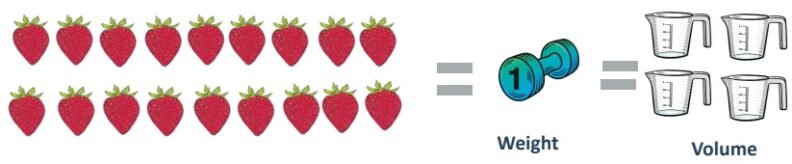
Measurements
Freezing
- Freeze strawberries soon after picking.
- Sort; wash under cold running water, a small amount at a time. Drain well.
- Freeze whole berries on a cookie sheet, and package into moisture-vapor proof freezer bags or cartons when solid. Pack into moisture-vapor proof containers or freezer weight plastic bag. Label, seal and freeze.
- Freeze Sliced, Crushed, or Pureed Berries: Slice, crush, or press berries through a sieve for puree. Add sugar to taste, if desired.. Stir gently until dissolved. Store in moisture/vapor-proof freezer containers or freezer-weight plastic bags. Label, seal and freeze.

Tip: Frozen berries or puree may be used at a later date to make fruit spreads, juice, or in baking.
Drying
Preparation:
Sort and wash. Remove stems. Cut berries in half or in slices ¼ inch thick.
Pretreatment:
No pretreatment is necessary.
Drying Procedure:
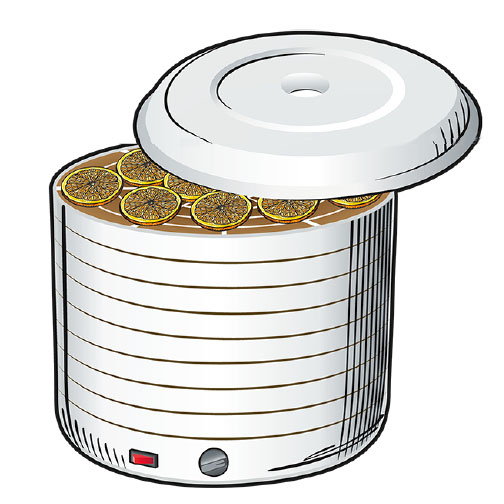
- Spread on dryer trays, 1 to 2 berries deep.
- Dry skin side down at 140 ° F until the strawberries are leathery and pliable.
- Package in moisture/vapor proof containers. Label.
- Store in a cool, dark, dry place.
Water Bath Canning
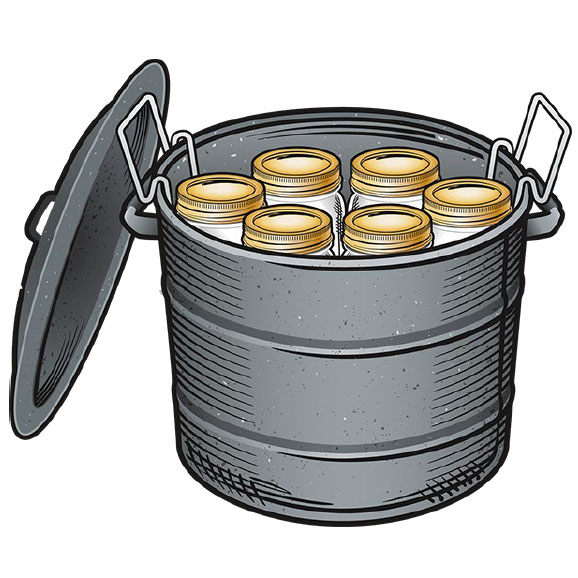
Strawberries are a high-acid food so can safely be processed in the boiling water canner using the USDA processing time for berries; however, they make a poor product and alternative preservation methods are recommended.
Strawberry Syrup
Select 6½ cups of fresh or frozen berries. Wash, and crush in a saucepan.
To prepare juice:
- Heat fruit to boiling, then reduce heat simmer until soft (5 to 10 minutes).
- Strain mixture through a colander and drain until cool enough to handle.
- Strain collected juice through a double layer of cheesecloth or jelly bag. Discard the dry pulp.
- The yield of pressed juice should be about 4½ to 5 cups.
Combine juice with 6¾ cups of sugar in a large saucepan, bring to a boil, and simmer 1 minute. For thicker syrup, increase cooking time. To make a syrup with whole fruit pieces, save 1 or 2 cups of the fresh or frozen fruit. Add fruit when adding sugar, and simmer as directed for syrup. Remove from heat, skim off foam, and fill into hot half-pint or pint jars, leaving ½-inch headspace. Wipe rims with a clean, damp paper towel. Apply two-piece lids and process in boiling water canner according to directions below.
Once processing is complete, turn off heat, remove canner lid and wait 5 minutes before removing jars. Let cool at room temperature, undisturbed, for 12 to 24 hours and check for seals. Wipe jars, remove rings, label, and store in a cool, dry place.
Processing Directions for Strawberry Syrup:
| Style of pack | Jar Size | 1–1,000 ft | 1,001–3,000 ft |
| Hot | Half Pints or Pints | 10 minutes | 15 minutes |
Water Bath Canning
Strawberries can be made into a variety of fruit spreads, either alone or in combination with other fruits. Recipes for jams, jellies and preserves can be found in commercial pectin packages. Options are available for full sugar, low sugar and freezer jam products. Recipes using pectin have been carefully formulated and should be followed exactly. Cooked fruit spreads must be processed in a boiling water canner for storage at room temperature.
Strawberry Jam Using Ball RealFruit Low or No Sugar Pectin
Yield: 4 (8 oz) half pints
Ingredients:
- 4 cups crushed strawberries
- 2/3 cup unsweetened fruit juice
- 3 Tbsp Ball®RealFruit™ Low or No-Sugar Needed Pectin
Prepare boiling water canner. Heat jars in simmering water until ready for use. Do not boil. Wash lids in warm soapy water and set bands aside.
Combine strawberries and juice in a medium saucepan. Gradually stir in pectin. Bring mixture to a full rolling boil that cannot be stirred down. Boil hard 1 minute, stirring constantly. Remove from heat. Skim foam if necessary. Ladle hot jam into a hot jar leaving a ¼ inch headspace. Remove air bubbles. Wipe jar rim.
Center lid on jar and apply band, adjust to fingertip tight. Place jar in boiling water canner. Repeat until all jars are filled. Process according to the directions below. Turn off heat, remove lid, let jars stand 5 minutes. Remove jars and cool 12-24 hours. Check lids for seal, they should not flex when center is pressed.
(Pectin Manufacturer’s Recipe found at www.ballmasonjars.com)
Processing Directions for Strawberry Jam With Low or No Sugar Pectin:
| Style of pack | Jar Size | 1–1,000 ft | 1,001–3,000 ft |
| Hot | Half Pints or Pints | 10 minutes | 15 minutes |
Water Bath Canning
Strawberry Jam Using Powdered Pectin
Yield: About 9 or 10 Half-Pint Jars
Ingredients:
- 5½ cups crushed strawberries (about 3 quart boxes strawberries)
- 1 package powdered pectin
- 8 cups sugar
Procedure: Sterilize canning jars and prepare two-piece canning lids according to manufacturer’s directions. Sort and wash fully ripe strawberries; remove stems and caps. Crush berries. Measure crushed strawberries into a kettle.
Add pectin and stir well. Place on high heat and, stirring constantly, bring quickly to a full boil with bubbles over the entire surface. Add sugar, continue stirring, and heat again to a full bubbling boil.
Boil hard for 1 minute, stirring constantly. Remove from heat; skim.
Fill hot jam immediately into hot, sterile jars, leaving ¼ inch headspace. Wipe rims of jars with a dampened clean paper towel; adjust two-piece metal canning lids. Process in a Boiling Water Canner according to directions below . Once processing is complete, turn off heat, remove canner lid and wait 5 minutes before removing jars. Let cool at room temperature, undisturbed, for 12 to 24 hours and check for seals. Wipe jars, remove rings, label, and store in a cool, dry place.
Processing Directions for Strawberry Jam With Powdered Pectin:
| Style of pack | Jar Size | 1–1,000 ft | 1,001–3,000 ft |
| Hot | Half Pints or Pints | 5 minutes | 10 minutes |
Preserve Skagit Crop Sheets describe three food preservation techniques—freezing, drying, and boiling water canning—consistent with USDA Food Preservation and Food Safety recommendations. Pressure canning for low acid foods such as meats and vegetables is not included.
Additional resources and recipes, as well as information on Pressure Canning, can be found on the WSU Skagit Food Preservation Website https://extension.wsu.edu/skagit/fam/food-preservation/ or the National Center for Home Food Preservation https://nchfp.uga.edu/index.html.
Copyright 2022 WSU Skagit Extension. Any opinions, findings, conclusions, or recommendations expressed on this fact sheet are those of the author(s) and do not necessarily reflect the view of the USDA. WSU Extension programs are available to all without discrimination