For a printable version of this webpage: Tomato(PDF)
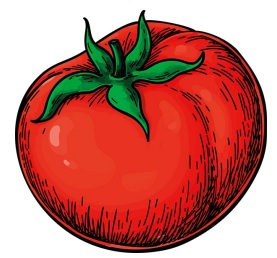
Tomato
Tomatoes, native to the Americas, trace back to the early Aztecs around 700 A.D. Today, tomatoes come in countless varieties, with a rainbow of colors – red, orange, white, deep purple, yellow, green-striped – with a range of delicious flavor profiles. Are they a fruit…or a vegetable? Botanically they are classified as berries, but culinarily they are classified as vegetables. Commercially grown tomatoes are harvested under-ripe to avoid bruising in shipping. Locally grown tomatoes are usually vine-ripened and are more flavorful. Skagit farmers focus on farm-fresh vine-ripened tomatoes, growing different types including Heirloom varieties.
Nutrition
Tomatoes are an excellent source of vitamin A, vitamin C, and a noteworthy source of antioxidants. An average-sized tomato is just 22 calories and a large one is 33 calories, with no fat or cholesterol.
Selection
Look for tomatoes that are firm but not overripe, red in color, plump, smooth, and free from blemishes. For best flavor, select vine-ripened tomatoes, locally grown. Clean tomatoes before processing by rinsing under running water.
Storage
Tomatoes that are under-ripe are best stored at room temperature for several days or until ripening is complete. Temperatures under 40 degrees (refrigerator temps) destroy flavor enzymes. However, overripe tomatoes may be stored in the refrigerator to halt ripening process and may prolong storage by several days. Tomatoes are not typically well-suited for long-term storage without a preservation method such as freezing, drying, or canning.
Measurements

Freezing
- Select well-ripened, firm fruit.
- Wash and peel. Cut in halves or quarters and remove cores.
- Use an anti-darkening agent to prevent browning.
- Heat in boiling sugar syrup, your choice of light to heavy syrup, for 1 to 2 minutes (depending on size of pieces). Drain, cool, and pack in cooking syrup.
- Pack in moisture-vapor proof freezer containers or freezer weight plastic bags, leaving 1-inch headspace. Seal, label, and freeze.

Tip: Freezing fresh pears is generally not recommended due to poor quality when defrosted. Cooked pears can be frozen with more success.
Drying
Preparation:
Select ripe tomatoes of good color (meaty varieties work the best). Cut into ¼-⅓ inch slices or cut into sections not more than 3/4 inch wide. Cut small pear or plum tomatoes in half.
Pretreatment:
None. Remove skins, if desired, by dipping in boiling water for 30 seconds. Chill in cold water.
Drying Procedure:
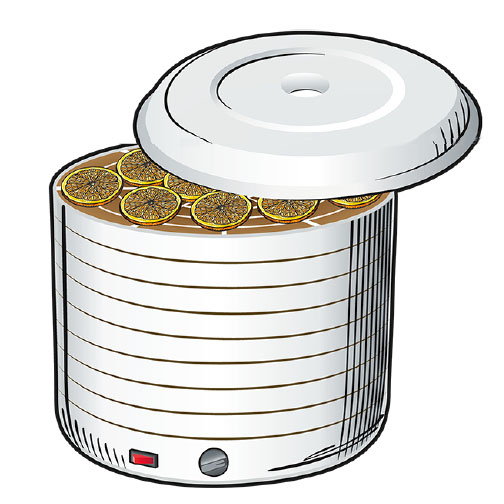
- Arrange tomato slices in single layers on drying trays.
- Dry at 140°F for 10-18 hours until leathery to crisp, no moist areas remain. Cool thoroughly.
- Package dried tomatoes in moisture/vapor-proof containers.
- Label. Store in a cool, dark, dry place.
Tip: Dried tomatoes can be crumbled for use in stews, soups, casseroles. Sprinkle raw tomato slices with oregano, basil and/or garlic powder before drying for delicious chips for dips.
Boiling Water Canning

Safety Note: All tomatoes for canning need to be acidified. For each quart of tomatoes add 2 tablespoons of bottled lemon juice or ½ teaspoon of citric acid.
For each pint, add 1 tablespoon of bottled lemon juice or ¼ teaspoon of citric acid. Acid can be added directly to the jars before filling the jars with tomatoes.
Canned Tomatoes
An average of 21 pounds is needed per canner load of 7 quarts; an average of 13 pounds is needed per canner load of 9 pints.
Always select firm, ripe tomatoes picked from the living vine. Process as soon as possible after harvest. Do not can overripe tomatoes, or tomatoes with soft spots, mildew, or decay because these are unsafe for canning. Do not can tomatoes from dead or frost-killed vines because of food safety concerns.
Wash tomatoes. Dip in boiling water for 30 to 60 seconds or until skins split, then dip in cold water. Slip off skins and remove cores. Leave whole or halve. Add bottled lemon juice or citric acid to the jars. Add 1 teaspoon of salt per quart to the jars, if desired.
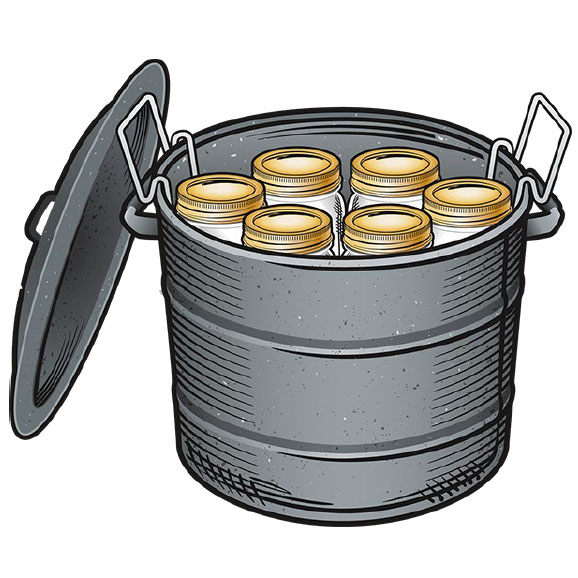
Fill jars with raw tomatoes. Press tomatoes in the jars until spaces between them fill with juice. Leave 1/2- inch headspace. Remove air bubbles, adjust headspace if needed. Wipe rims of jars with a clean, damp paper towel. Adjust two-piece lids and process in boiling water canner according to directions below.
Once processing is complete, turn off heat, remove canner lid and wait 5 minutes before removing jars. Let cool at room temperature, undisturbed, for 12 to 24 hours and check for seals. Wipe jars, remove rings, label, and store in a cool, dry place.
Tip: The Roasting Method can simplify the peeling process. Place tomatoes in a hot oven, 425 degree F and bake until the edges of the tomatoes are well browned. Peel.
Processing Directions for Canned Tomatoes:
| Style of pack | Jar Size | 1–1,000 ft | 1,001–3,000 ft |
| Cold | Pints or Quarts | 85 minutes | 90 minutes |
Safety Note: There are many different options for preserving tomato and tomato products such as crushed, paste, sauce and juice – each with specific processing instructions and times. Refer to Canning Tomatoes and Tomato Products for detailed instructions.
Boiling Water Canning
Choice Salsa
Yield: About 6 Pint Jars
Ingredients:
- 6 cups peeled, cored, seeded and chopped ripe tomatoes
- 9 cups diced onions and/or peppers of any variety (See Notes below)
- 1 ½ cups commercially bottled lemon or lime juice
- 3 teaspoons canning or pickling salt
To prepare tomatoes: Dip washed tomatoes in boiling water for 30 to 60 seconds or until the skins split. Submerge immediately in cold water. Peel off loosened skins and remove cores. Remove seeds and chop to ¼ to ½ inch pieces.
To prepare onions: Peel, wash, core and dice onions ¼ inch pieces.
To prepare mild or sweet bell peppers: Wash and core bell peppers. Remove the seeds and membranes before dicing ¼ inch pieces.
To prepare hot peppers: Wash and remove stems of hot peppers. Keep or remove as much of the seeds and membranes as you wish, depending on the ‘pepper heat’ of the salsa that you desire. Dice peppers to ¼ inch pieces. CAUTION: Wear plastic or rubber gloves and do not touch your face while handling or cutting hot peppers. If you do not wear gloves, wash hands thoroughly with soap and water before touching your face or eyes.
Combine prepared ingredients in a large pot; add lemon juice and salt. Bring to a boil over medium heat while stirring. Reduce heat and simmer salsa for an additional 3 minutes, stirring as needed to prevent scorching. Fill the hot salsa into prepared hot jars, leaving 1/2-inch headspace. If needed, remove air bubbles and re-adjust headspace to ½-inch. Wipe rims of jars with a clean, damp paper towel. Adjust two-piece lids and bands. Process in a boiling water canner according to directions below.
Once processing is complete, turn off heat, remove canner lid and wait 5 minutes before removing jars. Let cool, undisturbed, for 12 to 24 hours at room temperature and check for seals. Wipe jars, remove rings, label, and store in a cool, dry place.
Processing Directions for Choice Salsa:
| Style of pack | Jar Size | 1–1,000 ft | 1,001–3,000 ft |
| Hot | Half Pints or Pints | 15 minutes | 20 minutes |
Safety Note: There are several different recipes for preserving salsa, each with specific processing instructions and times. Refer to Salsa Recipes for Canning for detailed instructions.
Do not alter the proportions of tomatoes, vegetables and acid because that might make the salsa unsafe when this canning process is used. Any mixture of sweet bell peppers (of any color) and/or hot peppers can be used.
Boiling Water Canning
Spiced Tomato Jam
Yield: About 5 half-pint jars
Ingredients:
- 3 cups prepared tomatoes (prepare about 2¼ pounds tomatoes)
- 1½ teaspoons grated lemon rind
- ½ teaspoon ground allspice
- ½ teaspoon ground cinnamon
- ¼ teaspoon ground cloves
- ¼ cup lemon juice
- 4½ cups sugar
- 1 box powdered pectin
Wash firm, ripe tomatoes. Scald, peel, and chop tomatoes. Place chopped tomatoes in a saucepan and heat slowly to simmer, stirring constantly to prevent sticking and burning. Cover and simmer 10 minutes, stirring occasionally. Measure 3 cups of the cooked tomatoes into a large saucepan. Add lemon rind, allspice, cinnamon and cloves.
Sterilize canning jars. Add lemon juice to the prepared tomatoes in the saucepan. Measure sugar and set aside. Stir powdered pectin into prepared tomatoes. Bring to a boil over high heat, stirring constantly. Immediately stir in sugar. Stir and bring to a full rolling boil that cannot be stirred down. Then boil hard for 1 minute, stirring constantly.
Remove from heat. Skim off foam. Pour hot jam into hot jars, leaving ¼ inch headspace. Remove air bubbles, adjust headspace if needed. Wipe rims of jars with a clean, damp paper towel; adjust two-piece canning lids. Process in Boiling Water Canner according to directions below.
Once processing is complete, turn off heat, remove canner lid and wait 5 minutes before removing jars. Let cool at room temperature, undisturbed, for 12 to 24 hours and check for seals. Wipe jars, remove rings, label, and store in a cool, dry place.
Processing Directions for Spiced Tomato Jam:
| Style of pack | Jar Size | 1–1,000 ft | 1,001–3,000 ft |
| Hot | Half Pints or Pints | 5 minutes | 10 minutes |
Preserve Skagit Crop Sheets describe three food preservation techniques—freezing, drying, and boiling water canning—consistent with USDA Food Preservation and Food Safety recommendations. Pressure canning for low acid foods such as meats and vegetables is not included.
Additional resources and recipes, as well as information on Pressure Canning, can be found on the WSU Skagit Food Preservation Website https://extension.wsu.edu/skagit/fam/food-preservation/ or the National Center for Home Food Preservation https://nchfp.uga.edu/index.html.
Copyright 2022 WSU Skagit Extension. Any opinions, findings, conclusions, or recommendations expressed on this fact sheet are those of the author(s) and do not necessarily reflect the view of the USDA. WSU Extension programs are available to all without discrimination