Washington State University Skagit County Extension
Washington State University Extension engages people, organizations and communities to advance economic well-being and quality of life by connecting them to the knowledge base of the university and by fostering inquiry, learning, and the application of research.

Greetings!
Washington State University Skagit County Extension has been keeping crop records since 1922. Information is compiled from processing companies, farm organizations, growers, field representatives, media sources, and University sources.
Agricultural statistics with related written details are important for several reasons:
Figures show the past production history of farming in a community.
Statistics show the ups and downs of agriculture in relationship to weather, economics, urban encroachment, disasters, or a shift in production to other areas.
This information provides a basis on which to make important decisions for land-use planning, zoning, and economic development planning related to agriculture.
Your comments and suggestions are welcomed and encouraged. Feel free to give us a call and we can discuss the enclosed information. You can download a print copy pdf.
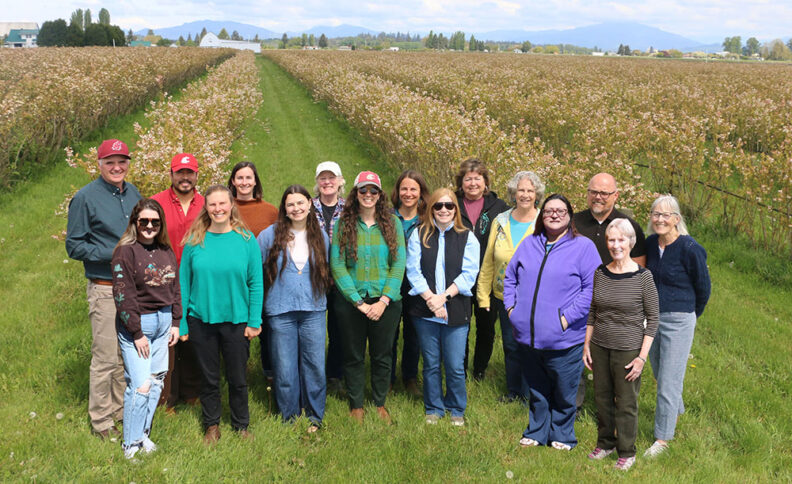
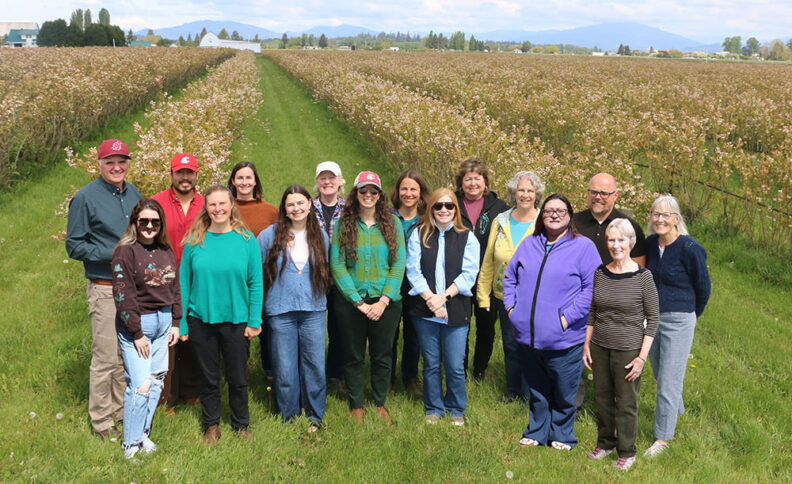
WSU Skagit County Extension Staff
| Name | Role/Title | Additional Info / Location |
|---|---|---|
| Don McMoran | Agriculture and Natural Resources Faculty | WSU Skagit County Extension Director |
| Diane Smith | Extension Faculty | Skagit/Whatcom, Family Consumer Sciences/Food Access Specialist |
| Kevin Zobrist | Extension Faculty | Puget Sound, Forest Stewardship |
| Nicole Jones | 4-H Youth Program Coordinator | |
| Joan DeVries | Livestock Advisor Program Coordinator | Skagit/Snohomish |
| Alex DuPont | Master Gardener Program Coordinator | |
| Jennie Goforth | Ideas for Healthy Living Program Coordinator | |
| Allen Bush | Marketing and Communications Support | |
| Debbie Fredricks and Cheryl Reese | DOH Farm Stress Suicide Prevention Co-Coordinators | |
| Maddy Vanderkooy | Western Region Agricultural Stress Assistance Program Coordinator | |
| Katherine Hayes | Entomology Coordinator | |
| Kate Smith | Small Farm/Latino Educator | |
| Rosa Cantu | Grants Coordinator | |
| Sue Moulton | Receptionist / Technical Assistant |
About Skagit County
 Geography
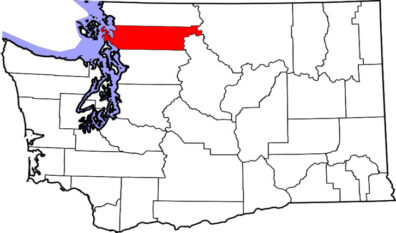
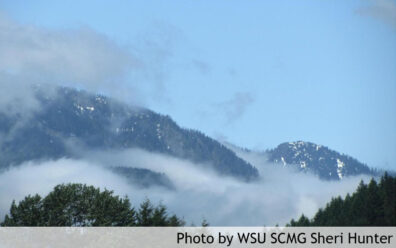
Skagit County is 60 miles north of Seattle. It is 24 miles wide (north and south) and 95 miles long (east and west). Several islands in the Puget Sound area are included in the county. Snowcapped Mount Baker (in Whatcom County), elevation 10,000 feet, dominates the northeastern edge of the county and is the start of the North Cascades wilderness area and National Park. The Skagit River, which is famous for steelhead and salmon fishing and serves as important bald eagle feeding grounds, begins in the North Cascade Mountain area. The upper Skagit has three hydro-electric dams which provide power for the northwest. Below the dams, the Skagit is fed by the Sauk, Cascade, Suiattle and Baker rivers. The Skagit River flows through the “upper valley” and continues through thousands of acres of fertile farmland before emptying into Puget Sound.
Climate
Cool, marine temperatures and an abundance of moisture is evidenced by the lush growth of forest, pastures and agricultural crops in Skagit County.
Rainfall. The “rule of thumb” is to add one inch of moisture for each mile traveled east from Puget Sound. Anacortes averages 25 inches per year; Marblemount, 95 inches per year. The driest year since 1948 was in 1987, when precipitation total was 20.71 inches. The wettest year was 1990, with 47.20 inches. Approximately 20% of the rainfall in Mount Vernon occurs June through September. The sun shines 65% of the time in summer, and 25% of the time in winter.
Temperature
The highest temperature ever on record at the WSU Northwestern Washington Research and Extension Center at Mount Vernon, was 98°F on August 9, 1960. The average summer temperature is 73° F. The highest recorded winter temperature for December, January and February was 65° F. The lowest temperature on record was –4° F. on January 26, 1957. WSU NWREC has been keeping records since 1948. (See chart on next page).
Weather
2024 Weather Picture
The winter of 2023/2024 began on Oct 26th, 2023 with the first frost of the season; the coldest day of the year occurred on January 13th at 9.8 degrees. The cold weather had a major impact on the perennial cropping systems in Skagit County; with many reported crop failures due to freezing weather on cabbage seed, raspberries and/or blackberries. The spring of 2024 was more normal with weekly rain events that slowed the planting process, experiencing much more rain in 2024 compared to 2023, which had 36 inches of rain compared to the 22.36 inches seen in 2023. The precipitation carried into the summer with an abnormally wet August (2.45 inches). Irrigation did occur in Skagit County but at a reduced frequency to the past few hotter/drier years. Harvest was difficult with many farms fighting the muddy conditions of Skagit County in the fall. October closed out harvest for the year with 4.26 inches of rain during the month and November slammed it shut several more times with 4.85 inches of rain, forcing farmers to leave some of their crop in the ground. Most Meteorologists are predicting 2025 to be the exact opposite of 2024 with hotter and drier weather.
| January | 34.71 | 40.11 | 45.51 | 4.60 |
| February | 36.43 | 42.87 | 49.31 | 3.18 |
| March | 38.55 | 45.40 | 52.25 | 1.99 |
| April | 39.85 | 48.22 | 56.58 | 2.62 |
| May | 44.61 | 53.27 | 61.92 | 2.89 |
| June | 48.55 | 57.86 | 67.17 | 2.61 |
| July | 52.00 | 64.29 | 76.58 | 0.98 |
| August | 52.00 | 62.36 | 72.71 | 2.58 |
| September | 48.57 | 58.31 | 68.05 | 1.97 |
| October | 44.33 | 51.81 | 59.29 | 4.26 |
| November | 40.50 | 45.65 | 50.80 | 4.85 |
| December | 37.46 | 43.11 | 48.76 | 3.50 |
Precipitation year total 36.03
Source: http://www.weather.wsu.edu/
Freeze
Frost Free Days
The lower Skagit Valley area has approximately 230 growing days and the upper valley has approximately 200 growing days. The last spring frost in the lower valley is estimated to occur about April 15, and the first fall frost occurs about October 15.
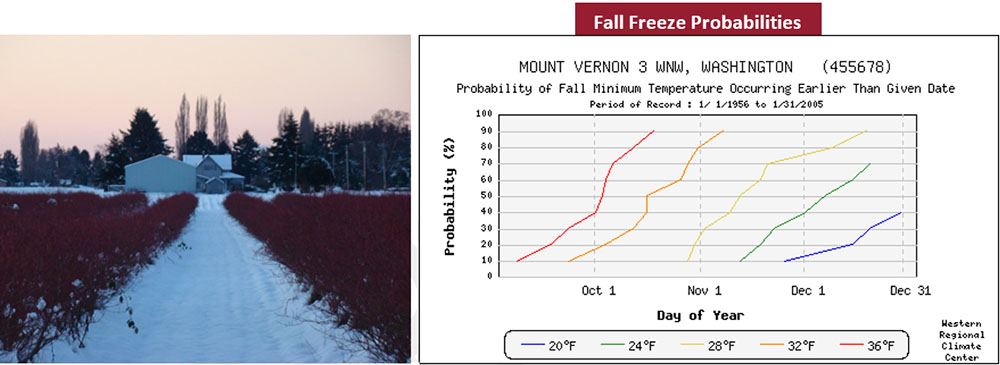
Fall ‘Freeze’ Probabilities (Jul. 31 – Dec. 31)
MOUNT VERNON 3 WNW, WASHINGTON (455678)
| Temp F | Earliest | 10% | 20% | 30% | 40% | 50% | 60% | 70% | 80% | 90% | Latest |
| 36.5 | 08/29 | 09/08 | 09/18 | 09/23 | 10/01 | 10/03 | 10/04 | 10/16 | 10/12 | 10/18 | 10/26 |
| 32.5 | 09/03 | 09/23 | 10/04 | 10/12 | 10/16 | 10/16 | 10/26 | 10/28 | 10/31 | 11/07 | 11/23 |
| 28.5 | 10/04 | 10/28 | 10/30 | 11/02 | 11/09 | 11/12 | 11/18 | 11/20 | 12/09 | 12/19 | 12/30 |
| 24.5 | 10/28 | 11/12 | 11/18 | 11/22 | 12/01 | 12/07 | 12/15 | 12/20 | **/** | **/** | **/** |
| 20.5 | 10/29 | 11/25 | 12/15 | 12/20 | 12/29 | **/** | **/** | **/** | **/** | **/** | **/** |
Earliest – Earliest date when a minimum temperature below the threshold occurred. Dates listed means the minimum temperature can go below the threshold temperature any day during the July 31 to Dec. 31 period. % Listed are the Percent probability that a minimum temperature below the threshold will occur on or before the given date. **/** means non-occurrence of the threshold or insufficient data to determine a threshold. Latest – Latest date when a minimum temperature below the threshold occurred. Source: Western Regional Climate Center
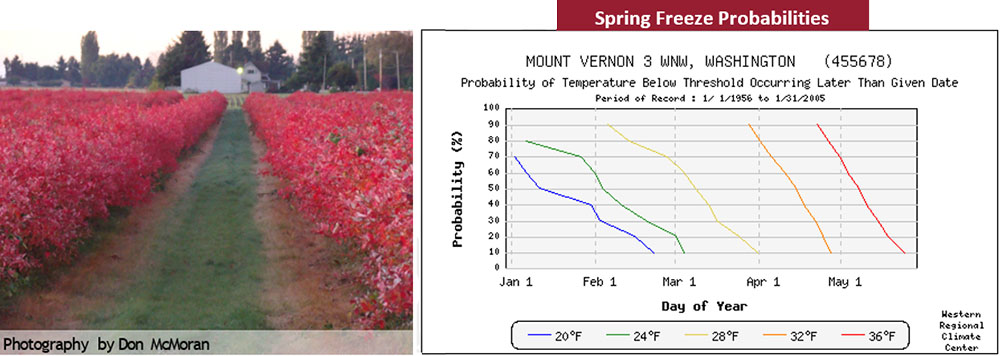
Spring ‘Freeze’ Probabilities (Jul. 31 – Dec. 31)
MOUNT VERNON 3 WNW, WASHINGTON (455678)
| Temp F | Earliest | 90% | 80% | 70% | 60% | 50% | 40% | 30% | 20% | 10% | Latest |
| 36.5 | 04/03 | 04/22 | 04/26 | 04/30 | 05/03 | 05/07 | 05/10 | 05/14 | 05/18 | 05/24 | 05/29 |
| 32.5 | 03/08 | 03/28 | 04/01 | 04/05 | 04/10 | 04/14 | 04/17 | 04/21 | 04/24 | 04/27 | 05/15 |
| 28.5 | 01/17 | 02/05 | 02/13 | 02/27 | 03/04 | 03/08 | 03/13 | 03/16 | 03/24 | 03/31 | 04/17 |
| 24.5 | **/** | **/** | 01/06 | 01/26 | 01/31 | 02/03 | 02/10 | 02/19 | 03/01 | 03/04 | 03/19 |
| 20.5 | **/** | **/** | **/** | 01/02 | 01/06 | 01/11 | 01/30 | 02/02 | 02/15 | 02/22 | 03/04 |
Earliest – Earliest date when a minimum temperature below the threshold occurred. % Listed – Percent probability that a minimum temperature below the threshold will occur on or after the given date. **/** means non-occurrence of the threshold or insufficient data to determine a threshold. Latest – Latest date when a minimum temperature below the threshold occurred. Dates Listed means the minimum temperature can go below the threshold temperature any day during the Jan. 1 to July 31 period. Source: Western Regional Climate Center
Agricultural Facts
Irrigation
In June, July and August, irrigation was used on approximately 20,000 acres of cropland in 2024. This was a new record for Skagit County due to drought conditions. The main crops irrigated were corn, grass pasture, berries, potatoes, vegetable seed crops, and tree fruits.
Soils
The Skagit Valley was formed by water-deposited (alluvial) soils. Most cropland and pasture land in the county is located in the floodplain-delta area. This area covers the valley floor and extends east along the Skagit River and its tributaries. There are five primary soil types in the floodplain-delta area. Three types are located in the floodplain: Skagit (26%), which consists of silt loam, silty clay loam, and a small amount of very fine sandy loam; Sumas (15%); and Field (14%). The other two types are found along the Skagit River: Lorus (17%) and Pilchuck (14%). Floodplain soils are highly productive under dry land farming. Elevation in this area ranges from sea level to 500 feet.
Soil wetness is the major limitation for crops in the floodplain area. The Skagit and Samish Rivers have had a long history of flooding. The Skagit River, from just west of Sedro-Woolley to the Puget Sound, is protected from flooding by dikes and levees. The floodplain areas along the lower reaches of the Samish River, below Thomas Creek, are flooded almost every year.
Skagit Agriculture Fun Facts
- Skagit County is a major producer of cabbage, table beet, and spinach seed for the world. There are six vegetable seed companies in the county, most of which market products worldwide.
- There are two remaining processing companies in Skagit County: Sakuma Brothers and Gielow Pickles.
- There are two major ag-supply dealers in the Valley: Skagit Farmers Supply and Wilbur-Ellis provide supplies and services to farmers.
- More tulip and daffodil bulbs are produced in Skagit County than in any county in the United States.
- Skagit County ranks fifth in dairy production in Washington State.
- About 10,000 Trumpeter and Tundra swans, 100,000 Snow geese, and thousands more of mallard and other dabbling ducks utilize Skagit farmland for food and habitat. Skagit County is host to one of the highest concentrations of raptors, which also utilize farmland, in North America.
- Every year since 1999 approximately 20,000 visitors enjoy the Skagit Valley Festival of Family Farms.
Agricultural Labor
Minimum wage in the state of Washington is the highest in the country, the result of a 1998 citizens’ initiative passed by voters that links the minimum wage to the Federal Consumer Price Index.
Skagit County Population Growth
| Year | 1970 | 1980 | 1990 | 2000 | 2010 | 2020 | 2024 |
|---|---|---|---|---|---|---|---|
| Value | 52,381 | 64,138 | 79,555 | 102,300 | 116,910 | 130,575 | 132,736 |
Source: U.S. Census Bureau
Washington State Minimum Wage
| Effective Date | Dollars per Hour |
|---|---|
| January 1, 1976 | 2.30 |
| January 1, 1989 | 3.85 |
| January 1, 1990 | 4.25 |
| January 1, 1994 | 4.90 |
| September 1, 1997 (Federal minimum wage changed) | 5.15 |
| January 1, 1999 | 5.70 |
| January 1, 2000 | 6.50 |
| January 1, 2001 | 6.72 |
| January 1, 2002 | 6.90 |
| January 1, 2003 | 7.01 |
| January 1, 2006 | 7.63 |
| January 1, 2007 | 7.93 |
| January 1, 2008 | 8.07 |
| January 1, 2009 | 8.55 |
| January 1, 2011 | 8.67 |
| January 1, 2014 | 9.32 |
| January 1, 2015 | 9.47 |
| January 1, 2017 | 11.00 |
| January 1, 2019 | 12.00 |
| January 1, 2020 | 13.50 |
| January 1, 2021 | 13.69 |
| January 1, 2023 | 15.74 |
| January 1, 2024 | 16.28 |
CROPS A-C
In the past the Skagit County processing industry revolved around green peas. 2010 marked the first year since the early 1900s that no commercial pea processing took place in Skagit County. As a result, growers have been experimenting with new crops in hopes of finding the next niche.
Potatoes have become a very important crop with acreage expanding significantly over the past fifteen years. Other crops, such as cole crops, vegetable seed crops, cucumbers, flower bulbs, and small fruits contribute less in gross dollars but are very important. The net return to the grower on these crops is relatively high, and they provide diversification and many jobs.
Apples

Apple acreage in Skagit County is on the decline. The 2021 Skagit crop showed average yields and average quality with a moderate pricing structure.
Our coastal climate allows us to grow varieties that are different from those grown in the large apple-producing regions of central Washington. Varieties grown here such as Jonagold, Gravenstein, Spartan, Akane and Honey Crisp are excellent apples to consume, but with no apple processing facilities in Skagit County, shipping the apples back and forth across the mountain passes makes commercial production unprofitable.
In 1998 Washington State Department of Agriculture added Skagit to the list of counties quarantined against apple maggot. WSU Skagit County Extension initiated the formation of the Skagit County Horticultural Pest and Disease Board to develop programs to prevent the pest from infesting commercial orchards. To date, no apple maggots have been found in commercial orchards.
Blueberries
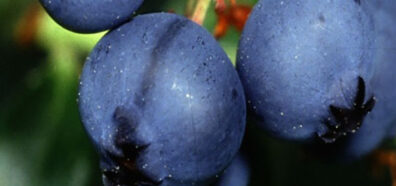
Harvested by hand and machine, about half the crop is sold for fresh market, and half is processed. Yields and quality in this area are high relative to traditional production areas in the Midwest and eastern North America. New cultivars are replacing older ones and production is modernizing so the industry remains competitive on a national and international stage. The county produces some organic blueberry, but most growers are not certified organic due to high disease and pest pressure.
Blackberries
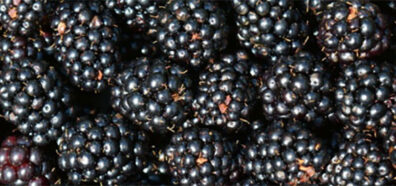
Skagit County leads in-state blackberry production, and the acreage of this crop has expanded in recent years due to a rise in fresh market opportunities. Winter hardiness is an important barrier to cultivating blackberries in northwest Washington with semierect cultivars (e.g., ‘Celestial’) being more adapted than trailing cultivars (e.g., ‘Marion’). Blackberry/red raspberry hybrids such as ‘Tayberry’, ‘Boysen’, and ‘Logan’ are also cultivated on a small scale for local markets.
Bulb Crops

Approximately 700 acres of tulips and daffodils are grown in Skagit County. They are sold for both cut flowers and bulbs and shipped throughout the U.S. and Canada. About 20 million bulbs are harvested each summer in Skagit County. About 75 million cut flowers are grown in greenhouses and fields, accounting for over 50% of overall sales. About 500 acres of tulips are grown in the Valley, which represents 75% of U.S. commercial production. Skagit County is known worldwide for its Tulip Festival, which occurs the entire month of April. The Tulip Festival began in 1984 and now brings an estimated 300,000 visitors and $65 million in revenue to the county.
The bulb industry averages about $20 million in annual gross income, $3 million of which is in bulb sales. Since 1968, flower prices have increased three times, while bulbs have only doubled, but prices have decreased steadily since 2000. There are now only two bulb-growing farms in the region. Iris production was discontinued in 2016.
Brussels Sprouts, Cauliflower and Broccoli
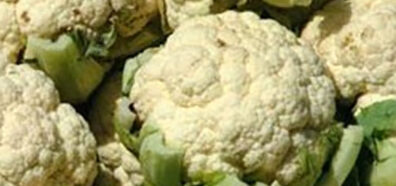
All Skagit County Brussels sprouts, cauliflower and broccoli are grown for fresh market. Head quality is exceptionally high in this region. Approximately 60% to 80% of the Brussels sprouts, broccoli and cauliflower grown in Skagit is consumed in Oregon, Washington, and British Columbia. Skagit farmers grew about 2,500 acres of Brussels sprouts, cauliflower and broccoli this year. Farmers in the Skagit Valley maintained acreages for these important rotational crops in largely for the disease suppression that brassica crops provide via biofumigation.
Chickens and Eggs

Washington is ranked 19th in the nation for egg production. Two companies produce the majority of the eggs in Skagit County: National Foods and Wilcox Farms. These two farms account for hundreds of millions of eggs being produced in Skagit County and Washington State.
In 2024 the retail price for a dozen eggs in the United States was rose from $1.97 to $3.23 U.S. dollars. Setting a new
peak that hasn’t been seen since 2015.
The sole Washington-owned chicken processor in the state, Draper Valley Farms, is located in Mount Vernon. The company employs approximately 500 people and has sales around 80 million dollars.
In the United States, the price for a pound of fresh whole chicken cost consumers an average of $2.06 which, has increased over previous years.
CROPS C-R
Cucumbers
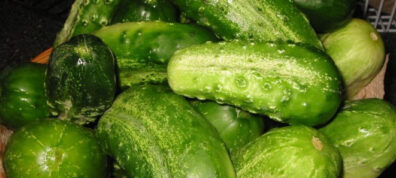
The lone large scale commercial pickle cucumber processor in Washington State is Gielow Pickles located at the Port of Skagit County with headquarters located in Lexington, MI. According to their website, “Making pickles is in our blood. When our family began making pickles in the early 1900’s, our goal was to make the highest quality pickle at a competitive price. Today, our goal remains the same. The use of automated packaging equipment, direct contact with growers across America, and the buying power of the market leaders enables Gielow Pickles to accomplish our goal.”
Potatoes
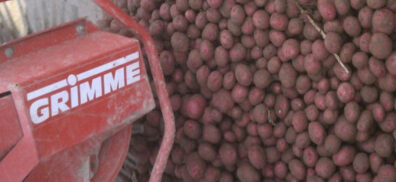
Potato acreage consists primarily of fresh market reds, whites, yellows, purple, fingerlings and some chipping potatoes. Skagit potatoes are in demand for their high quality. Late blight disease is a constant threat to the industry; however, due to a study of all the growers in Skagit and northern Snohomish counties, WSU Skagit County Extension was able to determine that Potato Virus Y (PVY) and Silver Scurf continues to be more of a problem for area growers. Researchers at WSU NWREC and WSU Skagit County Extension are now working on these issues. Because of the need for a three-year rotation, there is limited ground available for the 11,000 acres of potatoes currently grown in Skagit County. Overall production remained relatively constant for potatoes despite consolidation of the industry. There were over 2000 acres of potatoes that were not harvested in 2024 based on heavy rains throughout the harvest season.
Raspberries
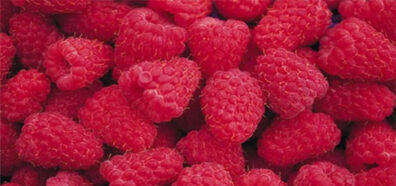
Most of the raspberry acreage in Skagit County is now harvested by hand for the fresh market due to a major reduction in raspberry production for processing beginning around 2010 and a switch from raspberry to blueberry production. Most of the raspberry production in Washington State is concentrated in Whatcom County with key cultivars including ‘Meeker’, ‘Kulshan’, and ‘WakeField’. Important fresh market cultivars for Skagit County includes ‘Prelude’, ‘Tulameen’, and some producers are trialing proprietary genetics.
Seed Crops
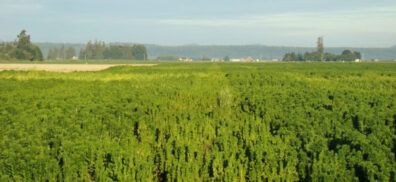
A large variety of vegetable seed crops are grown in the Skagit Valley; the top 3 in both acreage and farmgate value are spinach, cabbage and beet seed. Skagit and Snohomish counties produce nearly 75% of the US supply of spinach and cabbage seed and nearly 95% of the U.S. table beet seed. Skagit County is known as a significant world contributor with approximately 8% of the world’s spinach seed, 25% of the world’s cabbage seed, and 25% of the world’s beet seed. Other vegetable seeds produced in Skagit County include arugula, broccoli, Chinese cabbage, coriander, mustard, parsley, parsnip, rutabaga, swiss chard and turnip.
Vegetable seed production is highly technical and often involves long rotation intervals— sometimes stretching beyond a decade. Skagit County farmers have developed innovative tools and cultural practices along with a close relationship with Washington State University research scientists and Extension professionals to be proactive in managing specialty seed crops challenges.
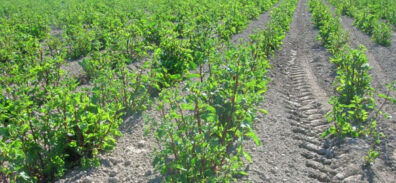
Vegetable seeds from the Skagit County are marketed all over the world. The need for isolation distances to prevent contamination from cross-pollination keeps the vegetable seed acreage below 5,000 acres in Skagit County. Skagit-based seed companies contract some of their acreage with Snohomish, Island, Whatcom, and Clallam County growers. To protect these areas, seed companies joined together in the 1940s to designate where the crops would be grown. On the first Monday in March and again in June, the seed companies meet at WSU NWREC for the annual pinning days that determine which crop/variety will be planted and where. It is this spirit of cooperation that keeps the seed industry growing in Skagit County.
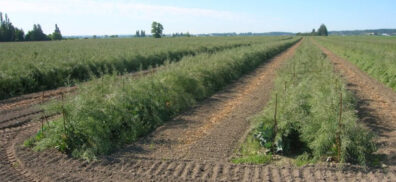
Beet and spinach seed yields were average in 2024 due to wetter conditions.
Of the cabbage that survived the winter of 2023/2024 seed harvest was above average due to wetter weather conditions.
There are nine vegetable seed companies in Skagit County: Sakata, Illinois Foundation, McDonald, Rijk Zwaan, Schafer, Skagit Seed Services, Syngenta, Universal and Vikima Seeds USA.
Some turf and forage grasses for seed are also grown in Skagit County; production varies widely depending upon market volatility.
CROPS S-Z
Strawberries
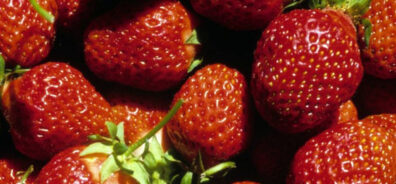
Skagit County produces high quality strawberries that historically were sold on the processing market. Strawberry acreage is decreasing in Skagit County and elsewhere in Washington State due to shifting markets, difficulty securing labor, and the disbanding of the in-state strawberry commission. Many growers are shifting to day-neutral, fresh market cultivars to capture more of the fresh market. Important processing cultivars are ‘Puget Reliance’, ‘Totem’, ‘Tillamook’, ‘Hood’, and ‘Sweet Sunrise’. ‘Albion’ is the top fresh-market, day-neutral cultivar.
Wine Grapes
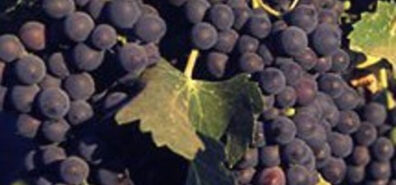
The marine climate in the Skagit Valley is similar in many ways to the fine-wine-producing areas of France and Germany. Research conducted from 1976 to 1988 at WSU NWREC produced several white wine grape varieties, which have already proven successful in area vineyards. More recent research involves projects in evaluating new wine grape varieties, and rootstock trials evaluating potential for earlier maturity in ‘Pinot Noir’ grapes.
Currently, there are 7 wineries producing 25,000 cases of wine on approximately one hundred acres valued at over $1 million.
Organic Farming
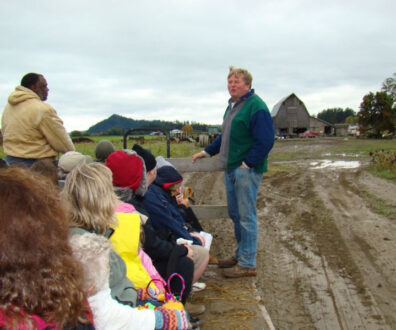
Organic production continues to grow in Skagit County is valued at more than thirty million dollars making it the highest organic agricultural producing county in Western Washington.
WSU Skagit County Extension has been teaching the Cultivating Success Beginning Farmer and Rancher course and the Agricultural Entrepreneur bilingual 12-week course in partnership with Skagit Valley College since 2006. To date more than 600 students have been educated on organic/sustainable agricultural production.
Dairy
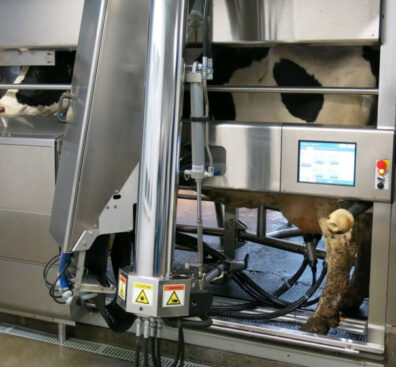
U.S. dairy product consumption statistics reveal interesting trends. The USDA’s Economic Research Service reports the following changes between 1975 and 2013:
- Milk and cream: 28% decrease in consumption
- Yogurt: 645% increase in consumption
- Cheese: 89% increase in consumption
- Evaporated and condensed milk: 16% decrease in consumption
- Frozen products: 23% decrease in consumption
Table 1. Skagit County Milk Production Data 2012-2024
| Year | Number of Dairies Start of Year | Number of Dairies End of Year | Total Pounds Milk Produced | Uniform Average Milk Price/cwt* | Total Milk Cows Skagit Inventory |
| 2024 | 8 | 8 | 45,258,042 | $19.95 | 9,500 |
| 2023 | 16 | 8 | 100,616,221 | $18.33 | 9,300 |
| 2022 | 20 | 16 | 67,882,343 | $ 23.31 | 13,900 |
| 2021 | 22 | 20 | 216,921,976 | $16.64 | 15,000 |
| 2020 | 26 | 23 | 255,033,223 | $15.57 | 15,500 |
| 2019 | 30 | 26 | 262,945,486 | $16.76 | 15,000 |
| 2018 | 30 | 29 | 279,152,302 | $14.83 | 14,700 |
| 2017 | 30 | 30 | 279,118,178 | $16.16 | 14,500 |
| 2016 | 30 | 30 | 277,208,444 | $14.67 | 14,500 |
| 2015 | 29 | 30 | 287,906,784 | $15.59 | 14,000 |
| 2014 | 29 | 29 | 299,584,645 | $22.66 | 13,500 |
| 2013 | 30 | 29 | 280,182,987 | $18.84 | 13,000 |
| 2012 | 31 | 30 | 270,573,960 | $17.20 | 14,100 |
* Weighted Average Uniform Price = Class III milk price + producer price differential.
Table 2. Skagit County Milk Production Data 2024
| Month | Pounds of Milk Produced | Price/cwt | Total Value | Dairies | Total WA Dairies |
| January | 2,236,341 | 17.39 | 388,900 | 8 | 154 |
| February | 2,145,163 | 17.96 | 385,271 | 8 | 155 |
| March | 2,216,003 | 18.41 | 407,966 | 8 | 148 |
| April | 2,318,000 | 18.26 | 423,266 | 8 | 147 |
| May | 2,372,816 | 19.52 | 463,174 | 8 | 146 |
| June | 2,199,686 | 20.57 | 452,475 | 8 | 139 |
| July | 2,213,656 | 20.87 | 461,990 | 8 | 137 |
| August | 2,263,123 | 21.37 | 483,629 | 8 | 136 |
| September | 9,431,975 | 22.59 | 2,130,683 | 12 | 217 |
| October | 9,062,398 | 21.67 | 1,963,821 | 12 | 213 |
| November | 8,798,881 | 20.90 | 1,838,966 | 12 | 210 |
| December | 2,261,701 | 19.94 | 450,983 | 8 | 135 |
| TOTALS | 45,258,042 | 19.95 | 9,851,124 | 10 avg. | 161 avg. |
Vegetable Seed
Table 1. Vegetable Seed Production in Western Washington (Acres)
| Harvest Year | Skagit County Beet | Skagit County Cabbage | Skagit County Spinach | Skagit County Misc. | Total Skagit County | Total Clark | Total Clallam | Total Cowlitz | Total Island | Total Jefferson | Total Lewis | Total Snohomish | Total Whatcom | Total Western Washington |
| 2024 | 535 | 513 | 1994 | 42 | 3084 | 40 | 55 | 12 | 34 | 0 | 60 | 619 | 124 | 4028 |
| 2023 | 290 | 570 | 2069 | 112 | 3041 | 5 | 53 | 416 | 28 | 6 | 72 | 559 | 273 | 4453 |
| 2022 | 313 | 503 | 1839 | 147 | 2802 | 2 | 85 | 485 | 28 | 0 | 110 | 407 | 116 | 4035 |
| 2021 | 319 | 416 | 1841 | 142 | 2718 | 300 | 30 | 250 | 75 | 10 | 125 | 500 | 100 | 4108 |
| 2020 | 300 | 200 | 1500 | 40 | 2040 | 350 | 30 | 250 | 75 | 10 | 150 | 650 | 80 | 3635 |
| 2019 | 345 | 189 | 2045 | 45 | 2624 | 344 | 32 | 251 | 62 | NA | 116 | 643 | 70 | 4142 |
| 2018 | 598 | 271 | 2036 | 67 | 2972 | 35 | 35 | 493 | 57 | 10 | 176 | 766 | 94 | 4638 |
| 2017 | 486 | 260 | 1956 | 17 | 2719 | NA | NA | NA | 67 | 10 | 300 | 742 | 54 | 3892 |
| 2016 | 581 | 236 | 1260 | 45 | 2122 | NA | NA | NA | 73 | 10 | 300 | 507 | 45 | 3057 |
| 2015 | 609 | 250 | 1227 | 25 | 2111 | NA | NA | NA | 56 | 10 | 250 | 503 | 43 | 2973 |
| 2014 | 734 | 202 | 1622 | 20 | 2578 | NA | NA | NA | 50 | 10 | 200 | 252 | 30 | 3120 |
| 2013 | 1005 | 322 | 2139 | 25 | 3491 | NA | NA | NA | 59 | 1 | NA | 479 | 50 | 4080 |
| 2012 | 733 | 388 | 1847 | 50 | 3018 | NA | NA | NA | 44 | 1 | NA | 531 | 57 | 3651 |
| 2011 | 668 | 339 | 1454 | 68 | 2529 | NA | NA | NA | 76 | 1 | NA | 235 | NA | 2841 |
| 2010 | 512 | 495 | 1619 | 44 | 2670 | NA | NA | NA | 46 | 1 | NA | 384 | NA | 3101 |
| 2009 | 305 | 433 | 1631 | 75 | 2444 | NA | NA | NA | 70 | NA | NA | 315 | NA | 2829 |
| 2008 | 457 | 381 | 1456 | 20 | 2314 | NA | NA | NA | 60 | NA | NA | 367 | NA | 2741 |
| 2007 | 530 | 400 | 1493 | 80 | 2503 | NA | NA | NA | 73 | NA | NA | 272 | 26 | 2874 |
| 2006 | 519 | 352 | 1680 | 69 | 2620 | NA | NA | NA | 60 | NA | NA | 458 | NA | 3138 |
Table 2. Vegetable Seed Production in Western Washington (Dollars)
| Harvest Year | Skagit Beet | Skagit Cabbage | Skagit Spinach | Skagit Misc. | Total Skagit | Total Clark | Total Clallam | Total Cowlitz | Total Island | Total Jefferson | Total Lewis | Total Snohomish | Total Whatcom | Total Western Washington |
| 2024 | 1,872,500 | 3,078,000 | 6,979,000 | 210,000 | 12,139,500 | 160,000 | 220,000 | 48,000 | 136,000 | 0 | 240,000 | 2,476,000 | 496,000 | 15,915,500 |
| 2023 | 1,015,000 | 3,135,000 | 7,241,500 | 504,000 | 11,895,500 | 22,500 | 238,500 | 1,872,000 | 126,000 | 27,000 | 324,000 | 2,515,500 | 1,228,500 | 18,249,500 |
| 2022 | 1,095,500 | 2,766,500 | 6,436,500 | 661,500 | 10,960,000 | 9,000 | 382,500 | 2,182,500 | 112,500 | 0 | 495,000 | 1,831,500 | 522,000 | 16,495,000 |
| 2021 | 797,500 | 2,080,000 | 5,523,000 | 426,000 | 8,826,500 | 1,000,000 | 90,000 | 700,000 | 700,000 | 100,000 | 375,000 | 2,500,000 | 500,000 | 14,791,500 |
| 2020 | 900,000 | 1,000,000 | 4,500,000 | 120,000 | 6,520,000 | 1,050,000 | 90,000 | 750,000 | 750,000 | 100,000 | 450,000 | 3,250,000 | 800,000 | 13,760,000 |
| 2019 | 1,035,000 | 1,890,000 | 6,135,000 | 135,000 | 9,195,000 | 1,032,000 | 144,000 | 753,000 | 620,000 | NA | 464,000 | 3,215,000 | 700,000 | 16,123,000 |
| 2018 | 1,794,000 | 2,710,000 | 6,108,000 | 201,000 | 10,813,000 | 227,500 | 175,000 | 1,479,000 | 570,000 | 100,000 | 528,000 | 4,100,000 | 470,000 | 18,462,500 |
| 2017 | 1,458,000 | 2,598,000 | 5,868,000 | 51,000 | 9,975,000 | NA | NA | NA | 670,000 | 100,000 | 1,500,000 | 3,707,500 | 530,000 | 16,482,500 |
| 2016 | 2,324,000 | 2,362,000 | 3,780,000 | 135,000 | 8,601,000 | NA | NA | NA | 728,000 | 100,000 | 1,500,000 | 2,532,500 | 450,000 | 13,911,500 |
| 2015 | 1,827,000 | 1,250,000 | 3,681,000 | 75,000 | 6,833,000 | NA | NA | NA | 278,000 | 100,000 | 500,000 | 1,509,000 | 213,000 | 9,433,000 |
| 2014 | 2,202,000 | 2,016,000 | 4,866,000 | 60,000 | 9,144,000 | NA | NA | NA | 150,000 | 400,000 | 800,000 | 1,004,000 | 150,000 | 11,648,000 |
| 2013 | 1,512,500 | 1,932,000 | 5,347,500 | 62,500 | 8,854,500 | NA | NA | NA | 292,500 | 2,500 | NA | 2,395,000 | 250,000 | 11,794,500 |
| 2012 | 1,899,000 | 1,940,000 | 5,541,000 | 75,000 | 9,455,000 | NA | NA | NA | 217,500 | 1,500 | NA | 1,703,000 | 388,500 | 11,765,500 |
| 2011 | 2,004,000 | 1,693,500 | 4,847,000 | 102,000 | 8,646,500 | NA | NA | NA | 381,500 | 1,500 | NA | 705,000 | NA | 9,734,500 |
| 2010 | 1,536,000 | 2,473,500 | 4,857,000 | 132,000 | 8,998,500 | NA | NA | NA | 230,250 | NA | NA | 1,152,000 | NA | 10,380,750 |
| 2009 | 915,000 | 2,166,250 | 4,894,500 | 225,000 | 8,200,750 | NA | NA | NA | 347,500 | NA | NA | 1,017,000 | NA | 9,565,250 |
| 2008 | 1,143,300 | 1,905,500 | 4,366,599 | 100,000 | 7,515,399 | NA | NA | NA | 300,000 | NA | NA | 1,100,100 | NA | 8,915,499 |
| 2007 | 953,640 | 1,198,500 | 2,238,750 | 120,000 | 4,510,890 | NA | NA | NA | 219,000 | NA | NA | 527,700 | 78,000 | 5,335,590 |
| 2006 | 519,000 | 352,800 | 1,680,000 | 39,000 | 2,590,800 | NA | NA | NA | 180,450 | NA | NA | 458,000 | 120,300 | 3,349,550 |
Crop Acreage/Yield
Table 1. Skagit County Crop Acreage Summary
| Crop | 2024 | 2020 | 2010 | 2000 | 1990 |
| Apples | 125 | 100 | 100 | 373 | 103 |
| Blackberries | 550 | 500 | 60 | n/a | n/a |
| Blueberries | 4,800 | 4,500 | 1,200 | 625 | n/a |
| Brussels Sprouts | 2,100 | 2000 | 10 | n/a | n/a |
| Carrots (processing) | 0 | 0 | 200 | 800 | 468 |
| Cucumbers (processing) | 400 | 500 | 1000 | 2396 | 1900 |
| Beans | 2,600 | 2000 | 1 | n/a | n/a |
| Field Crops (2) | 34,500 | 34,000 | 35,000 | 22650 | 33050 |
| Grass Seed | 2,600 | 2000 | 650 | 1081 | n/a |
| Misc. Crops (3) | 4,100 | 4,000 | 4,000 | 3623 | 665 |
| Peas (processing) | 0 | 0 | 0 | 7233 | 14880 |
| Potatoes | 11000 | 12000 | 10500 | 9500 | 7250 |
| Rasp/Blueberries | See separate listing | See separate listing | See separate listing | See separate listing | 420 |
| Raspberries | 225 | 300 | 1300 | 1441 | n/a |
| Strawberries | 425 | 500 | 475 | 390 | 615 |
| Sweet Corn (processing) | 0 | 0 | 0 | 0 | 616 |
| Vegetable Seed | 3040 | 2,040 | 2669.7 | 3800 | 3375 |
Statistical Summary
| Crop | 2024 | 2020 | 2010 | 2000 | 1990 |
| Apples(1) | 200,000 | 150,000 | 200,000 | 865,200 | 592,250 |
| Blackberries | 2,000,000 | 1,500,000 | 30,000 | n/a | n/a |
| Blueberries | 27,500,000 | 22,500,000 | 6,000,000 | 3,011,646 | xxx |
| Brussels Sprouts | 12,000,000 | 10,000,000 | 50,000 | n/a | n/a |
| Carrots processing) | 0 | 0 | 600,000 | 985,600 | 493,794 |
| Cucumbers (processing) | 500,000 | 500,000 | 1,500,000 | 5,220,773 | 4,944,034 |
| Dairy (milk sold) | 9,851,124 | 39,626,975 | 40,854,426 | 43,895,519 | 53,122,168 |
| Beans | 4,000,000 | 3,000,000 | 1,500 | n/a | n/a |
| Eggs and Fryers (2) | 35,000,000 | 27,500,000 | 25,000,000 | 12,309,000 | 14,016,877 |
| Field Crops (3) | 50,000,000 | 35,000,000 | 30,000,000 | 9,423,600 | 12,844,718 |
| Grass Seed | 4,000,000 | 3,000,000 | 487,500 | 545,000 | xxx |
| Livestock | 20,000,000 | 12,500,000 | 7,500,000 | 8,123,000 | 4,400,000 |
| Misc.Crops (4) | 42,500,000 | 35,000,000 | 20,000,000 | 16,944,598 | 2,046,600 |
| Nursery & Greenhouse, Floriculture & Sod | 65,000,000 | 55,000,000 | 50,000,000 | 56,207,469 | 24,000,000 |
| Peas (processing) | 0 | 0 | 0 | 3,044,092 | 5,640,903 |
| Potatoes | 70,000,000 | 60,000,000 | 52,500,000 | 52,725,000 | 33,746,600 |
| Raspberries/ Blueberries | See separate listings | See separate listings | See separate listings | See separate listings | 1,179,450 |
| Raspberries | 1,000,000 | 900,000 | 8,400,000 | 4,143,347 | xxx |
| Strawberries | 2,000,000 | 1,750,000 | 2,500,000 | 2,725,643 | 2,496,280 |
| Sweet Corn (processing) | 0 | 0 | 0 | 0 | 187,828 |
| Vegetable Seed (5) | 11,700,000 | 6,520,000 | 10,380,750 | 7,566,503 | 3,144,352 |
| TOTALS | 357,251,124 | 314,446,975 | 256,004,176 | 227,735,900 | 162,855,854 |
Crops Grown
Commercial Crops Grown in Skagit County
Fruit
| Aronia* | Currant* | Raspberry |
| Blackberry | Lingonberry* | Strawberry |
| Blueberry | Loganberry* | Tayberry* |
| Boysenberry* | Marionberry* | >Watermelon* |
| Cantaloupe* | Wine Grape |
Tree Fruit
| Asian pear* | Hasselnut/Filbert | Quince* |
| Peach* | Pear* |
Vegetables
| Artichoke | Cabbage | Onion* |
| Asparagus and asparagus root* | Carrot | Parsley* |
| Basil* | Cauliflower | Parsnip* |
| Bean Beet* | Chives* | Pepper |
| Bok Choy* | Cucumber | Potato |
| Broccoli | Garlic* | Pumpkin |
| Brussels sprout | Green pea* | Radish* |
| Burdock* | Hothouse Tomato* | Rhubarb* |
| Cabbage | Kale* | Salad Mix Spinach* |
| Carrot | Kohlrabi* | Summer squash |
| Cauliflower | Leek | Sweet corn |
| Chives* | Lettuce | Swiss chard* |
| Cucumber | Mizuna* | Tomatillo* |
| Tomato* | Turnip* | Winter squash |
Seed Crops
| Arugula | Chinese mustard | Kale |
| Broccoli-raab | Coriander | Kohlrabi |
| Brussels sprouts | India mustard | Parsley |
| Cabbage | Kale | Parsnip |
| Cauliflower | Kohlrabi | Radish |
| Chinese cabbage | Parsley | Rutabaga |
| Chinese kale | Parsnip | Spinach |
| Swiss chard | Table Beet | Turnip |
Seed/Pulse Crops (Other)
| Ryegrass | Tall fescue |
Small Grains
| Oats | Triticale | Wheat |
Forage Crops
| Alfalfa | Field corn | Silage grass |
Flowers and Bulbs
| Lily | Tulip |
Miscellaneous Crops
| Bamboo | Christmas trees | Dill* |
| Fennel* | Gourds* | Hybrid poplar |
| Marijuana | Sod | Tea* |
Involvement
Organizations, Businesses and Agencies Serving Skagit County Agriculture
| Agrilink Foods | Natural Resources Conservation Service | Twin City Foods |
| Bank of the Pacific | Northwest Ag Business Center | Valley Pride Sales |
| Banner Bank | Northwest Agricultural Research Foundation | Vikima Seed USA |
| Skagit Dairy Women | Northwest Bulb Growers | Viva Farms |
| Skagit Farmers Supply | Northwest Farm Credit Services | WA Blueberry Commission |
| Skagit Seed Services | Northwest Food Processors Association | WA Lettuce & Vegetable Co. |
| Bio Huma Netics, Inc. | Pape Tractor | WA Red Raspberry Commission |
| Brim Tractor | Peoples Bank | WA Seed Potato Commission |
| Cascadian Farms | Puget Sound Seed Growers Association | WA State Dairy Federation |
| Conway Feed | Rabo Bank | WA State Potato Commission Western |
| Cucumber Industry Advisory Committee | Rijk Zwaan Seed | WA Agricultural Association |
| Farm Service Administration | Sakata Seed Company | Western WA Fruit Research Foundation |
| Farmers Equipment Company | Sakuma Bros. | Western WA Small Seed Advisory Committee |
| Gielow Pickles | Schafer Agriculture Services | Wilbur Ellis Company |
| Harmony Dairy | Skagit Conservation District | WSU Mount Vernon NW Research & Extension Center |
| Illinois Foundation Seed Company | Skagit County Cattlemen’s Association | WSU Clallam County Extension |
| Natural Resources Conservation Service | Skagit County Dairy Federation | WSU Clark County Extension |
| Northwest Ag Business Center | Skagit County Farm Bureau | WSU Jefferson County Extension |
| Northwest Agricultural Research Foundation | Skagit County Farmland Legacy Program | WSU Skagit County Extension |
Acknowlegements
We wish to express our appreciation to the following for their assistance in the gathering of data for this report:
| Capital Press | Northwest Agriculture Business Center | US Department of Commerce |
| Day Creek Poultry Farms | North Fork Nursery | US Department of Labor |
| Draper Valley Farms, Inc. | Ralph’s Greenhouse | Valley Pride Sales |
| Economic Development Alliance of Skagit | Sakuma Brothers Farm | Vikima Seed, USA |
| Farm Service Agency | Sakata Seed Company | Viva Farms |
| Gielow Pickles Inc. | Schafer Ag Services, LLC | Washington Agricultural Statistics Service |
| Harmony Dairy | Seminis Vegetable Seed Co. | Washington Bulb Co., Inc. |
| Hedlin Farms | Skagit Farmers Supply | Washington Fryer Commission |
| Hughes Farms | Skagit Seed Services | Washington State Potato Commission |
| Knutzen Farms | Skagit Select | Washington Red Raspberry Commission |
| McMoran Farms | Skagit Valley Herald | Washington State Employment Security Department |
| Merritt’s Apples | Skagit Valley Farms | Washington Strawberry Commission |
| National Oceanic Atmospheric Administration | Syngenta Seeds, Inc. | Western Washington Agriculture Association |
| Norm Nelson, Inc. | Universal Seed, Inc. | Wilbur Ellis Company |
| WSU Mount Vernon NW Washington Research and Extension Center |
