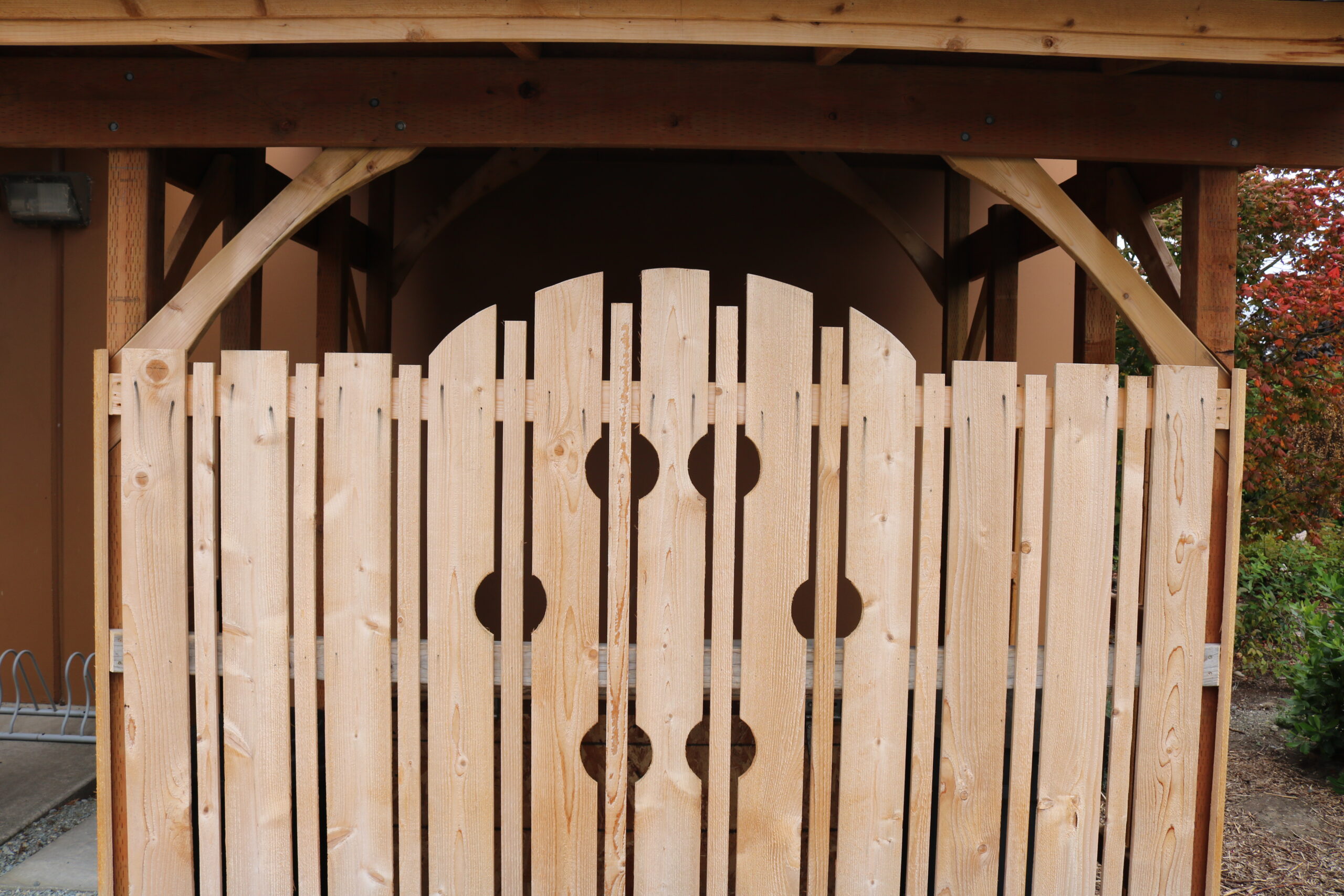
Throughout the growing season, the sorted and chipped prunings, browns and greens are combined and turned. Mother Nature does her part and gives us nutrient-rich compost in a year.
Composting reduces waste and provides an inexpensive treatment for home gardens and landscapes
Artistic Composting – Skagit County Master Gardener Foundation
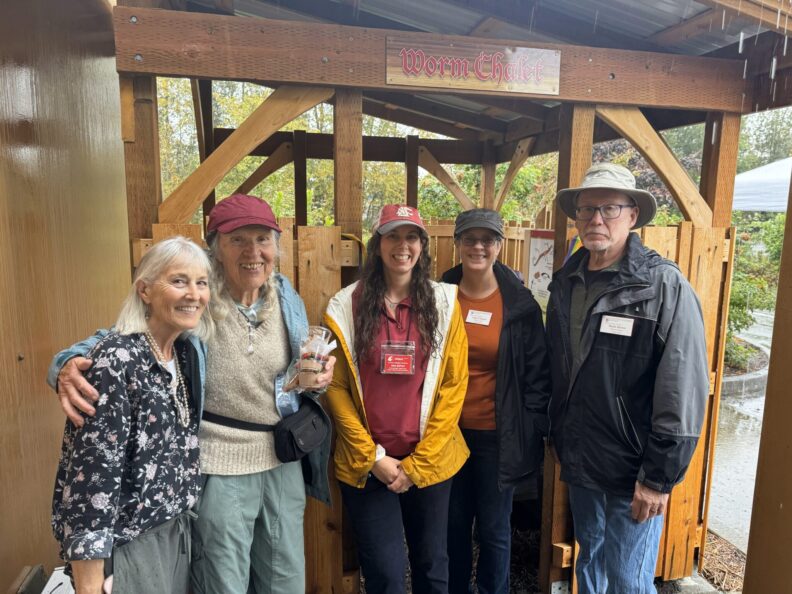
Rain did not dampen spirits for the Worm Chalet Ribbon Cutting ceremony held September 25, 2024. Read about it at CAHNRS News.
If you missed the ribbon cutting, stop by the Extension Office and take a self-guided tour and see how it fits into our broader Program Priorities.
The Worm Chalet is a food waste recycling station operated by Skagit County WSU Extension Office.

Let worms work for you! Reduce Food waste by recycling kitchen scraps and other organic materials into compost for your garden and landscape. Explore how a worm composting system can help make your garden more sustainable. Learn about its impact on Soil Health, Climate Change, and Local Food!
How it works:
The worm bin contains a bedding of woody mulch chips, brown leaves, partially decomposed greens, shredded card board or paper in which worms (red wigglers) find shelter, moisture, darkness and an even moderate temperature where they can live, eat, digest and procreate. Regularly added food scraps, once a week or so, ensure the worms have a constant stream of fresh nutrients to consume and to digest. To the degree that organic materials decompose and settle in the bottom of the bin, fresh moistened bedding materials are added occasionally (once a month for example). Overtime, the bin will fill up. Once a year you can harvest the castings by separating the worms from the compost.
What can the worms eat?
All kinds of organic materials at varying degrees of decay from fresh to rotten:
- Food leftovers, cooked or raw
- Scraps from vegetable preparation
- Coffee grounds
- Paper products (Paper, soiled paper plates, used paper cups, brown bags, cardboard) to be cut or shredded in small pieces.
What not to use:
- Meat, oil, fat, dairy, or citrus.
In general have a good mixture of diverse food, never a huge bulk of anything. After feeding cover the scraps with burlap cloth for neatness and to retain moisture.