
Tip Sheet #14
Climate Friendly Gardening

King County Gardening Tip Sheets
Tip Sheet #14 – Climate Friendly Gardening
More Information
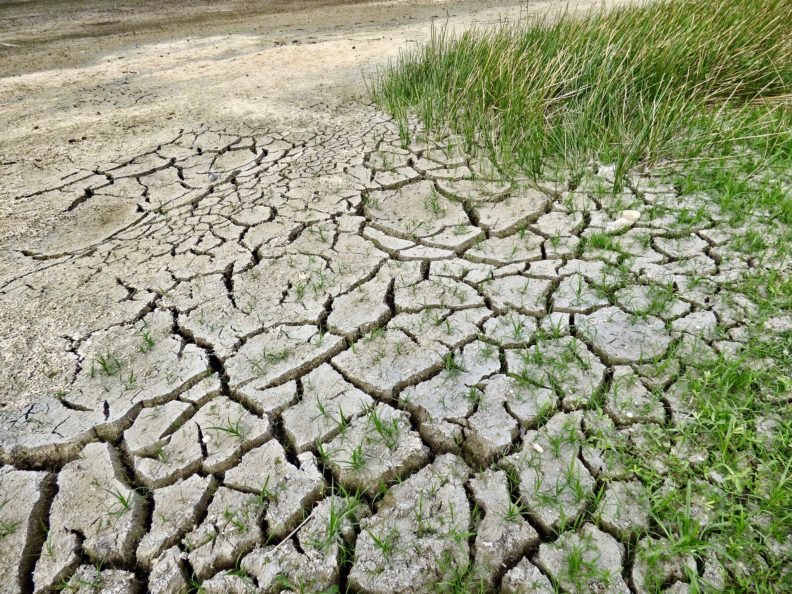
Gardeners can help reverse the accumulation of heat-trapping gases by growing plants and building healthy soils. How? Plants use the sun’s energy to pull carbon dioxide out of the air. They use it to make the sugar glucose needed for plant growth. Their roots secrete glucose and other carbon compounds to feed soil microbes that enhance plant health. The soil microbes also feast on decomposing plants and animal waste. As soil microbes die, their remains accumulate to create humus, the dark organic matter responsible for soil fertility. The carbon-rich humus in fertile soils keeps carbon out of the atmosphere for many years. Better management of our soils can capture and remove 21 percent of annual greenhouse gas emissions in the U.S.
Every gardener can help. Climate friendly gardening on the 136 million acres of residential land in the U.S. can make a considerable difference in reversing climate change. The following gardening techniques help store carbon in soils and in plants and trees.
Store Carbon in Garden Soils and Plants
Reduce Your Carbon Footprint
Additional Master Gardener Tip Sheets, including “Gardening Websites” and “Gardening Publications” are available at Tip Sheets. Also, see WSU’s “Gardening in Washington State” and free downloads of WSU gardening publications at WSU Extension Publications Store.
By Elizabeth S. Smoots, MD, physician and gardener in Seattle, and James W. Little, MD, physician and WSU Master Gardener in Seattle.
Detail image by Jo Davis.
References
1 The Intergovernmental Panel on Climate Change. 2018. Special Report: Global Warming of 1.5 Degrees C. The Intergovernmental Panel on Climate Change (IPCC), 10/2018. (The IPCC is the United Nations body for assessing the science related to climate change.) www.ipcc.ch/sr15/
2 United States Federal Government. 2018. Fourth National Climate Assessment, Volume II: Impacts, Risks, and Adaptation in the United States. United Stated Federal Government: United States Global Change Research Program, 11/23/2018. nca2018.globalchange.gov/
3 Patz, J., V. Stull, and V. Limaye. 2020. A low-carbon future could improve global health and achieve economic benefits. Journal of the American Medical Association 323 (13): 1247-1248.
4 Weddell, B., L. Carpenter-Boggs, and S. Higgins. 2012. Global Climate Change. Washington State University Extension Fact Sheet FS069E.
5 Onti, T., and L. Schulte. 2012. Soil Carbon Storage. Nature Education Knowledge 3 (10): 35.
www.nature.com/scitable/knowledge/library/soil-carbon-storage-84223790/
6 Fargione, J.E., S. Bassett, and T. Boucher. 2018. Natural climate solutions for the United States. Science Advances 4 (11): Published online 11/14/2018 at advances.sciencemag.org/content/4/11/eaat1869
7 Nickerson, C, R. Ebel, A. Borchers, and R. Carriazo. 2011. Major Uses of Land in the United States, 2007. United States Department of Agriculture, Economic Information Bulletin Number 89. www.ers.usda.gov/publications/pub-details/?pubid=44630
8 Marinelli, J. 2019. The Hidden Carbon Trap in Your Garden? It’s All About the Soil. Audubon, 4/19/2019. www.audubon.org/news/the-hidden-carbon-trap-your-garden-its-all-about-soil
9 Gies, E. 2016. Landfills have a huge greenhouse gas problem. Ensia, October 25, 2016. ensia.com/features/methane-landfills/
10 Chan, Y., R. Sinha and W. Wang. 2011. Emission of greenhouse gases from home aerobic composting, anaerobic digestion and vermicomposting of household wastes in Brisbane (Australia) 29 (5): 540-549.
11 O’Hara, B. No-Till Intensive Vegetable Culture: Pesticide-Free Methods for Restoring Soil and Growing Nutrient-Rich, High-Yielding Crops, First Edition (February 21, 2020). Chelsea Green Publishing, White River Junction, Vermont.
12 Montgomery, D., and A. Bikle. Hidden Half of Nature: The Microbial Roots of Life and Health, Reprint Edition (November 15, 2016). W. W. Norton & Company, New York, New York.
13 Dinius, P. 2015. Organic soil amendments in yards and gardens: How much is enough? Washington State University Master Gardener Program, February 16, 2015.
gardening.wsu.edu/organic-soil-amendments-in-yards-and-gardens-how-much-is-enough/
14 Cogger, C., D. Sullivan, and A. Bary. 2017. Backyard Composting. Washington State University Extension Home Garden Series EB1784E.
15 Chalker-Scott, L. 2014. Biochar: A Home Gardener’s Primer. Washington State University Extension Fact Sheet FS147E. pubs.extension.wsu.edu/biochar-a-gardeners-primer-home-garden-series
16 Chuanhui, G., J. Crane, G. Hornberger, and A. Carrico. 2015. The effects of household management practices on the global warming potential of urban lawns. Journal of Environmental Management 151: 233-244. pubmed.ncbi.nlm.nih.gov/25585139/
17 Sisson, P. 2019. In age of climate change, can our lawns be more than landscaping? Curbed, May 1, 2019. www.curbed.com/2019/5/1/18524512/landscaping-gardening-lawns-front-yards
18 Novak, D., E. Greenfield, R. Hoehn, and E. Lapoint. 2013. Carbon storage and sequestration by trees in urban and community areas of the United States. Environmental Pollution 178: 229-236. www.sciencedirect.com/science/article/pii/S0269749113001383?via%3Dihub
19 Lawrence, T. 2015. Pollination and Protecting Bees and Other Pollinators: Home Garden Series. Washington State University Extension Fact Sheet FS174E. pubs.extension.wsu.edu/pollination-and-pollinator-protection-home-garden-series
20 Ley, E., S. Buchmann, K. McGuire and R. Holmes. 2009. Selecting Plants for Pollinators: Pacific Lowland. North American Pollinator Protection Campaign. www.pollinator.org/pollinator.org/assets/generalFiles/PacificLowlandrx8_171017_090207.pdf
21 Lawrence, T., and W. Sheppard. 2013. Neonicotinoid Pesticides and Honey Bees. Washington State University Extension Fact Sheet FS122E.
22 Flynn R., and J. Idowu. 2015. Nitrogen fixation by legumes. New Mexico
State University College of Agricultural, Consumer and Environmental Sciences.
23 Lynch, T. 2020. How to Turn Your Yard Into an Ecological Oasis. Yes! Solutions Journalism, February 7, 2020. www.yesmagazine.org/environment/2020/02/07/yard-sustainability-native-plants
24 Schnabel, F., J. Schwartz and A. Danescu. 2019. Drivers of productivity and its temporal stability in a tropical tree diversity experiment. Global Change Biology 25 (12): 4257-4272.
25 Piantanida, D. 2008. Green Things Come in Large Packages. The EPA Blog, August 5, 2008.
26 Osborne, C. 2019. #NoMowDays and Other Ways to trim your Grass and Your Emissions. Utah Department of Environmental Quality, September 9, 2019. deq.utah.gov/communication/news/no-mow-days-trim-grass-emissions
27 Antonelli, A. 2014. Pest Control in Home Vegetable Gardens. Washington State University Extension Fact Sheet E009E. pubs.extension.wsu.edu/pest-control-in-home-vegetable-gardens
28 Russ, K. 2019. Less Toxic Insecticides. Clemson University Cooperative Extension Service, Home & Garden Information Center (Clemson, SC). hgic.clemson.edu/factsheet/less-toxic-insecticides/
29 Cleary, J., N.T. Roulet, and T.R. Moore. 2005. Greenhouse gas emissions from Canadian
peat extraction, 1990–2000: A life-cycle analysis. Ambio 34(6): 456–461.
30 Hawken, P. Drawdown: The Most Comprehensive Plan Ever Proposed to Reverse Global Warming, First Edition (April 18, 2017). Penguin Random House, New York, New York.
Washington’s Water: Climate Change. Washington State University Extension. extension.wsu.edu/water/climate-change/