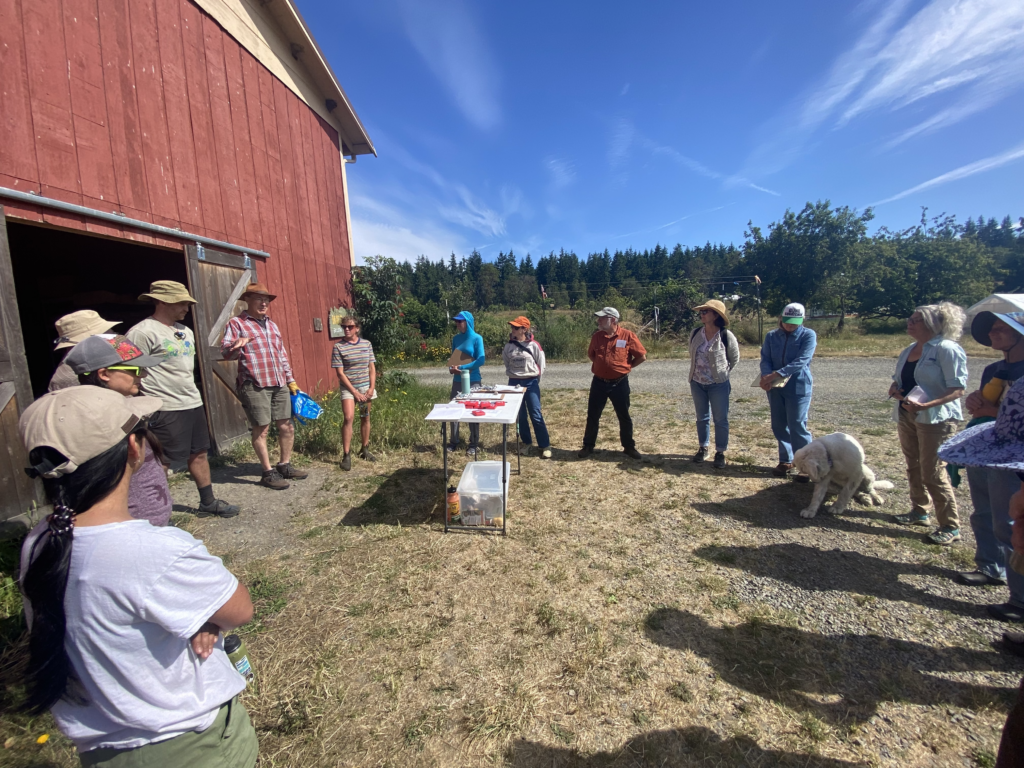
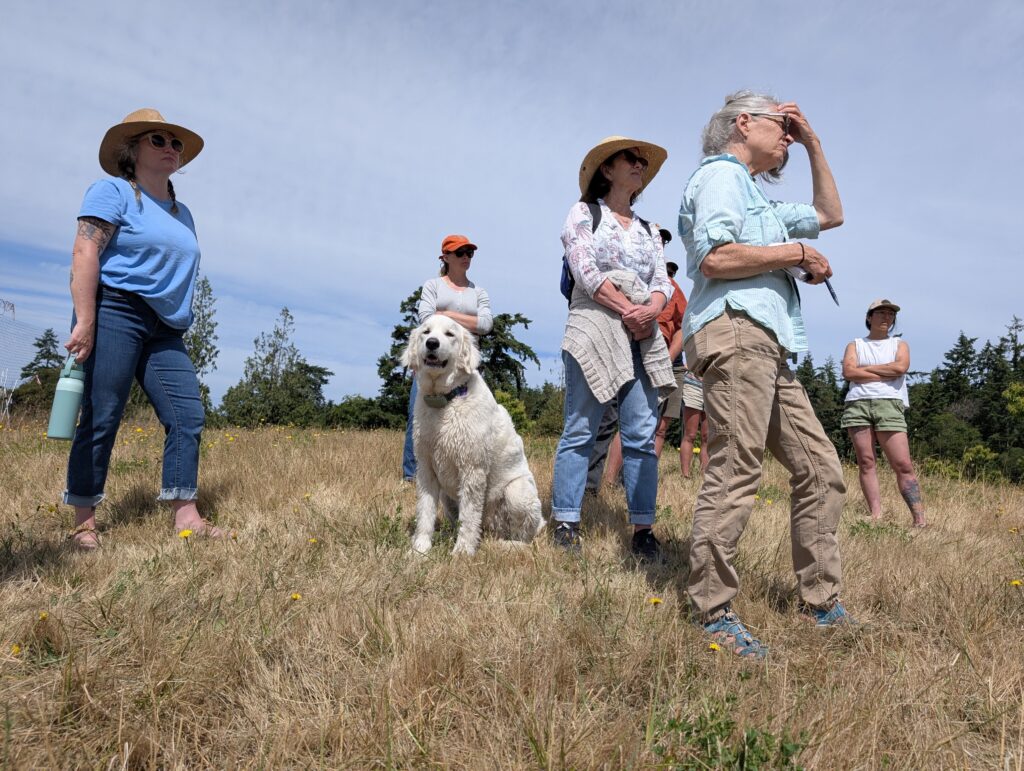
At one of our recent Dirt Talk Farm Walks in early July, hosted by the WSU Regional Small Farms Program, farmers from around the region gathered to discuss a popular topic: collaborative farming. The learning opportunity took place at Natembea Farm, a 97-acre piece of land in Port Townsend. The land was purchased by Pablo and Devon Cohn in 2016. Their goal was to save the historical farmland from development and continue a legacy of local, sustainable food production while providing affordable farmland for lease. Pablo helped lead the farm walk, along with 4 of the 6 farmers that currently steward the land: Theresa Kim of Mollayo Farm, Hailey Lampe of The Hedgerow by Cruising Climate, Pierce Kennedy of Soft Step Farm and Elyse Carter of Fig and Otter Farm.
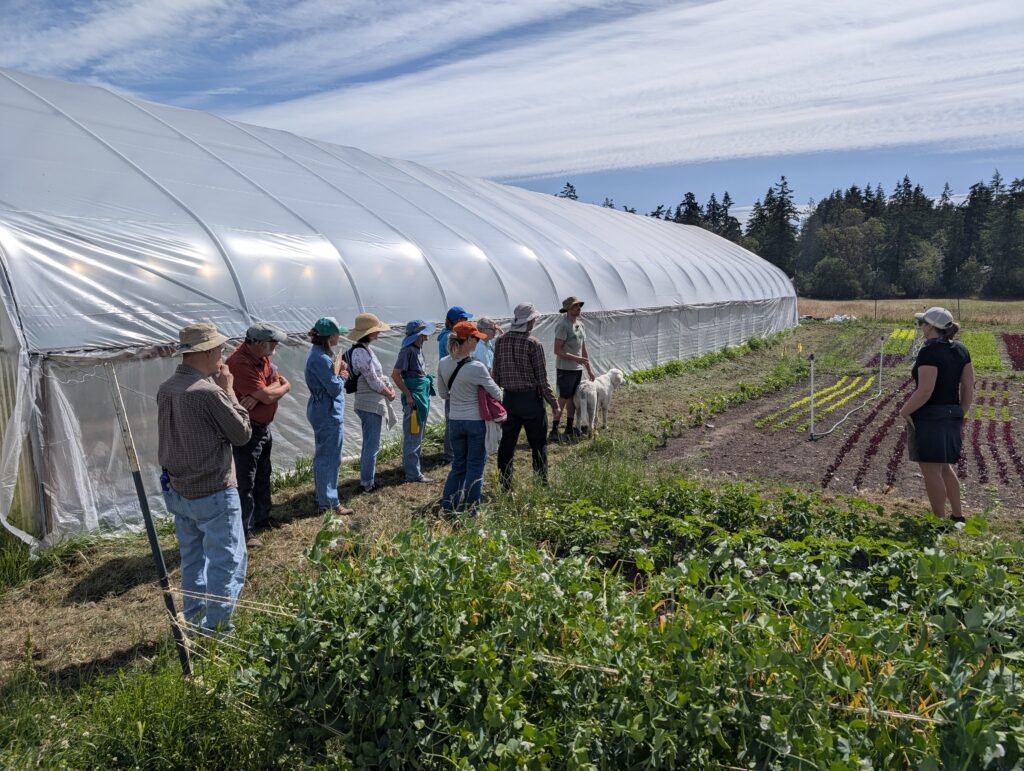
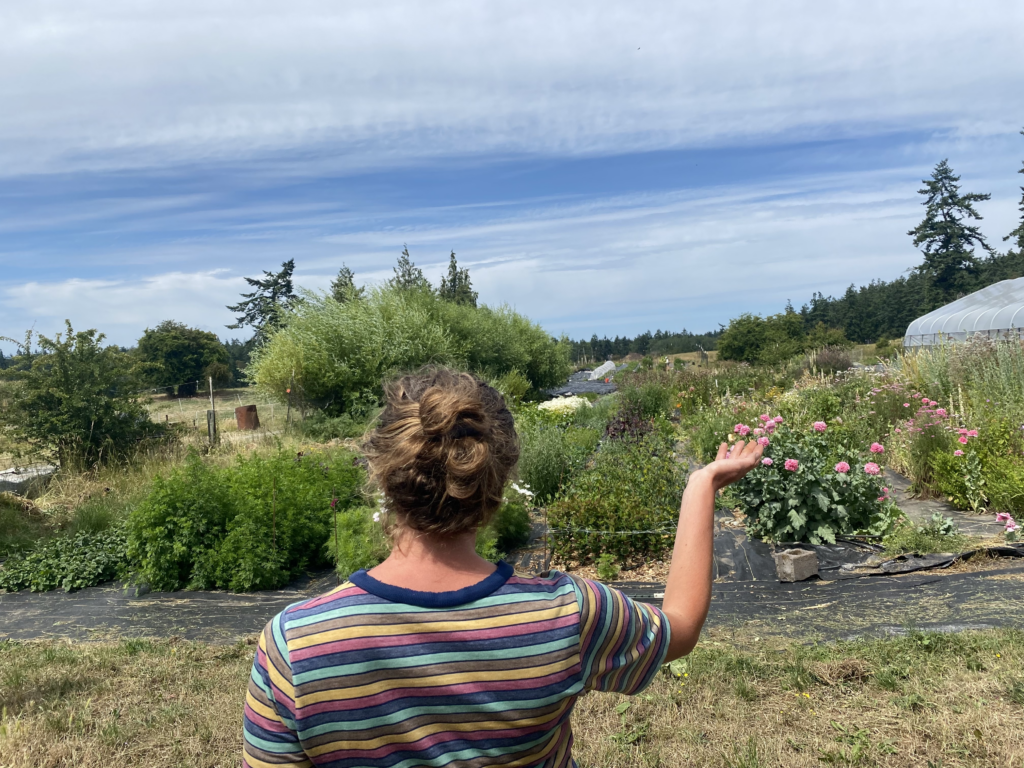
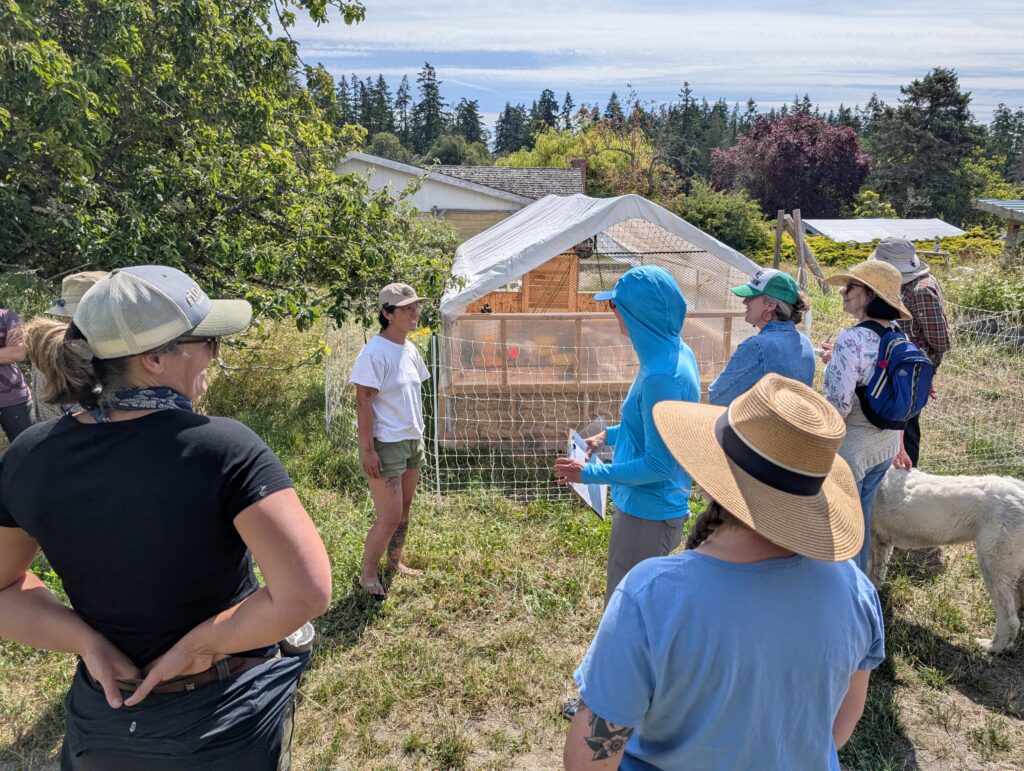
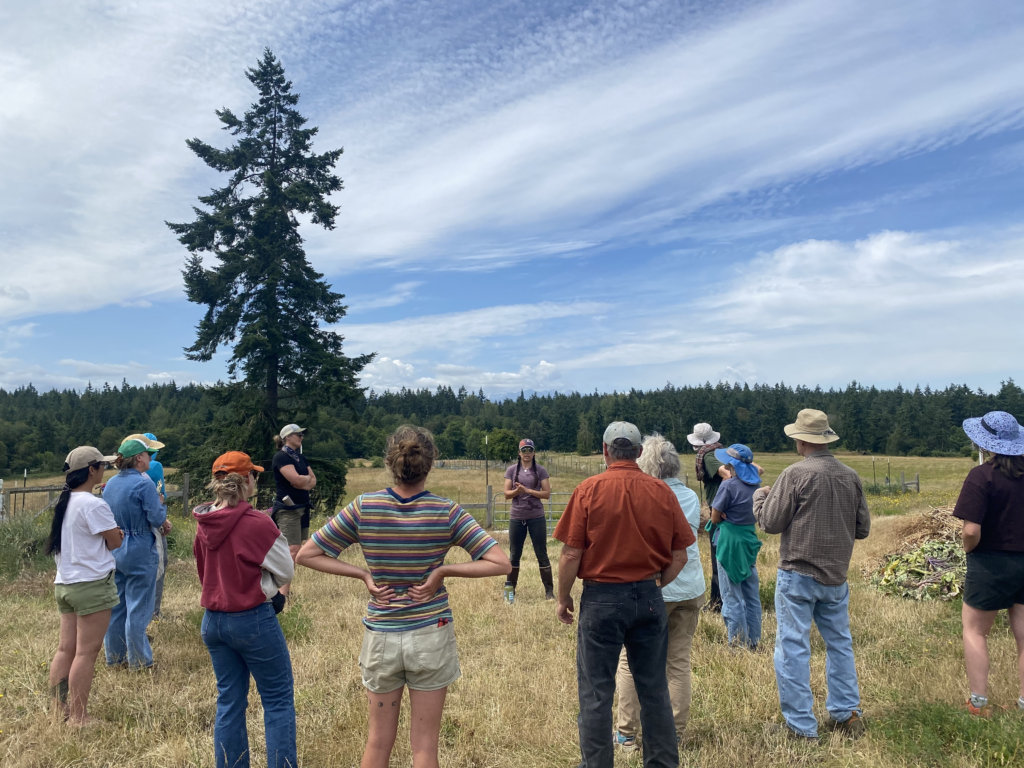
Collaborative farming is a term with myriad definitions and is usually defined by the farm itself. Oftentimes the terms collective, collaborative, and cooperative are used interchangeably, though cooperative is a term with a legal definition. A collaborative may be a farm where individual farmers work and sell together for one business; it may be a piece of land where many individual farm businesses work separately under separate leases. The structure can range from informal handshake leases to complex documents that outline all the fine details and involve input from lawyers. Emerging trends in collaborative farming reflect rising challenges such as limited access to affordable land, high startup costs, and expensive infrastructure. Collaborative farming offers a creative solution that allows farmers to maintain autonomy while benefiting from shared resources.
In the case of Natembea, the farmers run separate businesses and operate under different leases, tailored to the various needs of the individual farmers. Pablo emphasizes that the leases are asymmetrical, in order to place more power in the hands of the farmer instead of the landowner. To explain, he gives an example: if the farmer needs to break their lease, they have to give 30 days’ notice. If the landowner wants to end the lease, they have to give a couple years notice, giving the farmer plenty of time to shift their business to a different parcel of land.
The farm businesses range in scope and purpose: flowers, vegetables, broiler chickens, native perennial plants, and perennial hedgerows are all grown and raised here. There are also long-term projects between Pablo and some of the farmers, including a large grove of chestnuts. This endeavor looks many years into the future, when the trees will finally become productive enough for commercial sales. The chestnuts are a testament to the optimism of not only the landowners but the farmers as well; their willingness to invest in long-term ventures demonstrates their commitment to making this collective farm succeed.
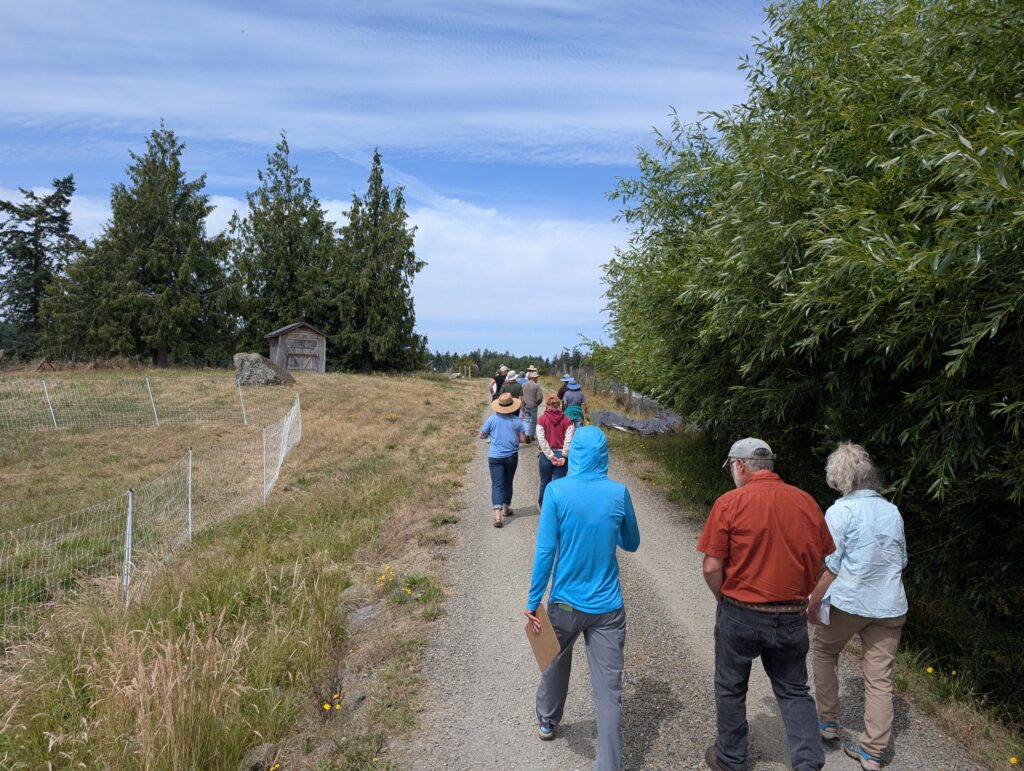
Collaborative farming isn’t without its challenges. Everyone who comes to Natembea brings a different brain, different perspective, and different communication style. One class participant pointed out that conflict doesn’t mean they’re doing things wrong. It can be an indication that things are going right, because when friction points come up they’re being addressed.
Healthy communication is both a pro and con of collaborative farming, because oftentimes the farmers are busy or tired. Sending or answering a text or email can seem like one more thing on a never-ending checklist. But the Natembea farmers spent much more time focusing on the positive aspect of farming in community. Everyone agreed that it was better for their mental health; instead of farming all alone, there are people around who can support them, check in and share farm chores. As farming solo is becoming more common, working on a collaborative farm is an antidote to the isolation of farming without a partner.
Hailey from Cruising Climate put it this way: right now Natembea is in a “sweet spot of farm culture.” When asked to elaborate and explain what works, the farmers all offered their own perspectives. The farmers who succeed on the farm take accountability. If they break something, they say so. They lean into the community and trust of the collective. In a time when land access has become one of the largest obstacles to farming, collaborative farms like Natembea offer a different model of farming, one rooted in collective effort.
To learn more about collaborative farming, here are a number of resources:
Land for Good, Seeking Farmland resources
Includes a number of resources for those seeking land, including the Accessing Farmland Together Toolkit. This is a comprehensive, interactive and introspective document for prospective collectives to fill out and use in their decision-making process.
Farmland Access Legal Toolkit, Collaborative Farming
A legal toolkit as well as basic overview of different types of collaborative farming models with case studies.
Rogue Farm Corps, Collaborative Farming Page
A series of pages within the RFC website that contains a wealth of information relevant to collaborative farms.
Access to Land, WSU Regional Small Farms
This page within our own website covers a number of resources for accessing land, including several links covering various ways to lease farmland.
What are Dirt Talk Farm Walks?
Dirt Talk Farm Walks are extensions of our Dirt Talk farmer-to-farmer events. They are experiential, farmer-led events geared toward engaging local farmers (beginning and seasoned) around a topic of interest, getting them out on a farm for discussion, networking, and sharing of ideas and resources around that topic. Learn more about upcoming Dirt Talks and other events on our website via our Upcoming Events Calendar or signing up for our newsletter.
WSU Extension programs and employment are available to all without discrimination. Evidence of noncompliance may be reported through your local WSU Extension office.