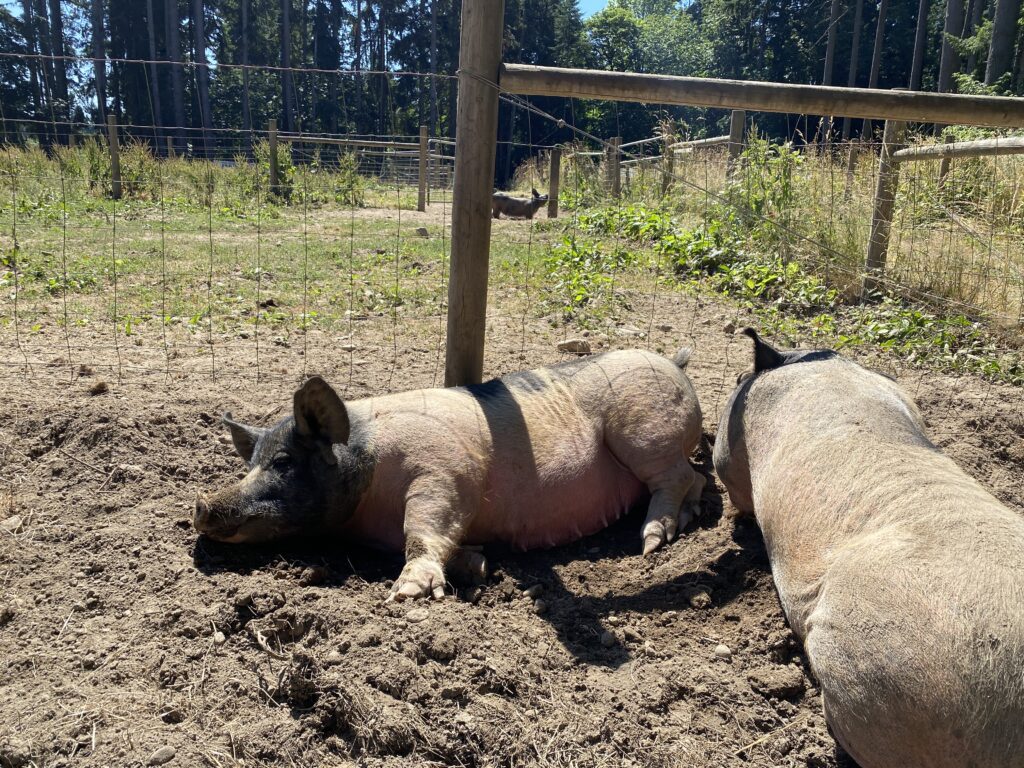
On July 8th, farmers from Kitsap and Clallam met at Winney Farm, a historical farm on Bainbridge Island, to discuss pig keeping in the context of a diverse vegetable and livestock operation. Farmers Brian and Penny Stahl taught the class. The class was a mix of experience levels and served as an introduction into the various systems required to raise pigs. In comparison to other livestock that require more acreage and pasture, pigs can flourish on a relatively small amount of space. This class showed participants how they can integrate pigs into an already established farming system and how to raise piglets that will thrive in their environment.
It’s clear the Winney Farm, which has preserved its name throughout many iterations of ownership, has been raising animals and growing vegetables for many decades. There are a series of buildings that have been remarkably preserved, filled with the detritus of agriculture as it was in years past, with antique tools and farm equipment and a buck antler chandelier that hangs in the gathering space. Within one of these buildings are the farrowing stalls, where pregnant sows come to give birth throughout the year.
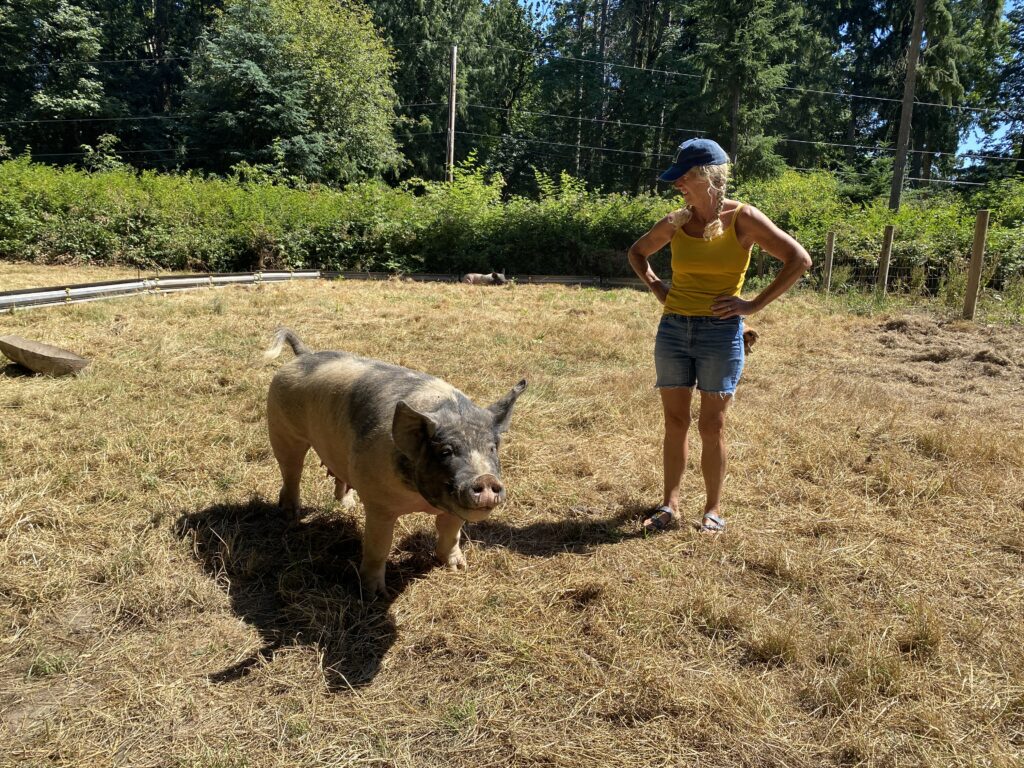
The Stahls have been raising pigs for several years, including breeding pigs. This came with a steep learning curve and some hard lessons that they shared with the class. In the early days of raising pigs, they lost one of their sows during farrowing. They now keep cameras in their farrowing pens so they can monitor the entire birthing process, which is especially important for first time sows who can encounter more issues than the seasoned sow. This is an example of how traditional farming practices can lean on modern technology to make conditions more humane for the animal and less stressful for the farmer.
The tips and tricks shared throughout the class were abundant. In the farrowing pens, they lean cattle gates against the wall. The sow is unable to move the heavy gates, even when she leans up against it. This allows for a gap between the gate and the wall, where piglets can scurry when their mama lies down, thus avoiding being crushed. The Stahls also keep heat lamps in their farrowing pens, placed in a spot where the sow can’t reach. Piglets seek heat when they are born; this often leads to crushing if their mama is the only source of warmth. Providing an alternative source of heat where piglets are safe from the risk of crushing leads to a much higher piglet survival rate when compared to the rates on commercial farms.
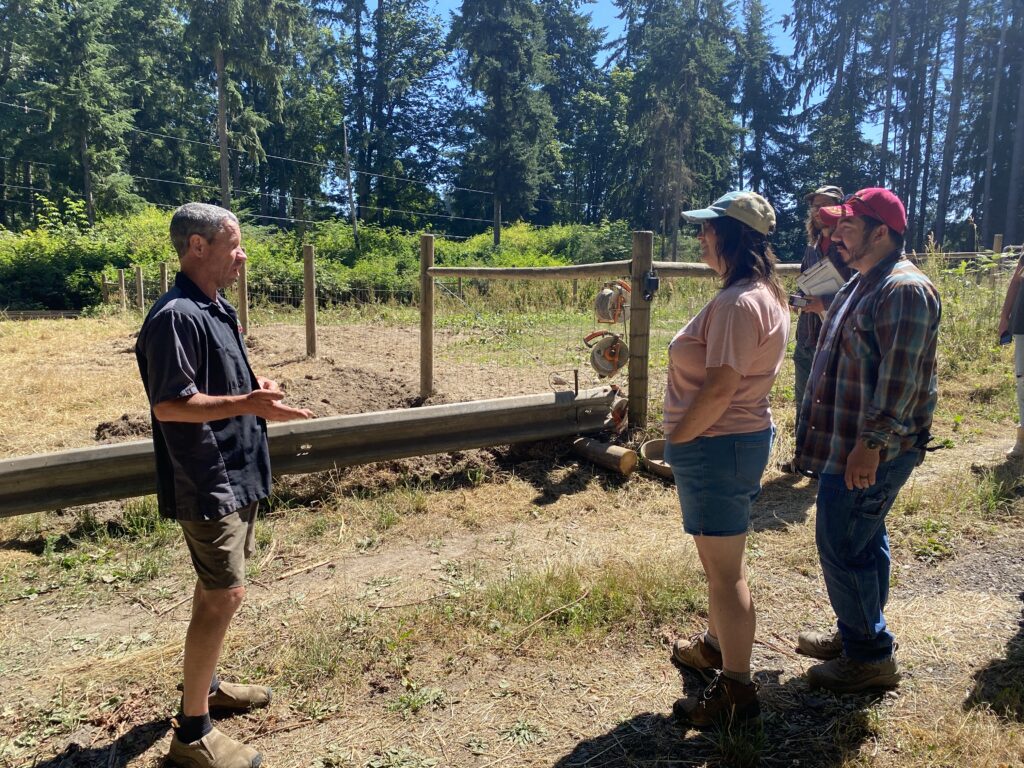
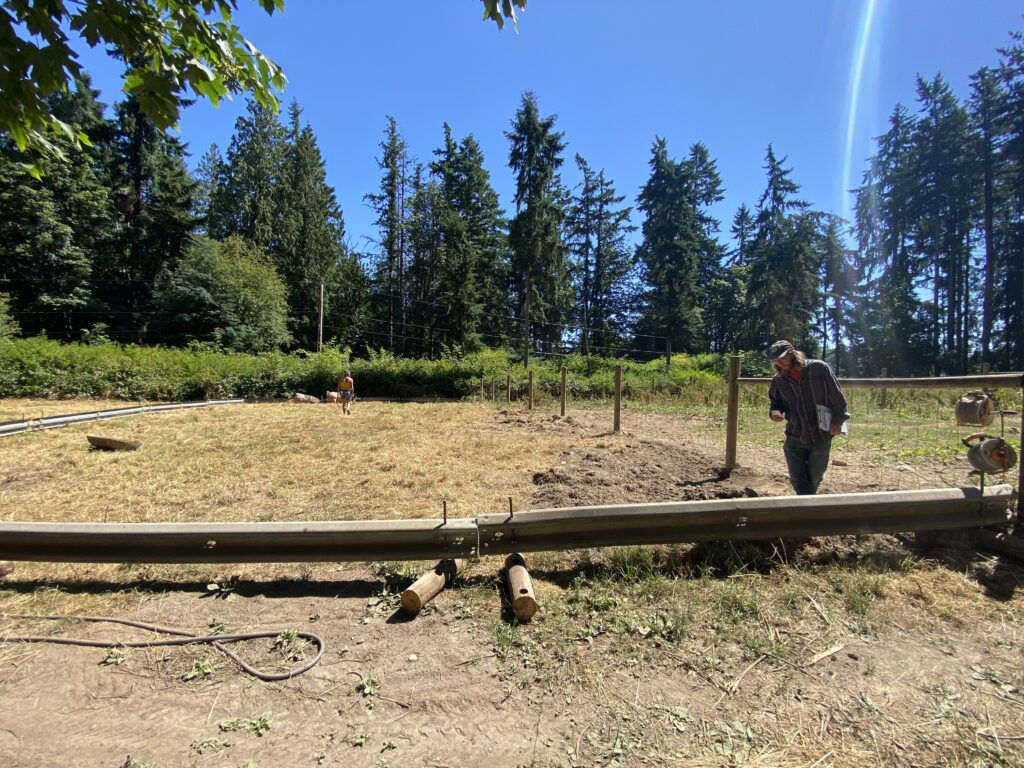
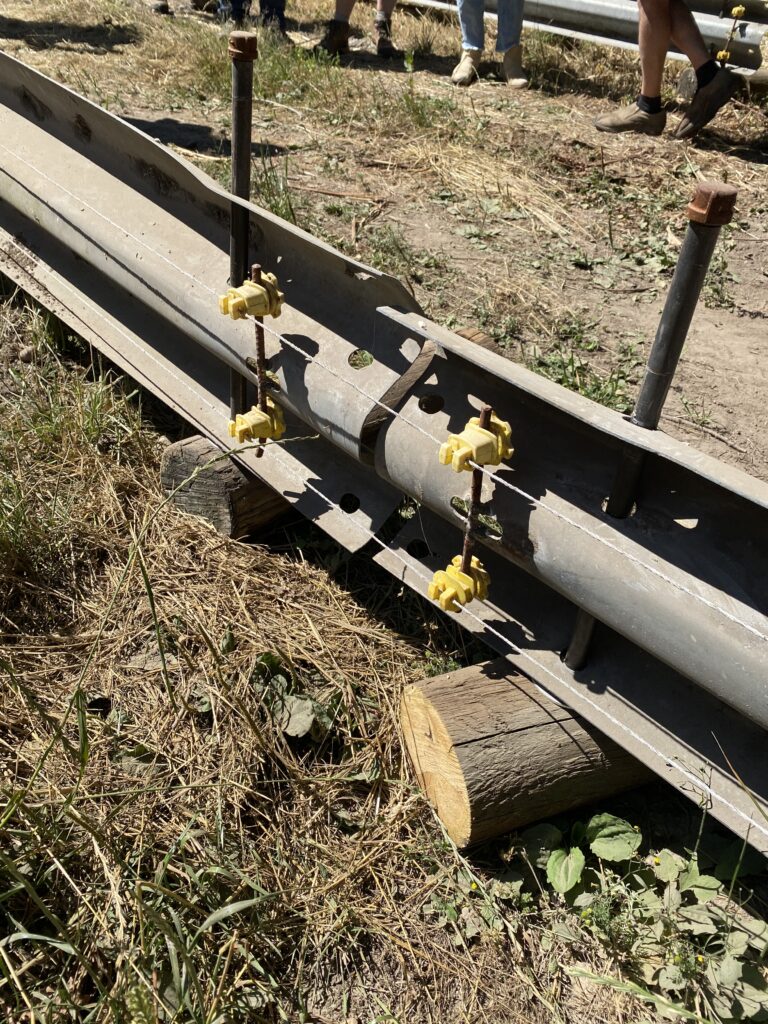
After visiting the farrowing pens, the class participants traveled to a different section of the farm. Here they were able to see a few iterations of fencing from over the years: some more permanent and the newest type of fencing which is more mobile. This fencing is made of recycled guardrails with two strands of electrified polywire. Brian welded insulators onto the guardrails to make stringing the wire both easy and effective. The guardrails are sturdy enough for pig fencing, short enough for the farmers to easily enter the pens, and light enough to move around. The Stahls hope to create a system that is simpler to move while also providing their pigs more space to root up pasture or areas overgrown with weeds and brush. When compared to their permanent fencing, with posts that are already rotting, this new system of all-metal fencing that reuses materials is highly preferable. By sharing stories of their mistakes and missteps, the Stahls showed participants how observation and innovation are valuable tools when it comes to improving systems and practices on the farm, especially when raising livestock like pigs.
For introductory resources on raising pigs, see the links below:
Raising Small Groups of Pigs, PennState Extension
So You Want to Raise Hogs, PennState Extension
Care and Management of New Feeder Pigs, Oregon State University
Profitable Pork: Strategies for Hog Producers, Sustainable Agriculture Research and Education
What are Dirt Talk Farm Walks?
Dirt Talk Farm Walks are extensions of our Dirt Talk farmer-to-farmer events. They are experiential, farmer-led events geared toward engaging local farmers (beginning and seasoned) around a topic of interest, getting them out on a farm for discussion, networking, and sharing of ideas and resources around that topic. Learn more about upcoming Dirt Talks and other events on our website via our Upcoming Events Calendar or signing up for our newsletter.
WSU Extension programs and employment are available to all without discrimination. Evidence of noncompliance may be reported through your local WSU Extension office.