For a printable version of this page: Cauliflower
Cauliflower
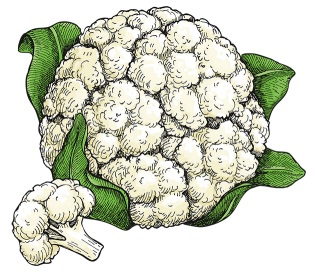
The cauliflower head is known as a “curd.” Up to 80% of the cauliflower grown in Skagit is consumed in Oregon, Washington and British Columbia. A member of the brassica family, this versatile vegetable can be prepared in including steamed, riced, sauteed, or roasted. Even the green leaves at the base of cauliflower can be used just like cabbage.
Nutrition
Cauliflower, an extremely healthy vegetable, is a significant source of Vitamin C, Vitamin K, fiber, folate, and potassium.
Selection
Select white or creamy-white, very fresh heads which are firm and compact. Avoid heads with discoloration or softness. Cauliflower also comes in hues other than white including purple, green, and orange. To clean, rinse the cauliflower with running water, scrubbing with hands or vegetable brush. If necessary to remove insects, soak for 30 minutes in solution of salt and water (4 teaspoon salt per gallon water. Drain.
Storage
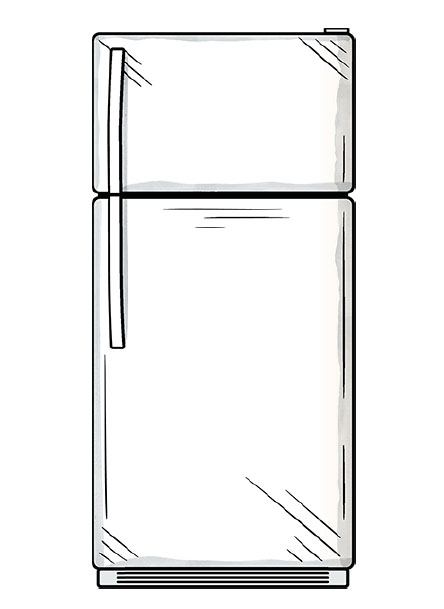
To increase storage capacity, wrap a cauliflower head in a damp paper towel and store in a perforated plastic bag in the refrigerator. Using this method, cauliflower may be stored for 2-4 weeks.
Measurements
Freezing
- Wash and cut off leaves. Split heads into pieces approximately 1-inch across. Rinse and drain.
- Blanching cauliflower stops enzymes that otherwise cause undesirable changes in flavor, texture, color and nutritive value during storage.
- To avoid over- or undercooking during blanching, allow 1 gallon of water per pound of cauliflower when blanching in boiling water.
- Blanch in boiling water for 3 minutes. Cool immediately by dipping in ice water for an equivalent length of time.
- Drain and pack in moisture-vapor proof freezer containers or freezer weight plastic bags, squeezing out as much air as possible, leaving no head space. Label, seal, and freeze.
Drying
Preparation:
Wash flowerets and remove from core, splitting stems so flowerets are not more than 1- inch thick.
Pretreatment:
Water blanch (add 1 tablespoon vinegar per gallon of water for best color retention) for 3 to 4 minutes. Drain well.
Drying Procedure:
- Arrange in single layers on drying trays.
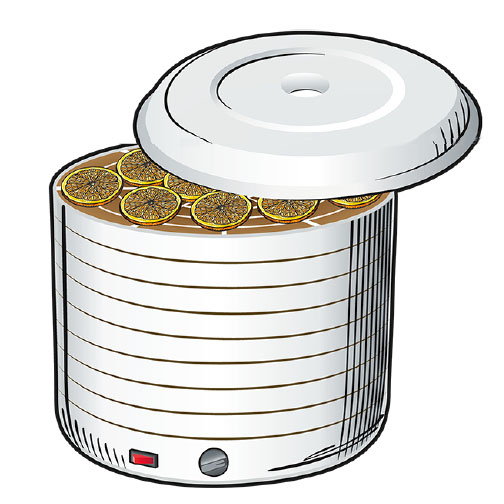
- Dry at 140° F until tough and brittle; approximately 12- 15 hours with no moist areas remain. Cool thoroughly.
- Package dried cauliflower in moisture/vapor proof containers. Label. Store in a cool, dark, dry place.

Tip: Chop dried cauliflower to add to soups.
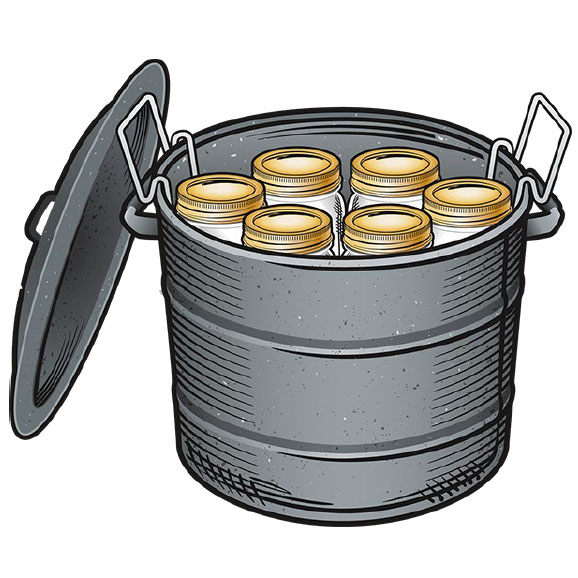
Boiling Water Canning

Cauliflower is a low acid food. Canning is not recommended and there are no processing times available from the USDA.
Pickling
Pickled cauliflower products may be safely preserved using the boiling water canning method. Because cauliflower is a low-acid food, the proportion of vinegar to water in a pickling recipe is critical. Use only tested, approved pickling recipes and follow instructions for preparation of carrots.
Pickled Cauliflower
Yield: 9 half-pints
- 12 cups of 1- to 2-inch cauliflower florets
- 4 cups white vinegar (5% acidity)
- 2 cups sugar
- 2 cups thinly sliced onions
- 1 cup diced sweet red peppers
- 2 tbsp mustard seed
- 1 tbsp celery seed
- 1 tsp turmeric
- 1 tsp hot red pepper flakes
Wash cauliflower florets and boil in salt water (4 tsp canning salt per gallon of water) for 3 minutes. Drain and cool. Combine vinegar, sugar, onion, diced red pepper, and spices in a large saucepan.
Bring to boil and simmer for 5 minutes. Distribute onion and diced pepper among hot jars. Fill jars with cauliflower pieces and pickling solution, leaving ½ inch headspace. Remove air bubbles and adjust headspace if needed. Wipe rims with a cleaned, dampened paper towel. Adjust two-piece lids and process in boiling water canner according to directions below.
Once processing is complete, turn off heat, remove canner lid and wait 5 minutes before removing jars. Let cool at room temperature, undisturbed, for 12 to 24 hours and check for seals. Wipe jars, remove rings, label, and store in a cool, dry place.
Processing Directions for Pickled Cauliflower:
| Style of pack | Jar Size | 1–1,000 ft | 1,001–3,000 ft |
| Hot | Half Pints or Pints | 10 minutes | 15 minutes |
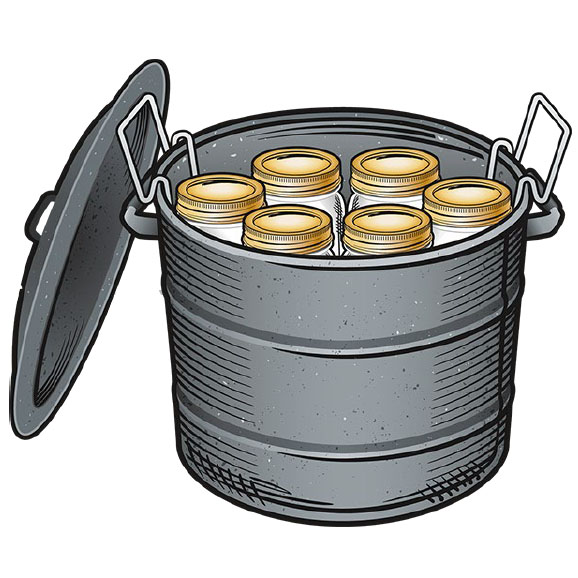
Boiling Water Bath Canning
Fall Garden Relish
Yield: About four pint jars
- 1 quart chopped cabbage (about 1 small head)
- 3 cups chopped cauliflower (about 1 medium head)
- 2 cups chopped green tomatoes (about 4 medium)
- 2 cups chopped onions
- 2 cups chopped sweet green peppers (about 4 medium)
- 1 cup chopped sweet red peppers (about 2 medium)
- 3¾ cups vinegar (5%)
- 3 tablespoons canning salt
- 2¾ cups sugar
- 3 teaspoons celery seed
- 3 teaspoons dry mustard
- 1½ teaspoons turmeric
Combine washed chopped vegetables; sprinkle with the 3 tablespoons salt. Let stand 4 to 6 hours in the refrigerator. Drain well. Combine vinegar, sugar and spices; simmer 10 minutes. Add vegetables; simmer another 10 minutes. Bring to a boil.
Pack boiling hot relish into hot jars, leaving ½ inch headspace. Remove air bubbles and adjust headspace if needed. Wipe rims of jars with a dampened clean paper towel; adjust two-piece metal canning lids and process in boiling water canner according to directions below.
Once processing is complete, turn off heat, remove canner lid and wait 5 minutes before removing jars. Let cool at room temperature, undisturbed, for 12 to 24 hours and check for seals. Wipe jars, remove rings, label, and store in a cool, dry place.
Processing Directions for for Fall Garden Relish:
| Style of pack | Jar Size | 1–1,000 ft | 1,001–3,000 ft |
| Hot | Pints | 10 Minutes | 15 Minutes |
Preserve Skagit Crop Sheets describe three food preservation techniques—freezing, drying, and boiling water canning—consistent with USDA Food Preservation and Food Safety recommendations. Pressure canning for low acid foods such as meats and vegetables is not included.
Additional resources and recipes, as well as information on Pressure Canning, can be found on the WSU Skagit Food Preservation Website https://extension.wsu.edu/skagit/fam/food-preservation/ or the National Center for Home Food Preservation https://nchfp.uga.edu/index.html.
Copyright 2022 WSU Skagit Extension. Any opinions, findings, conclusions, or recommendations expressed on this fact sheet are those of the author(s) and do not necessarily reflect the view of the USDA. WSU Extension programs are available to all without discrimination