For a printable version of this webpage: Onions
Onions
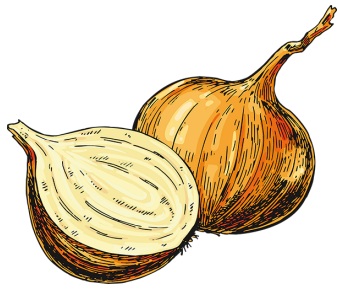
Onions are prized for their versatility in cooking and pungent taste flavor, sometimes sweet, sometimes sharp. Onions are a member of the allium family, and many are grown here in Skagit – chives, scallions, shallots, leeks, and red, yellow and white bulb onions. Red onions have a strong slightly sweet flavor; white onions, a sharp medium tangy flavor; and yellow onions, a sharp taste that is spicy and bold, unless cooked down to a caramelized sweetness.
Nutrition
Onions are a good source of vitamin C, are high in potassium, calcium, and phosphorus, and are a rich source of antioxidants for cell and tissue health. One medium onion has 45 calories, with no fat or cholesterol and very, very low sodium.
Selection
Choose firm onions with shiny skin and a tight neck. Avoid onions with soft spots, discoloration or overly dry onions.
To wash an onion before processing, cut off the two stems and remove all the outer skin, rinse with cool running water and wipe away any obvious debris. Pat dry with a paper towel.
Storage
Sweet onions have a shorter shelf life and are best stored in the crisper drawer of the refrigerator, wrapped individually in a paper towel. Storage onions are well suited to cool (40-50 degrees), dark, and dry conditions with good ventilation. Onions will begin to sprout and degrade with too much light or moisture.
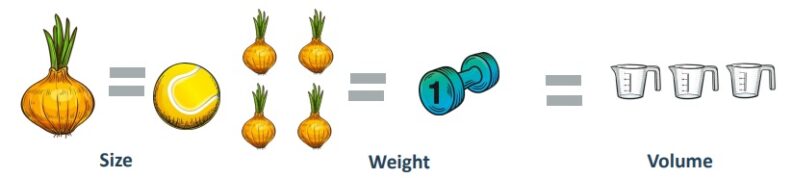
Measurements
Freezing
- Select fully mature onions.
- Peel, trim and clean thoroughly.
- Dice (about 1/4-inch pieces).
- Blanching is not necessary.
- Pack into moisture-vapor proof freezer containers or freezer weight plastic bags leaving 1/2 inch of headspace.
- Label, seal and freeze.
- For onion rings or slices, freeze first on a tray, then pack into moisture-vapor proof freezer containers or freezer-weight plastic bags. Label, seal and freeze.
Drying
Preparation:
Remove outer discolored layers. Cut uniform slices 1/8” to 1/4” thick, or chop.
Pretreatment:
None.
Drying Procedure:
- Spread thinly on trays.
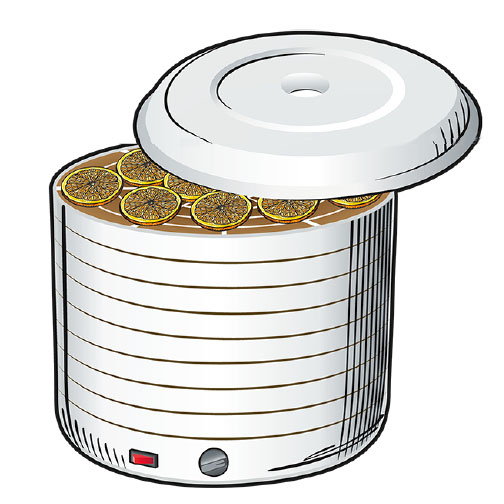
- Dry at 140°F for 3-9 hours. Dry until brittle and light colored; feels like paper.
- For onion powder, crush slices after drying.
- Cool thoroughly. Package in moisture/vapor proof containers. Label. Store in a cool, dark, dry place.

Tip: Dried onions do not need to be reconstituted before use, unless so specified. Add them directly to the recipe you are preparing.
Boiling Water Canning

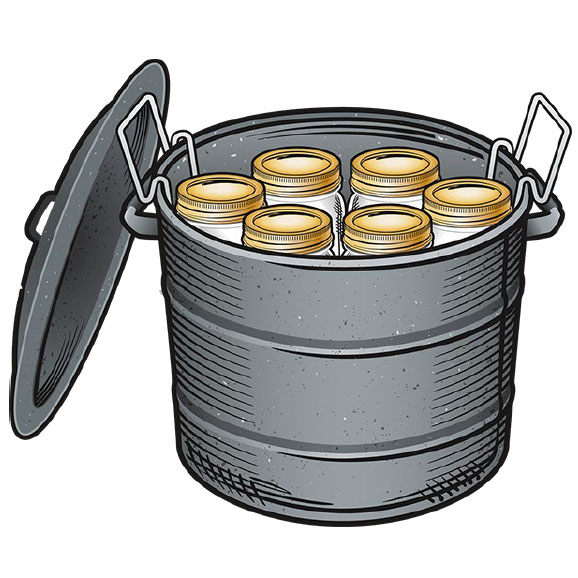
Onions are a low acid food. Canning is not recommended and there are no processing times available from USDA.
Pickling
Pickled onion products may be safely preserved using the boiling water canning method. Because onions are a low-acid food, the proportion of vinegar to water in a pickling recipe is critical. Use only tested, approved pickling recipes and follow instructions for preparation of onion.
Pickled Pepper-Onion Relish
Yield: 9 half pints
Ingredients:
- 6 cups finely chopped onions
- 3 cups finely chopped sweet red peppers
- 3 cups finely chopped green peppers
- 1-1/2 cups sugar
- 6 cups vinegar (5% acidity), preferably white distilled
- 2 tbsp canning or pickling salt
Wash and chop vegetables. Combine all ingredients and boil gently until mixture thickens and volume is reduced by one-half (about 30 minutes). Sterilize jars.
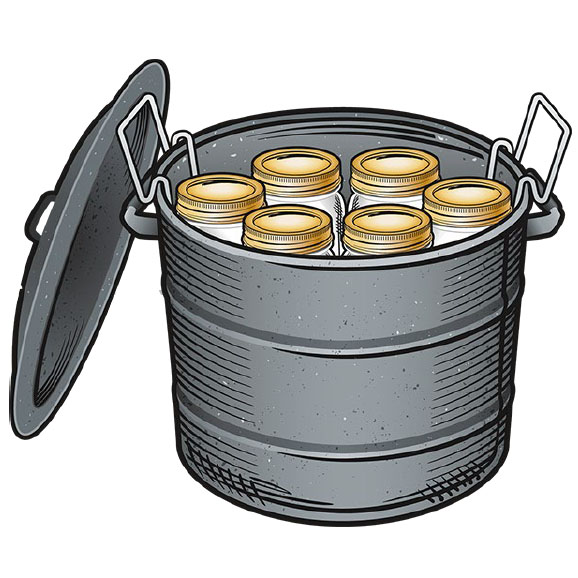
Fill jars with hot relish, leaving 1/2-inch headspace. Remove air bubbles and adjust headspace if needed. Wipe rims of jars with a dampened clean paper towel; adjust two-piece metal canning lids. Process in a Boiling Water Canner according to directions below.
Once processing is complete, turn off heat, remove canner lid and wait 5 minutes before removing jars. Let cool at room temperature, undisturbed, for 12 to 24 hours and check for seals. Wipe jars, remove rings, label, and store in a cool, dry place.
Processing Directions for Pickled Pepper-Onion Relish:
| Style of pack | Jar Size | 1–1,000 ft | 1,001–3,000 ft |
| Hot | Half Pints or Pints | 5 minutes | 10 minutes |
Boiling Water Canning
Pickled Pearl Onions
Yield: About three to four pint jars
Ingredients:
- 8 cups peeled white pearl onions (four 10-ounce bags unpeeled pearl onions as purchased)
- 5½ cups white distilled vinegar (5%)
- 1 cup water
- 2 teaspoons canning salt
- 2 cups sugar
- 8 teaspoons mustard seed
- 4 teaspoons celery seed
To peel onions, place a few at a time in a wire-mesh basket or strainer, dip in boiling water for 30 seconds, then remove and place in cold water for 30 seconds. Cut a 1/16th-inch slice from the root end, and then remove the peel and 1/16th inch from the other end of the onion.
Combine vinegar, water, salt and sugar in an 8-quart Dutch oven or stockpot. Bring to a boil and boil gently 3 minutes. Add peeled onions and bring back to a boil. Reduce heat to a simmer and heat until the onions are half-cooked (about 5 minutes).
Meanwhile, place 2 teaspoons mustard seed and 1 teaspoon celery seed in the bottom of each clean, hot pint jar. Fill hot jars with the hot onions, leaving 1- inch headspace. Cover with hot pickling liquid, leaving ½-inch headspace. Remove air bubbles and adjust headspace if needed. Wipe rims of jars with a dampened, clean paper towel; adjust two-piece metal canning lids. Process in a Boiling Water Canner according to directions below .
Once processing is complete, turn off heat, remove canner lid and wait 5 minutes before removing jars. Let cool at room temperature, undisturbed, for 12 to 24 hours and check for seals. Wipe jars, remove rings, label, and store in a cool, dry place.
Tip: Allow pickled onions to sit in processed jars for 3 to 5 days before consuming for best flavor development.
Processing Directions for Pickled Pearl Onions:
| Style of pack | Jar Size | 1–1,000 ft | 1,001–3,000 ft |
| Hot | Pints | 10 Minutes | 15 Minutes |
Boiling Water Canning
Onion Relish
Ingredients:
- 8 cups peeled, thinly sliced onions (about 3 pounds)
- 2 cups of white vinegar (5%)
- 2 cups sugar
- 2 tsp. salt
- 1 tsp mustard seed
Drop onion slices into boiling water and cook 4 minutes. Drain. Combine vinegar, sugar, salt and mustard seed in a large saucepan. Bring mixture to boil. Add onions and simmer 4 minutes.
Pack onions into hot jars, leaving ½ – inch headspace. Fill jar ½ inch from top with boiling hot cooking liquid (be sure onions are totally immersed in vinegar solution).
Remove air bubbles and adjust headspace if needed. Wipe rims of jars with a dampened, clean paper towel; adjust two-piece metal canning lids. Process in a Boiling Water Canner according to directions below.
Once processing is complete, turn off heat, remove canner lid and wait 5 minutes before removing jars. Let cool at room temperature, undisturbed, for 12 to 24 hours and check for seals. Wipe jars, remove rings, label, and store in a cool, dry place.
Tip: Use red onions for a beautiful pink color!
Processing Directions for Onion Relish:
| Style of pack | Jar Size | 1–1,000 ft | 1,001–3,000 ft |
| Hot | Pints | 10 Minutes | 15 Minutes |
Preserve Skagit Crop Sheets describe three food preservation techniques—freezing, drying, and boiling water canning—consistent with USDA Food Preservation and Food Safety recommendations. Pressure canning for low acid foods such as meats and vegetables is not included.
Additional resources and recipes, as well as information on Pressure Canning, can be found on the WSU Skagit Food Preservation Website https://extension.wsu.edu/skagit/fam/food-preservation/ or the National Center for Home Food Preservation https://nchfp.uga.edu/index.html.
Copyright 2022 WSU Skagit Extension. Any opinions, findings, conclusions, or recommendations expressed on this fact sheet are those of the author(s) and do not necessarily reflect the view of the USDA. WSU Extension programs are available to all without discrimination