What is food waste?
Food waste refers to edible food meant for human consumption that has instead been discarded or recycled. Food waste can occur at different points of processing or consumption in schools, restaurants, or at home. This includes plate waste, expired/rotten food, parts of food you don’t typically eat, (peels and rinds) and more.
Why is food waste so important?
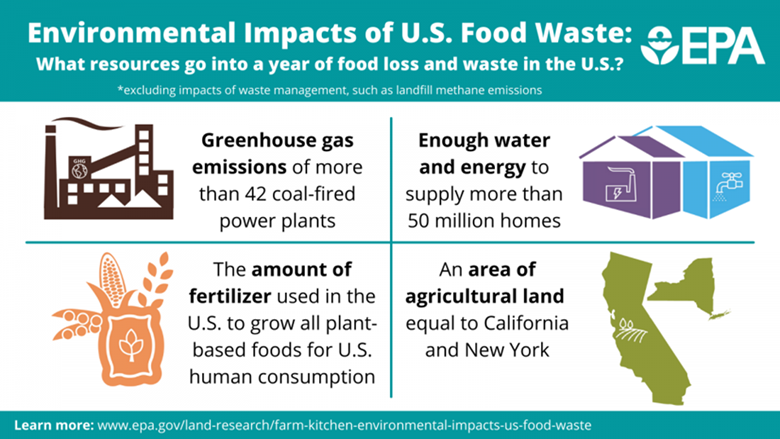
When food is wasted, so too is the time, land, energy, water, love, and other resources utilized in growing, transporting, processing, cooking, and storing food. Worst of all, if food waste is disposed of in landfills, it is unable to break down naturally– it decomposes in an environment without oxygen, leading to the production of methane, a greenhouse gas 30-80 times more potent than carbon dioxide.
Consejos para reducir el desperdicio de alimentos
Todos podemos contribuir a alcanzar la meta nacional de reducción del desperdicio de alimentos: reducirlo en un 50% para el año 2030. Ponga en práctica estas sugerencias de inmediato para reducir el desperdicio de alimentos, ahorrar dinero y proteger el medio ambiente.
Quick Links
Join the Food Waste Prevention Movement!
A digital tool to help you plan meals and your shopping list.