Food handling safety risks are more common than most people think. 1 in 6 Americans will get a foodborne illness this year! Learn how to prepare safer food.
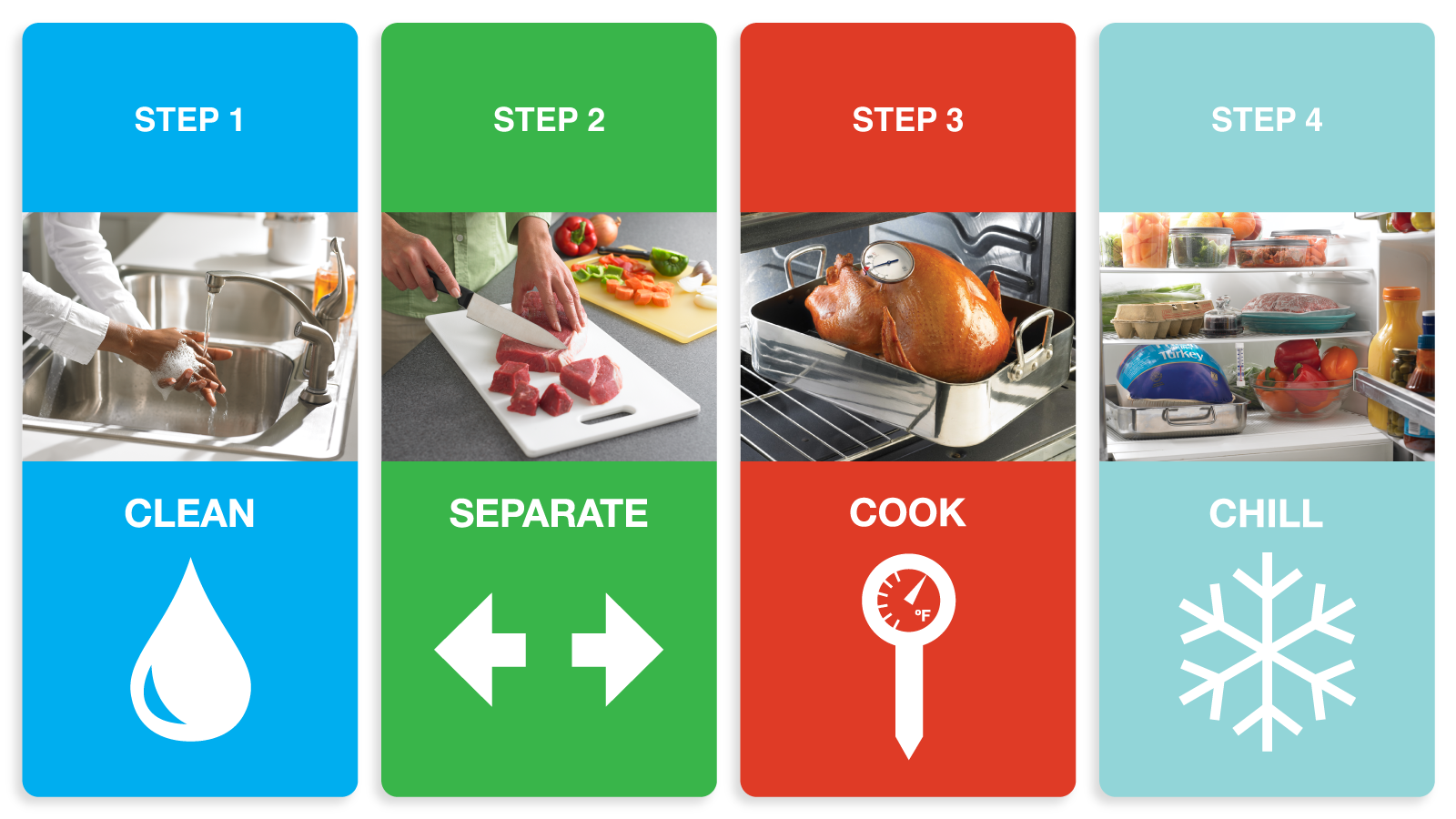
Food Safety at Home
Raw meat may contain harmful bacteria that are killed when meat is cooked to the proper temperature. Follow the four steps to safety and use a meat thermometer to ensure proper cooking.
- At Home Food Safety (pdf)
- Handling Fresh Fruits and Vegetables (pdf)
- Washing Foods (pdf)
- Cutting Boards (pdf)
- Food Safety After School (pdf)
- Partnership for Food Safety Education
Shopping
Cooking
- How Temperatures Affect Food (pdf)
- Doneness vs Safety (pdf)
- Grilling & Using Food Thermometers (pdf)
- Barbecue Safely (pdf)
- Cooking Temperature Chart for Meats
- Deep Fat Frying Safely (pdf)
- Microwave Cooking (pdf)
- Slow Cooker Food Safety (pdf)
- Special Cooking Devices Food Safety (pdf)
- Cooking for Groups – English (pdf)
- Cocinar para Grupos (Cooking for Groups – Spanish) (pdf)
- Holiday Entertaining Safely (pdf)
- Cook Turkey Stuffing Safely (pdf)
Storing
Farm to Table
Food Safety on the Go
- Lunch Box Food Safety (pdf)
- Food Safety On The Go (pdf)
- Food Safety While Hiking, Camping, or Boating (pdf)
- Safe Handling of Take Out Foods (pdf)
Food Safety in an Emergency
Remembering the rules about food safety when the power is out and during an emergency is difficult. Learn how to avoid food-related illness.

Food Recalls
The Partnership for Food Safety Education encourages consumers to be aware of food recalls and what to do if you have a recalled food product.
The Basics
Where Do You Find Out About Food Recalls?
Visit FoodSafety.gov for a current list of food recalls.
Additional Questions?
Ask USDA, your guide to expert knowledge on handling and storing food safely and preventing food poisoning. Search the USDA’s Food Safety Education knowledge base of common food safety questions, available 24/7. Available for mobile devices.