WSU Ferry County Extension has a certified WSU Extension Consumer Food Safety and Preservation Advisor! Please feel free to reach out to us with your food safety and food preservation questions. In addition, we look forward to offering classes and workshops in these areas in the future.
As we proceed to build this page, be aware that a great deal of information can be found by visiting the WSU Consumer Food Safety page.
We will continue to offer free pressure canner gauge testing and inspection of the seals and safety plugs. We are able to test pressure gauges on most pressure canner models.
Food Safety in a Minute from Washington State University Extension answers the most commonly asked questions from consumers. These minute-long podcasts offer handy, easy-to-apply tips to avoid food-borne illness. This series delves into issues ranging from holiday food safety to packing school lunches, how to store canned food, and more.
Pressure Canner Gauge Testing
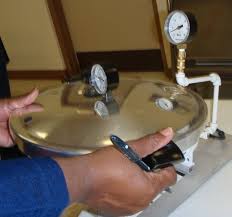
A pressure canner (pdf) is a very important piece of equipment when it comes to home food preservation. Making sure it is working properly is a precaution that should be taken seriously. If the dial gauge on your pressure canner does not register correctly, you could be jeopardizing the safety of the food you just canned.
The USDA recommends having pressure canner gauges tested annually. Testing your pressure canner will determine whether it is functioning properly and will help you produce safely preserved food. Pressure canning is the only recommended method for canning meat, poultry, seafood, and vegetables to destroy the disease-causing microorganisms that could be present. The risk associated with preserving these low-acid foods is botulism poisoning. Only pressure canning will allow food to be heated to and held for a specified time at 240 degrees Fahrenheit which is hot enough to destroy the bacterial spores that emit toxins.
There are two types of pressure canners – weighted gauge and dial gauge. The difference is that the weighted gauge rocks or jiggles under pressure, whereas the dial gauge has a dial that registers the amount of pressure in the canner. Weighted gauges are noisy because the pressure is released and rocks or jiggles the weight but they are always accurate when used correctly. Make sure you read the manufacturer’s instructions to know what the correct procedure is when using a weighted gauge pressure canner.
Weighted gauges that rock under pressure do not need to be tested, neither do pressure canners that have both a dial and weighted gauge, such as the newer All American brand. Just make sure to check rubber seals and safety plugs regularly for wear and cracks and replace if necessary.
Appointments are requested by calling 509-775-5225, x1116 or email kianna.carpenter@wsu.edu.