For a printable version of this webpage: Mushrooms
Mushrooms
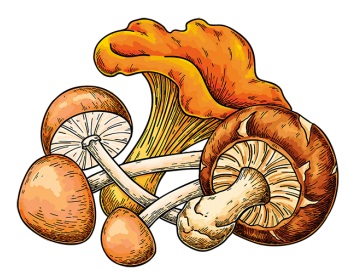
Though found in the vegetable section and farmers’ produce markets, mushrooms are not technically a vegetable but rather a fungus. There are many different varieties – white, button, cremini, portabella, shitake–each with a distinctive flavor and texture profile. Most mushrooms available at supermarkets are commercially grown. In Skagit county, wild mushrooms can be foraged in the Cascades, but since mushrooms can be poisonous, it’s safest to purchase them from a reliable source.
Nutrition
Mushrooms are low in calories and a good source of B vitamins and potassium. One cup of raw sliced mushrooms contains only 20 calories. Mushrooms have no fat, cholesterol, or sodium.
Selection
Look for young mushrooms that are small to medium in size. Caps should be either closed around the stem or moderately open with pink or light tan gills. The surface of the cap should be white, creamy, or light brown. Overripe mushrooms with dark discolored gills and caps may have slightly more flavor but they will spoil rather quickly. To clean before processing, use a soft brush or wipe with a wet paper towel to remove dirt.
Storage
The best container for fresh mushrooms stored inside or outside a refrigerator is in a paper bag. This allows moisture to escape and fresh air to circulate. Plastic bags are not recommended and will shorten storage capacity. Mushrooms can be brushed or wiped before using. If they must be washed, it is best to avoid soaking and to dry thoroughly.
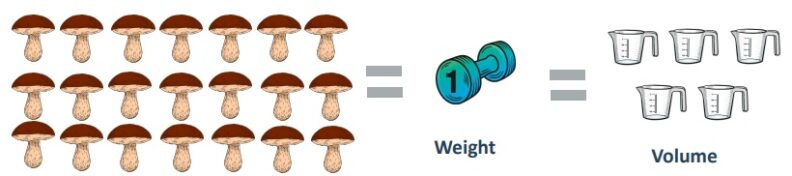
Measurements
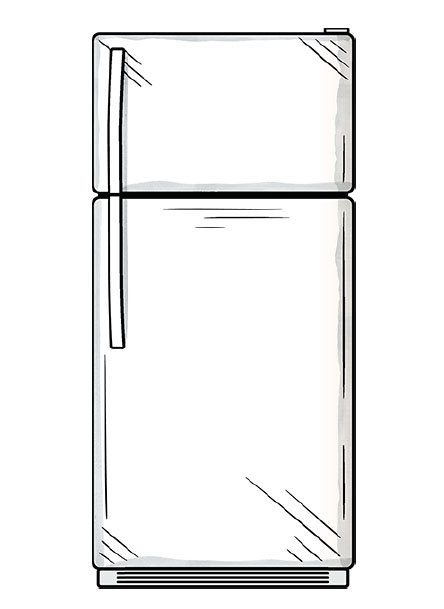
Freezing
- Sort according to size.
- Wash thoroughly in cold water.
- Trim off ends of stems.
- If mushrooms are larger than 1 inch across, slice them or cut them into quarters.
- If mushrooms are larger than 1 inch across, slice them or cut them into quarters.
- Mushrooms can be steamed or heated in fat in a fry pan. Steamed mushrooms will keep longer than those heated in fat.
- To Steam – Mushrooms to be steamed have better color if treated with an anti-darkening treatment. To do this, dip for 5 minutes in a solution containing 1 teaspoon lemon juice to a pint of water or use and follow directions of an anti-darkening agent.
- Next, steam whole mushrooms for 5 minutes; buttons or quarters 3 ½ minutes; and slices 3 minutes. Cool promptly. Drain and pack in moisture-vapor proof freezer containers or freezer weight plastic bags, squeezing out as much air as possible. Seal, label and freeze.
- To Heat in Fry Pan – Heat small quantities of mushrooms in fat or oil of choice such as margarine, butter, or olive oil, in an open sauté pan until almost done.
- Allow to cool. Pack in moisture-vapor proof freezer containers or freezer weight plastic bags, squeezing out as much air as possible. Seal, label, and freeze.
Drying
Preparation:
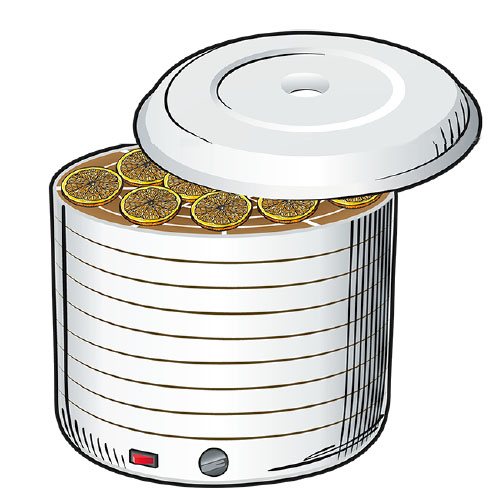
Scrub mushrooms thoroughly. Slice off woody stems. Slice, or dry whole if small. Try to ensure that pieces are very similar in size.
Pretreatment:
None.
Drying Procedure:
- Spread mushrooms in a thin layer on trays, no more than ½ inch deep.
- Dry at 120° F until crisp and brittle; approximately 8- 10 hours. Drying at this slightly lower temperature will help avoid a condition called “case hardening” in which the outside is dark and dry but the interior remains raw.
- Cool thoroughly. Package dried mushrooms in moisture/vapor proof containers. Label.
- Store in a cool, dark, dry place.

Tip: You may powder dried mushrooms using a coffee grinder or high-powered blender. This versatile powder may then be used for use in gravies, sauces, soups, and more.
Canning

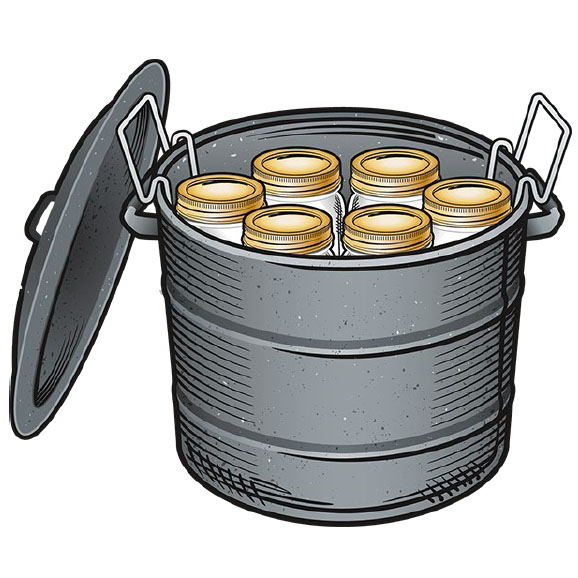
Mushrooms are a low-acid food. Pressure canning is necessary when canning mushrooms to prevent the growth of botulinum bacteria. Refer to the National Center for Home Food Preservation for Pressure Canning instructions.
Pickling
Pickled mushroom products may be safely preserved using the boiling water canning method. Because mushrooms are a low-acid food, the proportion of vinegar to water in the pickling recipe is critical. Use only tested, approved pickling recipes and follow instructions for preparation of mushrooms.
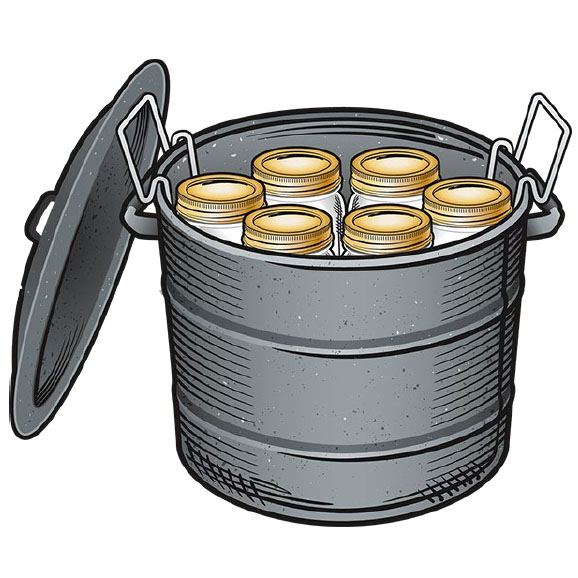
Boiling Water Canning
Marinated Whole Mushrooms
Yield: About 9 half pints
Ingredients:
- 7 lbs small whole button mushrooms
- 1/2 cup bottled lemon juice
- 2 cups olive or salad oil
- 2-1/2 cups white vinegar (5%)
- 1 tbsp oregano leaves
- 1 tbsp dried basil leaves
- 1 tbsp canning or pickling salt
- 1/2 cup finely chopped onions
- 1/4 cup diced pimento
- 2 cloves garlic, cut in quarters
- 25 black peppercorns
Select very fresh unopened mushrooms with caps less than 1-1/4 inch in diameter. Wash. Trim stems, leaving ¼ inch attached to mushroom cap. Add lemon juice and water to cover; bring to boil. Simmer for 5 minutes. Drain mushrooms. Mix olive oil, vinegar, oregano, basil, and salt in a saucepan.
Stir in onion and pimento and heat to boiling. Place 1/4 garlic clove and 2-3 peppercorns in each clean half-pint jar and alternately fill with mushrooms and hot, well-mixed oil/vinegar mixture, leaving ½ inch headspace.
Remove air bubbles and adjust headspace if needed. Wipe rims of jars with a dampened, clean paper towel; adjust two-piece metal canning lids. Process in a Boiling Water Canner according to directions below.
Once processing is complete, turn off heat, remove canner lid and wait 5 minutes before removing jars. Let cool at room temperature, undisturbed, for 12 to 24 hours and check for seals. Wipe jars, remove rings, label, and store in a cool, dry place.
Processing Directions for Marinated Whole Mushrooms:
| Style of pack | Jar Size | 1–1,000 ft | 1,001–3,000 ft |
| Hot | Half Pints | 20 Minutes | 25 Minutes |
Preserve Skagit Crop Sheets describe three food preservation techniques—freezing, drying, and boiling water canning—consistent with USDA Food Preservation and Food Safety recommendations. Pressure canning for low acid foods such as meats and vegetables is not included.
Additional resources and recipes, as well as information on Pressure Canning, can be found on the WSU Skagit Food Preservation Website https://extension.wsu.edu/skagit/fam/food-preservation/ or the National Center for Home Food Preservation https://nchfp.uga.edu/index.html.
Copyright 2022 WSU Skagit Extension. Any opinions, findings, conclusions, or recommendations expressed on this fact sheet are those of the author(s) and do not necessarily reflect the view of the USDA. WSU Extension programs are available to all without discrimination